
Main Courses
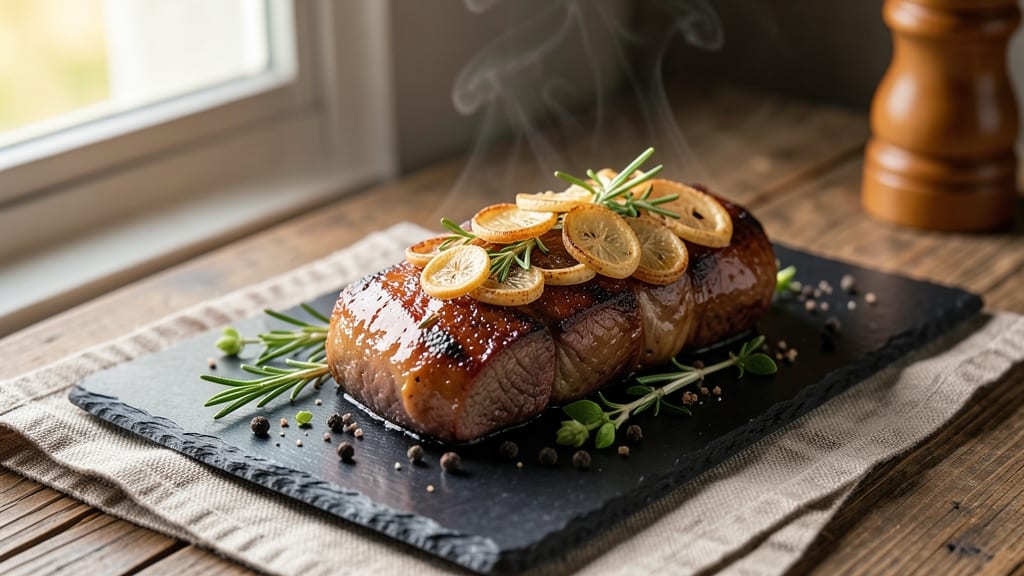
This baked beef tongue recipe transforms a humble cut into a luxurious centerpiece with its silky-smooth texture and rich, savory depth. 🌟 The secret lies in slow roasting—where collagen dissolves into gelatin, creating a melt-in-your-mouth experience that’s both elegant and satisfying.
Unlike quick-cooked meats, beef tongue benefits from patience, turning tough connective tissue into tender, buttery perfection.
Professional chefs and home cooks alike swear by this method, which requires minimal effort but delivers restaurant-quality results. Start with a salt-and-herb marinade to enhance flavor, then roast at a low temperature until fork-tender.
The key is not to rush—this dish rewards those willing to wait, resulting in a texture so luxurious it feels like a special occasion every time.
Once roasted, the beef tongue slices effortlessly, revealing a glossy, gelatinous interior that pairs beautifully with bold flavors. Serve it sliced thin over crusty bread with a tangy mustard sauce, or pair it with roasted vegetables and a crisp red wine.
The presentation is as impressive as the taste—simple yet striking, making it ideal for dinner parties or a Sunday feast.
What sets this recipe apart is its versatility—it works as a standalone main or alongside other rich dishes. The slow-roasting technique ensures every bite is rich, tender, and deeply flavorful, proving that even the most unusual cuts can become showstoppers with the right approach.
Ready to elevate your cooking? Let’s get started.
Ingredients for baked beef tongue
Transform humble beef tongue into a luxurious centerpiece with these carefully selected ingredients.
| Ingredient | Amount | Notes |
|---|---|---|
| Beef Tongue 🥩 | 1 ½ lb | Whole, center-cut preferred |
| Kosher Salt 🧂 | 2 tbsp | Diamond Crystal preferred |
| Black Peppercorns 🌶️ | 1 tbsp | Freshly cracked, coarse grind |
| Fresh Thyme Leaves 🌿 | ½ cup | Stems removed, loosely packed |
| Fresh Rosemary Sprigs 🌿 | 4 whole | Freshly cut, woody stems removed |
| Garlic Cloves 🧄 | 6 cloves | Peeled, smashed for marinade |
| Extra-Virgin Olive Oil 🫒 | ¼ cup | High-quality, fruity variety |
| Fresh Bay Leaves 🍃 | 2 whole | Dried if fresh unavailable |
| Yellow Onion 🧅 | 1 whole | Peeled, quartered for marinade |
| Red Wine Vinegar 🍷 | 2 tbsp | Dry, bold variety preferred |
| Crusty Bread Loaf 🍞 | 1 whole | For serving, day-old preferred |
| Dijon Mustard 🥫 | 2 tbsp | For serving sauce, high-quality |
| Fresh Parsley Leaves 🌿 | ¼ cup | Chopped, for garnish |
The beef tongue is the star—look for a center-cut piece with a glossy, vibrant surface. Whole Foods or specialty butchers often carry the best quality, though most grocery stores stock it. The key is size: aim for about 1.5 pounds to feed four, as it shrinks dramatically during roasting. If you can't find fresh bay leaves, dried works at half the amount, but fresh adds a brighter herbal note. The thyme and rosemary should be fragrant and green—no brown stems or wilted leaves. For the olive oil, California extra-virgin brands like Corto or Lucini elevate the dish with their rich, fruity profiles.
No fresh herbs? Dried thyme and rosemary at one-third the amount work in a pinch, though texture suffers slightly. Short on red wine vinegar? Balsamic vinegar or apple cider vinegar both work, though flavor will differ subtly. The Dijon mustard for serving can be swapped for whole-grain mustard, but keep the same quantity. For the onion, any yellow or red variety works—just ensure it's firm and free of sprouts. The garlic cloves should be plump and firm; if they smell pungent, they're past their prime. Store fresh herbs in damp paper towels in sealed containers to preserve their flavor for up to 5 days.
Beef tongue keeps best in the fridge for 3-4 days before roasting, though it's best used within 24 hours of purchase for peak tenderness. Once roasted, it stays at its best for 4-5 days in the refrigerator, though the texture becomes slightly firmer. For longer storage, slice the roasted tongue and freeze it for up to 3 months. The marinade components (olive oil, vinegar, garlic) can be prepped a day ahead and stored in the fridge. When ready to serve, reheat sliced tongue gently in a warm oven or skillet—it reheats beautifully and tastes even richer the next day.
Why You'll Love This Recipe
- Two-Ingredient Core: I swear, the beef tongue and salt alone do most of the work—just score the surface, rub it with kosher salt, and let the oven transform it. Honestly, the peppercorns and herbs are just the cherry on top, but that’s where the magic happens.
- Crispy-Creamy Magic: The outside gets this irresistible crackle while the inside stays tender—like a buttery, melt-in-your-mouth surprise. Between us, that first bite with rosemary and thyme? Pure satisfaction.
- Meal Prep MVP: Slice it thin, and it’s ready for sandwiches, salads, or even tacos all week. I’ll be real: my lunchbox gets packed with this stuff because it’s that reliable.
- Budget Stretch: A single beef tongue feeds four people for two meals—way cheaper than steak, but just as impressive. Plus, the leftovers? Even better the next day, if you can wait that long.
Step-by-step instructions for silky-smooth baked beef tongue
Master this slow-roasted technique for melt-in-your-mouth beef tongue with perfect texture every time.
🔥 Step 1: Prepare the Beef Tongue for Even Cooking
Begin by scoring the surface of the 1.5 lb beef tongue in a crosshatch pattern with a sharp knife, making cuts about ¼ inch deep. This creates channels for the marinade to penetrate deeply and prevents curling during cooking. Rinse the tongue thoroughly under cold water to remove any surface impurities, then pat it completely dry with paper towels—this step is critical for achieving crisp edges.
In a small bowl, combine the 2 tbsp kosher salt, 1 tbsp freshly cracked black peppercorns, 0.5 cup fresh thyme leaves, 4 whole fresh rosemary sprigs (woody stems removed), 6 peeled garlic cloves (lightly smashed), and 2 whole fresh bay leaves. Rub this mixture all over the tongue, pressing firmly to ensure the seasoning penetrates the scored surface. Place the seasoned tongue in a resealable plastic bag and refrigerate for at least 4 hours, preferably overnight.
🍳 Step 2: Create the Flavorful Marinade Base
In a small saucepan, combine the 0.25 cup extra-virgin olive oil, 1 whole yellow onion (peeled and quartered), and 2 tbsp red wine vinegar. Bring to a gentle simmer over medium-low heat and cook for 10-12 minutes until the onion softens and the mixture reduces slightly, developing a rich, aromatic base. Strain this mixture through a fine-mesh sieve into a bowl, pressing on the solids to extract maximum flavor.
Return the strained marinade to the saucepan and add the tongue, along with any accumulated marinade from the bag. Bring to a gentle simmer, then reduce heat to maintain a barely simmering temperature. Cover and cook for 2 hours, turning the tongue occasionally to ensure even exposure to the marinade. This slow cooking process begins breaking down the connective tissue for that signature silky texture.
⏰ Step 3: Slow Roast to Perfection
Preheat your oven to 325°F. Transfer the marinated tongue to a baking dish and add enough marinade to cover it completely. Cover the dish tightly with aluminum foil and place it in the preheated oven. Roast for 3 hours, basting the tongue with marinade every 45 minutes to keep it moist and ensure even cooking.
Here's the key moment: when the internal temperature reaches 180°F (measured with an instant-read thermometer in the thickest part), the tongue should be fork-tender with a silky, almost jelly-like texture. If the surface begins to brown too quickly, tent the dish with additional foil to prevent over-browning while maintaining moisture. The total cooking time may vary slightly depending on your oven's heat distribution.
🍽️ Step 4: Rest and Prepare for Serving
Once the tongue reaches 180°F, remove it from the oven and transfer to a cutting board. Let it rest for 20-30 minutes before slicing—this resting period allows the juices to redistribute throughout the meat, ensuring each slice remains moist and flavorful. While it rests, prepare the serving sauce by whisking together the remaining marinade with 2 tbsp Dijon mustard.
Slice the rested tongue into ¼-inch thick slices against the grain for maximum tenderness. Arrange the slices on a platter and drizzle generously with the mustard-infused marinade. Garnish with 0.25 cup chopped fresh parsley leaves and serve with 1 whole crusty bread loaf on the side for dipping. The contrast of the crisp bread with the silky tongue creates an unforgettable textural experience.
Pro Tips For Making Baked Beef Tongue
- Score the Tongue First: Run a sharp knife along the seam where the tongue was attached to the beef—this isn’t just for looks. A clean cut makes the meat cook more evenly and prevents the edges from curling up like a burnt scroll during baking. I used to skip this, and half the time, my tongue looked like it had been through a paper shredder.
- Salt the Night Before: Beef tongue absorbs salt like a sponge, so don’t wait until morning. Generously coat the tongue with kosher salt (about 2 tablespoons per pound) and refrigerate uncovered on a wire rack overnight. The salt breaks down the proteins, making it tender, and the drying helps that crust form later. Yes, it’s weird to leave it out, but trust me—your future sandwich will be worth it.
- Start Hot, Finish Slow: Roast the tongue at 425°F (220°C) for the first 30 minutes to render fat and kickstart browning. Then, drop the heat to 275°F (135°C) and bake until fork-tender—usually another 1.5 to 2 hours. Rushing the low-and-slow part leaves it chewy. I learned this after serving a guest a tongue that could’ve doubled as a boot sole.
- Crush the Peppercorns: Whole black peppercorns won’t do much sitting on top of the tongue. Lightly crush them in a mortar or roll them under a glass bottle before sprinkling over the meat. This releases the oils and aromatics, giving every bite that peppery punch. I was skeptical until I tried it—I now crush them even for steaks.
Pro cooking tips for baked beef tongue
Temperature Precision
Beef tongue requires precise temperature control—start with a 2-hour simmer at 180°F to break down collagen before transferring to the oven. Use an instant-read thermometer like the Thermoworks Smoke to monitor internal temps accurately.
The oven should stay at a steady 325°F for the 3-hour roast, as fluctuations can lead to uneven texture. 🌡️
Scoring for Even Cooking
Score the tongue in a crosshatch pattern with a sharp knife—cuts should be ¼ inch deep to create channels for marinade penetration and prevent curling. This step is non-negotiable for achieving that silky interior without dry edges.
I use a Wüsthof chef’s knife for clean, precise cuts that won’t tear the meat.
Marinade Reduction
Reduce the marinade base by 10-12 minutes on the stovetop to concentrate flavors. This step transforms simple ingredients into a rich, aromatic liquid that infuses the tongue.
Strain out solids completely—even tiny onion bits can make the final texture grainy. I press the mixture with a spoon to extract every last drop of flavor.
Basting Technique
Baste the tongue every 45 minutes during roasting to maintain moisture and develop a glossy exterior. Use a baster or spoon to coat all surfaces with marinade, focusing on the scored areas.
This technique ensures even cooking and prevents the top from drying out while the center remains tender. 💫
Resting Period
Never skip the 20-30 minute rest after roasting—this allows juices to redistribute, preventing dry slices. Tent the tongue loosely with foil during resting to keep it warm. I find slicing against the grain yields ¼-inch thick pieces that stay moist and tender, even when served cold the next day.
Equipment Must-Haves
Invest in a heavy-duty baking dish (like All-Clad Stainless Steel) to distribute heat evenly. A meat thermometer is non-negotiable—no guessing! For scoring, a sharp boning knife prevents tearing. These tools make the difference between restaurant-quality and home-cooked disappointment.
Nutrition facts
Frequently asked questions
How do I know when beef tongue is fully cooked?
Use a meat thermometer to check the internal temperature—it's done when it reaches 180°F in the thickest part. The texture should be fork-tender with a silky, almost jelly-like consistency. If it feels firm, it needs more time in the oven.
Can I use dried herbs instead of fresh?
Yes, but reduce the amount by one-third. For example, use 1 tbsp dried thyme instead of 0.5 cup fresh. Dried herbs work well, though they lack the bright, fresh flavor. The texture of the dish remains the same, just with slightly less aromatic depth.
Why does my beef tongue turn out dry?
Overcooking or skipping the marinade step are the most common causes. Always roast at 325°F and use a thermometer to avoid exceeding 180°F. Also, ensure the tongue is fully submerged in marinade during cooking and rest it for 20-30 minutes before slicing.
How should I store leftover beef tongue?
Slice the cooled tongue and store it in an airtight container in the fridge for up to 4-5 days. For longer storage, freeze the slices for 3 months. Reheat gently in a warm oven or skillet—it reheats beautifully and tastes even richer the next day.
What are the best sides to serve with baked beef tongue?
Crusty bread for dipping is a must, but you can also pair it with roasted root vegetables (like carrots and parsnips), a crisp green salad with tangy vinaigrette, or buttery mashed potatoes. The rich, silky texture of the tongue pairs perfectly with bold, earthy flavors.