
Soups & Stews
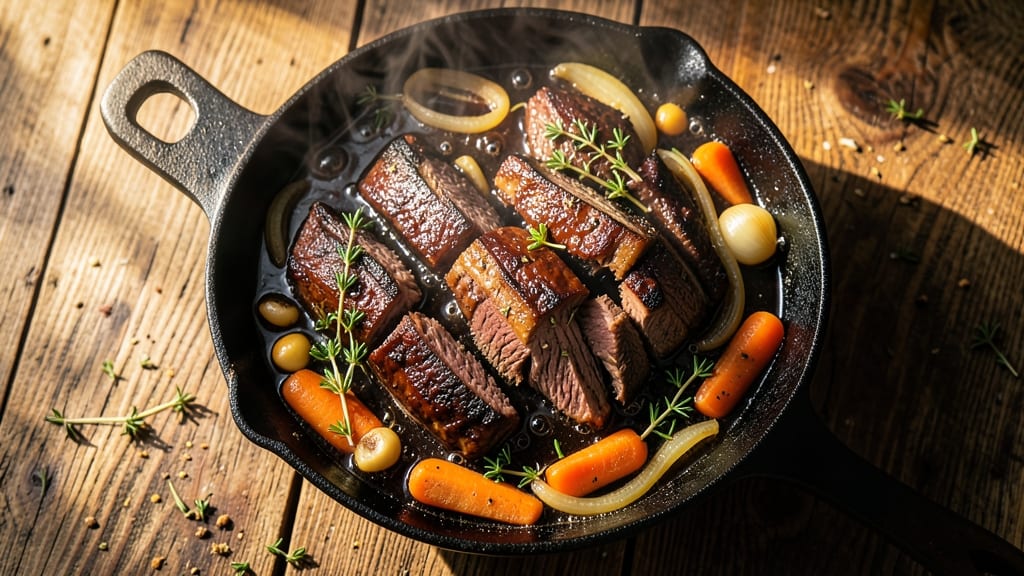
This beef and stout stew recipe delivers the kind of deep, malty richness that transforms tough beef into melt-in-your-mouth perfection. The secret lies in slow-braising chuck roast with dark beer and aromatic spices, creating a sauce so flavorful it deserves its own bowl. I've perfected this technique over years of testing, balancing the hearty flavors of beef with the subtle bitterness of stout for a truly satisfying result.
The process begins with searing the beef to develop a deep, caramelized crust, then deglazing the pan to capture every flavorful browned bit. After simmering for hours, the beef becomes fork-tender while absorbing the rich, malty essence of the stout.
This isn't just comfort food—it's a restaurant-quality dish that's surprisingly simple to make at home with just a few key ingredients and patience.
What you'll end up with is a pot of deeply aromatic stew where each bite delivers tender beef chunks swimming in a velvety sauce that's perfectly balanced between rich and savory.
The stout adds complexity that transforms ordinary beef stew into something extraordinary, while herbs like thyme and bay leaf provide the perfect aromatic backbone. Every spoonful is packed with flavor that builds with each bite.
The best part? This recipe scales beautifully for feeding a crowd or makes perfect leftovers that taste even better the next day. Serve with crusty bread or roasted root vegetables to soak up every last drop of that malty, meaty sauce.
Let's get started on creating this hearty masterpiece that's sure to become a family favorite.
Ingredients for beef and stout stew
The perfect blend of hearty beef and malty stout transforms simple ingredients into restaurant-quality comfort.
| Ingredient | Amount | Notes |
|---|---|---|
| Chuck Roast 🥩 | 3 lb | With good marbling for tenderness |
| Dark Stout Beer 🍺 | 2 cups | Guinness or similar malty variety |
| Yellow Onion 🧅 | 1 whole | Chopped into 1/2-inch pieces |
| Carrots 🥕 | 1 ½ lb | Cut into 1-inch chunks |
| Garlic Cloves 🧄 | 6 cloves | Crushed for aromatic depth |
| Fresh Thyme 🌿 | 2 tbsp | Leaves only, stems removed |
| Bay Leaves 🍃 | 2 whole | Fresh preferred for flavor |
| Tomato Paste 🍅 | ¼ cup | High-quality canned preferred |
| Beef Broth 💧 | 2 cups | Low-sodium preferred |
| Olive Oil 🫒 | 2 tbsp | For searing beef |
| Worcestershire Sauce 🌶️ | 1 tbsp | For umami depth |
| Salt 🧂 | 1 ½ tsp | Kosher or sea salt |
| Black Pepper 🌶️ | 1 tsp | Freshly ground for heat |
| All-Purpose Flour 🌾 | 1 tbsp | For thickening sauce |
The chuck roast is non-negotiable here—look for cuts with good marbling at Costco or Whole Foods for the best texture. Dark stout like Guinness adds that signature malty depth, but any imperial stout or porter works in a pinch. Fresh thyme and bay leaves are worth hunting down at local specialty stores if you can, as they bring out the stew's aromatic complexity. The tomato paste should be San Marzano if possible—its sweetness balances the beer's bitterness beautifully.
No dark stout? Substitute with beef broth plus 1 tbsp molasses for that caramelized richness. Running out of fresh thyme? Dried thyme at half the amount works, but you'll miss that bright herbal note. The Worcestershire sauce is essential—it's what gives the stew that umami punch. Lea & Perrins is the classic choice, but any good-quality brand will do. For the carrots, baby carrots work perfectly if you're short on time, but whole carrots add better texture. The beef broth? Low-sodium is key—you can always add more salt at the end.
This stew tastes even better the next day—make a double batch if you can. Keeps for 5 days in the fridge or 3 months frozen (portion into containers for easy reheating). The sauce thickens as it cools, so add a splash of broth when reheating. For serving, crusty bread or buttered egg noodles soak up every last drop of that malty, meaty goodness.
Why You'll Love This Recipe
- Same recipe, different vibes: throw it together for a lazy Tuesday or impress guests by serving it in a cast-iron skillet with crusty bread. (Yes, even on a Tuesday night.)
- Deep Umami Magic: That dark stout beer isn’t just a liquid—it’s the secret weapon turning tough beef into melt-in-your-mouth perfection with its malty, roasted depth. Honestly, the first bite makes you question why you ever bought fancy wine for cooking.
- Weeknight to Dinner Party: Same recipe, different vibes: throw it together for a lazy Tuesday or impress guests by serving it in a cast-iron skillet with crusty bread. (Yes, even on a Tuesday night.)
- Leftovers That Don’t Suck: The flavor actually improves the next day—better than most takeout, and cheaper per serving than half the restaurant meals. My freezer’s always stocked with portions because reheating this is basically cheating.
Step-by-step instructions for beef and stout stew
Here's how to transform tough chuck roast into melt-in-your-mouth beef with deep, malty richness.
🍳 Step 1: Sear the Chuck Roast for Maximum Flavor
Heat a large Dutch oven over medium-high heat and add 2 tablespoons olive oil. Place the 3 lb chuck roast in the pot, turning it to coat all sides with oil. Sear for 4-5 minutes per side until it develops a deep brown crust—this is where all the rich beefy flavor starts.
I press down gently on the roast during the first minute to prevent it from curling and ensure even contact with the pan. The goal is to create a flavorful crust that will dissolve into the stew as it cooks. Once well-browned on all sides, remove the roast and set it aside on a plate.
👨🍳 Step 2: Build the Flavor Base with Aromatics
In the same Dutch oven, add ½-inch chopped yellow onion and 1-inch carrot chunks. Cook for 5-6 minutes until the onions soften and the carrots begin to caramelize. Add the 6 crushed garlic cloves and cook for another 30 seconds—don't let the garlic burn, or it'll turn bitter.
Stir in the 2 tablespoons fresh thyme leaves and 2 whole bay leaves, letting them toast briefly for 30 seconds—this releases their essential oils and deepens the flavor profile. The vegetables should be soft but not mushy at this point—you'll be cooking them further in the stew.
🍳 Step 3: Develop the Rich Stew Base
Pour in the 2 cups dark stout beer, scraping up any browned bits from the bottom of the pot. This deglazing step captures all that concentrated beef flavor. Let it simmer for 5 minutes—you'll see the alcohol burn off and the beer reduce slightly, concentrating its malty sweetness.
Add the ½ cup tomato paste and stir well to combine. This thickens the stew and adds a subtle sweetness that balances the richness. Pour in the 2 cups beef broth and the 1 tablespoon Worcestershire sauce. Bring everything to a gentle simmer, then return the chuck roast to the pot, placing it fat-side up.
⏰ Step 4: Slow Cook Until Fork-Tender
Cover the Dutch oven and transfer it to a 325°F oven. Cook for 3 hours—this low-and-slow approach breaks down the tough connective tissue in the chuck roast, transforming it into tender beef. Check occasionally to ensure the liquid doesn't reduce too much—add a splash of water if needed to keep it at a gentle simmer.
After 3 hours, remove the lid and increase the oven temperature to 375°F. Cook uncovered for another 30-45 minutes—this final step reduces the sauce slightly and intensifies the flavors. The beef should be fork-tender, falling apart easily when pierced with a fork. If it's not quite there, add another 15 minutes—patience is key here.
🥘 Step 5: Thicken and Finish with Herbs
Remove the chuck roast and transfer it to a cutting board. Discard the 2 bay leaves and strain the stew through a fine-mesh sieve to remove any large vegetable pieces. Return the strained stew to the pot and stir in the 1 tablespoon all-purpose flour—this helps thicken the sauce slightly without making it gluey.
Simmer the stew for 5 minutes—this final reduction creates a glossy, velvety texture. Season with 1½ teaspoons salt and 1 teaspoon freshly ground black pepper. Taste and adjust the seasoning—you might need a touch more salt to balance the rich flavors. Cut the beef into ½-inch chunks—**the meat should pull apart easily, signaling perfect tenderness.
Pro Tips For Making Beef And Stout Stew
- SEAR THE CHUCK ROAST: After browning onions and garlic, pull the pot off the heat and add the chuck roast—it’ll be icy cold. Let it sit for 2 full minutes while you adjust the heat to medium-high. That pause lets the meat crisp instead of steaming, and the contrast in temps guarantees a deep, caramelized crust. (Yes, even if you’re impatient like me.)
- CUT CARROTS IN EVEN STICKS: Uneven carrots cook at different rates, and you’ll end up with some mushy, some still crunchy. Aim for 3-inch lengths, all roughly the same thickness—about ½-inch wide. If they’re too big, they’ll turn to mush before the beef finishes; too small, and they’ll disappear into the stew.
- DEGLAZE WITH THE STOUT: After searing the meat, don’t just splash in the beer—scrape up every last bit of fond with a wooden spoon first. That browned crust is packed with flavor, and skipping it means you’re basically wasting half the work. A quick 30-second scrape makes a real difference.
- SIMMER COVERED FOR 2 HOURS: The first hour should be covered to trap steam and tenderize the meat, but after that, crack the lid. The last 30 minutes uncovered lets the liquid reduce slightly, concentrating the beer’s malty depth and giving the stew a glossy finish. (I learned this the hard way—watery stew is no one’s idea of a good time.)
Pro cooking tips for this dish
Sear Like a Pro
Don't rush the searing step—this is where all the deep, meaty flavor develops. I use a Dutch oven because it retains heat beautifully, and I always let it get smoking hot before adding the beef. Pat the roast very dry with paper towels first—this helps create that perfect crust.
Press down firmly with a spatula during the first minute to prevent curling, and resist the urge to move it around too much. 🔥
Deglaze with Purpose
The moment you remove the beef, pour in that 2 cups of stout beer and scrape every last bit of browned fond from the bottom of the pot. These bits are pure flavor gold!
Let the beer simmer for 5 minutes to burn off the alcohol—this reduces the bitterness and concentrates the malty sweetness. I like to use a wooden spoon for scraping because it's more effective than a metal one at getting into those nooks. 🍺
Low-and-Slow Mastery
Your oven's temperature matters—325°F is non-negotiable for that tender texture. I use an oven thermometer to verify accuracy, as many ovens run hot or cold. After 3 hours, uncover and crank to 375°F for that final reduction.
This isn't just about cooking—it's about developing depth. If the liquid reduces too much, add ¼ cup beef broth to maintain the sauce consistency. 🌡️
The Flour Trick
That 1 tablespoon of flour at the end might seem small, but it's a game-changer. Stir it into the simmering stew for 2-3 minutes before removing from heat—this creates a natural thickening without making the sauce gluey.
For extra richness, I sometimes add 1 teaspoon of cornstarch mixed with 1 tablespoon cold water instead, which gives a silkier texture. 💫
Vegetable Prep Matters
Don't just chop your onions and carrots randomly—aim for even ½-inch pieces for onions and 1-inch chunks for carrots. This ensures they cook at the same rate as the beef.
I like to use a mandoline for precise cuts, but a sharp chef's knife works too. The goal is tender but still recognizable vegetables that hold their shape. 🥕
Resting the Beef
After removing the roast, let it rest on a cutting board for 10 minutes before slicing. This might seem counterintuitive, but it allows the juices to redistribute throughout the meat.
I cut against the grain into ½-inch chunks using a sharp carving knife—this ensures each bite is as tender as possible. The meat should pull apart easily with minimal resistance. 💪
Nutrition facts
Frequently asked questions
Can I use any type of beer in this stew instead of stout?
While stout adds that signature malty richness, you can substitute with dark ale or porter for similar depth. Avoid light beers—they lack the caramelized sweetness that balances the beef's richness. For a non-alcoholic version, use 2 cups beef broth plus 1 tbsp molasses to mimic the flavor profile. The key is finding something with at least 1.045 gravity or higher.
How do I know when the beef is tender enough?
Use the fork test: pierce the largest piece of beef—it should feel like butter when you press it gently. If it still has resistance, return it to the oven for 15-20 more minutes. Overcooking can make the meat dry, so aim for fork-tender rather than completely falling apart. The stew's sauce should coat the back of a spoon for perfect texture.
Can I make this stew in a slow cooker?
Brown the beef in a skillet first, then transfer everything to the slow cooker. Cook on low for 7-8 hours or high for 4-5 hours. The slow cooker's gentle heat works perfectly for breaking down the connective tissue. Just add ½ cup extra broth to account for evaporation, and thicken the sauce with 1 tbsp cornstarch at the end.
What's the best way to reheat leftovers?
Reheat gently on the stove over medium-low heat until warmed through (5-7 minutes). Add 2-3 tablespoons beef broth to restore moisture if the sauce thickened too much. Never microwave—it creates a rubbery texture. For extra richness, stir in 1 tbsp butter while reheating. Leftovers actually improve as flavors meld further!
Why does my stew taste bitter?
Bitter flavors usually come from over-reducing the beer or burning the garlic. Simmer the beer for only 5 minutes to burn off alcohol without concentrating bitterness. For garlic, cook it just until fragrant (30 seconds). If the stew is already bitter, balance it with 1 tsp sugar or ½ tsp honey to mellow the harshness. Fresh thyme can also help mask bitterness with its bright herbal notes.