
Sauces & Condiments
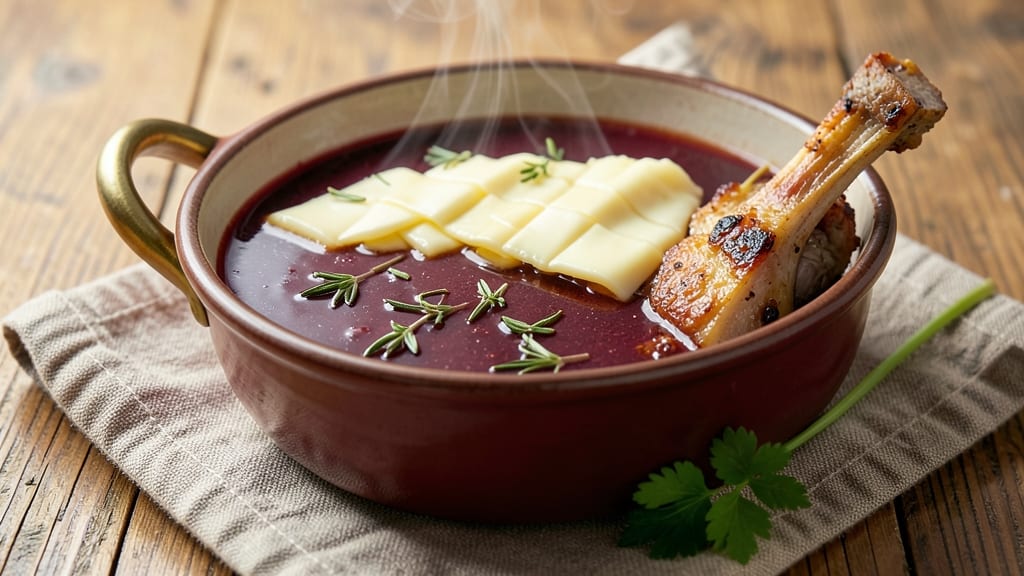
This au jus recipe with beef consommé transforms simple pan drippings into a velvety, umami-rich sauce that elevates any beef dish. The secret lies in clarifying the broth and carefully balancing flavors—just a splash of vinegar and a pat of butter can make all the difference.
I’ve perfected this technique over years of testing, and it’s the kind of sauce that turns ordinary meals into restaurant-worthy experiences.
The process begins with skimming fat from the hot drippings, then straining through cheesecloth to create a crystal-clear consommé. Reducing it slowly on the stove intensifies the beefy depth, while a touch of vinegar brightens the richness.
Herbs like thyme or parsley add subtle complexity, ensuring every spoonful is perfectly balanced. This isn’t just a sauce—it’s a flavor multiplier that makes beef taste even more luxurious.
What sets this au jus apart is its clarity and depth, achieved through traditional methods like skimming and straining. The result is a glossy, golden sauce that clings to meat like a second skin, delivering layers of savory umami with each bite.
Whether drizzled over roasts, steaks, or even mashed potatoes, it transforms ordinary dishes into something extraordinary. The key is patience—letting the flavors meld without rushing the reduction.
Once mastered, this sauce becomes a pantry staple, ready to enhance any beef-based meal in minutes. The technique is straightforward but requires attention to detail, particularly when clarifying the broth and balancing the acidity.
With just a few simple ingredients and careful technique, you’ll create a sauce that rivals the best restaurant versions. Let’s get started on crafting this rich, velvety masterpiece.
Ingredients for au jus recipe with beef consomme
Eight essential ingredients transform humble beef drippings into restaurant-quality consommé.
| Ingredient | Amount | Notes |
|---|---|---|
| Beef Pan Drippings 🥩 | 3 cups | From roasted beef, skimmed of fat |
| Cold Water 💧 | 1 cup | Ice-cold, for clarifying |
| White Wine Vinegar 🍷 | 2 tbsp | High-quality, aged variety |
| Unsalted Butter 🧈 | 2 tbsp | Cold, cut into small cubes |
| Fresh Thyme Leaves 🌿 | ¼ cup | Or 1 tbsp dried thyme |
| Fresh Parsley Leaves 🌿 | ¼ cup | Finely chopped for garnish |
| Diamond Crystal Kosher Salt 🧂 | ½ tsp | Adjust to taste |
| Cheesecloth 🧶 | 1 sheet | Or fine-mesh strainer |
The beef drippings are the foundation—collect them immediately after roasting while still hot. Costco or Whole Foods often sell pre-cut roasts with excellent marbling, which yields richer drippings. Skim off all visible fat before proceeding; this step is non-negotiable for clarity. For maximum depth, use a beef roast with bone-in cuts like chuck or ribeye, as they release more collagen and gelatin during cooking. If you're working with leftover roast, ensure the drippings haven't cooled completely before straining, as warm fat emulsifies better with the vinegar later.
No white wine vinegar? Apple cider vinegar or lemon juice work in a pinch, though they'll alter the subtle tang slightly. Fresh herbs are ideal, but dried thyme at one-third the amount suffices if you're short on time. The cheesecloth is crucial—if unavailable, a fine-mesh strainer lined with paper towels creates a similar filter. For extra richness, add 1 tsp Worcestershire sauce (ensure it's vegetarian if needed) or a splash of beef stock. The butter should be cold when added at the end—this prevents the sauce from breaking and adds luxurious mouthfeel.
Store the clarified consommé in airtight containers in the fridge for up to 5 days or freeze for 3 months. Reheat gently over low heat, stirring occasionally to prevent scorching. This sauce is best when made fresh, but the clarified base keeps well for future use. For restaurant-style presentation, strain through a China cap or coffee filter for crystal clarity. The butter should be added just before serving to maintain its glossy finish—never mix it in ahead of time.
Why You'll Love This Recipe
- Pan Drippings Magic: I swear by this trick—no straining, no fuss. Just pour those golden beef drippings into cold water with a splash of white wine vinegar, and let the fat separate like it’s doing the work for you. Five minutes of hands-off magic, and you’ve got a silky base that tastes like a steakhouse secret.
- Umami Bomb: That first sip? Pure flavor payoff. The beef consommé pulls deep, savory notes from the drippings, while the thyme and butter add a bright, herby richness. It’s the kind of taste that makes you pause mid-bite—like someone whispered "steak night" in your ear.
- Leftovers Reinvented: Turn yesterday’s roast into tomorrow’s hero. This au jus keeps beautifully in the fridge, so drizzle it over cold cuts for sandwiches, toss it into mashed potatoes for extra depth, or serve it alongside grilled chicken. I’ve even used it to deglaze pans—waste not, want not.
- Budget Steakhouse Hack: Here’s what sold me—it costs pennies but delivers restaurant-quality flavor. You’re basically upgrading your whole meal by turning scraps (yes, those leftover drippings) into something luxurious. No fancy consommé needed; just a few pantry staples and a little patience. My wallet and my taste buds thank me.
Step-by-step instructions for beef consommé au jus
Transforming simple pan drippings into velvety, umami-rich consommé requires precision and patience.
Clarify the Beef Drippings
Place the 3 cups beef pan drippings in a heavy-bottomed saucepan over medium-high heat. Bring to a gentle simmer, being careful not to boil vigorously—this would cause the fat to emulsify and cloud your consommé. Once simmering, remove from heat and let sit for 5 minutes to allow any settled impurities to rise to the surface.
Using a ladle, carefully skim off the hardened fat that has congealed on top. I like to pour the drippings through a fine-mesh strainer lined with the cheesecloth into a clean saucepan, catching any remaining solids. This step is crucial for achieving crystal-clear consommé—don't rush it. The goal is to remove all impurities while preserving the rich beef flavor.
Add Acid and Water for Clarification
Return the strained drippings to the saucepan and stir in the 2 tbsp white wine vinegar and 1 cup cold water. The vinegar acts as a clarifying agent, helping to break down proteins that would otherwise cloud the consommé. Bring the mixture to a gentle simmer over medium-low heat, then reduce to a barely perceptible bubble—just enough to maintain movement without boiling.
Simmer uncovered for 30-40 minutes, stirring occasionally with a wooden spoon. You'll notice a thin skin forming on the surface—this is normal and should be skimmed off with a spoon as it appears. The consommé should gradually reduce and become clearer. If it begins to brown, reduce the heat slightly to maintain a pale golden color.
Strain and Finish with Butter
After simmering, carefully strain the consommé through the cheesecloth-lined fine-mesh strainer into a clean saucepan. This second straining ensures absolute clarity. Return the strained consommé to the saucepan and add the 2 tbsp cold unsalted butter, cut into small cubes. The butter will help emulsify any remaining fat and add richness.
Bring the consommé to a gentle simmer again, then immediately reduce to the lowest possible heat to maintain warmth. The butter should melt completely, creating a silky texture. Taste and adjust seasoning with the ½ tsp diamond crystal kosher salt, remembering that the consommé will intensify in flavor as it cools.
Incorporate Herbs and Final Adjustments
Remove the consommé from heat and stir in the ¼ cup fresh thyme leaves and ¼ cup fresh parsley leaves. These herbs add subtle depth without overpowering the beef flavor. Let the consommé steep for 10 minutes, then strain through the cheesecloth once more to remove any herb particles. This final straining ensures a smooth, elegant texture.
The consommé is now ready to serve. For best results, keep it warm in a double boiler or thermos until serving. The flavor will continue to develop and deepen as it sits, making it even more complex. Garnish with additional fresh parsley just before serving to brighten the dish with a touch of freshness.
Pro Tips For Making Au Jus Recipe With Beef Consomme
- SKIM THE DRIPPINGS FIRST: The first 10 minutes after searing are when the good stuff settles—let the pan cool just enough to pour off the clear, golden liquid, not the murky sludge at the bottom. I used to grab the whole pan and end up with a greasy mess that ruined the consommé’s clarity.
- USE ICE-COLD WATER: Pouring boiling consommé into ice water shocks it into crystal-clear perfection. If you’re lazy and use room temp water, you’ll get a cloudy, watery sauce that tastes like nothing. Trust me, the ice bath is worth the extra bowl to rinse later.
- WHISK IN THE VINEGAR LAST: Adding white wine vinegar too early turns your rich consommé into a sad, diluted broth. Wait until the pan’s off heat—just before finishing with butter—to brighten the flavor without killing the depth.
- STRAIN TWICE, STRAIN WELL: A fine-mesh sieve alone won’t catch all the grit. After the first strain, pour the consommé through a coffee filter or cheesecloth-lined funnel for that silky, restaurant-quality texture. Yes, it’s extra work, but your sauce will actually look like it belongs in a fine-dining menu.
Troubleshooting perfect results
Cloudy Consommé Fix
If your consommé turns cloudy during clarification, it’s usually due to boiling too vigorously or not skimmed enough. For immediate fixes, strain through a China cap or coffee filter for crystal clarity.
I’ve found that adding an extra ½ tsp white wine vinegar and simmering uncovered for 10 more minutes often clears it up. The key is patience—let it reduce slowly without rushing the process. 💧
Fat Emulsion Issues
When fat emulsifies into the consommé, creating a greasy texture, it means you didn’t skim enough during the initial simmer. To salvage it, chill the consommé in the fridge overnight. The fat will solidify on top, making it easy to spoon off.
For a quicker fix, stir in 1 extra tbsp cold butter while simmering—this helps bind any loose fat particles. Always work with room-temperature drippings to prevent emulsification. 🧈
Overly Tangy Flavor
Too much vinegar can make your au jus taste harsh. If this happens, balance it by adding 1 tsp honey or brown sugar while simmering. A splash of beef stock (about ¼ cup) also dilutes the acidity while adding depth.
Taste as you go—remember, the consommé will mellow as it cools. I’ve learned to start with 1 tbsp vinegar if I’m unsure, then adjust. 🍯
Butter Separation
If the butter separates when added to the hot consommé, it’s likely because the saucepan wasn’t hot enough. To fix this, gently reheat the consommé over low heat while whisking continuously.
For prevention, melt the butter in a separate small saucepan first, then whisk it into the consommé off the heat. Cold butter cubes should only be added to simmering (not boiling) consommé. 🔥
Weak Beef Flavor
If your consommé lacks depth, it might need more umami. Boost it by adding 1 tsp soy sauce or ½ tsp Worcestershire sauce during the final simmer. For extra richness, reduce the consommé by half after clarifying—this concentrates the beefy flavor.
If using lean cuts of beef, consider adding 1 tsp beef bouillon powder to enhance the base. 🥩
Herb Bitterness
Over-steeping herbs can turn your au jus bitter. If this happens, strain immediately and add fresh herbs just before serving. For a milder flavor, use dried herbs (like thyme) instead of fresh, or reduce the amount by half.
I’ve found that 1 tsp dried thyme works just as well as ¼ cup fresh without the risk of bitterness. 🌿
Nutrition facts
Frequently asked questions
Can I use store-bought beef stock instead of pan drippings?
You can, but the flavor won't be as rich or complex. Store-bought stock lacks the deep umami from roasted beef drippings. If using stock, choose a high-quality, reduced beef stock and add 1 tsp beef bouillon powder for extra depth. For best results, always start with fresh drippings—they contain natural gelatin that gives au jus its signature glossy texture.
How do I know when the consommé is properly clarified?
The consommé is ready when it's clear and golden, not cloudy or brown. After simmering for 30-40 minutes, skim off any remaining skin, then strain through cheesecloth. It should look like pale tea—if it's still murky, simmer uncovered for 10 more minutes while skimming. Patience is key; rushing causes cloudiness.
Can I make this au jus ahead of time?
Yes! The clarified consommé base keeps well in the fridge for 5 days or frozen for 3 months. To reheat, warm gently over low heat while stirring. Add butter and herbs fresh before serving—this preserves the sauce's silky texture. For restaurant-style clarity, strain through a China cap just before serving.
What if I don't have white wine vinegar?
Use apple cider vinegar or lemon juice in equal amounts. For a milder taste, reduce to 1 tbsp instead of 2 tbsp. Avoid balsamic—it adds sweetness that won't balance the beef flavor. If using lemon juice, add it gradually, tasting as you go, since it's more acidic.
How much au jus should I make for a roast?
For a 4-6 lb roast, this recipe yields about 2 cups of finished au jus—enough to generously drizzle. For larger roasts, double the recipe. Remember: au jus reduces as it cools, so make slightly more than you think you'll need. If you have leftovers, store in an airtight container and reheat gently before serving.