
Main Courses
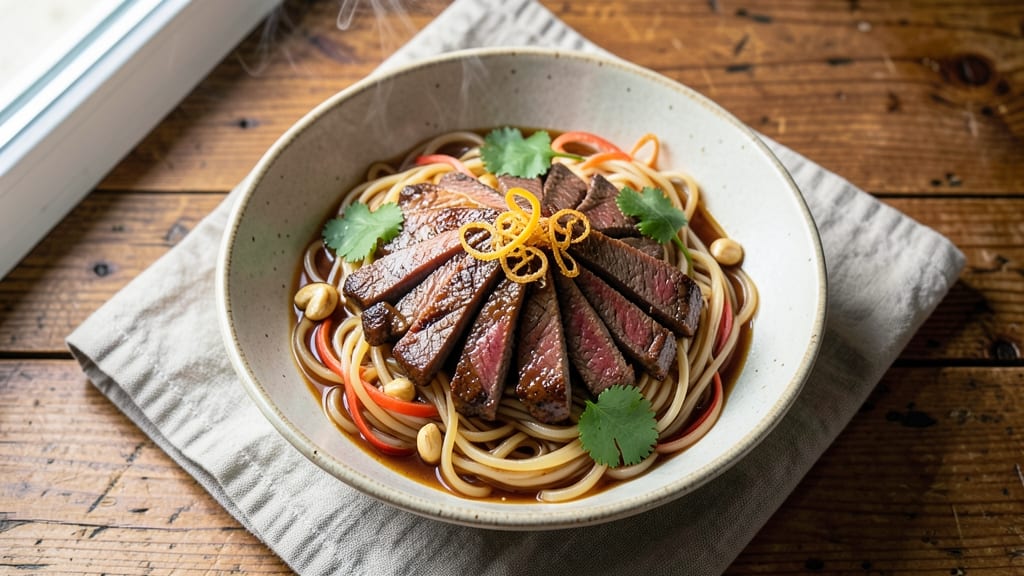
This Asian beef noodle bowl recipe delivers restaurant-quality wok-seared beef and a silky soy-ginger sauce that ties every component together. The secret lies in high-heat stir-frying for tender beef with a caramelized crust, then balancing it with chewy noodles and fresh vegetables.
I developed this version after years of experimenting with fusion techniques that keep the dish authentic yet approachable for home cooks.
The foundation begins with thinly sliced beef that develops a beautiful mahogany crust when seared quickly in a hot wok. A simple soy-ginger sauce—simmered just until it thickens—adds depth without overpowering the natural beef flavor.
The recipe uses wide rice noodles for their perfect chew, which absorb the sauce beautifully while maintaining structure. What makes this bowl special is how each element comes together: tender beef, silky noodles, crisp vegetables, and a sauce that's both savory and aromatic.
By the time you assemble everything, you'll have a bowl that's visually stunning and packed with contrasting textures and flavors. The wok-seared beef delivers meaty satisfaction, the noodles provide chewy substance, and the sauce ties it all together with its perfect balance of sweet, salty, and umami.
This is the kind of dish that feels indulgent yet remains balanced enough for a weeknight dinner. The best part? It comes together in under 30 minutes, making it ideal for busy evenings.
Customize it with your favorite vegetables or swap the beef for chicken or tofu to suit dietary preferences. The technique remains the same—quick searing, silky sauce, and perfectly cooked noodles. Let's get started on creating this flavorful, satisfying bowl that's sure to become a regular on your dinner rotation.
Ingredients for asian beef noodle bowl
Restaurant-quality wok-seared beef and silky sauce meet chewy noodles for a bowl that's both indulgent and quick.
| Ingredient | Amount | Notes |
|---|---|---|
| Flank Steak 🥩 | 1 lb | Thinly sliced against grain |
| Wide Rice Noodles 🍜 | 12 oz | Uncooked, dry weight |
| Fresh Ginger 🧄 | 2 tbsp | Finely grated, peeled |
| Garlic Cloves 🧄 | 6 cloves | Minced, fresh preferred |
| Sesame Oil 🫒 | 1 tbsp | Toasted, for aroma |
| Soy Sauce 🍶 | ½ cup | Kosher or Diamond Crystal |
| Honey 🍯 | 1 tbsp | Pure, not imitation |
| Rice Vinegar 🍶 | 2 tbsp | White or seasoned |
| Vegetable Oil 🫒 | 2 tbsp | High smoke point |
| Baby Bok Choy 🥬 | 2 whole | Trimmed, halved |
| Shiitake Mushrooms 🍄 | 4 whole | Stems removed, sliced |
| Green Onions 🧅 | 4 whole | White and green parts |
| Sesame Seeds 🌾 | 1 tbsp | Toasted, for garnish |
| Sesame Oil 🫒 | 1 tsp | For finishing, lighter aroma |
| Salt 🧂 | 1 tsp | Kosher or sea salt |
The beef is everything here. Flank steak delivers that perfect balance of tenderness and chew when sliced thinly against the grain. Grab it from the butcher counter at Whole Foods or your local Asian market—they'll slice it for you if you ask. For the noodles, rice noodles are non-negotiable—they hold up to stir-frying better than wheat noodles. If you can't find wide rice noodles, vermicelli noodles are a decent substitute, but they won't have the same satisfying bite. The ginger and garlic? Fresh is non-negotiable—dried just won't cut it here. I always buy extra ginger because it keeps for weeks in the freezer, and pre-minced garlic is a waste of money for this dish.
No sesame oil? Toasted peanut oil works in a pinch, but the aroma is different. Short on honey? Maple syrup gives a similar depth, though it's slightly more robust. The soy sauce matters—Kikkoman or Pearl River Bridge are my go-tos, but any good-quality brand will do. For the vegetables, baby bok choy and shiitake mushrooms are ideal, but swap in broccoli or snap peas if that's what you've got. The key is keeping everything crisp-tender, so don't overcook. And if you're feeling fancy, blanched green beans add another layer of texture that pairs beautifully with the beef.
This dish reheats beautifully—just add a splash of water to the sauce and warm it through. Keeps for 3 days in the fridge, though the noodles get softer with time. For meal prep, portion the sauce separately and toss it in fresh when serving. The beef and vegetables can be stir-fried ahead and stored in the fridge for 2 days. Freeze the sauce in ice cube trays for easy single-serving use. Garnish with toasted sesame seeds and a drizzle of sesame oil right before eating—that's what makes it look restaurant-quality.
Why You'll Love This Recipe
- No Fuss, Big Payoff: I swear by this recipe—just slice the steak thin, sear it fast, and toss it with the noodles. No fancy techniques, no waiting for hours. That sesame oil finish? Instant flavor without extra effort.
- Umami-Packed Punch: The combo of ginger, garlic, and flank steak is chef’s kiss—tender beef with that bright, zesty kick. Honestly, the first bite makes me forget takeout exists.
- Lunchbox Hero: Between us, this is my go-to for meal prep. Toss leftover noodles with the beef, pack them in containers, and boom—ready for work lunches or school lunches. My kid even eats it cold.
- Budget-Friendly Feast: Flank steak stretches far, and wide rice noodles cost pennies. I feed four for under $15, and there’s always leftovers for another night. No waste, just flavor.
Step-by-step instructions for wok-seared beef and silky soy-ginger sauce
Here's how to create restaurant-quality beef noodle bowls with perfectly seared beef and a velvety sauce.
Prepare the Flank Steak for Maximum Tenderness
Slice the 1 lb flank steak thinly against the grain into ¼-inch strips. This is crucial—cutting against the grain ensures each bite is fork-tender rather than chewy. Place the sliced steak in a bowl and add the 1 tsp salt, tossing gently to distribute evenly. Let it marinate for 15 minutes at room temperature while you prep the rest of the ingredients.
I like to work quickly here. The steak should be at room temperature when it hits the wok—this ensures even cooking. If you're short on time, you can slice it slightly thicker (⅛-inch) and cook it a bit longer, but the texture won't be as tender. Trust me, the effort pays off in every bite.
Cook the Noodles to Al Dente Perfection
Bring a pot of water to a rolling boil and add the 12 oz wide rice noodles. Unlike other noodles, these don't require salted water—they're delicate enough that even tap water works fine. Cook for 3-4 minutes until the noodles are tender but still have a slight bite. You want them al dente so they don't turn mushy when mixed with the sauce later.
Drain the noodles immediately and rinse under cold water for 10 seconds to stop the cooking process. Toss them gently with 1 tsp sesame oil to prevent sticking. Keep them covered while you prepare the vegetables and sauce—they'll continue to soften slightly from the residual heat.
Build the Flavorful Soy-Ginger Sauce
In a small bowl, whisk together the 0.5 cup soy sauce, 1 tbsp honey, 2 tbsp rice vinegar, and 1 tbsp toasted sesame oil. This is your sauce base, and the balance of salty, sweet, and tangy flavors is what makes this dish sing. Taste it now—it should be bold but not overpowering. If you prefer it sweeter, add a touch more honey; for more tang, a splash of vinegar.
Set the sauce aside while you prep the vegetables. The sauce will mellow slightly as it sits, so don't worry if it seems strong now. This is the perfect time to prep the 2 tbsp fresh ginger (finely grated) and 6 cloves garlic (minced)—you'll need them in the next step. The aroma alone will make your kitchen smell amazing.
Wok-Sear the Beef and Vegetables
Heat a wok or large skillet over high heat until it's smoking hot. Add 2 tbsp vegetable oil and swirl to coat. Working in batches if needed, add the sliced flank steak and sear for 1-2 minutes until the edges are deep brown and slightly caramelized. Remove the beef and set it aside—it's done and won't overcook.
In the same wok, add 1 tbsp vegetable oil and stir-fry the 4 whole shiitake mushrooms (sliced) and 2 whole baby bok choy (halved) for 2-3 minutes until the mushrooms release their moisture and the bok choy wilts slightly. Add the 2 tbsp fresh ginger and 6 cloves garlic, cooking for another 30 seconds until fragrant. This quick cooking preserves the vegetables' vibrant colors and crisp texture.
Assemble the Bowls with Perfect Sauce Consistency
Return the cooked beef to the wok and pour in the soy-ginger sauce. Toss everything together for 1-2 minutes until the beef is evenly coated and the sauce thickens slightly from the residual heat. If the sauce seems too thick, add 1-2 tablespoons of hot water to loosen it to a silky consistency—it should coat the back of a spoon but still be pourable.
Divide the wide rice noodles among four bowls, then top each with the beef and vegetable mixture. Garnish with 4 whole green onions (sliced) and 1 tbsp sesame seeds for texture and visual appeal. Drizzle with the remaining 1 tsp sesame oil and serve immediately while everything is hot and the flavors are at their peak.
Pro Tips For Making Asian Beef Noodle Bowl
- Slice Against the Grain: Flank steak’s tough fibers run parallel to the grain—cutting perpendicular ensures each bite melts like silk. Use a sharp knife and slice after resting, not before, or you’ll end up with chewy strips instead of tender ribbons.
- Blanch Noodles First: Wide rice noodles stick like glue when tossed raw. Soak them in hot water for 30 seconds, drain, then rinse with cold water—this prevents a gummy mess when assembling. (Yes, even if the recipe says otherwise.)
- Char the Ginger: Peel and slice ginger thin, then sear it in a dry pan for 30 seconds until edges darken. That caramelized bite cuts through the beef’s richness better than raw ginger ever could.
- Use Cold Beef: Let cooked flank steak cool completely before slicing—it’s the only way to get clean, even strips. Cold meat holds its shape; warm meat tears. (Trust me, I’ve cried over shredded beef in noodles.)
Essential equipment for this recipe
Wok Essentials
A carbon steel wok is my go-to for this recipe—it heats up fast and retains heat perfectly, which is key for quick searing. Look for a 14-inch wok with a flat bottom if you're new to wok cooking.
Brands like Mauviel or De Buyer are top-tier, but a budget-friendly Amazon Basics carbon steel wok works just as well. 🔥
If you don’t have a wok, a large, heavy-bottomed skillet (like a Lodge cast iron) will work in a pinch. Just make sure it’s well-seasoned and preheated on high heat to mimic the wok’s searing power. Avoid nonstick pans—they can’t handle the high heat needed for proper caramelization.
High-Heat Tools
For stir-frying, you’ll need tongs and a spatula—I use OXO Good Grips for their sturdy build and heat resistance. A sharp chef’s knife (like Wüsthof) is essential for slicing the beef and vegetables uniformly. Thin, even slices ensure consistent cooking and perfect texture. 💡
Don’t skip the thermometer—a Thermoworks Smoke is my favorite for monitoring wok temperatures. Aim for 500°F+ to get that perfect crust on the beef. If your wok isn’t hot enough, the beef will steam instead of sear, leading to a soggy texture.
Sauce and Noodle Prep
A small saucepan (like a 3-quart stainless steel) is perfect for simmering the soy-ginger sauce. You’ll also need a fine-mesh strainer to rinse the noodles quickly after cooking. I keep a colander nearby to drain the noodles efficiently—wide rice noodles can get gummy if overcooked. ⏰
For the noodles, a large pot with a tight-fitting lid helps bring water to a boil faster. If you’re prepping ahead, use airtight containers to store the sauce and cooked beef separately.
The sauce will keep for 5 days in the fridge, while the beef stays fresh for 3 days when stored properly.
Garnish and Finishing
Toasted sesame seeds and sesame oil are non-negotiable for that final touch. Use a small dry skillet to toast the seeds over low heat for 1-2 minutes until fragrant. A microplane makes quick work of grating the ginger, and a garlic press speeds up mincing the cloves. 🌾
For presentation, I like to use wide, shallow bowls (like pyrex measuring cups) to showcase the vibrant colors of the beef, vegetables, and sauce. A small squeeze bottle comes in handy for drizzling the finishing sesame oil evenly over each bowl.
Nutrition facts
Frequently asked questions
Can I substitute flank steak with another cut of beef?
Sirloin or ribeye work well—just slice them ¼-inch thick against the grain. For leaner options, try top round, but marinate it longer (30 minutes) to prevent dryness. Avoid fatty cuts like ribeye unless you trim excess fat first. The key is thin, even slices for consistent cooking.
How do I adjust the recipe for spicier flavors?
Add ½ teaspoon of chili flakes or 1 tablespoon of sambal oelek to the sauce for heat. For depth, stir in 1 teaspoon of gochujang (Korean chili paste) with the soy sauce. Balance with extra honey or rice vinegar if needed. Always taste as you go—spice builds!
Can I make this dish ahead of time?
Yes! Cook the beef and vegetables, then store them separately in airtight containers for up to 3 days. Keep the sauce in a jar—it thickens when chilled, so add 1-2 tablespoons of water when reheating. Reheat everything in a wok or skillet over medium heat for 2-3 minutes. Cook fresh noodles when serving for the best texture.
What if I don’t have wide rice noodles?
Use vermicelli or udon noodles as substitutes, but adjust cooking times. Vermicelli needs 2-3 minutes in boiling water, while udon requires 4-5 minutes. For chewier texture, soak dried rice noodles in warm water for 10 minutes before using. The sauce ratio stays the same—just taste and adjust!
Why did my beef turn out tough?
Tough beef usually means one of two things: thick slices or low heat. Always slice ¼-inch thick against the grain, and use a wok or skillet at 500°F+. If your pan isn’t hot enough, the beef will steam instead of sear. For extra tenderness, marinate the beef for 30 minutes with 1 tablespoon of cornstarch before cooking.