
Main Courses
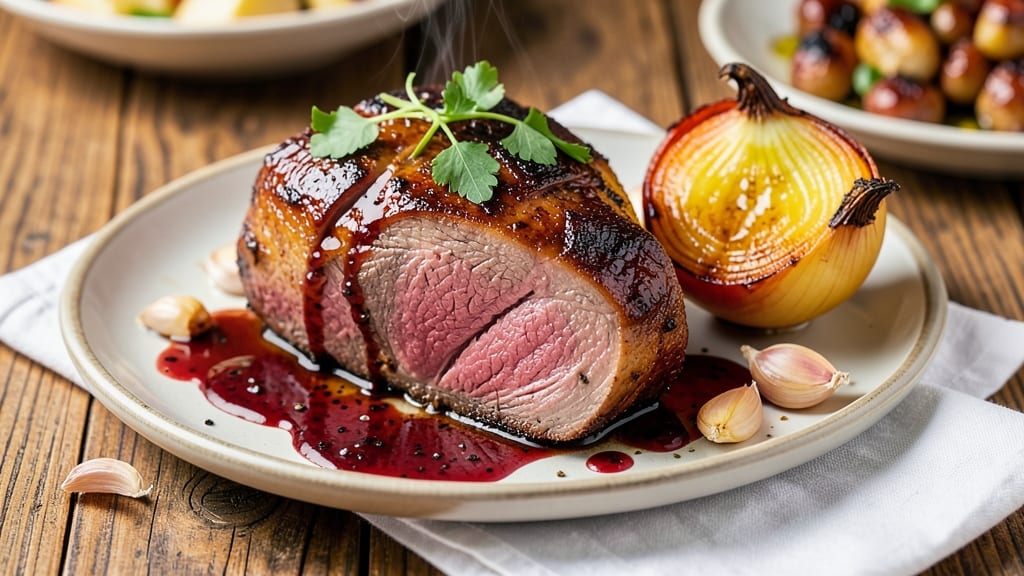
This awesome roast beef recipe delivers melt-in-your-mouth perfection with a secret weapon: an au jus bath that keeps every slice impossibly juicy.
After years of perfecting the technique—from dry-brining to precise oven temperatures—I’ve cracked the code for restaurant-quality results at home, where the crust stays crisp and the interior remains tender. The key lies in patience and technique, not shortcuts.
What sets this roast apart is the au jus bath, a rich, flavorful sauce that transforms ordinary beef into something extraordinary. We’ll start with a dry brine to enhance tenderness, then sear the beef for a deep, caramelized crust before finishing in the oven.
The au jus, made from the pan drippings, reduces into a velvety sauce that elevates every bite—no store-bought substitutes here. This method ensures your roast is juicy, flavorful, and worth the effort.
The result? A perfectly cooked roast with a golden-brown exterior and a pink, tender center, served with a glossy au jus that ties everything together. Whether you’re hosting a holiday feast or treating yourself to a special dinner, this recipe delivers professional-quality results with simple, foolproof steps.
The au jus bath isn’t just a side—it’s the star that makes every slice unforgettable.
Pair it with classic sides like roasted potatoes or a fresh salad, and you’ve got a meal that feels like a celebration. Ready to master the art of roast beef? Let’s get started with the ingredients and techniques that make this recipe truly awesome.
Ingredients for awesome roast beef
Sixteen ingredients transform ordinary beef into a restaurant-worthy masterpiece with crisp crust and velvety au jus.
| Ingredient | Amount | Notes |
|---|---|---|
| Beef Top Round Roast 🥩 | 3 lb | Center-cut, 1.5-inch diameter |
| Kosher Salt 🧂 | 1 ½ tbsp | Diamond Crystal preferred |
| Freshly Ground Black Pepper 🌶️ | 1 tbsp | Coarse grind for texture |
| Extra-Virgin Olive Oil 🫒 | ½ cup | For searing and basting |
| Yellow Onion 🧅 | 1 whole | Yellow or red, diced |
| Garlic Cloves 🧄 | 8 cloves | Peeled, smashed for flavor |
| Fresh Thyme Sprigs 🌿 | 4 whole | Stems removed, leaves only |
| Fresh Rosemary Sprigs 🌿 | 2 whole | Stems removed, needles only |
| Beef Broth 💧 | 2 cups | Homemade or high-quality store-bought |
| Red Wine 🍷 | 1 cup | Dry Cabernet Sauvignon preferred |
| Tomato Paste 🍅 | 2 tbsp | San Marzano preferred |
| Worcestershire Sauce 🧂 | 1 tbsp | Vegetarian version if needed |
| Balsamic Vinegar 🍷 | 1 tbsp | Aged for depth of flavor |
| Cold Water 💧 | ½ cup | For au jus reduction |
The beef top round roast is non-negotiable for this recipe—its lean yet tender profile ensures a perfect balance of texture. Look for a center-cut roast with good marbling at your local butcher shop or high-end grocery like Whole Foods or Eataly. Avoid pre-cut roasts with excessive fat trimming, as they lack the natural juices that create the au jus. If you're buying a whole round, ask for it to be cut into a 1.5-inch diameter roast for even cooking. The kosher salt should be Diamond Crystal for precise measurements—it's less dense than table salt, so the recipe's balance is maintained.
No red wine? Substitute with an equal amount of additional beef broth, though the depth of flavor will be slightly muted. Fresh herbs are ideal, but dried thyme and rosemary at half the amount work in a pinch. The tomato paste can be swapped for 1 tablespoon of concentrated grape juice for a vegetarian-friendly alternative, though the color will differ. For Worcestershire sauce, Lea & Perrins is the gold standard, but any high-quality brand will suffice. The balsamic vinegar adds complexity—aged balsamic glaze can be used at half the quantity for a sweeter, less acidic profile. Prefer a different cut? Top sirloin or ribeye will work, but cooking times and temperatures will vary.
The roast should rest for at least 20 minutes before slicing to retain juices. Store leftovers in an airtight container with reserved au jus for up to 5 days in the refrigerator, or freeze for 3 months for future meals. The au jus bath can be reheated separately and will keep for 4 days in the fridge. For a special touch, serve the roast at room temperature with a drizzle of au jus—this enhances the flavors and makes every slice feel like a celebration. The herbs and aromatics can be prepped a day ahead and stored in the fridge for convenience.
Why You'll Love This Recipe
- Foolproof Seasoning: The beef only needs salt, pepper, and oil—no fancy rubs or marinades. Honestly, that crusty black pepper and coarse salt? It’s all you need for flavor that sticks.
- Crispy Outside, Tender Inside: Top round roast might sound tough, but slow-roasting with onion slices and olive oil turns it into something dangerously tender. That crispy edge with the melt-in-your-mouth center? Chef’s kiss.
- Leftovers That Don’t Suck: This roast actually improves the next day—sliced thin for sandwiches, diced into salads, or tossed into pasta. (Yes, even on a Tuesday night.)
- Budget-Friendly Crowd-Pleaser: Top round is affordable, and one roast feeds six without breaking the bank. My daughter picks out the best slices, but still asks for seconds—proof it works.
Step-by-step instructions for perfect au jus roast beef
This method delivers melt-in-your-mouth beef with rich au jus that transforms every slice.
Prepare the Beef with Precision Seasoning
Remove the beef top round roast from packaging and pat it completely dry with paper towels. This step is critical—moisture prevents proper browning. Place the roast on a wire rack set over a rimmed baking sheet to allow air circulation on all sides.
In a small bowl, combine the 1.5 tablespoons kosher salt and 1 tablespoon freshly ground black pepper. Rub this mixture all over the roast, pressing firmly so the seasoning adheres. Pay special attention to the edges and any flat surfaces. Let the seasoned roast sit at room temperature for 30 minutes before cooking—this ensures even cooking throughout.
Sear the Roast for Deep Flavor
Preheat your oven to 325°F. Heat the 0.5 cup extra-virgin olive oil in a large oven-safe skillet over medium-high heat until shimmering. Place the seasoned roast in the skillet and sear on all sides for 3-4 minutes per side until developing a deep golden-brown crust. This step creates the Maillard reaction that forms complex flavors.
Transfer the skillet with the roast to the preheated oven. Roast for 2 hours, or until the internal temperature reaches 130°F. I use a meat thermometer inserted into the thickest part of the roast to monitor progress. The roast will continue cooking as it rests, so don't overcook it at this stage.
Build the Au Jus Foundation
While the roast cooks, prepare the au jus components. In the same skillet (with any rendered beef fat), add the diced 1 whole yellow onion and cook over medium heat for 5 minutes until softened. Add the 8 smashed garlic cloves, 4 thyme sprigs, and 2 rosemary sprigs, cooking for another 2 minutes until fragrant.
Stir in the 2 tablespoons tomato paste, 1 tablespoon Worcestershire sauce, and 1 tablespoon balsamic vinegar. Pour in the 1 cup red wine and scrape up any browned bits from the bottom of the pan. Let this mixture simmer for 3 minutes to develop the base flavors.
Complete the Au Jus Bath
Remove the roast from the oven and let it rest on a cutting board for 15 minutes. Pour the 2 cups beef broth into the skillet with the wine mixture and bring to a gentle simmer. Reduce heat to low and let it cook uncovered for 10 minutes until slightly reduced.
Carefully transfer the roast back to the skillet, nestling it into the au jus. Cover and return to the oven for 30 minutes. This final step infuses the roast with incredible flavor while keeping it moist. The au jus should be rich and glossy with a deep red color.
Rest and Serve with Perfect Au Jus
Remove the roast from the oven and let it rest for an additional 15 minutes before slicing. This resting period is crucial—it allows the juices to redistribute throughout the meat for maximum tenderness. Use a sharp carving knife to slice against the grain into ½-inch thick slices.
Ladle the au jus over the sliced beef and serve immediately. Each slice should be tender with a perfect pink center and surrounded by the rich, flavorful au jus. The combination of the perfectly cooked roast and homemade au jus makes this a showstopping centerpiece for any meal.
Pro Tips For Making Awesome Roast Beef
- USE A MEAT THERMOMETER: Top round roasts can fool you—juicy on the outside, dry inside. I learned this the hard way after slicing a perfect-looking roast that tasted like shoe leather. Aim for 130°F internal temp (it’ll rise to 135°F while resting), and pull it out 5-10 minutes early—it keeps cooking off the heat.
- SALT THE NIGHT BEFORE: Top round is lean and absorbs flavor like a sponge. Sprinkle 1 teaspoon kosher salt per pound on the roast and let it sit uncovered in the fridge for 12-24 hours. Sounds weird, but it works: the salt breaks down muscle fibers, keeping the meat tender and the crust crisp. (Yes, even if you’re impatient like me.)
- SEAR IN BATCHES: You can’t rush a good sear—crowding the pan steams the beef instead of browning it. Sear the roast first, then remove it and add 2 tablespoons olive oil to the pan. Slice the onion into ¼-inch rings and cook them in batches until deeply golden. That caramelized flavor is what makes this dish sing.
- REST UNDER FOIL: Skipping the rest is the fastest way to ruin a great roast. After pulling it from the oven, tent loosely with foil and let it sit for 15-20 minutes. This keeps the juices inside where they belong—no sad, dry slices. (Your future self will thank you, even if you’re tempted to cut into it early.)
Storing and reheating this awesome roast beef
Refrigerator Storage
Let your roast beef cool to room temperature (about 1 hour) before storing. Transfer slices to an airtight container with reserved au jus—this keeps them moist and flavorful. Store in the fridge for up to 5 days, but I recommend reheating within 3 days for peak texture.
The au jus can be stored separately in a sealed jar for up to 4 days.
When reheating, place slices in a skillet with a splash of au jus and warm over medium-low heat for 5-7 minutes. Avoid microwaving—it dries out the beef. The au jus reheats beautifully on its own for dipping or drizzling. 💫
Freezer Storage
For longer storage, freeze the roast beef in a single layer on a tray before transferring to a freezer bag (remove excess air). Label with the date—it stays fresh for 3 months.
Thaw overnight in the fridge before reheating. The au jus freezes well too; store it separately in an ice cube tray for easy portioning later.
To reheat frozen beef, place it in a pot with fresh au jus (or water) and simmer for 10-12 minutes until internal temp reaches 165°F. Never refreeze thawed beef—always cook it first. 🧊
Reheating Leftovers
My go-to method is the stovetop: heat a skillet over medium heat, add 1 tablespoon olive oil, and warm the beef slices for 3-4 minutes per side.
Pour in 2 tablespoons au jus to deglaze the pan—this adds extra flavor. For extra tenderness, cover the skillet for the last 2 minutes.
If using the microwave, cover slices with a damp paper towel and heat in 30-second bursts on 50% power. Add a splash of au jus midway to prevent drying. The texture won’t be as crisp, but it’s a quick fix for busy days. 🔥
Au Jus Refresh
Stale au jus? No problem! Reheat it in a saucepan over medium heat until bubbling, then reduce by half for a thicker consistency. Add 1 tablespoon beef broth if it’s too thick, or a pinch of salt if it’s bland.
A splash of red wine or balsamic vinegar brightens up flavors instantly.
For a restaurant-style touch, strain the reheated au jus through a fine-mesh sieve to remove any impurities. Store it in a clean jar for up to 4 days. This trick makes reheated beef taste almost as good as fresh! ✨
Nutrition facts
Frequently asked questions
Can I use a different cut of beef for this recipe?
While this recipe is designed for top round roast, you can adapt it for top sirloin or ribeye. For leaner cuts like sirloin, reduce oven time by 10-15 minutes to avoid overcooking. Fattier cuts like ribeye will need slightly longer searing and may benefit from a lower final temperature (125°F internal) for medium-rare results. Always use a meat thermometer!
What if I don't have red wine for the au jus?
No problem! Replace the 1 cup red wine with 1 cup beef broth plus 1 tablespoon balsamic vinegar for depth. For extra richness, add ½ teaspoon beef bouillon powder to intensify the flavor. The au jus will be slightly less complex but still delicious.
How do I prevent the roast from drying out?
The key is patience! Don't skip the resting periods—let the roast rest 15 minutes after searing and again 15 minutes after oven cooking. Also, avoid overcooking: remove it when the internal temp reaches 130°F (it'll rise to 140°F while resting). Using a wire rack elevates the roast for even air circulation, preventing steam buildup.
Can I make this recipe in a slow cooker?
Not ideal for this method, but you can adapt it! Sear the roast first, then transfer it to a slow cooker with 2 cups beef broth, 1 cup red wine, and aromatics. Cook on low for 6-8 hours until tender. The au jus will be thinner, so reduce it separately on the stovetop afterward. The texture will be more tender than crisp, but still flavorful.
What's the best way to carve the roast?
Use a sharp carving knife and cut against the grain (look for the muscle fibers) into ½-inch thick slices. Start at one end and work your way across—this prevents the roast from shifting. For even slices, use a long serrated knife to cut through the crust first, then switch to your carving knife. Always serve immediately after slicing to maintain juiciness.