
Soups & Stews
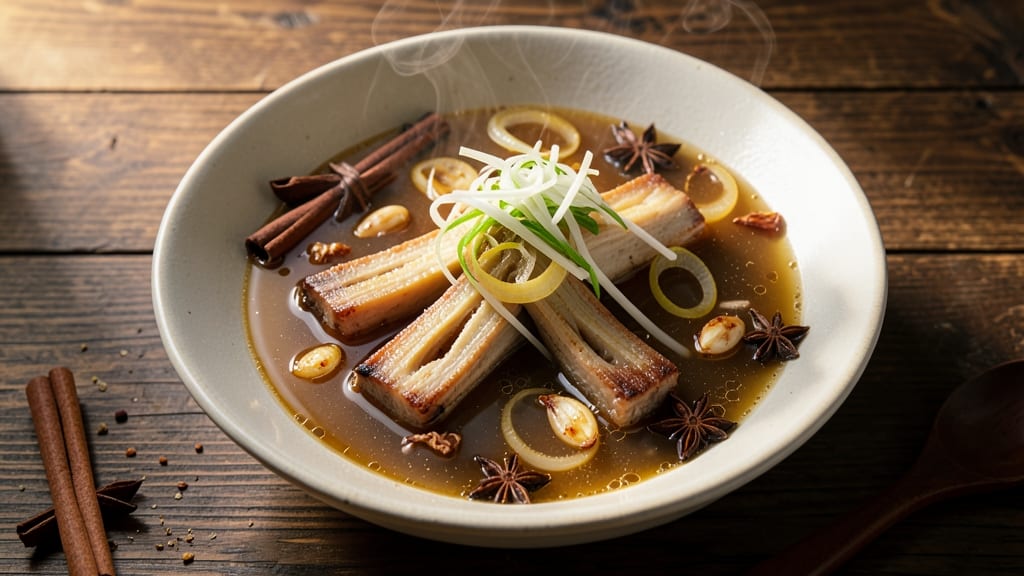
This Asian beef bone soup recipe delivers a velvety, marrow-rich broth that transforms simple ingredients into a deeply comforting meal. The secret lies in slow-simmered beef bones and aromatic spices that extract collagen for natural thickness, creating a broth so rich it tastes like a hug in a bowl.
I’ve perfected this version after years of testing—balancing traditional techniques with modern shortcuts for home cooks.
The process begins with beef marrow bones, which release gelatin and fat for unmatched depth, while ginger, garlic, and star anise build layers of flavor.
Unlike quick broths, this one requires patience—6 to 8 hours of simmering—but the result is worth every minute: a silky, golden liquid that clings to noodles or rice like liquid silk.
The broth’s richness pairs perfectly with chewy rice cakes, fresh herbs, or a sprinkle of sesame seeds for texture.
What sets this apart is the marrow-rich depth—each spoonful delivers a creamy, almost buttery quality from the bones, while the spices add warmth without overpowering. Whether you’re serving it as a light lunch or a hearty dinner, this soup adapts effortlessly.
The key is controlling the simmer: too fast, and the broth stays thin; too slow, and the flavors meld into perfection.
For those short on time, a pressure cooker cuts prep to 2 hours without sacrificing depth, though traditional stovetop simmering yields the most complex flavor. Garnish with scallions, cilantro, or a drizzle of chili oil for brightness. This isn’t just soup—it’s a restaurant-quality experience you can make at home.
Ingredients for asian beef bone soup
Marrow bones and aromatic spices create a restaurant-quality broth without exotic ingredients.
| Ingredient | Amount | Notes |
|---|---|---|
| Beef Marrow Bones 🦴 | 2 lb | Knocked clean, split lengthwise |
| Yellow Onion 🧅 | 1 whole | Sliced into wedges, skin on |
| Fresh Ginger Root 🌿 | 2 inch | Peeled, sliced into thin coins |
| Garlic Cloves 🧄 | 8 cloves | Smashed, skin left on |
| Star Anise Pods 🌟 | 4 whole | Lightly crushed |
| Cinnamon Sticks 🌿 | 2 whole | 3-inch lengths |
| Dried Bay Leaves 🍃 | 2 whole | Fresh if available |
| Salt 🧂 | 1 ½ tbsp | Diamond Crystal preferred |
| Black Peppercorns 🌶️ | 1 tsp | Crushed lightly |
| Rice Vinegar 🍶 | 2 tbsp | For brightness |
| Sesame Oil 🫒 | 1 tbsp | Toasted, for aroma |
| Fresh Cilantro 🌿 | ¼ cup | Chopped, for garnish |
| Green Onions 🧅 | 4 whole | Sliced, for garnish |
| Rice Noodles 🍜 | 8 oz | Flat or round, soaked |
The marrow bones are non-negotiable here—Costco or butcher shops carry the best cuts, often labeled as knuckle or shin bones. Look for bones with visible marrow channels; these release the most gelatin. If you can't find marrow bones, beef short ribs work in a pinch, though they won't be as rich. Split the bones lengthwise before simmering to expose the marrow. For spices, Penzeys or bulk bins at Whole Foods offer the freshest star anise and cinnamon—key for that warm, earthy depth. The ginger should be firm and aromatic; Asian markets often carry the freshest roots.
No star anise? 1 tsp ground cinnamon plus 1/2 tsp ground cardamom mimics its complexity. Running short on cinnamon sticks? 1/4 tsp ground cinnamon works, but the sticks infuse better. The rice vinegar adds brightness—Kikkoman is reliable, but any mild vinegar does. For sesame oil, toasted varieties from Trader Joe's have the best aroma. The cilantro can be subbed with parsley if you're not a fan, though it loses some freshness. Fresh bay leaves are ideal, but dried work fine at double the quantity. And if you're using a pressure cooker, reduce simmer time to 90 minutes—still rich, just faster.
This broth tastes even better the next day as flavors meld. Store in glass jars in the fridge for 5 days or freeze for 3 months. For freezer storage, leave room at the top—liquids expand. The noodles? Soak them in warm broth just before serving to keep them chewy. I always make a double batch—one for the fridge, one for freezing. Garnish with cilantro and green onions right before serving; their freshness cuts through the richness. The sesame oil should be added last—just a few drops—to keep its aroma vibrant.
Why You'll Love This Recipe
- Minimal Chopping Required: I swear by this—just slice the onion and ginger into thick chunks, crush the garlic, and toss in the star anise whole. The bones do all the work while you sip tea. (Yes, even on a Tuesday night.)
- Rich Without the Effort: That marrow from the bones? It melts into the broth like liquid gold, while the star anise and ginger add warmth without overpowering. Honestly, it’s the kind of flavor that makes you forget how little work went into it.
- Crowd-Pleaser Leftovers: This soup only gets better the next day—thicker, deeper, and perfect for packing lunches or feeding unexpected guests. Between us, I’ve reheated this for breakfast and it still tasted like a hug.
- Budget Bone Magic: Beef marrow bones are cheaper than you think, and one pot feeds four (or five if you’re me). The star anise and ginger stretch the flavor, so you’re not sacrificing taste for savings—just pure, satisfying broth.
Step-by-step instructions for Asian beef bone soup
Here's how to build a rich, marrow-infused broth that balances deep umami with bright, aromatic notes.
Prepare the Marrow Bones for Maximum Flavor
Start by knocking the 2 lb beef marrow bones clean with a mallet or rolling pin, removing any excess meat or gristle. Split each bone lengthwise to expose the marrow cavity—this is where the real magic happens. The marrow will slowly melt into the broth, creating a velvety texture and deep, savory richness.
Rinse the bones thoroughly under cold water to remove any blood or impurities, then give them a final rinse with ice water. This step ensures your broth stays crystal clear rather than cloudy. Pat them completely dry with paper towels before proceeding. I like to lay them out on a baking sheet and let them air-dry for 10 minutes—this helps them develop a better crust when searing.
Build the Aromatic Base
In a large Dutch oven or heavy pot, combine the prepared marrow bones, 1 whole yellow onion (sliced into wedges with skin on), 2-inch fresh ginger root (peeled and sliced into thin coins), 8 smashed garlic cloves (skin left on), 4 lightly crushed star anise pods, 2 whole cinnamon sticks (3-inch lengths), 2 whole dried bay leaves, 1.5 tbsp salt, and 1 tsp crushed black peppercorns. The spices should be in direct contact with the bones to infuse their flavors.
Place the pot over medium-high heat and add 1 tablespoon sesame oil. Let the bones sear for 8-10 minutes, turning occasionally, until they develop a deep golden-brown crust. This step is crucial—it creates the Maillard reaction that forms complex flavors. Don't rush it; you'll know it's ready when the bones release easily from the pot and the oil shimmers with golden flecks.
Simmer the Broth Low and Slow
Once the bones are seared, carefully add 12 cups cold water (enough to cover the bones by about 2 inches). Bring to a gentle boil, then immediately reduce heat to low—you're aiming for a simmer where you see just a few small bubbles breaking the surface every few seconds. The key here is patience; a rolling boil will cloud the broth and make it taste bitter.
Cover the pot and let it simmer for 3 hours, skimming off any foam or impurities that rise to the surface with a ladle. This skimming process ensures your broth stays crystal clear. After 3 hours, check the bones—they should be fork-tender, and the broth should have developed a deep amber color with a rich, meaty aroma. If the broth hasn't reduced enough, continue simmering uncovered for another 30 minutes to concentrate the flavors.
Finish with Bright, Herbal Notes
Remove the bones from the broth and set them aside (they're perfect for serving on the side or using in sandwiches). Strain the broth through a fine-mesh sieve into a clean pot, pressing gently on the solids to extract every last drop of flavor. Discard the solids in the sieve.
Return the strained broth to the pot and stir in 2 tbsp rice vinegar and 1 tbsp toasted sesame oil. The vinegar adds a bright, tangy note that cuts through the richness of the marrow, while the sesame oil brings a nutty aroma. Taste and adjust seasoning with additional salt if needed—this broth should be deeply savory but balanced.
Serve with Fresh Herbs and Noodles
To serve, portion the 8 oz rice noodles into bowls and ladle the hot broth over them. Garnish each serving with 0.25 cup chopped fresh cilantro and 4 sliced green onions for a pop of color and freshness. The noodles will absorb the silky broth beautifully, creating a comforting, restaurant-quality dish.
For an extra touch, place a few of the reserved marrow bones on the side of each bowl. As your guests eat, they can crack open the bones to scoop out the creamy marrow with a spoon—a true taste of indulgence. This soup is best enjoyed fresh, so assemble it just before serving to keep the noodles from becoming mushy.
Pro Tips For Making Asian Beef Bone Soup
- BLANCH BONES FIRST: I learned this the hard way—skipping the quick 10-minute boil in water with a splash of vinegar leaves your bones dull and slow to render. The acid helps loosen dirt, while the hot water jumpstarts collagen breakdown. Rinse them thoroughly after—no one wants gritty soup.
- CHAR THE AROMS HARD: After burning three batches of garlic, I finally figured out: low and slow won’t cut it. Crank the heat to medium-high and sweat onions until deep gold, then fry garlic and ginger until they’re almost crispy edges—just before they burn. Star anise? Toast it whole in the oil first for 30 seconds so it releases aroma before adding liquid.
- SKIP THE CROWDED POT: Your bones need room to breathe. Packing them in too tight means uneven cooking and a broth that turns cloudy from trapped starch. Arrange them in a single layer, then add water just to cover—you’ll top it off later. (Yes, even if you’re impatient like me.)
- SAVE TIME WITH PARBOILED GINGER: My grandmother swore by this, and she was right: Peel and lightly parboil ginger slices for 2 minutes before adding to the pot. They soften faster, release flavor more evenly, and won’t cling to the bones like uncooked chunks. (Pro move: Smash them slightly with the side of your knife first.)
Serving suggestions for this recipe
Noodle Pairings
For the ultimate texture contrast, serve this soup with rice noodles—I prefer 8 oz of flat or round rice noodles like those from H Mart. Soak them in warm broth for 5-7 minutes before serving to keep them chewy.
If you want extra heartiness, try chewy udon noodles (soak for 8-10 minutes) or egg noodles for a richer bite. For a lighter option, glass noodles (like cellophane noodles) add a delicate, almost jelly-like texture that soaks up the broth beautifully. 🍜
Crunchy Garnishes
Add a satisfying crunch with toasted sesame seeds or crispy shallots—just fry 2 tbsp sesame seeds in 1 tbsp neutral oil for 2 minutes until golden. For extra flair, top with crispy fried garlic (sauté 4 minced garlic cloves in oil until golden).
These toppings not only add texture but also balance the soup’s richness. I love sprinkling 1 tbsp fried garlic and 1 tsp sesame seeds right before serving for that restaurant-quality finish. 🌟
Side Dish Pairings
Serve alongside steamed jasmine rice or sticky rice to soak up every last drop of that silky broth. For a vegetarian option, a quick-pickled cucumber salad (toss 1 cucumber with 2 tbsp rice vinegar, 1 tsp sugar, and ½ tsp salt) adds refreshing acidity.
If you want protein, grilled pork belly slices or crispy tofu make excellent additions. The key is to keep sides light so the soup remains the star. 🥗
Bread and Dipping
No soup is complete without bread! Offer crusty baguette slices or Asian-style mantou (steamed buns) for dipping. For a modern twist, serve garlic butter bread (mix 2 tbsp butter with 1 minced garlic clove and ½ tsp parsley) on the side.
The bread soaks up the marrow-rich broth like a dream, and the garlic butter adds another layer of flavor. I always make extra—it disappears fast! 🥖
Fermented Add-Ins
Boost umami with 1 tbsp doenjang (Korean fermented soybean paste) or 1 tsp miso paste stirred into the broth just before serving. For heat lovers, add 1 tsp gochujang (Korean chili paste) and a drizzle of chili oil.
These fermented ingredients deepen the soup’s complexity and add a tangy kick. If you’re feeling adventurous, try 1 tsp fish sauce for a salty, savory punch. 🌶️
Presentation Tips
Serve in deep, wide bowls to highlight the soup’s rich color and depth. Garnish with cilantro, green onions, and a drizzle of sesame oil for a pop of color.
For an elegant touch, place a marrow bone on the side of each bowl—let guests crack it open and scoop out the creamy marrow with a spoon. The presentation makes it feel like a special occasion, even if it’s a weeknight dinner. ✨
Nutrition facts
Frequently asked questions
Why do marrow bones make this soup so much richer than regular beef broth?
The marrow inside these bones melts during simmering, releasing natural fats and collagen that create a velvety texture and deep umami flavor. Unlike regular beef broth, which relies on meat scraps, marrow bones infuse the liquid with a creamy, almost buttery richness that's hard to replicate. Think of it as nature's version of a velouté sauce—no heavy cream needed!
Can I substitute beef marrow bones with chicken bones or pork bones?
While you can use chicken or pork bones, they won't deliver the same depth of flavor. Chicken bones create a lighter broth, and pork bones can make the soup too fatty. For best results, stick with beef marrow bones—they're worth seeking out at specialty butchers or Asian markets. If you absolutely must substitute, beef short ribs are your next best option for richness.
How do I know when the broth is ready and not just simmering too long?
Your broth is perfect when it reaches a deep amber color and has a rich, meaty aroma after 6-8 hours of simmering. The bones should be fork-tender, and you'll see a natural reduction in volume. Overcooking can make it bitter, but don't worry—this broth actually tastes better the next day as flavors meld. The key is maintaining a gentle simmer, not a rolling boil.
What if I don't have star anise or cinnamon sticks?
No problem! For star anise, use 1 tsp ground cinnamon plus ½ tsp ground cardamom for similar warmth. For cinnamon sticks, ¼ tsp ground cinnamon works in a pinch, though whole spices infuse better. The broth will still taste amazing—these spices just add that special depth. Don't skip them entirely, though, as they're crucial for that authentic Asian flavor profile.
Can I make this soup in a slow cooker or Instant Pot?
For a slow cooker, follow the same steps but simmer on low for 8-10 hours. For an Instant Pot, sear the bones first, then cook on high pressure for 90 minutes (natural release). The pressure cooker version will be ready in about 2 hours total, though traditional stovetop simmering yields the most complex flavors. Both methods work beautifully—just adjust the time accordingly.