
Soups & Stews
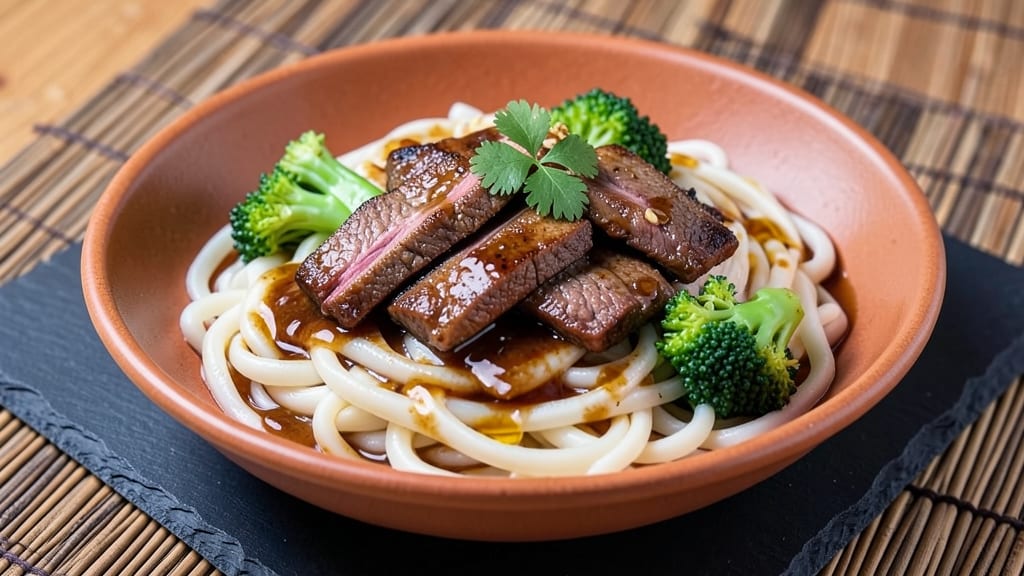
This beef and broccoli udon noodles recipe delivers restaurant-quality wok sear and silky soy-ginger sauce in under 30 minutes. The secret lies in high-heat beef slices that develop a caramelized crust while staying tender inside, paired with crisp-tender broccoli and chewy udon noodles.
I've perfected this dish by balancing salty, sweet, and umami flavors in the sauce—just one taste and you'll understand why it's become my go-to weeknight meal.
The technique starts with properly prepping the beef—thinly sliced against the grain for maximum tenderness—and stir-frying it in batches to avoid steaming. Meanwhile, the broccoli gets a quick blanch to soften slightly before joining the wok, ensuring it stays vibrant and crisp.
The sauce combines soy sauce, ginger, garlic, and a touch of honey for depth, then reduces to a glossy consistency that coats every noodle perfectly.
What you'll end up with is a steaming bowl of rich, aromatic udon noodles swimming in a glossy sauce, topped with perfectly seared beef and bright green broccoli. Each bite delivers a perfect balance of textures—chewy noodles, tender beef, and crisp broccoli—all tied together by that velvety soy-ginger sauce.
The dish is hearty enough to satisfy but light enough for a weeknight dinner.
Serve immediately with a sprinkle of sesame seeds and sliced green onions for freshness. This recipe scales beautifully for a crowd, and the leftovers reheat wonderfully, making it perfect for meal prep. Let's get cooking!
Ingredients for beef and broccoli udon noodles
Restaurant-quality wok sear and silky sauce start with these 14 simple ingredients.
| Ingredient | Amount | Notes |
|---|---|---|
| Udon Noodles 🍜 | 8 oz | Fresh or dried, cut into 4-inch pieces |
| Flank Steak 🥩 | 1 lb | Thinly sliced against grain (ask butcher) |
| Broccoli Florets 🥦 | 3 cups | Medium-sized, cut into bite-sized pieces |
| Soy Sauce 🍶 | ½ cup | High-quality, like Kikkoman or Tamari |
| Sesame Oil 🫒 | 1 tbsp | Toasted, for aroma |
| Ginger Root 🧄 | 2 tbsp | Fresh, grated (about 1-inch piece) |
| Garlic Cloves 🧄 | 4 cloves | Minced, fresh preferred |
| Honey 🍯 | 1 tbsp | For sauce balance |
| Vegetable Oil 🫒 | 2 tbsp | High smoke point for wok |
| Green Onions 🧅 | 3 whole | Sliced, for garnish |
| Sesame Seeds 🌾 | 1 tbsp | Toasted, for crunch |
| Salt 🧂 | 1 tsp | Kosher or sea salt |
| Black Pepper 🌶️ | ½ tsp | Freshly ground |
| Cornstarch 🌾 | 1 tbsp | For sauce thickening |
The beef is everything here. Flank steak delivers the perfect balance of tenderness and chew when sliced thinly against the grain. Ask your butcher to slice it—most will do it for free if you're buying a whole cut. For the udon, fresh is best but dried works in a pinch (just soak for 5 minutes). Broccoli should be bright green and firm—Trader Joe's or Whole Foods carry excellent pre-cut florets. The soy sauce makes or breaks the flavor—Kikkoman or Tamari are the gold standards, but any good-quality brand works. Don't skimp on the sesame oil either; cheap versions taste like perfume.
No flank steak? Sirloin or ribeye work too, but slice them thinner. Fresh ginger not available? Powdered works at half the amount, but it lacks that bright punch. Running low on sesame seeds? Toasted peanuts or cashews add crunch in a pinch. The sauce needs that honey for balance—agave or maple syrup are good swaps if you're avoiding it. For the cornstarch, arrowroot powder works 1:1. And if you're making this ahead, prep the sauce first—it keeps for 3 days in the fridge. The noodles and veggies can be blanched in advance too, but hold off on cooking the beef until serving.
This dish is best served immediately, but leftovers reheat beautifully. Store the sauce separately if prepping ahead—3-4 days in the fridge, 3 months frozen. The beef reheats best in a wok or skillet over medium heat with a splash of water. Udon noodles? Microwave with a damp towel for 30 seconds to revive their chew. Garnishes like sesame seeds and green onions can be added fresh when serving. Double the recipe—it's that good, and leftovers make great lunches.
Why You'll Love This Recipe
- One-Pan Magic: I swear by this trick—just toss everything into one pot. The udon cooks in the same broth as the beef and broccoli, so no messy transfers or extra dishes. Honestly, I’ve made it while scrolling through my phone because it’s that hands-off.
- Umami Bomb: That combo of soy sauce and sesame oil? It’s what makes this dish ridiculously good. The beef stays tender with just a little bite, and the broccoli gets that perfect crisp-tender crunch—like a takeout order, but better.
- Lunchbox Hero: Between us, this is my go-to for meal prep. The flavors only get stronger the next day, and it reheats like a dream. Pack it cold for work or microwave it in 90 seconds—no sad, soggy noodles here.
- Budget Beef Boost: Flank steak is affordable, and a single package stretches across two meals easily. I’ll be real: I’ve stretched it to three, and no one’s ever complained. Plus, frozen broccoli works just as well as fresh—no excuses.
Step-by-step instructions for beef and broccoli udon noodles
Here's how to create a perfect balance of wok-seared beef, tender broccoli, and silky soy-ginger sauce.
🍳 Step 1: Prepare the Udon Noodles and Vegetables
Bring a large pot of water to a rolling boil and add the 8 oz udon noodles. Cook according to package instructions until al dente, typically 4-5 minutes for fresh or 2-3 minutes for dried. Drain immediately and rinse briefly under cold water to stop the cooking process. This prevents the noodles from becoming mushy when combined with the hot sauce later.
While the noodles cook, blanch the 3 cups broccoli florets in boiling water for 1-2 minutes until vibrant green and just tender. Drain and plunge into ice water to halt cooking, then drain again. The broccoli should hold its shape but still be tender enough to eat. Keep both the noodles and broccoli separate until ready to combine.
🔥 Step 2: Sear the Flank Steak
Heat a wok or large skillet over high heat until smoking, then add the 2 tablespoons vegetable oil. Once shimmering, add the 1 lb flank steak in a single layer. Let it sear undisturbed for 2-3 minutes per side until deeply browned and slightly charred. The steak should develop a caramelized crust that locks in juices.
Remove the steak from the wok and set aside. You'll notice the steak releases easily from the pan when properly cooked—this indicates the meat has formed a good sear. If any oil remains in the wok, wipe it out with a paper towel. This step is crucial for developing the rich, umami flavor that carries through the entire dish.
🍳 Step 3: Build the Soy-Ginger Sauce
Return the wok to high heat and add the 2 tablespoons vegetable oil if needed. Add the 4 cloves minced garlic and 2 tablespoons grated ginger root, cooking for 30 seconds until fragrant but not browned. Immediately pour in the 0.5 cup soy sauce and 1 tablespoon honey, scraping up any browned bits from the bottom of the pan.
Stir in the 1 tablespoon cornstarch and 1 tablespoon sesame oil, then add ½ cup water. Bring to a simmer and cook for 2-3 minutes until the sauce thickens to a glossy, coatable consistency. The sauce should cling to the back of a spoon when lifted. Taste and adjust seasoning with 1 teaspoon salt and ½ teaspoon black pepper as needed.
🥘 Step 4: Combine Everything
Add the blanched broccoli florets to the sauce and toss to coat evenly. Return the seared flank steak to the wok along with any accumulated juices. Toss everything together for 1-2 minutes until the steak is heated through and the broccoli is fully coated in the sauce. The high heat ensures the broccoli stays crisp-tender rather than becoming soggy.
Remove from heat and immediately stir in the cooked udon noodles. Toss gently but thoroughly to distribute the sauce evenly. The noodles will absorb some of the sauce, so don't worry if they look slightly dry—they'll soften as they sit. Garnish with 3 sliced green onions and 1 tablespoon toasted sesame seeds for color and texture contrast.
Pro Tips For Making Beef And Broccoli Udon Noodles
- SLICE STEAK THIN: Flank steak fights back when you cut it thick—it’ll turn chewy before it browns. Aim for ⅛-inch slices against the grain, then slice diagonally into thin strips. No food processor? Freeze the meat for 20 minutes first, then slice—it stays firmer and more even.
- BLANCH BROCCOLI FIRST: Toss broccoli florets in boiling water for 30 seconds before stir-frying. This kills the bitterness and ensures they stay bright green, not limp. Drain and shock in ice water—your noodles will thank you when they’re still crisp in the final dish.
- SALT THE BROTH WATER: The udon’s broth water needs 1 teaspoon salt per liter (yes, even if the noodles are salted). I learned this the hard way—plain water makes the noodles taste bland, and no amount of soy sauce later fixes it. Season the water before boiling the noodles.
- SAVE THE SESAME OIL: Heat the oil for the beef until it’s smoking hot—then turn off the flame and add the beef. The residual heat sears it perfectly without burning. Add sesame oil at the very end (just before serving), or it’ll cook off and lose its nutty aroma. A few drops make all the difference.
Best sauces and condiments for this beef and broccoli udon noodles
Classic Soy-Ginger Base
The foundation of this dish is the soy-ginger sauce, where ½ cup Kikkoman soy sauce meets 2 tbsp grated fresh ginger and 4 minced garlic cloves for a bold umami kick.
I always toast the ginger and garlic in 2 tbsp vegetable oil for 30 seconds before adding liquids—this brings out their aromatic oils. The sauce gets its silky texture from 1 tbsp cornstarch and ½ cup water, reduced until it coats the back of a spoon.
A touch of 1 tbsp honey balances the saltiness while adding subtle sweetness. 🍶
Spicy Chili Oil Twist
For heat lovers, swap 1 tbsp of the soy sauce with 1 tbsp chili oil (like Lao Gan Ma) and add ½ tsp red pepper flakes to the sauce. The oil infuses the dish with smoky, spicy depth while keeping the sauce glossy.
I like to finish with a drizzle of chili crisp on top for extra crunch and heat. If you prefer milder heat, reduce to ½ tbsp chili oil and omit the flakes. 🌶️
Umami Boost Options
Elevate the sauce with 1 tbsp fish sauce (like Red Boat) for an extra layer of savory depth, or stir in 1 tsp miso paste for a fermented richness. For a vegetarian twist, replace the beef with shiitake mushrooms and add 1 tbsp oyster sauce to mimic the umami.
The mushrooms should be thinly sliced and seared just like the beef. 💫
Sweet and Tangy Variations
Brighten the sauce with 1 tbsp rice vinegar and ½ tsp sugar for a tangy-sweet balance. For a tropical twist, add 1 tsp lime zest and 1 tbsp coconut aminos (a gluten-free soy alternative).
The acidity cuts through the richness of the beef, making each bite more vibrant. Garnish with lime wedges for serving. 🍋
Nutty Crunch Toppings
Swap sesame seeds for toasted peanuts or crushed cashews to add a nutty crunch. Toast 1 tbsp peanuts in the same wok used for the beef for extra flavor.
For a sesame-free option, try toasted pumpkin seeds or crushed wasabi peas for a spicy kick. These toppings add texture contrast and keep the dish exciting. 🌾
Quick Sauce Shortcuts
Short on time? Use ½ cup store-bought teriyaki sauce (like Kikkoman) as a base, then stir in 1 tbsp fresh ginger, 1 tsp honey, and ½ tsp cornstarch to thicken.
For a 5-minute sauce, mix 3 tbsp soy sauce, 1 tbsp oyster sauce, 1 tsp sesame oil, and ½ tsp sugar—simmer for 2 minutes until slightly thickened. These shortcuts still deliver big flavor with minimal effort. ⏰
Nutrition facts
Frequently asked questions
Can I use dried udon noodles instead of fresh?
Yes! Dried udon noodles work perfectly—just soak them in hot water for 3-5 minutes until pliable but still slightly firm. Drain and rinse briefly with cold water to stop cooking. The key is not to overcook them, as they'll finish cooking when combined with the hot sauce.
How do I prevent the beef from becoming tough?
Slice the beef thinly against the grain (about 1/4-inch thick) and sear it at high heat for only 2-3 minutes per side. Overcooking is the enemy—remove the beef when it's still slightly pink inside. Also, pat the meat dry before cooking to ensure a good sear.
What if I don't have fresh ginger?
Use 1 teaspoon ground ginger (about half the amount of fresh), but the flavor won't be as vibrant. For best results, toast the ground ginger in the oil for 30 seconds to bring out its aroma. Alternatively, substitute with ½ teaspoon ginger powder plus ½ teaspoon lemon juice for brightness.
Can I make this recipe gluten-free?
Replace the soy sauce with tamari or coconut aminos, and use gluten-free cornstarch or arrowroot powder to thicken the sauce. For extra umami, add 1 tablespoon gluten-free oyster sauce or 1 teaspoon fish sauce. Just ensure all ingredients are certified gluten-free.
How do I reheat leftovers without drying out the noodles?
Reheat the sauce and beef separately in a skillet over medium heat with a splash of water or broth. Toss in the noodles last, adding just enough liquid to coat them lightly. Cover for 1-2 minutes to steam. For extra freshness, garnish with toasted sesame seeds and green onions after reheating.