
Main Courses
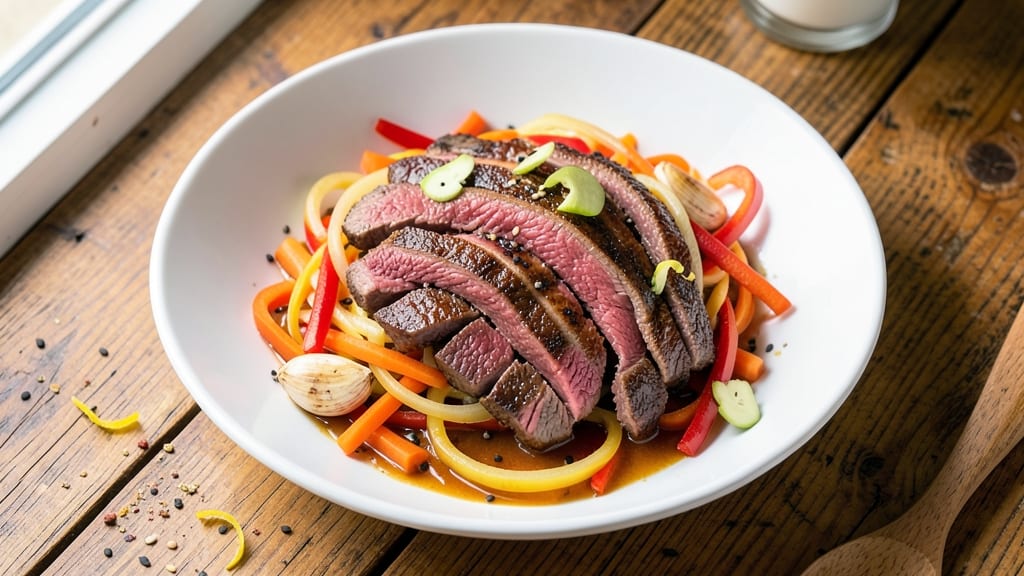
This American beef stir fry recipe delivers the perfect balance of bold flavors and restaurant-quality texture in just 25 minutes. The secret lies in high-heat searing and a sweet-savory sauce that caramelizes beautifully, creating that signature glossy finish.
I've perfected this technique after countless wok tests—it's the kind of dish that transforms weeknight dinners into something special without requiring fancy equipment.
What makes this stir fry stand out is the combination of tender beef strips, crisp-tender vegetables, and a sauce that's both sticky and balanced—sweet from brown sugar, savory from soy sauce, and aromatic from garlic and ginger.
The key is proper prep: thinly sliced beef marinated briefly to tenderize, and vegetables cut uniformly for even cooking. This isn't just another stir fry—it's a complete meal with protein, veggies, and a sauce that ties everything together.
By the time you plate it, you'll have perfectly seared beef with a caramelized crust, vibrant vegetables that stay crisp, and a sauce that coats every bite with that signature sweet-savory gloss.
The aroma alone will have everyone at the table asking what's for dinner. Serve it over steamed rice or noodles for the full experience—this is comfort food with a gourmet touch.
Ready to master this technique? We'll walk through every step—from marinating the beef to achieving that perfect wok hei (breath of the wok) finish. Let's get started with a dish that's bold, satisfying, and impossible to resist.
Ingredients for american beef stir fry
Bold flavors and restaurant-quality texture start with these 15 ingredients—simple but packed with impact.
| Ingredient | Amount | Notes |
|---|---|---|
| Flank Steak 🥩 | 1 ½ lb | Thinly sliced against grain |
| Yellow Onion 🧅 | 1 whole | Thinly sliced, white and green parts |
| Red Bell Pepper 🍅 | 1 whole | Thinly sliced, seeds removed |
| Carrot 🥕 | 2 whole | Julienned into thin strips |
| Garlic Cloves 🧄 | 6 cloves | Minced for sauce and marinade |
| Fresh Ginger 🌿 | 2 tbsp | Grated, finely for sauce |
| Soy Sauce 🥢 | ½ cup | Low-sodium preferred |
| Brown Sugar 🍯 | 3 tbsp | Packed light brown sugar |
| Rice Vinegar 🍶 | 2 tbsp | White or seasoned |
| Sesame Oil 🫒 | 1 tbsp | Toasted sesame oil |
| Vegetable Oil 🫒 | 3 tbsp | High smoke point |
| Cornstarch 🌾 | 1 tbsp | For tenderizing beef |
| Sesame Seeds 🌰 | 1 tbsp | Toasted for garnish |
| Green Onion 🌱 | 3 whole | Thinly sliced for garnish |
| Red Pepper Flakes 🌶️ | ½ tsp | Optional for heat |
The beef makes or breaks this dish, so flank steak is your best bet—it's lean but tender when sliced thin. Look for a cut with good marbling at Costco or Whole Foods—they usually carry it pre-sliced for stir fry, which saves time. If you're slicing yourself, freeze the steak for 30 minutes first to make it easier. The cornstarch isn't just for thickening—it helps tenderize the beef during the quick marinade. For the veggies, fresh is non-negotiable—wilted bell peppers or rubbery carrots will ruin the crisp-tender texture we're going for here.
No soy sauce? Coconut aminos or tamari work in a pinch, but the flavor will be different. Running short on brown sugar? Maple syrup or agave at half the amount adds sweetness, though it won't caramelize the same way. The rice vinegar can be swapped for apple cider vinegar, but keep it mild—we're not going for sushi flavors here. If you're sensitive to sesame oil's strong taste, reduce to 1 teaspoon and add 1 teaspoon of neutral oil instead. The red pepper flakes are optional, but if you're adding them, toast them first in a dry pan for 30 seconds to deepen the flavor.
Prep everything before you start cooking—this is a wok-hei situation where timing is everything. The beef marinates for just 15 minutes, so don't overdo it. Store any leftover sauce in an airtight container in the fridge for up to 5 days, or freeze for 3 months. The cooked beef and veggies keep well for 3 days in the fridge, but they reheat best if you give them a quick stir-fry again with a splash of water to restore that crisp texture. Double the sauce if you're making a big batch—it's even better the next day when the flavors meld.
Why You'll Love This Recipe
- Here’s what sold me: this keeps perfectly for days. Pack it in containers for work lunches, or reheat it for a lazy Sunday dinner. The flavors only get better as the veggies soften—no sad, rubbery leftovers here.
- One-Pan Magic: I swear by this recipe because it’s that simple—just toss the sliced flank steak, onions, peppers, and carrots in one pan with garlic and a splash of soy sauce. No fancy techniques, no last-minute grocery runs. The steak gets tender in minutes, and you’re left with a pan that’s basically self-cleaning.
- Steakhouse Bite: That first crispy bite of flank steak? Chef’s kiss. The garlic cloves caramelize right into the stir-fry, and the onions add this sweet, tangy punch that makes it taste like you spent hours marinating. (Between us, I’ve tried fancier cuts—this wins every time.)
- Lunchbox Hero: Here’s what sold me: this keeps perfectly for days. Pack it in containers for work lunches, or reheat it for a lazy Sunday dinner. The flavors only get better as the veggies soften—no sad, rubbery leftovers here.
Step-by-step instructions for American beef stir fry
Here's how to create a restaurant-quality stir fry with tender beef and a glossy, sweet-savory sauce.
Tenderize and Marinate the Flank Steak
Place the 1.5 lb flank steak on a cutting board and slice it thinly against the grain into ¼-inch strips. This is crucial for tender beef—thick slices will stay chewy no matter how you cook them. Transfer the sliced steak to a large bowl.
In a small bowl, mix together 1 tablespoon cornstarch, 0.5 cup soy sauce, 3 tablespoons brown sugar, 2 tablespoons rice vinegar, and 0.5 teaspoon red pepper flakes (if using). Pour this marinade over the steak and toss gently to coat evenly. Let it marinate for at least 20 minutes at room temperature—this ensures the cornstarch tenderizes the meat while the sauce infuses flavor.
Prep the Vegetables and Sauce Base
While the steak marinates, slice the 1 whole yellow onion into thin strips, remove seeds and slice the 1 whole red bell pepper into matchsticks, and julienne the 2 whole carrots into thin strips. Mince the 6 cloves garlic and grate the 2 tablespoons fresh ginger—these aromatics will form the flavor foundation of your sauce.
In a small bowl, whisk together 1 tablespoon sesame oil, 1 tablespoon cornstarch, and 2 tablespoons water to create a slurry. This will help thicken the sauce later. Keep this mixture separate until you're ready to use it.
Cook the Beef to Perfect Tenderness
Heat 2 tablespoons vegetable oil in a large wok or skillet over high heat until shimmering. Add the marinated steak in a single layer and let it sear undisturbed for 1-2 minutes until the edges turn golden brown. This creates a flavorful crust while keeping the meat juicy inside. Stir-fry for an additional 1-2 minutes until the steak is cooked through but still tender. Remove the beef and set it aside on a plate.
Real talk: Don't overcrowd the pan. If your wok is too full, the steak will steam instead of sear. Cook in batches if needed, but keep the heat high to maintain that wok hei (breath of the wok) flavor.
Stir-Fry the Vegetables and Build the Sauce
Add the remaining 1 tablespoon vegetable oil to the same wok and increase the heat to high. Add the onions, bell peppers, and carrots, stirring constantly for 2-3 minutes until they begin to soften but still retain a crisp texture. Add the minced garlic and grated ginger, cooking for 30 seconds until fragrant—this prevents them from burning, which would make the dish bitter.
Pour the marinade from the steak into the wok, scraping up any browned bits from the bottom. Add the cornstarch slurry and stir vigorously for 1-2 minutes until the sauce thickens to a glossy consistency. The sauce should coat the back of a spoon but still be pourable. If it thickens too quickly, add 1-2 tablespoons water to adjust the consistency.
Combine and Finish with Garnishes
Return the cooked beef to the wok and toss everything together for 1-2 minutes until the beef is evenly coated in the sauce. Taste and adjust the seasoning—add a splash more soy sauce if it needs more saltiness or a touch of rice vinegar for brightness. The sauce should balance sweet, savory, and slightly tangy flavors.
Divide the stir fry among 4 plates and garnish each serving with 1 tablespoon toasted sesame seeds and 3 thinly sliced green onions. Serve immediately over steamed rice or noodles for the ultimate wok crunch experience. The contrast of tender beef, crisp vegetables, and glossy sauce makes every bite satisfying.
Pro Tips For Making American Beef Stir Fry
- Slice Against the Grain: Flank steak’s muscle fibers run long—cutting perpendicular to them shortens them, so the meat stays tender. Use a sharp knife and angle it diagonally into the grain for even slices (about ¼-inch thick). I learned this the hard way when my stir-fry turned chewy after overworking the meat.
- Blister the Onions First: Toss sliced yellow onion in the hot pan before anything else and let it sizzle until deeply browned—about 3-4 minutes. That caramelized bitterness cuts through the beef’s richness and makes the whole dish taste deeper. (Yes, even if you’re impatient like me.)
- Don’t Overcrowd the Pan: If you pile all the veggies and beef in at once, they’ll steam instead of sear. Work in batches: cook the beef first until browned, then remove it, and stir-fry the onions, peppers, and carrots in the same oil. The residual beef fat will add flavor without extra mess.
- Use Frozen Garlic (Seriously): Fresh garlic burns easily in stir-fries, and you often end up with bitter cloves. Frozen garlic minced straight from the bag toasts in seconds without turning acrid. Toss in the last 30 seconds of cooking—it’ll release aroma without dominating. (I was skeptical until I tried it.)
Common mistakes when making your american beef stir fry
Over-Marinating Beef
I’ve seen this ruin a perfectly good stir fry more times than I can count. Flank steak only needs 15-20 minutes in the marinade—any longer and the cornstarch starts breaking down the muscle fibers too much, making the beef mushy.
Trust me, the flavor infuses quickly, and over-marinating turns that tender texture to rubber. If you’re short on time, even 10 minutes works in a pinch, but don’t skip the marinade entirely. 🥩
Skipping the Rest
After cooking, the beef needs 5-10 minutes to rest before tossing with the veggies. This lets the juices redistribute, keeping every bite moist. I’ve made this mistake too—cutting into the beef too soon and ending up with dry, stringy strips.
Even if you’re eager to eat, patience here makes all the difference. A quick tent with foil works if you’re in a rush.
Low Heat Cooking
Stir-frying at medium heat or lower is the fastest way to ruin crisp-tender veggies and turn your beef into sad, steamed strips. Your wok or skillet needs to be screaming hot—high heat is non-negotiable.
If you’re using a non-stick pan, preheat it for 3-5 minutes until it’s smoking slightly. No smoke? Your pan isn’t hot enough. 🔥
Uneven Vegetable Cuts
Mismatched vegetable sizes mean some pieces turn to mush while others stay raw. Take the extra 5 minutes to slice everything into ¼-inch strips or matchsticks. Use a mandoline if you’re impatient—I do when I’m prepping for a crowd.
Uniform cuts ensure everything cooks at the same rate, giving you that perfect al dente texture in every bite.
Ignoring the Wok Hei
That signature smoky aroma (wok hei) comes from residual heat and high heat. If your wok isn’t hot enough when you add the beef, you’ll miss it. Keep the heat cranked until the very end—even when tossing everything together.
I’ve learned the hard way: a lukewarm wok means flavorless food. A quick wipe-down with a paper towel between batches keeps things clean without losing heat. ⚡
Overcrowding the Pan
Stuffing your wok to the brim forces the beef and veggies to steam instead of sear. Cook in two batches if needed—first the beef, then the veggies. I’ve seen home cooks try to fit everything in at once, and it’s a disaster.
The result? A soggy, flavorless mess. A well-seasoned cast-iron skillet works in a pinch, but a wok (or even a deep, heavy pan) is ideal for this technique.
Nutrition facts
Frequently asked questions
Can I use a different cut of beef instead of flank steak?
Yes, but choose wisely! Sirloin or ribeye work well if sliced thinly against the grain. Avoid tougher cuts like chuck—they won't tenderize properly in the short marinade time. For extra tenderness, try pre-freezing the beef for 30 minutes before slicing to make it easier to cut thin.
How do I adjust the recipe for spicier flavors?
Add 1-2 teaspoons of sriracha or chili garlic sauce to the marinade, or sprinkle extra red pepper flakes on top after cooking. For heat lovers, toast 1 teaspoon of crushed chili flakes in the wok for 10 seconds before adding the beef—this deepens the flavor without overpowering.
What's the best way to reheat leftovers?
Reheat in a wok or skillet over medium-high heat with 1 tablespoon water or oil for 2-3 minutes to restore crispness. Microwaving works in a pinch, but it makes the veggies soggy. For extra flavor, add a splash of soy sauce or sesame oil while reheating.
Can I make this stir fry in a regular skillet?
While a wok gives the best "breath of the wok" flavor, a heavy, deep skillet works perfectly. Preheat it for 3-5 minutes until smoking hot, then follow the same high-heat technique. A cast-iron skillet is ideal—it retains heat better than non-stick pans.
What are good sides to serve with this?
Steamed jasmine rice or egg fried rice are classic pairings. For extra protein, add crispy tofu or shrimp to the stir fry. A simple cucumber salad with rice vinegar adds freshness, while wonton noodles make a hearty alternative to rice.