
Soups & Stews
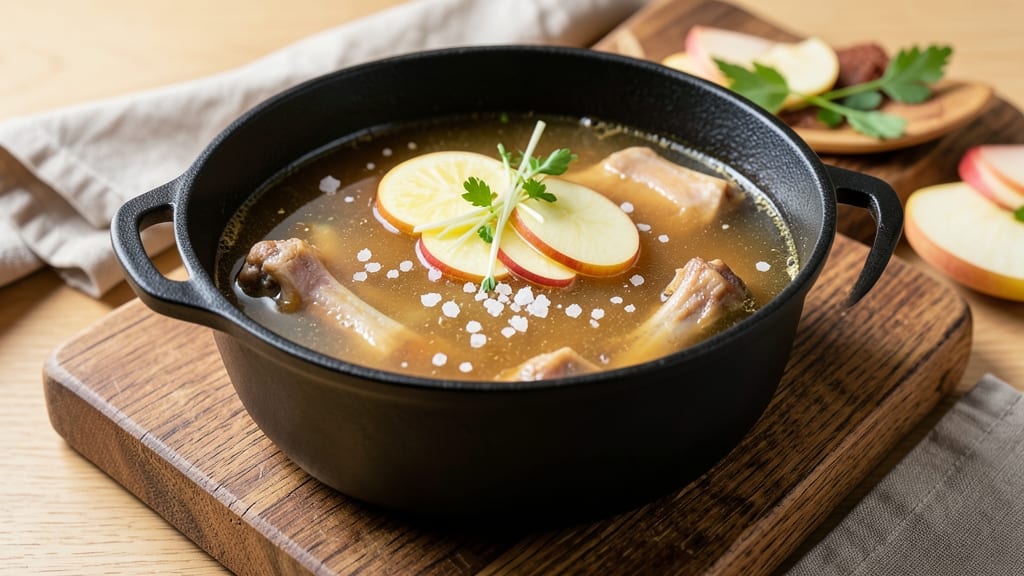
This AIP beef bone broth recipe transforms simple ingredients into a nourishing elixir that supports gut health and reduces inflammation. The slow-simmering process—12 to 24 hours—extracts collagen, gelatin, and minerals from bones, creating a rich, healing broth compliant with the Autoimmune Protocol.
No spices or herbs are needed; just high-quality bones, apple cider vinegar, and sea salt deliver deep flavor and nutritional benefits.
What sets this broth apart is its minimalist approach—no additives, no shortcuts. The key lies in selecting the right bones (knuckle, marrow, or neck bones) and maintaining a gentle simmer to prevent scorching while preserving nutrients.
The result? A deeply flavorful, gel-like broth that’s perfect for soups, stews, or sipping straight from the jar. Every sip is packed with amino acids and glycine, essential for gut repair.
By the time you strain the finished broth, you’ll have a clear, golden liquid that’s both comforting and functional. It’s the foundation for AIP-compliant meals, offering warmth and nutrition without compromising dietary restrictions.
The process may take time, but the results are worth every minute—a healing elixir that tastes as good as it works.
Store it in the fridge for up to 5 days or freeze for months, ensuring you always have a nutrient-dense base for healing meals. This isn’t just broth; it’s a cornerstone of AIP nutrition, crafted with intention and precision. Let’s get started on this transformative recipe.
Ingredients for aip beef bone broth
Five ingredients, one transformative elixir—this AIP beef bone broth recipe delivers gut-healing nutrition through slow-simmered precision.
| Ingredient | Amount | Notes |
|---|---|---|
| Beef Bones (Knuckle, Marrow, or Neck) 🦴 | 4 lb | Raw, uncooked, organic preferred |
| Apple Cider Vinegar 🍏 | ¼ cup | Raw, unfiltered for best flavor |
| Sea Salt 🧂 | 1 tbsp | Unrefined, mineral-rich preferred |
| Fresh Ginger Root 🧅 | 2 oz | Peeled, thinly sliced for infusion |
| Filtered Water 💧 | 12 cups | Enough to cover bones completely |
The bones are the foundation—organic, grass-fed knuckle or marrow bones yield the richest gelatin and collagen. Local butchers often carry these cuts, or order online from specialty suppliers like ButcherBox or Thrive Market. Avoid bones with meat still attached, as they can spoil faster. The apple cider vinegar isn’t just for flavor; it helps extract minerals from the bones during the long simmer. Look for raw, unfiltered versions—the cloudiness contains beneficial enzymes. Sea salt should be unrefined and mineral-rich like Redmond Real Salt or Maldon; table salt lacks the trace minerals that support gut health.
No fresh ginger? Dried ginger powder works at half the amount, though fresh provides more nuanced flavor. Running low on apple cider vinegar? Lemon juice is a suitable substitute, though it lacks the depth of vinegar’s acidity. The water should be filtered—chlorine and other contaminants can interfere with nutrient extraction. For a larger batch, simply double the bones and water while maintaining the same ratios. The broth’s clarity and gelatin content will improve with longer simmering, but never let it boil vigorously—gentle heat preserves nutrients and prevents scorching.
Store the finished broth in glass jars in the fridge for up to 5 days, or freeze in ice cube trays or mason jars for up to 6 months. The gelatin will thicken as it cools, so reheat gently to restore its smooth consistency. This broth is the backbone of AIP meals—use it as a base for soups, stews, or sip it straight. The longer it simmers, the more nutrients it releases, so don’t rush the process. Each batch yields about 4-5 cups of rich, golden liquid, perfect for meal prep or emergency healing nourishment.
Why You'll Love This Recipe
- No-Chop Necessary: I swear by this—just toss in whole knuckle bones, a few slices of ginger, and a splash of vinegar. The vinegar does all the work extracting flavor while you sip wine and pretend you’re not cooking.
- Umami Goldmine: That marrow-rich broth? It’s like liquid sunshine for your taste buds. The ginger and vinegar combo cuts through the richness, leaving you with a depth that’s hard to resist—especially when you’re sick or just craving something nourishing.
- Weeknight Magic: Freeze it in ice cube trays for quick soups, or use it as a base for stir-fries when you’re too tired to think. Honestly, I’ve made it on a Friday night after work and had leftovers for three days without getting bored.
- Budget Healer: A single batch feeds my family for days, and those knuckle bones? You can often find them cheap at butcher shops. Between us, this is my secret weapon for stretching meals without sacrificing flavor—or my wallet.
Step-by-step instructions for AIP beef bone broth
This method extracts maximum nutrients while maintaining strict Autoimmune Protocol compliance.
Prepare the Bones and Ingredients
Begin by rinsing the 4 lb beef bones under cold water to remove any surface debris. Pat them dry with paper towels, then place them in a large stockpot. The bones should be raw and uncooked—this ensures maximum gelatin extraction during the long simmer. I prefer knuckle or marrow bones for their high collagen content, which translates to a richer, more gelatinous broth.
Next, peel the 2 oz fresh ginger root and slice it thinly—about ¼-inch thick slices. The ginger adds anti-inflammatory properties while infusing subtle warmth into the broth. Add the ginger slices directly to the pot with the bones. Measure out the 0.25 cup apple cider vinegar and 1 tbsp sea salt—these ingredients aren't just flavor enhancers. The vinegar helps leach minerals from the bones, while the unrefined sea salt adds essential minerals back into the broth.
Cover with Filtered Water and Pre-Simmer
Add the 12 cups filtered water to the pot, ensuring the bones are completely submerged. If using knuckle bones, they may float—use a wooden spoon to press them under the surface. Bring the liquid to a boil over medium-high heat, then immediately reduce to a gentle simmer. This initial boil helps remove any impurities from the bones before the long cooking process begins.
Once simmering, skim off any foam or scum that rises to the surface using a fine-mesh skimmer or ladle. This step is crucial for clarity and flavor—foam contains impurities that can make the broth cloudy. Maintain a barely bubbling simmer—you should see small, occasional bubbles breaking the surface, not a rolling boil. Cover the pot with a lid and let it cook undisturbed for 2 hours.
Simmer for Maximum Gelatin Extraction
After the initial 2-hour simmer, check the broth's consistency. It should have reduced slightly, and the bones should begin to soften. This is when the real magic happens—gelatin begins to release from the bones, giving the broth its characteristic thickness and healing properties. Increase the simmer time to 8-12 hours total, depending on your schedule and bone type.
I recommend simmering overnight for 10-12 hours—this extended time allows for complete collagen breakdown. Keep the heat at a low simmer—if it boils vigorously, the broth may become cloudy or develop a bitter taste. Every 2-3 hours, gently stir the broth and skim off any additional foam. The longer it simmers, the richer and more nutrient-dense it becomes. If the water level drops significantly, add hot filtered water to maintain coverage.
Strain and Store for Maximum Freshness
Once the broth has simmered for the desired time, turn off the heat and let it sit for 10-15 minutes. This resting period allows any suspended particles to settle. Line a fine-mesh strainer with cheesecloth or a coffee filter to catch any remaining bone fragments or ginger pieces. Pour the broth through the strainer into a clean glass container, pressing gently on the solids to extract every last drop of liquid.
The resulting broth should be deep amber in color, with a rich, savory aroma and a slightly gelatinous texture when chilled. Store it in the refrigerator for up to 5 days or freeze in 1-cup portions for longer storage. The gelatin will solidify when refrigerated, creating a thick, spoonable consistency that's perfect for soups, stews, or as a healing elixir on its own.
Optional Final Touches for Enhanced Flavor
For an extra layer of depth, you can add 1-2 additional slices of ginger or a pinch of black pepper during the last 2 hours of simmering. These additions are optional but can enhance the broth's complexity. However, since this is an AIP recipe, avoid any non-compliant seasonings. The broth is already packed with flavor from the bones, vinegar, and ginger—no additional ingredients are necessary.
When ready to use, reheat the broth gently over low heat or in a saucepan of simmering water to preserve its delicate texture. Avoid boiling, as this can break down the gelatin and make the broth watery. Serve warm as a standalone healing drink, or use it as the base for compliant soups and sauces. The result is a nutrient-dense, gut-soothing elixir that aligns perfectly with the Autoimmune Protocol's principles.
Pro Tips For Making Aip Beef Bone Broth
- ROAST BONES FIRST: Start with a hot oven—425°F (220°C)—for 30 minutes before adding liquid. The Maillard reaction kicks in, pulling out deeper flavor from the bones’ collagen and marrow, which cold-soaking alone misses. (Yes, it’s an extra step, but the broth will taste richer.)
- PEEL GINGER THIN: Use a spoon to scrape off just the outer layer of ginger—no need for thick slices. The thin peel adds subtle heat and aroma without overpowering, while the flesh can get bitter if left too long. (I learned this after one batch tasted like medicine.)
- SKIP THE BOIL: Keep the pot at a gentle simmer—tiny bubbles, not rolling—after the initial 2-hour cook. Boiling scalds the collagen into a cloudy, gluey mess instead of letting it break down into silky gelatin. (Your future self will notice the difference.)
- ADD VINEGAR LATE: Stir in the apple cider vinegar only in the last 30 minutes. Its acidity helps extract minerals, but too early it can make the broth taste harsh. (I used to add it at the start—big mistake.)
Best sauces and condiments for these flavors
AIP-Compliant Sauce Pairings
This broth serves as a perfect base for AIP-friendly sauces that enhance its natural umami without violating dietary restrictions.
Try a simple ginger-turmeric sauce by blending 1 tbsp fresh ginger, ½ tsp turmeric powder, 1 tbsp coconut aminos, and 2 tbsp broth—this adds warmth while keeping flavors compliant. The ginger complements the broth’s existing notes beautifully. 🌶️
Collagen-Boosting Additions
For extra protein and thickness, stir in 1 scoop collagen peptides (like Vital Proteins) into warmed broth. This creates a gelatinous, spoonable consistency perfect for sipping or drizzling over compliant dishes.
I often use this in my morning "bone broth golden milk" by mixing with coconut milk and a pinch of turmeric. The collagen dissolves seamlessly, adding 10g protein per serving.
Fermented Umami Boosters
Add depth with AIP-approved fermented sauces like coconut aminos or fermented sea vegetables (e.g., dulse flakes). A splash of 1 tbsp coconut aminos in the last 30 minutes of simmering enhances savory notes without overpowering.
For a tangy twist, blend ¼ cup sauerkraut juice (strain out solids) with 1 tbsp broth—this adds probiotics and a bright acidity. 💛
Herbal Infusions (Optional)
While AIP restricts most herbs, fresh ginger and turmeric are permitted. For subtle complexity, add 1 tsp grated fresh turmeric during the final 1 hour of simmering. The earthy notes pair exceptionally with the broth’s savory depth. Avoid dried herbs—they often contain hidden additives or molds that violate AIP rules.
Storage-Friendly Drizzles
Freeze broth in ice cube trays for easy portioning—these cubes can be used to deglaze pans or drizzled over compliant dishes like AIP-friendly mashed cauliflower or roasted vegetables.
The concentrated flavor makes them ideal for quick sauces. Label containers with dates, as gelatin-rich broths last 3-6 months frozen without quality loss. ✨
Nutrition facts
Frequently asked questions
Can I use leftover roasted beef bones for this AIP broth?
Yes, but with caution! Roasted bones work, but they won't yield as much gelatin as raw bones. For best results, use raw knuckle or marrow bones—their collagen breaks down more thoroughly during the long simmer. If using roasted bones, extend simmering to 16-24 hours and add extra apple cider vinegar (0.5 cup) to help extract minerals.
Why does my broth turn cloudy or bitter?
Cloudiness usually means the broth boiled too vigorously or wasn't skimmed properly. To prevent bitterness, maintain a gentle simmer (small bubbles, not rolling) and skim foam every 2-3 hours. If it's already cloudy, strain it again through cheesecloth for a clearer result. Bitter flavor often comes from overcooking—stick to 12 hours max for knuckle bones.
How do I make this broth more flavorful without violating AIP?
Focus on bone quality and simmer time! Use marrow or knuckle bones for richer flavor. For extra depth, add 1 extra slice of fresh ginger or 1 tbsp coconut aminos in the last 30 minutes. Avoid all herbs/spices—even "AIP-approved" ones like turmeric can be controversial. The longer you simmer (16+ hours), the more umami develops naturally.
Can I use chicken or fish bones instead of beef?
Technically yes, but it won't be the same! Beef bones are ideal for their high collagen content, which creates the signature gelatin. Chicken bones work but yield a lighter broth with less gelatin. Fish bones (like salmon) are delicate and best used for short simmers (4-6 hours). For strict AIP compliance, stick to beef—it's the most nutrient-dense option for this recipe.
How do I know when my broth is done?
Look for these signs: The bones should be soft enough to pierce with a fork, the broth should have reduced by about 25%, and it should have a rich, amber color. When chilled, it should form a slight jelly-like consistency at the edges. If using a meat thermometer, bones should reach 200°F internally—this ensures maximum gelatin extraction.