
Soups & Stews
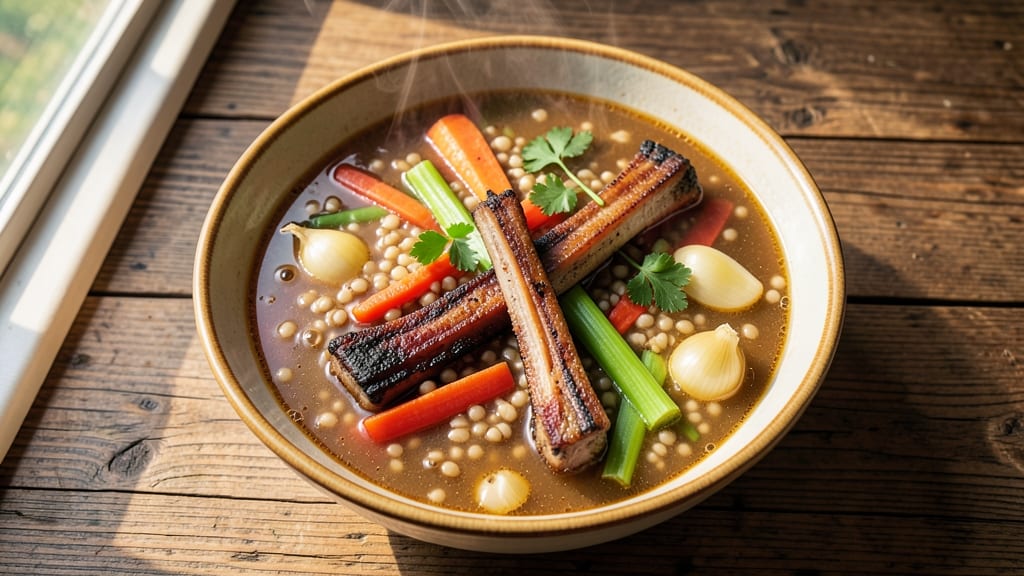
A beef barley soup recipe with prime rib bones transforms simple ingredients into a deeply satisfying meal that tastes like a home-cooked embrace. The secret lies in rendering prime rib bones for hours, extracting their marrow and collagen into a rich, velvety broth that forms the soul of this dish. This isn't just soup—it's a labor of love that rewards patience with layers of savory depth and hearty texture.
The process begins with slow simmering, where bones release their gelatinous goodness while barley softens into tender, chewy pearls. Unlike quick versions, this method builds flavor through time, creating a broth so robust it stands alone.
The result is a bowl that's equal parts comforting and restaurant-worthy, with every spoonful packed with umami and warmth.
What makes this recipe special is its balance of tradition and convenience—you can achieve the same depth with a pressure cooker in a fraction of the time, though the flavor develops differently.
The final assembly brings together tender beef, perfectly cooked barley, and a broth so rich it coats every ingredient. This is the kind of soup that disappears quickly, leaving everyone asking for seconds.
Perfect for chilly evenings or as a nourishing meal after a long day, this beef barley soup delivers both comfort and sophistication. The technique is approachable, yet the results feel luxurious—ideal for feeding a crowd or savoring a single bowl. Let's get started on creating something truly memorable.
Ingredients for beef barley soup recipe with prime rib bones
Sixteen ingredients, six bowls of soul-warming depth—this soup builds flavor through time and patience.
| Ingredient | Amount | Notes |
|---|---|---|
| Prime Rib Bones 🦴 | 3 lb | Raw, marrow-filled for richness |
| Pearl Barley 🌾 | 1 ½ cups | Uncooked, rinsed thoroughly |
| Yellow Onion 🧅 | 1 whole | Chopped, medium size |
| Carrots 🥕 | 4 whole | Medium, peeled and chopped |
| Celery Stalks 🌿 | 4 whole | Fresh, chopped with leaves |
| Garlic Cloves 🧄 | 6 cloves | Peeled, lightly crushed |
| Tomato Paste 🍅 | ½ cup | High-quality, no sugar added |
| Dried Thyme 🌿 | 1 tbsp | Fresh if available |
| Bay Leaves 🍃 | 2 whole | Fresh preferred |
| Black Peppercorns 🌶️ | 1 tbsp | Freshly cracked |
| Salt 🧂 | 1 ½ tsp | Kosher or sea salt |
| Beef Chuck Roast 🥩 | 2 lb | Cut into 1-inch cubes |
| Red Wine 🍷 | 1 cup | Bold, dry variety |
| Beef Broth 💧 | 6 cups | Homemade or high-quality |
| Olive Oil 🫒 | 2 tbsp | Extra-virgin for richness |
Prime rib bones are non-negotiable here—the marrow and collagen create that velvety texture. Butcher shops often have them pre-cut, but if buying whole, ask for the marrow-rich ends. The pearl barley should be rinsed well to remove any dust or debris. For the beef chuck, Costco or local butchers offer the best value—look for good marbling. Fresh thyme and bay leaves elevate the broth, but dried work in a pinch. The tomato paste? San Marzano is ideal, but any quality brand will do.
No prime rib bones? Beef shank bones work well, though they yield slightly less marrow. Substitute pearl barley with wild rice or farro for a different texture. The red wine can be swapped for beef broth with a splash of balsamic vinegar—just reduce the broth by 1/4 cup. For a deeper flavor, toast the spices lightly in olive oil before adding to the pot. The carrots and celery can be pre-chopped and frozen for convenience, though fresh is always better.
This soup tastes even better the next day as flavors meld. Store in the fridge for up to 5 days or freeze for 3 months. For a crowd, double the recipe—it reheats beautifully. The broth alone is worth saving for future soups or braises. If you're using a pressure cooker, reduce the simmering time to 2 hours instead of 4, though the flavor will develop differently.
Why You'll Love This Recipe
- One-Pot Magic: The prime rib bones do all the heavy lifting—just simmer them with veggies, and the broth builds itself. No extra pots, no fuss, just dump-and-go richness that tastes like you spent hours.
- Deep, Meat-Focused Richness: That marrow in the bones? It melts into the broth for a velvety depth you won’t find in store-bought versions. The barley soaks it up like a sponge, turning every spoonful into pure satisfaction.
- Weeknight to Holiday Hero: Same recipe works for a quick Tuesday dinner or a Thanksgiving side dish—just adjust the batch size. Honestly, I’ve served it at potlucks, and no one ever guesses how little effort it took.
- Budget-Friendly Luxury: Prime rib bones stretch into gallons of flavorful broth, and barley keeps it hearty. Leftovers reheat beautifully, so you’re feeding a crowd without breaking the bank—or your schedule.
Step-by-step instructions for beef barley soup with prime rib bones
Transform humble ingredients into a deeply flavorful soup where marrow-rich bones and hearty barley create perfect harmony.
Sear the Prime Rib Bones and Chuck Roast
Heat a large Dutch oven over medium-high heat and add the 2 tablespoons olive oil. Arrange the 3 lb prime rib bones in a single layer, marrow-side down. Let them sear undisturbed for 8-10 minutes until deeply browned on all sides. This caramelization builds the soup's foundational depth.
Remove the bones and set aside. In the same pot, add the 2 lb beef chuck roast cut into 1-inch cubes and sear until browned on all sides, about 5-6 minutes. The meat should develop a rich crust - this prevents it from turning tough during the long simmer. Transfer the chuck cubes to a plate and set aside with the bones.
Build the Flavor Base with Aromatics
In the same Dutch oven, add the chopped yellow onion, chopped carrots, chopped celery stalks, and lightly crushed garlic cloves. Cook over medium heat for 5-6 minutes until the vegetables soften and the garlic becomes fragrant. You'll notice the vegetables release moisture and the mixture darkens slightly - this is the aromatic foundation.
Stir in the 0.5 cup tomato paste, 1 tablespoon dried thyme, 2 whole bay leaves, 1 tablespoon freshly cracked black peppercorns, and 1.5 teaspoons salt. Cook for another 2 minutes until the tomato paste deepens in color and the spices bloom. This combination creates the perfect balance of sweet, savory, and aromatic notes that will infuse the broth.
Simmer the Soup for Maximum Flavor Extraction
Return the seared bones and chuck roast to the Dutch oven. Pour in the 1 cup red wine and scrape up any browned bits from the bottom of the pot. Let it simmer for 5 minutes to cook off the alcohol and concentrate the flavors. Then add the 6 cups beef broth and bring to a gentle boil.
Reduce heat to low and cover partially. Let the soup simmer for 2.5 hours, maintaining a gentle bubble. This long cooking time is crucial - it allows the marrow to melt from the bones and the collagen to break down into gelatin, creating a rich, velvety broth. Skim any foam that rises to the surface during the first 30 minutes of simmering to ensure a clear broth.
Add Barley and Finish the Soup
After 2.5 hours of simmering, strain the soup through a fine-mesh sieve, pressing gently on the solids to extract maximum flavor. Discard the bones and vegetables. Return the strained broth to the Dutch oven and add the 1.5 cups rinsed pearl barley. Stir well to distribute the barley evenly throughout the broth.
Return the soup to a simmer and cook uncovered for an additional 30-40 minutes until the barley is tender but still holds its shape. The soup should have a thick, hearty consistency with the barley absorbing the rich bone broth. Taste and adjust seasoning if needed - the depth of flavor should come primarily from the bones and wine, with just a touch of salt to balance.
Rest and Serve for Optimal Texture
Remove the soup from heat and let it rest for 15 minutes before serving. This resting period allows the flavors to meld completely and the barley to continue absorbing the broth, resulting in a soup that's perfectly balanced in texture and flavor. The broth should coat the back of a spoon with a velvety consistency, and each bite should deliver the rich umami from the bones along with the nutty sweetness of the barley.
Ladle the soup into bowls and serve immediately. The aroma alone should be enough to draw everyone to the table - a symphony of savory, sweet, and herby notes that build with each spoonful. This soup tastes even better the next day as the flavors continue to develop, making it perfect for meal prep or comforting weeknight dinners.
Pro Tips For Making Beef Barley Soup Recipe With Prime Rib Bones
- BLANCH THE BONES FIRST: Toss those prime rib bones in boiling water for 2–3 minutes before browning—this loosens dirt and renders fat cleaner. I learned this the hard way when my first batch left a metallic taste from unwashed bones (yes, even "clean" bones need this).
- CUT BARLEY IN HALF: Pearl barley’s outer shell stays stubbornly tough. Halving it with a sharp knife before adding to the pot cuts cooking time by nearly 30 minutes and keeps those grains tender without turning to mush.
- DON’T BOIL THE SOUP DRY: After the bones are in, skim fat aggressively and keep liquid at a gentle simmer—not a rolling boil. I used to ignore this, and my soup always ended up greasy or underflavored. Aim for 1–2 inches of liquid above the barley at all times.
- ADD VEGETABLES IN STAGES: Toss onions and celery in first (they’re the backbone), but hold carrots until the last 45 minutes. Their starch releases early and can make the broth cloudy. Also, chop carrots into ½-inch chunks—they’ll soften faster than you think.
Common mistakes when making perfect results
Skipping the Sear
I've seen many cooks rush through the searing step, thinking it's optional. But those beautifully browned bones and meat are where the Maillard reaction happens—this creates deep, complex flavors that form the foundation of your soup.
If you skip searing, your broth will taste flat and one-dimensional. Trust me, taking the extra 10-15 minutes to properly brown makes all the difference. 🔥
Not Enough Simmer Time
The magic of this soup happens during the long simmer. Many people get impatient and reduce the cooking time, but this is where the marrow melts from the bones and collagen breaks down into gelatin, creating that luxurious, velvety texture.
Don't rush it—aim for at least 2.5 hours of gentle simmering. If you're short on time, a pressure cooker can cut this to 90 minutes, but the flavor won't develop as deeply.
Ignoring the Skimming Step
During the first 30 minutes of simmering, you'll notice foam rising to the surface. This is natural, but if left unchecked, it can make your broth cloudy and bitter. Use a fine-mesh skimmer or ladle to remove any foam that forms.
I like to skim every 5-10 minutes during this initial phase—it's a small effort that pays off with a crystal-clear, rich broth. 💫
Adding Barley Too Early
Barley needs to cook separately after the bones have rendered all their flavor. If you add it too soon, it will absorb too much of the broth before the bones have had a chance to fully infuse their richness.
Wait until after you've strained the broth and removed the bones—this ensures your barley gets the full benefit of that deep, umami-packed liquid. I always add barley in the final 30-40 minutes of cooking.
Overcrowding the Pot
If you're using a standard Dutch oven, don't overfill it with broth. The soup should have enough liquid to cover the ingredients by at least 1 inch. If you're working with a large batch, consider cooking in two batches rather than crowding the pot.
Overcrowding leads to uneven cooking, and the barley may not absorb the broth properly, resulting in a watery soup. Trust me, patience here is key to a perfect texture.
Skipping the Resting Time
After cooking, letting the soup rest for 15 minutes before serving might seem unnecessary, but it's crucial. This resting period allows the flavors to meld completely and the barley to finish absorbing the broth, resulting in a soup that's perfectly balanced in texture and flavor.
If you serve it immediately, the barley will release starches too quickly, making the soup gummy. A short rest ensures every spoonful is rich and cohesive. ✨
Nutrition facts
Frequently asked questions
Can I substitute beef shank bones for prime rib bones?
Yes, but the flavor will differ slightly. Beef shank bones contain more collagen, which creates a thicker broth, while prime rib bones offer a richer, marrow-infused depth. For best results, use 2.5 lb of shank bones and add 1/2 cup extra beef broth to compensate for the increased collagen. The texture will be equally satisfying, though the umami profile will be more pronounced with prime rib.
How do I adjust this recipe for a pressure cooker?
For a 6-quart electric pressure cooker, follow the same searing steps but reduce the simmering time to 90 minutes (high pressure) instead of 2.5 hours. After straining, cook the barley for 15-20 minutes instead of 30-40. The broth will develop faster but won't have the same depth as stovetop simmering. For extra richness, add 1/2 cup extra broth during the pressure cooking phase.
What's the best way to reheat leftovers?
Reheat gently on the stovetop over low heat for 10-15 minutes, stirring occasionally, until thoroughly warmed through. Avoid microwaving as it can make the barley mushy. For best texture, add 1/4 cup water or broth while reheating. This soup actually improves overnight as flavors meld further—perfect for meal prep!
Why does my barley turn mushy?
Overcooking is the most common cause. Barley should be tender but still hold its shape—30-40 minutes is ideal. If using a pressure cooker, reduce time to 15 minutes after straining. Also, never add barley to cold broth—always use hot broth. For extra insurance, rinse barley before cooking and avoid stirring it excessively while cooking.
Can I make this soup in a slow cooker?
Sear the bones and meat as directed, then transfer everything to a 6-quart slow cooker. Add all remaining ingredients and cook on low for 8-10 hours or high for 5-6 hours. The long cook time enhances the broth's richness. For best texture, add barley during the final 30 minutes of cooking. The slow cooker method is perfect for hands-off preparation.