
Soups & Stews
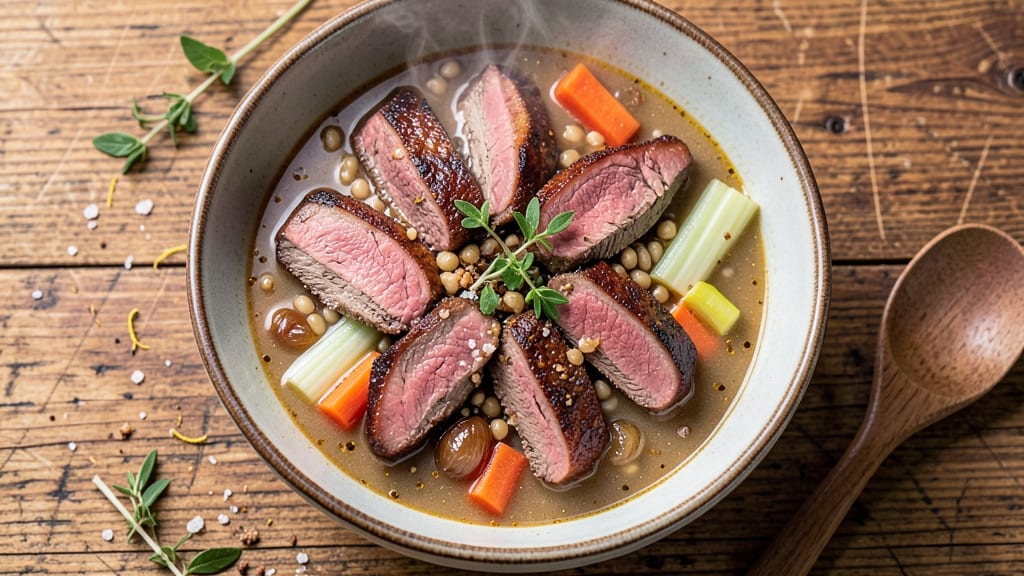
This beef barley soup recipe with leftover roast transforms dinner scraps into a hearty, restaurant-worthy meal with minimal effort. The secret lies in deglazing the roast pan—where every crispy bit dissolves into a rich, savory broth that forms the soul of the soup.
What starts as a simple simmer evolves into a deeply flavorful stew packed with tender beef, chewy barley, and aromatic vegetables, all while keeping your kitchen clean with that one-pot magic.
What sets this recipe apart is how it maximizes leftover roast beef, turning what might otherwise go to waste into the star of the show. The roast’s natural juices infuse the broth with depth, while the barley absorbs all the savory goodness, creating a satisfying texture.
Vegetables like carrots and celery add natural sweetness and crunch, balancing the dish perfectly. The result? A soup so comforting and flavorful, it feels like a hug in a bowl—without the fuss of multiple pots or complicated techniques.
This recipe is designed for efficiency, making it ideal for busy weeknights or when you’re looking to stretch a meal into something extraordinary. The one-pot approach means less cleanup, and the slow simmer ensures every ingredient melds together harmoniously.
Whether you’re feeding a family or meal prepping for the week, this soup delivers on both flavor and convenience, proving that good food doesn’t have to be complicated.
Serve it with crusty bread to soak up every last drop of that roast-infused broth, or garnish with fresh parsley for a pop of color and brightness. The beauty of this dish lies in its simplicity—no fancy ingredients, just smart techniques to elevate humble leftovers into something truly special.
Ready to turn scraps into a showstopper? Let’s get started.
Ingredients for beef barley soup recipe with leftover roast
Transform humble leftovers into restaurant-worthy richness with these 14 thoughtfully chosen ingredients.
| Ingredient | Amount | Notes |
|---|---|---|
| Leftover Roast Beef 🥩 | 1 ½ lb | Cut into bite-sized pieces |
| Barley 🌾 | 1 cup | Pearl barley, rinsed well |
| Yellow Onion 🧅 | 1 whole | Diced, medium size |
| Carrots 🥕 | 4 medium | Peeled, cut into chunks |
| Celery Stalks 🧄 | 4 whole | Trimmed, cut into pieces |
| Garlic Cloves 🧄 | 4 cloves | Minced, fresh preferred |
| Beef Broth 💧 | 6 cups | Low-sodium preferred |
| Tomato Paste 🍅 | 2 tbsp | Smooth, not chunky |
| Dried Thyme 🌿 | 1 tsp | Or 1 tbsp fresh |
| Bay Leaves 🍃 | 2 whole | Removed before serving |
| Salt 🧂 | 1 ½ tsp | Diamond Crystal preferred |
| Black Pepper 🌶️ | ½ tsp | Freshly ground preferred |
| Fresh Parsley 🌿 | ¼ cup | Chopped, for garnish |
| Olive Oil 🫒 | 2 tbsp | Extra-virgin for richness |
The roast beef is the foundation—look for pieces with good marbling that still hold together when sliced. Costco or Whole Foods often have high-quality roasts pre-cut, but any leftover beef with visible fat works. Barley is non-negotiable here; pearl barley from the bulk section (like at Trader Joe's) has the perfect chewy texture. Fresh thyme is ideal, but dried works at one-third the amount. For the broth, low-sodium options prevent over-salting later—Pacific Foods or Kitchen Basics are reliable brands. The tomato paste should be smooth, not chunky—Barilla or Rao's are excellent choices.
No fresh thyme? Dried works at one-third the amount, but toast it lightly in a dry pan first for deeper flavor. Short on beef? Add 1 cup cooked lentils for extra protein without compromising texture. The carrots and celery can be swapped for any root vegetables—parsnips or turnips add complexity. For a richer broth, deglaze the pan with a splash of red wine after browning the onions. The bay leaves should be removed before serving—they're for flavor, not eating. If you're prepping ahead, toast the barley first to reduce cooking time later.
This soup tastes even better the next day as flavors meld. Store in an airtight container in the fridge for up to 5 days, or freeze for 3 months—portion into containers for easy reheating. The barley softens further when reheated, so add a splash of broth if it seems dry. For meal prep, double the batch and freeze half immediately. The parsley garnish adds freshness—chop it last to preserve color and aroma. Leftovers reheat beautifully on the stove or in the microwave, though stovetop keeps the barley texture intact better.
Why You'll Love This Recipe
- No-Chop Nightmare: I swear by the "soak the barley overnight" trick—it turns this into a 15-minute assembly. Just toss in the veggies, add broth, and let the leftover roast beef melt into tender perfection. (Yes, even on a Tuesday night when you’d rather binge Netflix.)
- Umami Bomb: That leftover roast beef? It’s the star—juicy, rich, and packed with depth. The barley softens into a chewy, satisfying bite, while the onions and carrots caramelize just enough to add natural sweetness. Honestly, the first spoonful makes me forget I’m eating leftovers.
- Leftovers’ Best Friend: This soup tastes better the next day—seriously. The flavors meld, the barley plumps up, and you’ve got a meal that’s heartier than takeout. Freeze half for when you’re too tired to cook, and thaw it straight into a simmering pot. (No guilt, just comfort.)
- Budget Magic: Barley’s cheap, veggies are cheap, and you’re using up that roast before it goes bad. A single roast feeds a family for days—first as the main, then as soup. I’ll be real: my grocery bill dropped 20% after I started making this. (And no, I’m not exaggerating.)
Step-by-step instructions for beef barley soup with leftover roast
Transform your leftover roast into hearty, restaurant-quality soup using this precise technique.
Sauté the Aromatic Vegetables
Heat the 2 tablespoons olive oil in a large Dutch oven over medium heat. Add the diced yellow onion, chopped carrots, and celery stalks, stirring occasionally for 5-6 minutes until the vegetables soften and begin to release their natural juices. You'll notice the onions turn translucent and the carrots develop a slight sheen—this is your signal they're ready for the next step.
Add the minced garlic cloves and cook for an additional 30 seconds until fragrant. The garlic should sizzle gently without browning—if it starts to darken, reduce the heat slightly. This aromatic base forms the flavor foundation of your soup, so don't rush this step. The vegetables should be tender but still hold their shape, creating a satisfying texture in the finished dish.
Toast the Barley and Brown the Beef
Increase the heat to medium-high and add the 1 cup pearl barley, stirring constantly for 2 minutes until lightly toasted and golden. You'll see the barley become slightly crispy around the edges and release a nutty aroma. This toasting step enhances the barley's flavor and prevents it from becoming mushy during cooking.
Add the 1.5 pounds leftover roast beef, breaking it into bite-sized pieces as you stir. Cook for 3-4 minutes until the beef develops a light brown crust. The beef should release from the pan easily when stirred—this ensures maximum flavor extraction. If the pan becomes too dry, add 1-2 tablespoons beef broth to deglaze and prevent sticking.
Build the Flavor Base
Stir in the 2 tablespoons tomato paste, 1 teaspoon dried thyme, 1.5 teaspoons salt, and 0.5 teaspoon black pepper, cooking for 1 minute until the tomato paste darkens slightly and becomes fully incorporated. Add the 2 whole bay leaves and pour in the 6 cups beef broth, stirring to combine. The mixture should bubble gently—this is when all the flavors begin to meld together.
Bring the soup to a gentle boil over high heat, then immediately reduce to a simmer. The liquid should bubble softly without vigorous rolling. This simmering stage is critical for developing depth of flavor while allowing the barley to absorb moisture properly. Skim off any foam that rises to the surface during the first 5 minutes of simmering to ensure a clean, velvety texture.
Simmer Until Tender Perfection
Cover the Dutch oven and simmer for 45-50 minutes until the barley is tender and the beef is fork-tender. You'll know it's ready when a knife slides easily through the barley and the beef pieces pull apart with gentle pressure. The soup should have thickened slightly, with a rich, aromatic broth that coats the back of a spoon.
Check the seasoning after 30 minutes of simmering and adjust if needed. The barley should be fully hydrated but not mushy—if it appears undercooked, continue simmering for another 10-15 minutes. The beef should be completely tender, with no resistance when pierced with a fork. This slow cooking process transforms tough leftover beef into melt-in-your-mouth pieces.
Finish and Serve
Remove the 2 whole bay leaves and discard them. Stir in the 0.25 cup chopped fresh parsley just before serving to brighten the flavors with a fresh, herbal note. The parsley should be evenly distributed throughout the soup, adding both visual appeal and a subtle citrusy contrast to the rich beef flavors.
Ladle the soup into bowls and serve immediately. Each spoonful should deliver a perfect balance of tender beef, chewy barley, and aromatic vegetables in a deeply flavorful broth. The one-pot preparation ensures maximum flavor extraction while keeping the process simple and efficient. This soup tastes even better the next day as the flavors continue to develop, making it an ideal meal-prep option for busy schedules.
Pro Tips For Making Beef Barley Soup Recipe With Leftover Roast
- SHRED THE MEAT FIRST: Tear that leftover roast into bite-sized pieces before adding it to the pot—no need to force it through a fork. I used to chop it cold and end up with tough, uneven bits, but warm, tender meat shreds effortlessly and blends better into the broth.
- SAUTÉ THE AROMATICS LONG: Cook your onions, carrots, and celery in a dry pan for 8-10 minutes until the edges darken slightly—this builds deeper flavor than a quick toss. I learned this the hard way when my soup tasted bland because I rushed the base.
- USE PEARL BARLEY, NOT INSTANT: Pearl barley takes 45-60 minutes to soften properly, while instant barley turns mushy in under 20. If you’re short on time, soak the pearl barley for 30 minutes first, but don’t skip it—it’s what gives the soup real texture.
- SKIP THE BOILING START: Bring the broth to a gentle simmer, not a rolling boil, to keep the barley from turning to paste. I used to crank the heat and end up with a gluey mess—lower heat = better texture, even if it takes a few extra minutes.
Best sauces and condiments for this beef barley soup recipe with leftover roast
Creamy Mustard Swirl
Elevate your soup with a Dijon mustard swirl—just stir in 1 tablespoon prepared mustard (like Maille) during the last 5 minutes of simmering. For extra richness, whisk 2 tablespoons heavy cream with the mustard before adding.
This adds a tangy depth that cuts through the beef's richness while keeping the soup light. 🌟
Crispy Onion Topping
Sauté ½ cup thinly sliced yellow onion in 1 tablespoon butter until golden and crispy (about 10 minutes on medium heat). Sprinkle over individual servings just before eating for a sweet, crunchy contrast. I love using a mandoline for even slices—it’s foolproof and makes cleanup easier. 🧅
Herb Oil Drizzle
Infuse ¼ cup olive oil with 2 tablespoons chopped fresh thyme and 1 tablespoon chopped rosemary by gently heating in a small saucepan for 5 minutes. Strain and drizzle over the soup before serving.
This adds a fragrant, herbal finish that brightens the dish without overpowering the beef flavors. Store the remaining herb oil in a dark glass bottle for up to 2 weeks in the fridge. ✨
Sour Cream Finish
For a creamy, cooling element, stir in ¼ cup sour cream (like Kroger brand) during the final 2 minutes of simmering. Alternatively, serve it on the side for dipping crusty bread.
The tang balances the soup’s richness, and the texture adds a luxurious touch. I often garnish with a sprinkle of fresh dill for an extra layer of freshness. 🥄
Spicy Chili Oil
Heat 2 tablespoons neutral oil with 1 teaspoon red pepper flakes and 1 minced garlic clove until fragrant (about 1 minute). Drizzle over servings for a kick of heat.
For a smoky twist, swap the red pepper flakes for ½ teaspoon smoked paprika. This adds complexity and pairs beautifully with the hearty flavors of the soup. 🌶️
Cheesy Barley Boost
Stir in ½ cup shredded Gruyère or Parmesan cheese during the last 5 minutes of cooking. The cheese melts into the broth, creating a velvety texture and adding umami depth. For a vegetarian-friendly option, use nutritional yeast (about 2 tablespoons) for a cheesy flavor without dairy.
This works especially well if you’re serving the soup as a veggie-forward meal. 🧀
Nutrition facts
Frequently asked questions
Can I use any type of leftover beef for this soup?
While this recipe works best with tender, well-marbled roast beef, you can adapt it for other leftovers. Use beef that's already cooked through and holds together when sliced—think pot roast or braised beef. Avoid overly fatty cuts or beef that's become dry, as it won't rehydrate well during simmering. For tougher cuts, increase simmering time by 10-15 minutes to ensure tenderness.
How do I prevent the barley from becoming mushy?
Toast the barley first in the Dutch oven for 2 minutes until golden—this builds flavor and prevents mushiness. Use pearl barley specifically (not quick-cooking varieties) as it holds texture better. If your barley still seems undercooked after 45 minutes, add ½ cup hot broth and simmer 10 more minutes. Avoid overcrowding the pot, which can steam the barley instead of simmering it.
What if I don't have beef broth on hand?
No problem! Use a combination of water + bouillon (1:1 ratio) or even chicken broth in a pinch. For deeper flavor, add 1 teaspoon Worcestershire sauce or ½ cup tomato paste to compensate. If using water, increase the simmering time by 5-10 minutes to concentrate the flavors. The roast beef's natural juices will still infuse the broth with richness.
Can I make this soup in a slow cooker?
Follow the same steps for sautéing vegetables and toasting barley, then transfer everything to your slow cooker. Add 1 cup water (the slow cooker's lower heat means you'll need extra liquid) and cook on low for 6-7 hours or high for 3-4 hours. The slow cooking enhances tenderness, especially for tougher beef pieces. Check the barley's doneness after 4 hours and adjust time as needed.
Why does my soup taste bland after refrigerating?
This happens when flavors need time to develop or the broth became diluted. Add 1-2 tablespoons tomato paste or ½ teaspoon soy sauce when reheating, then simmer 5 extra minutes uncovered to reduce liquid. For extra depth, stir in 1 tablespoon butter or 2 tablespoons heavy cream at the end. The barley will absorb flavors better when reheated gently on the stove (never microwave).