
Soups & Stews
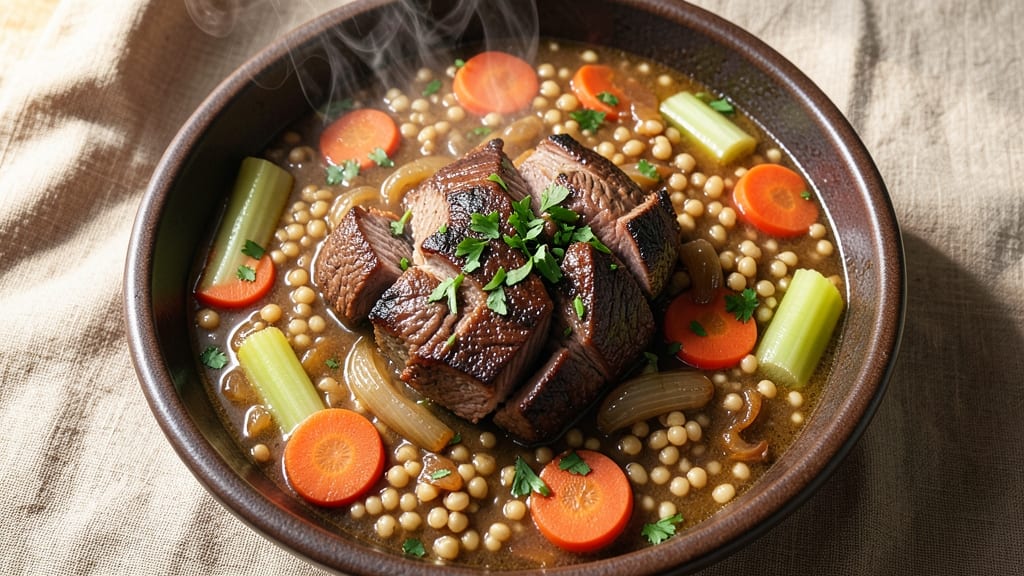
This beef and pearl barley stew recipe transforms tough cuts into melt-in-your-mouth tenderness with deep, savory layers that warm the soul. 🌟 The secret lies in slow-simmered roots and caramelized onions that build complexity hour by hour, creating a dish that tastes even better the next day.
Every spoonful delivers rich umami from the beef, earthy barley, and aromatic vegetables working in harmony.
What sets this stew apart is the technique: browning the beef in batches for maximum flavor, then deglazing the pot to capture every caramelized bit. Pearl barley soaks up the deep, meaty broth while softening just enough to hold its shape, creating the perfect balance of texture.
The result is a hearty, one-pot meal that feels like a hug on a chilly evening.
By the time you're done, you'll have a pot of restaurant-quality stew with tender beef, perfectly cooked barley, and vegetables that have melded into the broth. The aroma alone will have everyone gathering around the table, while the first bite delivers that satisfying combination of savory, sweet, and umami-rich flavors.
Serve with crusty bread to soak up every last drop or alongside roasted root vegetables for a complete meal. This is the kind of stew that becomes a family tradition—simple to make but impossible to resist. Let's get started on creating this comforting classic.
Ingredients for beef and pearl barley stew
Tough beef and hearty barley transform into restaurant-quality comfort with these 15 simple ingredients.
| Ingredient | Amount | Notes |
|---|---|---|
| Chuck Roast 🥩 | 2 lb | Cut into 1-inch cubes, trimmed of fat |
| Pearl Barley 🌾 | 1 cup | Rinsed thoroughly before cooking |
| Yellow Onions 🧅 | 2 whole | Cut into wedges, caramelized |
| Carrots 🥕 | 4 whole | Peeled, cut into 1-inch chunks |
| Celery Stalks 🧆 | 3 whole | Cut into 1-inch pieces, leaves reserved |
| Garlic Cloves 🧄 | 6 cloves | Minced, for deep flavor |
| Tomato Paste 🍅 | ½ cup | High-quality, no sugar added |
| Beef Broth 💧 | 4 cups | Homemade or quality store-bought |
| Red Wine 🍷 | 1 cup | Bold dry red like Cabernet Sauvignon |
| Bay Leaves 🌿 | 2 whole | Fresh preferred, dried works too |
| Thyme Sprigs 🌿 | 2 whole | Fresh, leaves stripped from stems |
| Olive Oil 🫒 | ½ cup | Extra-virgin for richness |
| Salt 🧂 | 1 ½ tsp | Kosher or sea salt, adjust to taste |
| Ground Black Pepper 🌶️ | 1 tsp | Freshly ground for best flavor |
| Fresh Parsley 🌿 | ¼ cup | Chopped, for garnish (optional) |
The beef is everything here—chuck roast gives that melt-in-your-mouth texture when cooked low and slow. Grab a 2-pound roast from the butcher section (they'll often cut it for you) or the meat department at Whole Foods or Kroger. Look for good marbling—those little white flecks of fat are what make the stew rich. If you're feeling fancy, ask for grass-fed, but regular works just fine. The pearl barley? Bob's Red Mill is my go-to brand—it cooks up perfectly without getting mushy. Store it in the pantry until ready to use, but give it a good rinse before adding to the pot to remove any excess starch.
No red wine? Dry white wine or extra beef broth works in a pinch—just add a splash of balsamic vinegar for depth. Fresh thyme is ideal, but dried thyme at one-third the amount gets you close. The tomato paste can be those little squeeze tubes from Trader Joe's—no waste, and they keep forever. Carrots and celery can be whatever's on sale (baby carrots work great), but don't skip the celery leaves—they add amazing aroma. For the broth, homemade is best, but Swanson or Pacific Foods are solid store-bought options. The key is avoiding low-quality brands with weird additives.
This stew tastes even better the next day—3-4 days in the fridge, honestly. Portion it out into containers for easy lunches, or freeze half for up to 3 months. The barley thickens as it cools, so add a splash of broth when reheating. For serving, crusty bread is a must—soak up every last drop of that rich, meaty broth. Leftovers? Even better—just reheat with a little water or broth to loosen things up. And if you make a double batch, trust me, you will.
Why You'll Love This Recipe
- Ditch the Chopping: The only prep is dicing onions, chopping carrots, and celery—basically what I do while scrolling through my phone. No fancy techniques, no stress, just a big pot and 15 minutes of hands-off time.
- Rich Without Effort: That chuck roast breaks down into melt-in-your-mouth tenderness, while the pearl barley soaks up all the savory broth. Honestly, the first bite makes me forget I didn’t spend hours searing meat.
- Leftovers That Don’t Suck: This stew actually improves the next day—flavors meld, barley gets even softer. I freeze half for lazy Mondays, and it reheats like it was just made. (Yes, even on a Tuesday night.)
- Budget Dinner Hero: A single chuck roast feeds four for under $15, and the veggies stretch it further. No takeout menus needed—just throw in whatever’s in my crisper drawer, and dinner’s sorted. My wallet thanks me.
Step-by-step instructions for beef and pearl barley stew
Here's how to build deep umami flavor through slow-cooked roots and tender beef.
🍳 Step 1: Sear the Chuck Roast for Maximum Flavor
Heat 0.25 cup olive oil in a large Dutch oven over medium-high heat until shimmering. Pat the 2 lb chuck roast dry with paper towels and cut it into 1-inch cubes, trimming any visible fat. Working in batches, sear the beef for 2-3 minutes per side until deeply browned—this creates the rich foundation for your stew.
Don't rush this step. You want those browned bits (fond) to develop on the bottom of your pot. They'll dissolve into the sauce later, adding layers of flavor. Transfer the seared beef to a plate and set aside temporarily.
👨🍳 Step 2: Caramelize the Vegetable Base
In the same Dutch oven, reduce heat to medium and add the 2 whole yellow onions cut into wedges, 4 whole carrots cut into 1-inch chunks, and 3 whole celery stalks cut into 1-inch pieces. Cook for 10-12 minutes, stirring occasionally, until the vegetables soften and develop golden color—this caramelization builds sweet depth.
Here's the thing—if you see the vegetables sticking, add 1-2 tablespoons of beef broth to deglaze. The goal is even browning, not burning. After 8 minutes, add the 6 cloves minced garlic and cook for another 30 seconds until fragrant. This aromatic base is your flavor backbone.
🥘 Step 3: Build the Rich Sauce Foundation
Stir in the 0.5 cup tomato paste and cook for 2 minutes until it darkens slightly. Pour in the 1 cup red wine and scrape up any browned bits from the bottom with a wooden spoon—this deglazing captures all that seared flavor. Let it simmer for 3-4 minutes until the wine reduces by half.
Add the 4 cups beef broth, 1.5 tsp salt, 1 tsp ground black pepper, 2 whole bay leaves, and 2 whole thyme sprigs. Bring to a gentle boil, then reduce heat to low and return the seared beef to the pot. The liquid should just barely bubble—this slow simmer is crucial for tender meat.
⏰ Step 4: Slow-Cook Until Tender and Flavor-Infused
Partially cover the Dutch oven and simmer for 1.5 hours. After 1 hour, add the 1 cup rinsed pearl barley and any reserved celery leaves. The barley needs this time to soften properly—it should be tender but still hold its shape when done.
Check for doneness by testing a beef cube with a fork. It should be fork-tender but not falling apart. If the stew reduces too much, add ½ cup hot water to maintain the right consistency. The flavors will deepen as it cooks longer, developing that rich, umami character we're after.
🍽️ Step 5: Finish and Garnish for Freshness
Remove the bay leaves and thyme sprigs (they've done their job). Taste and adjust seasoning—you might need a pinch more salt or pepper depending on your broth. For extra richness, stir in 1 tablespoon olive oil to help emulsify the flavors.
Ladle the stew into bowls and garnish with 0.25 cup chopped fresh parsley for brightness. Serve immediately with crusty bread to soak up every last drop of that flavorful sauce. The contrast of warm stew with cool bread makes each bite even more satisfying.
Pro Tips For Making Beef And Pearl Barley Stew
- Sear the Chuck Roast Hard: I learned this the hard way—skipping the deep sear means bland beef later. Get that roast screaming hot in a heavy pot with 2 tablespoons of oil, and let it develop a crust for 5-6 minutes per side. The Maillard reaction isn’t just for show; it’s what carries flavor through hours of simmering.
- Soak the Barley First: Pearl barley swells up like a sponge when raw, which means your stew will either turn mushy or stay grainy. Toss it in cold water for 30 minutes before adding to the pot—just drain well afterward. This guarantees even cooking and prevents a gummy texture, no matter how long you simmer.
- Don’t Crowd the Pot: I used to toss everything in at once, thinking it’d cook faster. Wrong. Overfilling the pot traps steam and steams instead of sears, leading to soggy veggies and uneven beef. Start with onions, carrots, and celery in a single layer, then add the barley and beef separately. If the pot’s crowded, cook in batches.
- Deglaze with Beer or Broth: That browned crust on the bottom? That’s flavor gold. Instead of just adding liquid, splash in ½ cup of beer (or broth) and scrape like you’re trying to win a poker game. Let it bubble for 2 minutes before adding the rest of the liquid—it’ll deepen the stew’s richness and cut through the fat. (Yes, even if you’re not a beer drinker.)
Storing and reheating this recipe
Refrigerator Storage
Let your stew cool to room temperature (about 1 hour) before transferring to airtight containers—I swear by Glasslock containers for their snug seals. Store in the fridge at 40°F or below for up to 4 days. The flavors actually deepen overnight as the barley absorbs more of that rich beef broth. Just
Freezer Prep Tips
For long-term storage, portion the stew into quart-sized freezer bags—they stack neatly and thaw faster than bulky containers. Remove as much air as possible before sealing to prevent freezer burn. Label each bag with the date and freeze for up to 3 months. Pro tip: Add a ½ cup beef broth to each bag before freezing to maintain moisture during thawing.
Stovetop Reheating
My preferred method is reheating on the stovetop because it preserves texture better. Transfer stew to a pot and heat over medium-low heat for 10-15 minutes, stirring occasionally. If it looks too thick after reheating, add 2-3 tablespoons of beef broth or water to loosen it up.
The barley thickens as it cools, so a little extra liquid helps restore the perfect consistency. 🔥
Microwave Method
For quick reheating, transfer stew to a microwave-safe bowl and cover loosely with a microwave-safe lid. Heat on 50% power in 2-minute intervals, stirring between each interval, until reaching 165°F internal temperature.
This gentle approach prevents the barley from becoming mushy. I like to add a splash of broth or water if it starts looking dry.
Oven Reheating
Preheat your oven to 350°F and transfer stew to an oven-safe dish. Cover tightly with aluminum foil and bake for 20-25 minutes, stirring halfway through. This method is great for reheating larger batches and keeps the stew warm for serving.
The gentle heat helps maintain the texture of both the beef and barley perfectly. ✨
Serving Leftovers
Leftovers taste even better the next day! I often serve reheated stew with toasted sourdough bread or over mashed potatoes for extra comfort. For a quick lunch, assemble stew bowls with extra barley and beef for a hearty meal.
Garnish with fresh parsley or a drizzle of high-quality olive oil to elevate the dish. Trust me, your taste buds will thank you. 💛
Nutrition facts
Frequently asked questions
Can I substitute pearl barley for another grain in this stew?
If you're short on pearl barley, try wild rice blend (1:1 ratio) or brown rice (use ½ cup less). For a nutty flavor, farro works beautifully—just increase cooking time by 10-15 minutes. Avoid white rice as it cooks too quickly and becomes mushy. The key is choosing grains that hold their shape while absorbing the rich broth.
How do I make this stew more flavorful if my beef broth is bland?
Boost depth by adding 1 teaspoon soy sauce or ½ teaspoon Worcestershire sauce when you add the broth. For umami richness, stir in 1 tablespoon tomato paste at the end or add ½ cup mushrooms (cremini or shiitake) when caramelizing the vegetables. A splash of red wine vinegar (1 teaspoon) brightens the flavors too. The slow simmer will amplify these additions beautifully.
What cut of beef works best if I can't find chuck roast?
Use stew meat (pre-cut chuck) or short ribs for extra richness. Chuck shoulder or brisket also work well—just increase cooking time by 30-45 minutes since they're slightly tougher. Avoid lean cuts like sirloin as they won't become tender enough. For best results, trim excess fat and cut into 1-inch cubes before searing.
Why did my barley turn mushy while the beef was still tough?
This usually happens when barley cooks too long or the pot isn't covered properly. Pearl barley needs 1.5 hours total cooking time—add it after 1 hour of simmering, not at the start. Keep the stew partially covered to maintain gentle heat. If it's still mushy, drain some broth through a strainer and return it to the pot to thicken the stew. For next time, try ½ cup less barley if you prefer firmer texture.
Can I make this stew in an Instant Pot or slow cooker?
Yes! For the Instant Pot: Sear beef separately, then add all ingredients (except barley) and cook on high pressure for 30 minutes. Quick-release, stir in barley, and cook another 10 minutes on low heat. For a slow cooker: Brown beef in a skillet first, then transfer everything to the pot and cook on low for 7-8 hours or high for 4-5 hours. Add barley during the last 45 minutes of cooking.