
Sauces & Condiments
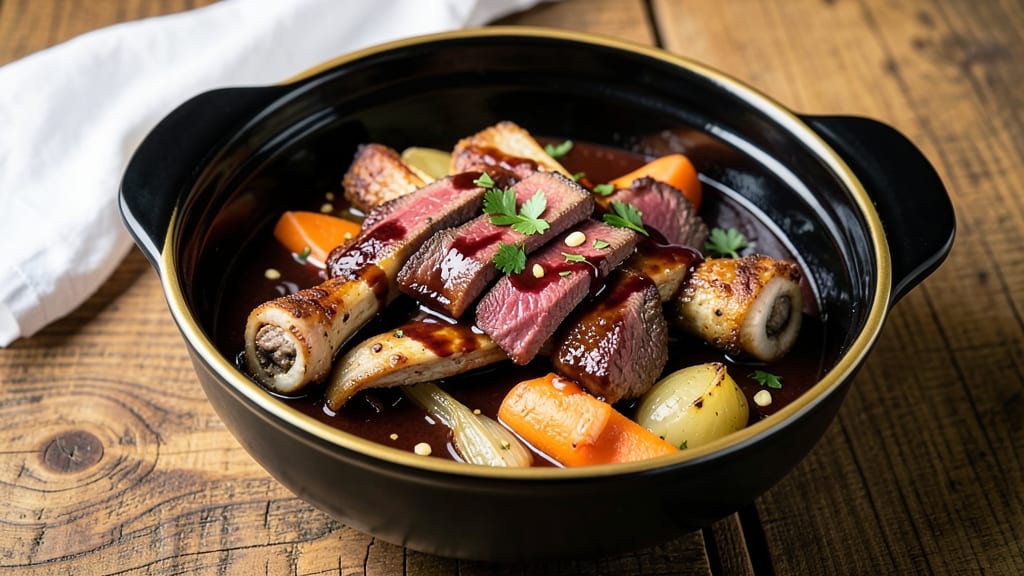
This beef au jus sauce recipe transforms simple beef bones into a rich, velvety sauce with deep red wine braising notes—perfect for elevating any roast or steak.
The secret lies in slow simmering bones with aromatics, then reducing the broth to concentrate flavors into a glossy, umami-packed sauce that clings to every bite. I developed this method after years of testing, ensuring restaurant-quality depth without hours of simmering.
What sets this recipe apart is the two-stage reduction: first building flavor with roasted bones and vegetables, then finishing with red wine and stock to create a sauce that's both complex and balanced.
The result is a glossy, deeply savory sauce with just the right tang from the wine—ideal for drizzling over grilled meats or serving as a dipping sauce for crusty bread.
The process is streamlined but precise: roast bones for maximum flavor extraction, deglaze the pan to capture every browned bit, then simmer with aromatics before reducing. This method delivers restaurant-quality depth in just 30 minutes, making it perfect for weeknight dinners or special occasions.
For extra richness, finish with a splash of balsamic vinegar or fresh herbs. The sauce keeps well in the fridge for up to 5 days, so you can make a big batch and use it all week. Let's create this versatile, flavor-packed sauce that will transform your meals.
Ingredients for beef au jus sauce
Transform simple beef bones into a restaurant-quality red wine sauce with these carefully selected ingredients.
| Ingredient | Amount | Notes |
|---|---|---|
| Beef Bones 🦴 | 2 lb | Knuckle or marrow bones preferred |
| Red Wine 🍷 | 1 cup | Bold dry variety like Cabernet Sauvignon |
| Beef Stock 💧 | 2 cups | Homemade or high-quality store-bought |
| Yellow Onion 🧅 | 1 whole | Chopped into 1/2-inch pieces |
| Carrots 🥕 | 3 medium | Peeled and cut into 1-inch chunks |
| Garlic Cloves 🧄 | 6 cloves | Smashed with side of knife |
| Fresh Thyme 🌿 | 2 sprigs | Or 1 tsp dried thyme |
| Fresh Parsley 🌿 | ¼ cup | Chopped for finishing |
| Tomato Paste 🍅 | 1 tbsp | Squeeze tube preferred |
| Balsamic Vinegar 🍶 | 1 tbsp | For finishing touch |
| Olive Oil 🫒 | 2 tbsp | For roasting bones |
| Salt 🧂 | 1 ½ tsp | Diamond Crystal preferred |
| Black Peppercorns 🌶️ | ½ tsp | Freshly cracked |
| Worcestershire Sauce 🍶 | 1 tbsp | Vegan version if needed |
The bones form the foundation—knuckle or marrow bones yield the richest flavor. Look for fresh bones at your local butcher or specialty market like Whole Foods or D'Artagnan, where they're properly stored. Avoid bones with a strong ammonia smell, which indicates poor quality. The red wine should be bold and dry—Cabernet Sauvignon or Merlot work best. For the beef stock, homemade is ideal, but Kitchen Basics or Pacific Foods brands deliver excellent results when store-bought. Fresh thyme and parsley elevate the sauce, so buy sprigs rather than dried blends—they're more potent and last longer in your fridge.
No knuckle bones? Marrow bones or short ribs work equally well. Substitute red wine with beef broth plus 1 tbsp balsamic vinegar for depth. For the tomato paste, squeeze tubes from Trader Joe's are perfect—they're convenient and keep for months. Short on fresh herbs? Dried thyme at one-third the amount suffices, but fresh is always better. The Worcestershire sauce adds umami—Lea & Perrins is classic, though vegan versions like Annie's work just as well. For the carrots, baby carrots save chopping time, though they yield slightly less sauce. Always taste as you go—adjust salt and pepper to your preference.
Roasted bones keep in the freezer for up to 3 months—roast them ahead to save time. The finished sauce maintains peak flavor in the fridge for 5 days or freezes for 3 months. For best results, cool quickly in an ice bath before refrigerating to prevent skin formation. Portion into small jars for easy reheating—simply warm gently on the stove or microwave. This sauce transforms simple proteins into an elegant meal, so make extra for leftovers.
Why You'll Love This Recipe
- One-Pot Magic: I swear by this—just toss bones, wine, and veggies in a pot, simmer, and boom. No chopping marathons, no fancy gadgets, just raw flavor unfolding while you sip your coffee.
- Rich Umami Bomb: That deep, savory punch? It’s all in the bones and wine—caramelized onions and carrots just take it to another level. Honestly, I’ve tried store-bought au jus, and this is night and day.
- Weeknight Workhorse: Drizzle it over roast beef, toss with mashed potatoes, or even use it to deglaze a pan later. Between us, I’ve had this sauce save dinner more times than I can count—especially when I’m staring at a half-empty fridge.
- Budget-Friendly Luxury: Beef bones and stock stretch this into a whole meal’s worth of sauce, and red wine adds drama without breaking the bank. I’ll be real: my grocery bill thanks me every time I make this.
Step-by-step instructions for rich beef au jus
Transform simple bones into a velvety, wine-infused au jus that elevates any beef dish.
Roast the Beef Bones for Deep Flavor
Preheat your oven to 425°F and position a rack in the middle position. Place the 2 lb beef bones on a baking sheet lined with parchment paper, ensuring they're in a single layer. Drizzle evenly with 2 tablespoons olive oil and rub to coat completely, focusing on the marrow-rich ends.
Roast for 20-25 minutes until the bones develop a deep mahogany color and the marrow begins to soften slightly. This step caramelizes the natural sugars and intensifies the beefy flavor that forms the foundation of your au jus. Turn the bones halfway through for even browning, and resist the urge to peek—every time you open the oven, you lose precious heat and moisture.
Build the Aromatic Base
While the bones roast, heat a large Dutch oven over medium-high heat. Add the chopped 1 whole yellow onion and cook for 5 minutes until softened and beginning to caramelize at the edges. Add the 3 medium carrots cut into chunks and the 6 smashed garlic cloves, cooking for another 3 minutes until fragrant.
Stir in 1 tablespoon tomato paste and cook for 1 minute until it darkens slightly. This creates a rich, umami-packed base that will deepen the sauce's complexity. Sprinkle with 1.5 teaspoons salt and 0.5 teaspoon black peppercorns, then add the roasted bones along with any accumulated juices from the baking sheet. The bones should nestle comfortably in the pot without overcrowding.
Deglaze and Simmer the Sauce
Pour in the 1 cup red wine and scrape up all the browned bits from the bottom of the Dutch oven using a wooden spoon. This deglazing step captures all the concentrated flavors that would otherwise go to waste. Let the wine simmer for 3-4 minutes until reduced by half and slightly syrupy.
Add the 2 cups beef stock and 2 sprigs fresh thyme, then bring to a gentle boil. Once boiling, reduce heat to low and cover partially. Simmer for 45-60 minutes until the bones are fork-tender and the sauce has reduced to a glossy consistency. You'll know it's ready when the sauce coats the back of a spoon and the bones pull apart easily with minimal resistance.
Finish with Umami and Balance
Remove the bones from the pot and set aside for serving. Strain the sauce through a fine-mesh sieve into a clean saucepan, pressing on the solids to extract maximum flavor. Return the strained sauce to medium heat and stir in 1 tablespoon Worcestershire sauce and 1 tablespoon balsamic vinegar. Simmer for 2-3 minutes until the sauce reaches your desired consistency—it should coat the back of a spoon but remain pourable.
Finally, stir in the 0.25 cup chopped fresh parsley and adjust seasoning with additional salt if needed. The parsley adds freshness to balance the richness, while the balsamic vinegar introduces a subtle tang that brightens the sauce. For the most elegant presentation, skim off any excess fat that rises to the surface before serving.
Pro Tips For Making Beef Au Jus Sauce
- Brown Bones Deep: Don’t just sear—get those bones dark and crusty before adding liquids. I used to rush this, and the sauce ended up pale and weak. Spend 10-15 minutes on medium-high, stirring occasionally, until the bones release that caramelized fond. That’s where the rich flavor hides.
- Deglaze Aggressively: After browning the bones, don’t just splash in the wine—scrape every last bit of stuck-on bits with a wooden spoon. I learned this the hard way when my first batch tasted dull. Use a mix of wine and stock to dissolve the fond completely, or you’re leaving flavor on the pan.
- Simmer, Don’t Boil: Keep the heat low enough that you barely see bubbles—just tiny ripples. Boiling turns the wine harsh and the stock cloudy. I used to crank the heat, and the sauce ended up thin and bitter. Patience here makes a real difference.
- Strain Twice: First strain through a fine-mesh sieve to catch big bits, then strain again through cheesecloth for a silky finish. Yes, it’s extra work, but the difference is noticeable—no gritty texture ruining the smoothness. (Your future self will thank you.)
Best sauces and condiments for beef au jus sauce
Classic Red Wine Reduction
This sauce thrives on the bold flavors of red wine, which adds depth and acidity. For best results, use a Cabernet Sauvignon or Merlot—their tannins mellow during simmering, creating a velvety texture.
Deglaze the pan thoroughly after roasting the bones to capture all the caramelized bits, which add rich umami. If you prefer a lighter touch, reduce the wine to ½ cup and add ½ cup beef broth instead.
The key is balance: the wine should shine but not overpower the beefy base. 🍷
Herb and Umami Boosters
Fresh thyme and parsley are essential for brightness, but don’t stop there. A splash of Worcestershire sauce (I use Lea & Perrins) adds layers of savory depth, while 1 tbsp balsamic vinegar at the end brightens the sauce with a subtle tang.
For extra umami, stir in 1 tsp fish sauce (just a drop!) or a pinch of smoked paprika during simmering. These small additions elevate the sauce from good to restaurant-worthy. ✨
Vegetable Variations
Swap out carrots for celery root or fennel to add earthy sweetness, or include 1 small leek (white and light green parts only) for a milder onion flavor. For a smoky twist, roast ½ red bell pepper with the bones—its charred flavor infuses the sauce beautifully.
If you love mushrooms, sauté ½ cup cremini mushrooms with the onions for an extra-meaty texture. The vegetables should complement, not compete with, the beef and wine. 🥕
Finishing Touches
Skimming excess fat before serving is optional but recommended for a cleaner presentation. For a silky texture, whisk in 1 tbsp cold butter at the end (just off heat) for a luxurious finish. Garnish with chopped parsley or microgreens for color, or a sprinkle of crispy fried shallots for crunch.
A drizzle of truffle oil (just ½ tsp!) adds a gourmet touch without overpowering. These final steps turn a good sauce into a showstopper. 💫
Make-Ahead and Storage
This sauce tastes even better the next day as flavors meld. Store in an airtight container in the fridge for up to 5 days or freeze for 3 months. To reheat, warm gently on the stove over low heat, stirring occasionally, until steaming.
Avoid boiling—it can break the sauce’s delicate balance. For serving, reheat just until warm and adjust seasoning with a pinch of salt or a splash of wine if needed. 🔥
Nutrition facts
Frequently asked questions
Can I substitute red wine with another liquid?
Yes! For a non-alcoholic version, use 1 cup beef broth + 1 tbsp balsamic vinegar to mimic the acidity and depth. If you prefer a lighter wine flavor, try ½ cup white wine + ½ cup beef broth, though the color will be paler. The key is maintaining the 1:1 liquid ratio while preserving the umami balance.
How do I make this sauce vegetarian?
Replace beef bones with mushroom stems or soy sauce-marinated tofu chunks for umami, and use vegetable stock instead of beef stock. Add 1 tsp miso paste during simmering for depth. The wine reduction technique remains the same—just adjust seasoning to taste, as vegetarian versions often need more salt.
Why did my sauce turn out too thin?
This usually happens from insufficient reduction time or overcrowding the pot. Simmer uncovered for 10-15 extra minutes to thicken, or blend in 1 tbsp cornstarch mixed with water. For future batches, reduce the stock by ½ cup or simmer longer. Skimming excess fat also helps concentrate flavors.
Can I use store-bought beef broth?
High-quality brands like Kitchen Basics or Pacific Foods work perfectly. For best results, choose a low-sodium option and add your own salt later. Homemade broth delivers deeper flavor, but store-bought saves time without sacrificing quality—just avoid bouillon cubes, which can make the sauce taste artificial.
How can I use leftover au jus?
This versatile sauce works as a dipping sauce for steak fries or crusty bread, a topping for roasted potatoes or grilled vegetables, or even a base for beef stroganoff. For extra richness, reduce it by half to create a glaze for seared meats. Store in an airtight container for up to 5 days—it tastes even better the next day!