
Sauces & Condiments
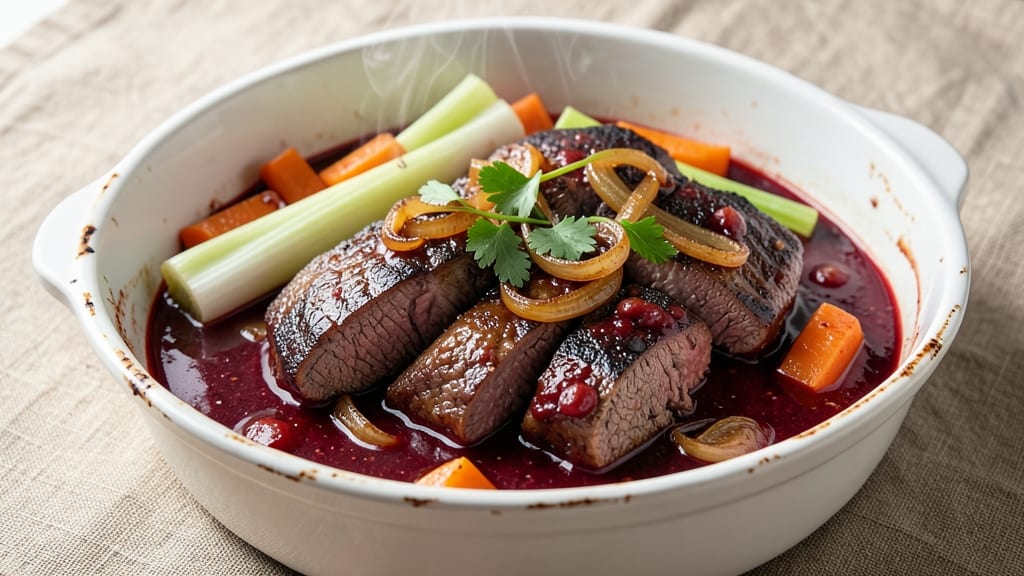
This beef and red wine sauce recipe transforms simple ingredients into a rich, velvety masterpiece that elevates any protein. The secret lies in slow reduction—letting the wine's acidity mellow while deepening its umami notes through caramelization.
I developed this version after years of refining restaurant-style techniques at home, ensuring every spoonful delivers that perfect balance of bold, earthy flavors.
The foundation begins with a classic mirepoix—onions, carrots, and celery—sautéed until sweet and golden, then deglazed with red wine to create a fragrant base. A touch of tomato paste adds depth, while beef stock and fresh herbs like thyme and bay leaf build complexity.
The sauce thickens beautifully with a simple butter roux, creating that luxurious, clinging consistency without losing its vibrant color.
What makes this sauce truly special is its versatility—it works equally well over steak, roasted chicken, or even mashed potatoes. The reduction process concentrates the flavors, so every bite carries that rich, wine-infused umami punch. Once you taste this, store-bought sauces will never compare again. Let's create something extraordinary together.
This recipe yields about 2 cups of sauce, perfect for 4 servings. Store leftovers in an airtight container in the refrigerator for up to 5 days, or freeze for up to 3 months.
The flavors actually improve with time, making it ideal for meal prep or special occasions. Ready to master this technique?
Ingredients for beef and red wine sauce
Rich, velvety sauce with deep umami and herb notes—just 13 ingredients transform any dish.
| Ingredient | Amount | Notes |
|---|---|---|
| Red Wine 🍷 | 2 cups | Bold, dry variety like Cabernet Sauvignon |
| Beef Stock 🍲 | 1 ½ cups | Homemade or high-quality store-bought |
| Tomato Paste 🍅 | 1 tbsp | Smooth, not chunky |
| Yellow Onion 🧅 | 1 whole | Medium size, finely diced |
| Carrots 🥕 | 2 whole | Medium, peeled and diced |
| Celery Stalks 🧄 | 2 whole | Trimmed and finely chopped |
| Garlic Cloves 🧄 | 4 cloves | Fresh, minced |
| Fresh Thyme 🌿 | 1 tbsp | Leaves only, chopped |
| Bay Leaf 🌿 | 1 whole | Dried or fresh |
| Unsalted Butter 🧈 | ½ cup | Cold, cubed for roux |
| All-Purpose Flour 🌾 | 1 tbsp | For thickening |
| Salt 🧂 | 1 tsp | Kosher or sea salt |
| Black Pepper 🌶️ | ½ tsp | Freshly ground |
The red wine is non-negotiable here. Cabernet Sauvignon or Merlot work best—their bold tannins cut through the richness while adding complexity. Trader Joe's and Total Wine carry excellent affordable options, but any dry red will do in a pinch. For the mirepoix, use equal parts onion, carrot, and celery—this classic ratio ensures balanced sweetness and depth. Fresh thyme and bay leaf are ideal, but dried works at one-third the amount if you're short on time. The beef stock should be rich and full-bodied; Kitchen Basics or Pacific Foods are reliable brands for quality.
No red wine? Dry sherry or beef broth with a splash of balsamic mimics the acidity and depth. Substituting tomato paste? Fresh tomato purée at double the amount works, but the sauce will be slightly thinner. For the butter roux, use cold butter and cook low and slow—this prevents burning and creates that signature velvety texture. The flour should be whisked smooth with the butter to avoid lumps. If you're making this ahead, reduce the sauce by half before storing to intensify the flavors—just add a splash of water or stock when reheating.
This sauce thickens as it cools, so reheat gently with a splash of water or stock to restore its silky consistency. Store in an airtight container in the fridge for up to 5 days, or freeze for 3 months—the flavors actually deepen over time. For meal prep, portion into small jars or silicone molds; they reheat perfectly in the microwave or stovetop. The sauce pairs beautifully with grilled steak, roasted chicken, or mashed potatoes, so make extra—you won’t regret it.
Why You'll Love This Recipe
- Pantry Magic: I swear by this sauce because it uses what I already have—no last-minute grocery runs. That jar of tomato paste, the red wine I bought on sale, even the beef stock simmering in my fridge? All I need to do is chop an onion and toss it in.
- Rich Without Effort: Between us, this sauce tastes like it simmered for hours, but it’s ready in 30 minutes. The wine mellows into something deep and savory, the carrots add natural sweetness, and the tomato paste? It’s the secret—thick, velvety, and impossible to resist.
- Leftovers That Shine: I make a double batch every time because it only gets better the next day. Freeze half for lazy nights, reheat it with pasta or roasted veggies, and no one will guess it’s not fresh. (Yes, even my picky husband asks for seconds.)
- Weeknight Hero: This is my go-to when I’m exhausted but still want flavor. One pot, minimal cleanup, and it pairs with everything—mashed potatoes, grilled chicken, even toast. Honestly, it’s the kind of sauce that makes me feel like I actually cooked something fancy.
Step-by-step instructions for crafting a rich beef and red wine sauce
This sauce builds layer upon layer of flavor—start with aromatic vegetables, then reduce until velvety.
Sauté the Vegetable Base for Foundational Flavor
Heat the 0.5 cup unsalted butter in a large, heavy-bottomed saucepan over medium heat. Add the finely diced yellow onion, diced carrots, and chopped celery stalks. Cook for 8-10 minutes, stirring occasionally, until the vegetables soften and release their natural juices. You'll notice the mixture darkens slightly—this is where the deep, caramelized flavors begin.
Add the 4 minced garlic cloves and 1 tbsp chopped fresh thyme, cooking for another 1-2 minutes until fragrant. The garlic should just begin to turn golden—don't let it brown or it'll turn bitter. Stir in the 1 whole bay leaf and 1 tbsp tomato paste, mixing well to coat the vegetables evenly. This step creates the aromatic backbone of your sauce.
Deglaze with Red Wine for Depth and Complexity
Pour in the 2 cups red wine and increase heat to medium-high. Bring to a gentle simmer, then reduce heat to medium-low and let it bubble away for 8-10 minutes, stirring occasionally. You'll see the wine reduce by about half, intensifying its flavor and leaving behind a glossy, syrupy liquid. This is where the sauce begins its transformation from simple to extraordinary.
After the wine reduces, add the 1.5 cups beef stock and 1 tsp salt. Bring to a simmer and let it cook uncovered for 15-20 minutes, stirring occasionally. The sauce should reduce to about 2 cups—it should coat the back of a spoon but still be pourable. If it reduces too quickly, cover and simmer gently to control the process. This step develops the sauce's rich, umami character.
Thicken the Sauce with a Classic Roux
In a small bowl, whisk together the 0.5 cup unsalted butter and 1 tbsp all-purpose flour to form a smooth paste. This is your roux—the secret to thickening the sauce without losing its silky texture. Add the butter-flour mixture to the simmering sauce, whisking constantly for 2-3 minutes until it thickens slightly and loses its raw flour taste.
Continue simmering for another 5-7 minutes, stirring frequently, until the sauce reaches your desired consistency—it should coat the back of a spoon but still be smooth and glossy. If it thickens too much, whisk in 1-2 tablespoons of hot beef stock to loosen it. Remove the bay leaf at this point, as it's served its purpose. Season with 0.5 tsp freshly ground black pepper and taste—adjust the salt if needed.
Refine and Finish for Restaurant-Quality Results
Strain the sauce through a fine-mesh sieve into a clean saucepan to remove any remaining vegetable pieces, if desired. Return it to medium-low heat and let it simmer gently for 5-7 minutes to refine its texture and deepen its flavor. The sauce should now be velvety, with a rich mahogany color and a balance of wine, beef, and herb notes.
Taste again and make any final adjustments—perhaps a pinch more salt or a splash of red wine to brighten the acidity. This sauce is incredibly versatile—serve it over pasta, alongside steak, or drizzled over mashed potatoes. For best results, keep it warm and serve immediately, as the flavors continue to develop even after cooking.
Pro Tips For Making Beef And Red Wine Sauce
- DEGLAZE HOT, NOT COLD: The second you pull that seared beef or onions from the pan, hit it with wine immediately—the heat difference makes all the difference. I used to wait, and the wine would just sit there like a sad, watery puddle instead of turning into a rich, velvety base. Scrape every last bit with a wooden spoon; those browned bits are pure flavor gold.
- SWEAT ONIONS LOW AND SLOW: Caramelizing onions for this sauce? Forget the high heat—it burns before it sweetens. Keep it at a simmer, not a sizzle, and let those onions turn translucent before adding anything else. My first attempt ended up bitter because I rushed, and now I swear by the 8-10 minute rule. Patience here means depth later.
- REDUCE THE WINE HALFWAY: Pour in the red wine, then walk away for 5 minutes while it reduces by half—no peeking. This isn’t the time to stir constantly; let the alcohol cook off naturally. I learned this after a sauce tasted harsh and underdeveloped. A quick taste test here tells you when it’s ready for the tomato paste.
- SALT THE STOCK EARLY: Season the beef stock before adding it to the sauce—trust me, it’s easier than fixing flat flavor later. A pinch of salt now makes the wine and tomato paste sing without overpowering. I used to add it at the end and wondered why the sauce always tasted bland. Timing matters more than you’d think.
Storing and reheating your beef and red wine sauce
Refrigerator Storage
Transfer your cooled sauce to an airtight glass container—I love using Pyrex with snap-on lids—and store it in the fridge for up to 5 days. The flavors actually deepen over time as the wine and beef stock meld together beautifully.
Always let the sauce cool completely before sealing to prevent condensation, which can dilute the richness. 💫
Freezer Preservation
For longer storage, portion the sauce into silicone molds or freezer-safe glass jars, leaving ½-inch headspace for expansion. It keeps its quality for up to 3 months—just thaw overnight in the fridge before reheating.
The sauce may thicken slightly after freezing, so add a splash of beef stock or water when reheating to restore its silky texture.
Stovetop Reheating
My preferred method is reheating on the stovetop to maintain that velvety consistency. Pour the sauce into a saucepan and warm over medium-low heat, stirring frequently. Add 1-2 tablespoons of water or stock if it thickens too much.
Keep it at a gentle simmer for 5-7 minutes until heated through—this preserves the sauce's depth and prevents curdling. 🔥
Microwave Method
For quick reheating, transfer the sauce to a microwave-safe bowl and cover loosely with a damp paper towel. Heat on 50% power in 1-minute intervals, stirring between each, until warmed through.
Avoid overcooking—the sauce can separate if heated too aggressively. This method works best for small portions and keeps the sauce's integrity intact.
Flavor Restoration
If your reheated sauce loses some brightness, revive it with a splash of fresh red wine or a pinch of salt. The butter roux helps stabilize the sauce, but a quick taste adjustment ensures it's as vibrant as the day you made it.
I often keep a small jar of the sauce in the fridge specifically for this purpose—just a spoonful can elevate any dish instantly. ✨
Portioning Tips
Divide the sauce into small jars (like 4-ounce portions) for easy meal prep. These reheat perfectly in 30 seconds in the microwave or 2 minutes on the stovetop. Label each jar with the date—this helps track freshness and ensures you always have a backup for last-minute dinners.
The sauce's versatility makes it a kitchen essential, so don't hesitate to make extra! 💡
Nutrition facts
Frequently asked questions
Can I substitute white wine for red wine in this sauce?
While white wine won't provide the same rich depth, you can use dry sherry or port wine instead—just reduce it by half to concentrate the flavor. For a lighter version, try mixing 1 cup red wine with 1 cup beef broth and a splash of balsamic vinegar to mimic the acidity and complexity. The sauce will be brighter but still delicious over grilled chicken or vegetables.
Why did my sauce turn out too thin?
This usually happens if the roux didn't cook long enough or the sauce reduced too quickly. To fix it, whisk in 1 tablespoon cornstarch mixed with 1 tablespoon cold water and simmer for 2-3 minutes until thickened. For next time, simmer uncovered longer or reduce heat to control the evaporation. The sauce should coat the back of a spoon but still be pourable.
What’s the best way to use leftover sauce?
This versatile sauce works beautifully over pasta, roasted vegetables, or grilled fish, but it also makes an amazing dip for crusty bread or a glaze for seared scallops. For extra richness, stir in 1 tablespoon crème fraîche or sour cream just before serving. The flavors actually improve when reheated gently, so don’t hesitate to use it up within 5 days.
Can I make this sauce in a slow cooker?
Yes! Sauté the mirepoix and garlic as directed, then transfer everything to a slow cooker. Cook on LOW for 4-5 hours or HIGH for 2-3 hours, stirring occasionally. The slow cooking enhances the wine’s depth and caramelizes the vegetables naturally. Finish with the butter roux on the stovetop for a smooth texture.
How do I adjust the flavor if I don’t have beef stock?
Use chicken or vegetable stock in a pinch, but add ½ teaspoon soy sauce or Worcestershire sauce to boost umami. For extra richness, stir in 1 tablespoon tomato paste or a splash of balsamic vinegar during the reduction. The sauce will still be flavorful, though the beefy depth will be slightly muted.