
Side Dishes
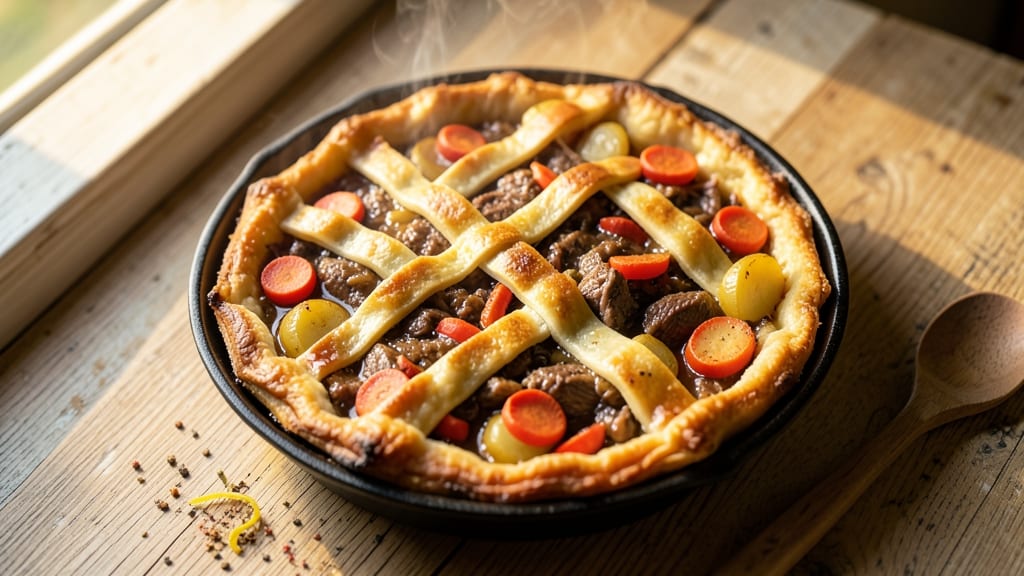
A beef and vegetable pie recipe encasing hearty beef and tender vegetables transforms a simple dinner into a comforting centerpiece. This dish delivers restaurant-quality results with a golden, crisp pastry that holds its shape while baking.
The secret lies in proper crust preparation—whether you choose a traditional homemade dough or a store-bought shortcut—and layering the filling just right for even cooking.
The filling combines tender beef, root vegetables, and rich gravy, all simmered until the flavors meld into a cohesive, hearty mixture. Pre-baking the crust ensures it stays crisp, while the filling bakes through to tender perfection.
This method balances tradition with practicality, making it ideal for both weeknight dinners and special occasions.
What you’ll achieve is a pie with a golden, shatteringly crisp crust and a filling so flavorful it disappears faster than you can slice. The beef remains tender, the vegetables caramelize slightly, and the gravy binds everything together into a cohesive, satisfying bite.
Serve with a simple green salad or crusty bread to complete the meal.
Whether you’re a seasoned baker or new to pie-making, this recipe builds confidence with clear steps and adaptable techniques. The result is a dish that feels indulgent yet approachable—perfect for feeding a family or impressing guests without stress. Let’s get started on creating this comforting classic.
Ingredients for beef and vegetable pie
These fourteen ingredients transform into a flaky, hearty beef and vegetable pie perfect for any occasion.
| Ingredient | Amount | Notes |
|---|---|---|
| Chuck Roast 🥩 | 1 ½ lb | Trimmed of excess fat, cut into 1-inch cubes |
| All-Purpose Flour 🌾 | 2 ½ cups | For homemade crust, sifted for lightness |
| Unsalted Butter 🧈 | ¾ cup | Cold and cubed for pastry |
| Carrots 🥕 | 1 lb | Peeled, sliced into 1/4-inch rounds |
| Russet Potatoes 🥔 | 1 ½ lb | Peeled, sliced into 1/4-inch rounds |
| Yellow Onion 🧅 | 1 whole | Peeled, diced into 1/4-inch pieces |
| Garlic Cloves 🧄 | 4 cloves | Peeled, minced finely |
| Beef Broth 💧 | 2 cups | Low-sodium preferred |
| Tomato Paste 🍅 | ¼ cup | Smooth texture preferred |
| Dried Thyme 🌿 | 1 tsp | Or 1 tbsp fresh thyme |
| Salt 🧂 | 1 ½ tsp | Diamond Crystal preferred |
| Black Pepper 🌶️ | ½ tsp | Freshly ground for best flavor |
| Allspice 🌶️ | ¼ tsp | Ground for warmth |
| Ice Water 💧 | ¼ cup | For dough elasticity |
The chuck roast is non-negotiable here—its marbling ensures tender, flavorful meat. Costco or local butchers often carry it at the best price, and you can ask them to cube it for you. For the crust, King Arthur flour is ideal due to its high protein content, but any all-purpose will work. The butter should be cold enough to hold its shape when pressed between fingers. Carrots and potatoes should be uniform in size to ensure even cooking throughout the pie. If you prefer a shortcut, Pillsbury refrigerated pie crust works beautifully—just brush it with egg wash for that golden finish.
No beef broth? Vegetable broth with 1 tbsp soy sauce mimics the depth. Substituting fresh thyme for dried is simple—just triple the amount. The tomato paste can be replaced with 1/4 cup crushed tomatoes, though it won't be as concentrated. For a richer crust, swap half the butter for lard or shortening. If you're short on allspice, a pinch of cinnamon and nutmeg will give a similar warmth. The key to a flaky crust is keeping everything cold until it goes into the oven—don't skip chilling the dough between folds.
Prep the filling ingredients ahead of time and store them in the fridge for up to 24 hours before assembling. The crust dough can be made 1 day in advance and kept wrapped in plastic. Once baked, the pie reheats beautifully—cover with foil and warm in a 350°F oven for 15-20 minutes. It keeps well in the fridge for 4 days or can be frozen for 3 months. For serving, a sprinkle of fresh parsley or a dollop of sour cream adds a bright contrast to the rich filling.
Why You'll Love This Recipe
- One-Pot Magic: I swear by this—dump everything in one pot, let it simmer, then top with that golden crust. No chopping frenzy, no last-minute stress. The chuck roast practically melts into tender perfection while the carrots and potatoes soften just enough to soak up all the rich juices.
- Rich, Rustic Depth: That slow-cooked chuck roast? It’s like a hug in a pie. The butter and flour crust adds a buttery contrast that makes every bite feel special. Honestly, the first time I tasted it, I thought, "Why haven’t I been making this all along?"
- Leftovers That Shine: This pie actually improves the next day. The flavors meld even deeper, and reheating it is a breeze—just pop it in the oven for 10 minutes. I’ve taken it to potlucks, packed it for lunch, and even frozen portions for lazy Sundays. It’s my go-to for feeding a crowd without the fuss.
- Budget-Friendly Feast: Chuck roast and potatoes stretch into a hearty meal that won’t break the bank. Between us, it’s the kind of dish where you get more than you expect—enough for dinner tonight, leftovers for tomorrow, and still enough to share. Plus, the crust uses basic flour and butter, so no fancy ingredients needed.
Step-by-step instructions for beef and vegetable pie
Here's the method for achieving a golden, flaky crust with a rich, savory filling that balances tender beef and sweet root vegetables.
Prepare the Filling Components
In a large Dutch oven, combine the 1.5 lb chuck roast cut into 1-inch cubes, 1 lb carrots sliced into ¼-inch rounds, and 1.5 lb russet potatoes sliced into ¼-inch rounds. This layered arrangement ensures even cooking and prevents the potatoes from sticking together.
Add the 1 whole yellow onion diced into ¼-inch pieces, 4 cloves garlic minced finely, 0.25 cup tomato paste, 1 tsp dried thyme, 1.5 tsp salt, 0.5 tsp black pepper, and 0.25 tsp allspice. Stir gently to coat the vegetables and meat evenly with the spices. The goal here is to distribute flavor without breaking down the meat prematurely.
Pour in the 2 cups beef broth and bring the mixture to a simmer over medium-high heat. Once it reaches a gentle bubble, reduce the heat to low and cover the pot. Let it cook for 20 minutes, stirring occasionally, until the vegetables begin to soften but aren't fully tender. This partial cooking prevents the filling from becoming waterlogged when the pie bakes.
Create the Homemade Crust
In a large bowl, combine the 2.5 cups all-purpose flour and 1.5 tsp salt. Cut in the 0.75 cup unsalted butter, which should be cold and cubed, using a pastry cutter or your fingers until the mixture resembles coarse crumbs with pea-sized butter pieces. This texture is crucial for achieving a flaky crust.
Gradually add the 0.25 cup ice water, 1 tablespoon at a time, mixing gently with a fork until the dough just comes together. The dough should hold its shape when pressed but not be sticky. Avoid overworking it—this develops gluten and makes the crust tough. Divide the dough into two equal portions and flatten each into a disk.
Wrap each disk tightly in plastic wrap and refrigerate for at least 1 hour. Chilling firms up the butter, which prevents it from melting during baking and ensures those signature flaky layers. This step is non-negotiable for achieving the promised flaky crust.
Assemble and Bake the Pie
Preheat your oven to 375°F. Roll out one dough disk on a lightly floured surface into a 12-inch circle—just slightly larger than your Dutch oven's diameter. Gently lift the dough and drape it over the filling, tucking any overhanging edges underneath. This creates a smooth, sealed base for the pie.
Roll out the second dough disk and cut it into 12 strips, about 1-inch wide. Arrange these strips in a lattice pattern over the filling, alternating directions for visual appeal. Brush the lattice with a beaten egg wash (1 egg + 1 tablespoon water) for a golden finish. Bake for 45-50 minutes until the crust is deep golden brown and the filling is bubbling.
For the final touch, increase the oven temperature to 400°F and bake for an additional 10-15 minutes until the crust is crisp and the filling has thickened. The pie is done when the crust is golden brown and the internal temperature of the filling reaches 195°F. Let it rest for 15 minutes before serving to allow the juices to redistribute and the filling to set.
Serve with Confidence
Slice the pie into 4 equal wedges, ensuring each portion contains both filling and crust. The contrast between the flaky, buttery layers and the rich, savory filling should be immediately apparent. Serve with a simple green salad and a crisp white wine to complement the hearty flavors.
This pie keeps well in the refrigerator for 3-4 days, making it perfect for meal prep. For best results, reheat individual slices in a 350°F oven for 10-15 minutes to restore the crust's crispness. The combination of tender beef, sweet potatoes, and aromatic vegetables creates a comforting dish that's perfect for family gatherings or cozy weeknight dinners.
Pro Tips For Making Beef And Vegetable Pie
- Sear the Chuck Roast Hard: Don’t just pat it dry—get that meat screaming hot in a dry pan with a tablespoon of oil for 4-5 minutes per side. I used to rush this, and the beef stayed tough and flavorless. The crusty brown bits (fond) are what make the gravy rich, so don’t skimp on the heat.
- Parboil Potatoes First: Toss the Russets in boiling water for 8-10 minutes before assembling the pie. This ensures they’re tender but not falling apart when baked later—no one wants a mushy bottom. Drain well, then pat dry with a towel so they don’t steam the filling.
- Don’t Overmix the Dough: Handle the flour-butter mixture like you’re folding a blanket, not kneading bread dough. Overworking it makes the crust tough and flaky in all the wrong ways. Press it into the pan just enough to seal the edges, then let it rest 15 minutes before baking.
- Use Cold Butter for Layers: Cut the unsalted butter into tiny cubes and layer them between the dough and filling. As it bakes, the butter melts into the crust, creating pockets of golden, crispy spots—like little surprise bites. Skip the warm butter, or you’ll end up with a soggy top.
Best sauces and condiments for beef and vegetable pie
Classic Gravy Base
The filling's rich, savory foundation comes from a simple beef gravy made by deglazing the Dutch oven after removing the filling. Use the same 2 cups beef broth from the recipe, plus 1 tablespoon cornstarch mixed with 2 tablespoons cold water to thicken it.
Simmer until it reaches a glossy, spoon-thick consistency—about 3-5 minutes. This gravy binds the filling and adds depth to every bite. 🥄
Mustard Cream Sauce
For a tangy twist, stir 2 tablespoons Dijon mustard and ¼ cup heavy cream into the gravy after thickening. Warm gently over low heat until smooth—this adds brightness that cuts through the richness. Garnish with chopped parsley before serving for a pop of color and freshness.
Red Wine Reduction
Swap the beef broth for 1 cup dry red wine (like Cabernet Sauvignon) when deglazing the pan. Reduce by half before adding the cornstarch slurry. The wine’s acidity enhances the beef’s umami while adding an elegant touch. Pair with earthy mushrooms in the filling for extra depth.
Cheesy Potato Topping
Before baking, sprinkle the lattice with a mix of ½ cup shredded cheddar and ¼ cup grated Parmesan. The cheese melts into a golden crust during baking, adding a creamy contrast. For extra indulgence, add ¼ cup sour cream to the filling before assembling.
Herb-Infused Oil Drizzle
After baking, drizzle the pie with 2 tablespoons olive oil infused with 1 tsp each of rosemary and thyme. Warm the oil in a pan, then cool before drizzling. This adds a fragrant, aromatic finish that elevates the dish without overpowering the filling.
Spicy Sriracha Glaze
For heat lovers, mix 1 tablespoon sriracha with 2 tablespoons honey and brush it over the lattice before the final 10-minute bake. The caramelized glaze adds a sweet-spicy contrast that pairs perfectly with the savory filling. Adjust heat with more or less sriracha to taste. 🌶️
Nutrition facts
Frequently asked questions
Can I make this beef and vegetable pie with a store-bought crust?
For a shortcut, use two 12-inch refrigerated pie crusts (like Pillsbury). Blind-bake the bottom crust for 10 minutes at 375°F with pie weights, then assemble as directed. Brush with egg wash before baking for that golden finish. The texture will be slightly less flaky but still delicious.
Why does my pie filling look watery before baking?
This happens if the vegetables release too much moisture. Pre-cook the filling for 20 minutes (as in the recipe) to reduce excess liquid, then drain any remaining broth before assembling. For extra insurance, sprinkle 1 tablespoon cornstarch over the filling before adding the top crust.
Can I prepare the filling ahead of time?
Yes! The filling can be made 1 day ahead and refrigerated in a sealed container. Reheat gently in a skillet before assembling the pie. The crust dough can also be prepped in advance—just keep it chilled until ready to roll. This makes pie assembly a breeze on busy days.
What vegetables can I substitute for carrots and potatoes?
Swap carrots for turnips or parsnips (same prep method) and potatoes for sweet potatoes or butternut squash (peeled and cubed). For a lighter option, add zucchini or green beans—just reduce cooking time by 5 minutes since they soften faster. Keep total veggie volume similar to maintain filling consistency.
How do I prevent a soggy bottom crust?
Always pre-bake the bottom crust for 10-12 minutes before adding filling (use pie weights or dried beans). For extra protection, brush the baked crust with a thin layer of egg white before adding filling—it creates a barrier. Never skip this step with wet fillings like this one!