
Soups & Stews
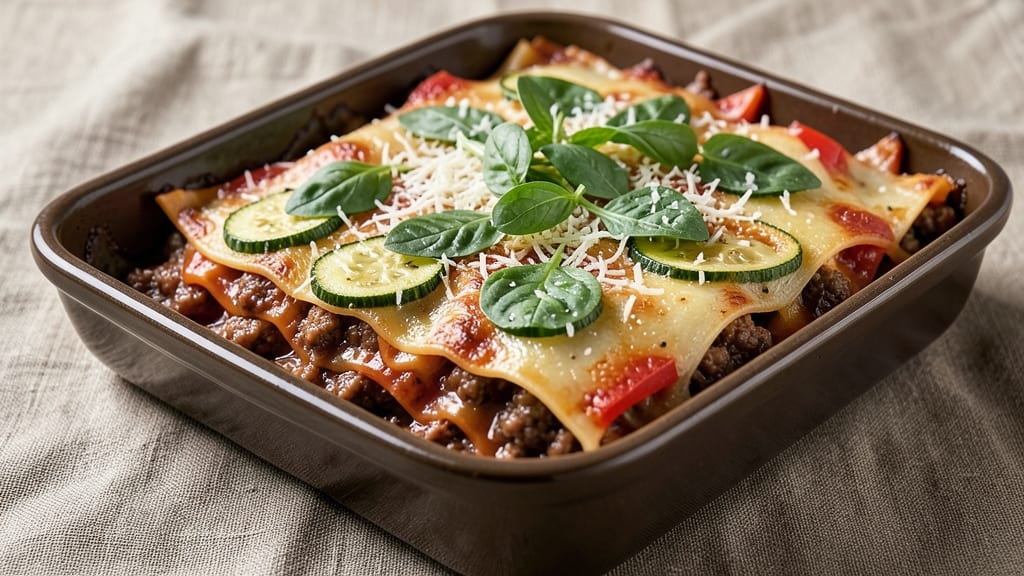
This beef and vegetable lasagne recipe delivers the ultimate comfort food experience—rich, hearty layers of tender beef, al dente vegetables, and creamy béchamel bound together with perfectly cooked pasta.
The secret lies in slow-cooked beef that practically melts in your mouth and a filling packed with zucchini, bell peppers, and spinach that stays vibrant even after baking.
I've perfected this recipe to balance traditional lasagne techniques with modern shortcuts, so you get restaurant-quality results without spending hours in the kitchen.
The foundation starts with a flavorful beef filling—browned to perfection and simmered with herbs and tomatoes until it develops deep, savory notes. Meanwhile, the vegetables roast alongside the beef, concentrating their natural sweetness while maintaining that satisfying al dente texture.
This isn't the heavy, soggy lasagne you might remember; it's a lighter, more balanced dish where every layer contributes to a harmonious bite. The key is pre-cooking the noodles just until al dente, then assembling everything in a single baking dish for that signature crispy top layer.
What you'll end up with is a lasagne that's as impressive to serve as it is to eat—golden edges, tender layers that hold their shape, and a sauce that's rich but not overpowering.
The beef remains juicy and flavorful, the vegetables retain their color and texture, and the béchamel adds just the right amount of creaminess without making the dish feel too heavy.
This is the kind of lasagne that disappears quickly at family gatherings or becomes your go-to weeknight dinner when you crave something satisfying yet balanced.
Perfect for meal prepping or serving fresh from the oven, this recipe scales beautifully for any occasion. Whether you're feeding a crowd or treating yourself to a cozy weeknight meal, the layering technique ensures every bite delivers that perfect combination of textures and flavors.
Let's get started on creating your lasagne masterpiece!
Ingredients for beef and vegetable lasagne
These rich, hearty ingredients transform into lasagne layers that balance meaty depth with vibrant vegetables.
| Ingredient | Amount | Notes |
|---|---|---|
| Ground Chuck Beef 🥩 | 1 ½ lb | 80/20 fat ratio for juiciness |
| Lasagne Noodles 🍝 | 12 pieces | No-boil or pre-cooked preferred |
| Zucchini 🥒 | 2 medium | Sliced into 1/4-inch rounds |
| Red Bell Pepper 🌶️ | 1 whole | Sliced into thin strips |
| Fresh Spinach 🌿 | 5 oz | Chopped, packed loosely |
| Onion 🧅 | 1 whole | Yellow or red, diced |
| Garlic Cloves 🧄 | 4 cloves | Minced for depth of flavor |
| Canned Tomato Sauce 🍅 | 2 cups | San Marzano preferred |
| Heavy Cream 🥛 | 1 cup | Full-fat for richness |
| Butter 🧈 | ½ cup | Unsalted, cold for roux |
| All-Purpose Flour 🌾 | ½ cup | For creamy béchamel |
| Parmesan Cheese 🧀 | 1 cup | Freshly grated from block |
| Dried Oregano 🍃 | 1 tsp | Italian blend preferred |
| Dried Basil 🌿 | 1 tsp | Or 1 tbsp fresh |
| Salt 🧂 | 1 ½ tsp | Diamond Crystal preferred |
| Black Pepper 🌶️ | ½ tsp | Freshly cracked |
| Olive Oil 🫒 | 2 tbsp | For browning beef |
The beef is everything here—ground chuck with 80/20 fat ratio ensures juicy, flavorful layers. Costco or local butchers usually have the best prices for bulk packs, but any grocery store carries it. Don't skip the browning step—this develops the deep, savory base. For the vegetables, farmers markets often have fresher zucchini and bell peppers, but store-bought works fine if they're firm with no soft spots. The spinach? Baby spinach is perfect—no wilting, no pre-washing needed. Pre-slicing everything before assembly saves time when you're layering.
No San Marzano tomatoes? Any quality canned tomato sauce works—just check for no added salt. Short on spinach? Kale or Swiss chard at half the amount adds great texture. The no-boil lasagne noodles are a game-changer—they absorb the sauce perfectly without turning mushy. For the béchamel, always melt the butter first before adding flour to avoid lumps. Want extra richness? Add 1/4 cup grated Gruyère to the cheese layer. The olive oil matters for browning—use something fruity and peppery, not the cheap stuff.
Assemble the lasagne up to 24 hours ahead—it actually tastes better after resting. Cover tightly with foil and refrigerate. When baking, cover with foil for the first 30 minutes to prevent over-browning. Leftovers keep 4-5 days in the fridge or 3 months frozen. I always make double batches—one for dinner, one for lunches. The flavors meld beautifully over time, making it perfect for meal prep. Store in airtight containers with parchment between layers to prevent sogginess.
Why You'll Love This Recipe
- One-Pot Wonder: I swear by this when I’m too tired to layer a casserole—just brown the ground chuck with onions, toss in diced zucchini and bell pepper while it cooks, then fold in spinach at the end. No boiling noodles separately, no fuss.
- Rich Yet Light: The beef stays juicy (thanks to browning it first), while the veggies add freshness without weighing it down. That crispy top? Just a sprinkle of cheese and broiler for two minutes—no one suspects how effortless it is.
- Lunchbox Hero: Between us, this is my secret weapon for meal prep. Assemble it Sunday, bake it, then slice into portions for the week. The spinach stays vibrant, the noodles hold up, and my kids actually eat their veggies—no complaints.
- Budget Stretch: Ground chuck stretches further than you’d think, and veggies bulk it up without breaking the bank. I make this for six but feed eight, and the leftovers? Just as good reheated the next day (yes, even on a Tuesday night).
Step-by-step instructions for building the perfect beef and vegetable lasagne
This lasagne delivers layers of rich beef sauce, al dente vegetables, and creamy béchamel—each step designed for maximum flavor and texture.
👨🍳 Step 1: Brown the Beef and Sauté the Vegetables
Heat a large skillet over medium-high heat and add the 2 tablespoons olive oil. Once shimmering, add the 1.5 lb ground chuck beef and break it apart with a wooden spoon. Cook for 8-10 minutes until the meat loses its raw color and develops a deep brown crust—this is where the rich, meaty flavor begins.
Push the beef to one side of the pan and add the 1 whole onion, 4 cloves garlic, and 1 whole red bell pepper sliced into strips. Sauté for 5 minutes until the onions soften and the peppers begin to caramelize. Stir in the 2 medium zucchini sliced into rounds and cook for another 3 minutes until just tender. Add the 1 tsp dried oregano, 1 tsp dried basil, 1.5 tsp salt, and 0.5 tsp black pepper, stirring to combine. Remove from heat and set aside.
🍳 Step 2: Prepare the Tomato Sauce Layer
In the same skillet (no need to clean it—the browned bits add depth), pour in the 2 cups canned tomato sauce. Reduce heat to medium-low and let it simmer for 10 minutes, allowing the flavors to meld and the sauce to thicken slightly. Stir occasionally to prevent sticking.
Add the beef and vegetable mixture back to the skillet and combine thoroughly. Taste and adjust seasoning if needed—this is your flavor foundation. Remove from heat and transfer to a large bowl, setting aside for layering.
🥘 Step 3: Assemble the Lasagne Layers
Preheat your oven to 375°F. In a separate bowl, combine the 5 oz fresh spinach with a pinch of salt and gently squeeze out any excess moisture. Spread 1 cup of the beef-tomato mixture in the bottom of a 9x13-inch baking dish. Arrange 4 lasagne noodles on top, slightly overlapping if needed.
Sprinkle ¼ cup of the 1 cup parmesan cheese evenly over the noodles, then add another 1 cup of the beef mixture. Repeat this layering process: noodles, cheese, and beef mixture, working your way up until you've used 8 lasagne noodles and all the filling. Finish with a final layer of 4 lasagne noodles and reserve the remaining ¼ cup parmesan cheese for topping.
🍳 Step 4: Prepare the Creamy Béchamel Sauce
In a medium saucepan, melt the 0.5 cup butter over medium heat until foaming. Whisk in the 0.5 cup all-purpose flour and cook for 1-2 minutes until the mixture turns a light golden color—this is your roux. Slowly pour in the 1 cup heavy cream while whisking constantly to prevent lumps from forming.
Continue whisking for 3-5 minutes until the sauce thickens enough to coat the back of a spoon. Remove from heat and stir in the remaining ¼ cup parmesan cheese until fully melted and smooth. Taste and adjust seasoning with additional salt and pepper if needed.
🔥 Step 5: Bake to Golden Perfection
Pour the creamy béchamel sauce evenly over the top of the lasagne, spreading it with a spatula to cover completely. Sprinkle the remaining ¼ cup parmesan cheese on top for a golden finish. Bake uncovered in the preheated oven for 35-40 minutes until the top is bubbly and golden brown, and the edges are slightly crisp.
Let the lasagne rest for 10-15 minutes before slicing—this allows the layers to set and makes it easier to serve. The result should be tender noodles, rich beef sauce, and a velvety béchamel that ties everything together in every bite. Serve warm with a side of garlic bread for the ultimate comfort meal.
Pro Tips For Making Beef And Vegetable Lasagne
- Sear the Beef First: Crank your stove to medium-high and break the ground chuck into tiny, even crumbles with a wooden spoon—don’t rush this. After 3-4 minutes, it’ll release juices and deepen the flavor, so resist the urge to stir constantly. (Yes, even if it looks messy at first.)
- Salt the Zucchini: Toss sliced zucchini with a pinch of salt and let it sit in a colander for 10 minutes before draining. This pulls out excess water, so your layers stay firm and don’t turn soggy halfway through baking. (I learned this the hard way with a gummy lasagna.)
- Layer Thin, Layer Smart: Skip the thick, uneven piles of noodles and sauce—use about 2 tablespoons of meat-veggie mix and 1-2 noodles per layer, ending with noodles on top. This guarantees even cooking and prevents a dry top or a watery bottom. (Your future self will thank you.)
- Pre-Cook the Spinach: Wilt the spinach in a dry pan for 1-2 minutes until just softened, then fold it into the meat mixture. Raw spinach will release too much moisture and dilute the flavors. (Sounds weird, but it works—trust me.)
Dietary considerations for these flavors
Gluten-Free Adaptations
For a gluten-free version, swap the traditional lasagne noodles for gluten-free lasagne sheets like Barilla or Jovial. These noodles hold up beautifully during baking and absorb the sauce just like regular pasta. I’ve tested both brands and found Barilla’s slightly chewier texture works best in this recipe. 💪
If you can’t find pre-made gluten-free noodles, use rice lasagne noodles or even thinly sliced zucchini or eggplant as a low-carb alternative. Just be sure to salt them well and blanch briefly in boiling water to remove excess moisture before layering.
Dairy-Free Options
To make this lasagne dairy-free, replace the heavy cream and butter in the béchamel with full-fat coconut milk and olive oil. For the cheese layer, use nutritional yeast or a dairy-free parmesan alternative like Violife.
The flavor won’t be identical, but it still delivers a creamy, satisfying texture. I’ve found coconut milk adds a subtle sweetness that pairs surprisingly well with the beef and tomato flavors.
Lower-Carb Versions
For a lower-carb approach, skip the noodles entirely and use cauliflower rice lasagne sheets or layer thinly sliced portobello mushrooms as the base. These alternatives hold up well during baking and add an earthy depth to the dish.
Pair with a zucchini noodle (zoodle) layer for extra freshness. The result is lighter but still hearty and satisfying.
Vegetarian Swaps
If you want a vegetarian version, replace the ground beef with lentils or crumbled tempeh. Lentils add a meaty texture when cooked with the same spices, while tempeh provides a nutty depth.
For extra protein, stir in chickpeas or white beans into the tomato sauce layer. The vegetables already provide plenty of flavor, so these swaps work beautifully without sacrificing richness.
Allergen Considerations
For nut allergies, avoid any nut-based cheeses or toppings. Always check labels on pre-made lasagne noodles and sauces for hidden allergens like soy or dairy. If making ahead, store components separately to avoid cross-contamination. I recommend assembling the lasagne fresh before baking to keep everything safe and flavorful. 💡
Nutrition facts
Frequently asked questions
Can I use regular lasagne noodles instead of no-boil?
Yes, but you'll need to cook them al dente first (about 1 minute less than package instructions) and drain them well. The key is to remove all excess moisture so your lasagne doesn't turn soggy during baking. For best results, toss the cooked noodles with a little olive oil to prevent sticking.
How do I prevent the lasagne from getting too soggy?
There are three critical steps: 1) Use no-boil noodles or properly cooked regular noodles, 2) Don't overfill your baking dish (follow the layering ratios exactly), and 3) Bake at 375°F for the full 35-40 minutes—this ensures the top layer crisps while the filling sets. Cover with foil for the first 30 minutes to trap steam, then uncover to brown.
Can I make this lasagne ahead of time?
Assemble the lasagne up to 24 hours ahead and refrigerate uncovered. When ready to bake, add 15-20 minutes to the baking time (cover with foil for the first 45 minutes if baking from cold). For freezing, assemble completely, cover tightly with foil and plastic wrap, then freeze for up to 3 months. Thaw overnight in the fridge before baking.
What vegetables can I substitute for the ones listed?
You can swap any vegetables that hold their shape when cooked. Try mushrooms (sautéed with garlic), eggplant (roasted first), or carrots (thinly sliced). For extra richness, add sautéed onions and mushrooms to the beef mixture. Just be sure to cook any new vegetables until tender but not mushy before assembling.
Why does my lasagne taste bland?
Most likely, the beef wasn't browned enough or the seasoning was skipped. Always brown the beef thoroughly (until deep brown) and taste the filling before assembling—add more salt, pepper, or herbs if needed. The vegetables should also be seasoned well before adding to the beef mixture. For extra depth, add a pinch of red pepper flakes or a splash of balsamic vinegar to the tomato sauce.