
Main Courses
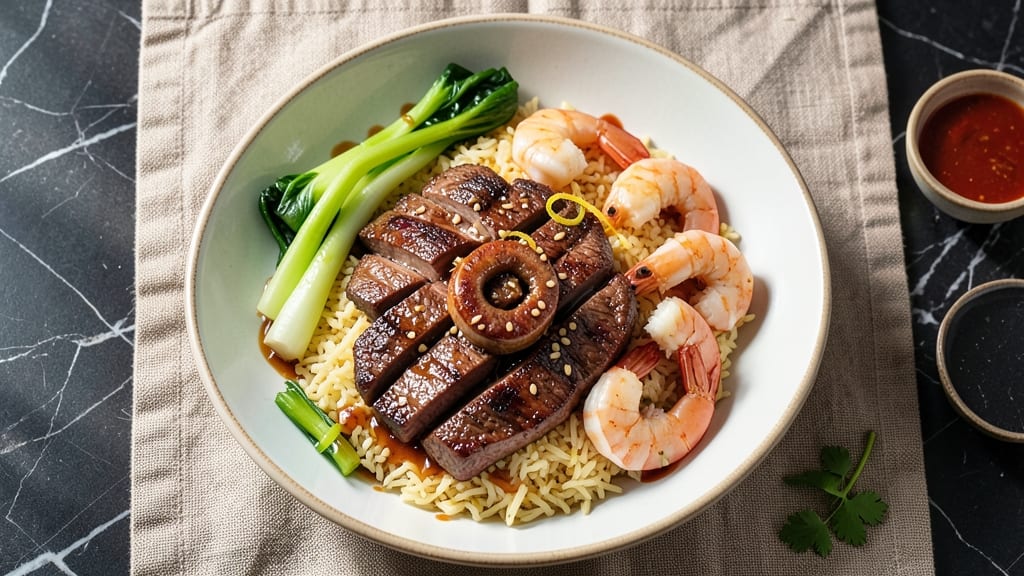
This beef and shrimp teriyaki recipe delivers a perfect balance of sweet, savory, and umami flavors in every bite. The secret lies in a rich homemade glaze that caramelizes beautifully while keeping the proteins tender and juicy.
I've perfected this dish over years of testing, ensuring the teriyaki sauce doesn't overpower the delicate shrimp or toughen the beef.
The recipe begins with a simple marinade that transforms into a glossy, sticky glaze when reduced. For the proteins, I recommend cooking them separately to prevent cross-contamination—searing the beef first for maximum flavor, then quickly cooking the shrimp to maintain their delicate texture.
This method guarantees restaurant-quality results without the fuss.
What you'll end up with is perfectly caramelized beef strips and succulent shrimp, both coated in a glossy teriyaki sauce that's sweet yet balanced with a touch of tang. The sauce clings beautifully to the proteins, creating a dish that's as impressive to serve as it is delicious to eat.
Serve this teriyaki masterpiece over steamed jasmine rice and pair with steamed bok choy or broccoli for a complete meal. The combination of textures and flavors makes this dish ideal for weeknight dinners or special occasions. Let's get started!
Ingredients for beef and shrimp teriyaki
Sweet, savory, and umami—these ingredients balance perfectly for a restaurant-worthy teriyaki.
| Ingredient | Amount | Notes |
|---|---|---|
| Ribeye Steak 🥩 | 1 lb | Thinly sliced against grain |
| Large Shrimp 🦐 | 1 ½ lb | Peeled, deveined, tails on |
| Jasmine Rice 🍚 | 1 ½ cups | Uncooked, long-grain |
| Bok Choy 🥬 | 4 whole | Baby or regular size |
| Sesame Oil 🫒 | 1 tbsp | Toasted for aroma |
| Soy Sauce 🥄 | ½ cup | Low-sodium preferred |
| Honey 🍯 | ⅓ cup | Wildflower or clover |
| Garlic Cloves 🧄 | 6 cloves | Minced for sauce |
| Ginger Root 🌿 | 1 tbsp | Freshly grated |
| Rice Vinegar 🍶 | ¼ cup | White or seasoned |
| Sesame Seeds 🌾 | 1 tbsp | Toasted for garnish |
| Vegetable Oil 🫒 | 2 tbsp | For searing |
| Salt 🧂 | 1 ½ tsp | Kosher or sea salt |
| Black Pepper 🌶️ | ½ tsp | Freshly cracked |
The beef and shrimp are stars here, but the ribeye makes all the difference. Look for well-marbled cuts at the butcher counter—they stay juicier when sliced thin. I grab mine from Whole Foods or my local Asian market, where they often have pre-sliced options. For shrimp, frozen works just fine—thaw in cold water before peeling. The bok choy? Baby or regular, but avoid anything wilted or yellowing. Fresh ginger and garlic are non-negotiable—they build the sauce's depth.
No sesame oil? Toasted peanut oil works in a pinch, though it won't have the same aroma. Swap honey for maple syrup or agave if you're avoiding it, but the sauce won't caramelize as beautifully. For extra umami, add 1 tbsp fish sauce to the marinade—trust me, it elevates everything. The rice vinegar can be subbed with apple cider vinegar, but it'll taste slightly different. And if you're short on time, pre-minced garlic and ginger from the jar saves steps without sacrificing flavor.
The teriyaki sauce keeps for 5 days in the fridge, so make extra for stir-fries or marinades. Store it in a sealed jar with a thin layer of oil on top to preserve freshness. The cooked proteins reheat beautifully—just toss them in a hot pan with a splash of sauce and water. For a quick meal, freeze the cooked beef and shrimp separately in single portions. And if you're prepping ahead, cook the rice and bok choy the same day to keep everything crisp.
Why You'll Love This Recipe
- One-Pan Magic: I swear by this when I’m too tired to scrub pots. The steak and shrimp sear in the same pan while the rice simmers in a separate pot—minimal cleanup, maximum flavor. Bok choy wilts in seconds, so you’re not stuck staring at a clock.
- Sweet-Savory Balance: That teriyaki glaze? It’s the star. The ribeye stays juicy while the shrimp soak up the sticky, umami-rich sauce—like a cross between a sizzling stir-fry and a comforting bowl of ramen. Honestly, the first bite makes me want to skip dessert.
- Weeknight to Dinner Party: Throw it together for a lazy Tuesday or dress it up for guests. Swap jasmine rice for short-grain and add a sprinkle of sesame seeds for a restaurant-worthy plate. My in-laws think I slaved over it—our secret.
- Leftovers That Don’t Suck: Unlike takeout, these reheat beautifully. The steak stays tender, the shrimp doesn’t turn rubbery, and the rice doesn’t dry out. I meal prep this all the time—just reheat with a splash of water and a drizzle of sesame oil. Budget-friendly too; one ribeye feeds four.
Step-by-step instructions for beef and shrimp teriyaki with umami crunch
Here's how to balance sweet-savory teriyaki with that perfect umami crunch—no shortcuts, just flavor.
Prep the Protein for Maximum Flavor
Start by slicing the 1 lb ribeye steak against the grain into ¼-inch thick strips. I like to cut them at a slight angle so they're uniform in size. Pat them completely dry with paper towels—this ensures a good sear later. In a bowl, toss the steak strips with 1.5 tsp salt and 0.5 tsp black pepper until evenly coated. Let them sit at room temperature for 10 minutes while you prep the shrimp.
For the 1.5 lb large shrimp, peel and devein them, leaving the tails on for presentation. Pat them dry too, then toss with ½ tsp salt and ¼ tsp black pepper. The key here is keeping everything dry—moisture steams instead of sears, and we want that caramelized crust.
Sear the Proteins for Deep Flavor
Heat 2 tbsp vegetable oil in a large skillet over medium-high heat until shimmering. Add the steak strips in a single layer and let them sear undisturbed for 1-2 minutes until they develop a golden crust. Flip and sear the other side for another 1-2 minutes. Transfer to a plate and set aside.
In the same skillet (no need to clean it—the browned bits add flavor), add the shrimp and cook for 1-2 minutes per side until they turn pink and opaque. They'll cook fast, so don't walk away. Transfer to the plate with the steak. The proteins should be hot but not fully cooked—they'll finish in the sauce.
Build the Sweet-Savory Teriyaki Glaze
Reduce the heat to medium and add 6 minced garlic cloves and 1 tbsp freshly grated ginger root. Sauté for 30 seconds until fragrant—you'll smell that aromatic punch of garlic and ginger. Pour in 0.5 cup soy sauce and 0.33 cup honey, stirring to combine. Let it simmer for 2 minutes until slightly thickened.
Add 0.25 cup rice vinegar and 1 tbsp toasted sesame oil, stirring well. Taste and adjust seasoning—you want a balance of sweet, salty, and tangy. The sauce should coat the back of a spoon but still be pourable. If it's too thick, add 1-2 tablespoons water to loosen it. This is your teriyaki base, so get it just right.
Cook the Jasmine Rice and Bok Choy
While the sauce simmers, rinse the 1.5 cups jasmine rice under cold water until the water runs clear. This removes excess starch so the grains stay separate. Cook the rice according to package instructions—usually a 1:1.5 rice-to-water ratio and 15 minutes of simmering. Fluff with a fork when done.
In a separate pan, heat 1 tbsp vegetable oil over medium heat. Add the 4 whole bok choy, stems first, and cook for 3-4 minutes until the stems soften and the leaves wilt slightly. Transfer to a plate and set aside. The bok choy should be tender-crisp, not mushy—it'll finish cooking when everything comes together.
Combine and Finish with Umami Crunch
Return the steak and shrimp to the skillet with the teriyaki sauce. Toss everything together and let it simmer for 2-3 minutes until the proteins are fully cooked and coated in the glaze. The shrimp should be opaque and slightly curled, and the steak should be tender but still holding its shape. Taste and adjust seasoning if needed—this is your chance to fine-tune the balance.
To serve, divide the jasmine rice among plates, top with the beef and shrimp mixture, and arrange the bok choy around the edges. Drizzle any remaining sauce over the top and sprinkle with 1 tbsp toasted sesame seeds for that final umami crunch. The contrast of the crispy seeds against the silky sauce and tender proteins is what makes this dish sing.
Pro Tips For Making Beef And Shrimp Teriyaki
- Sear Steak First: High heat for 2 minutes per side before adding teriyaki—this locks in juices and builds flavor the sauce can’t. I used to toss it in the sauce too soon, and the ribeye always ended up tough and dry.
- Peel Shrimp Last: Leave the shells on until after cooking, then peel and chop them into the sauce for a quick umami boost. Sounds weird, but it works: that shell flavor turns the teriyaki richer without extra ingredients.
- Don’t Overcrowd the Pan: Cook shrimp in batches if needed—too many at once steams them instead of searing. I learned this the hard way when my first batch turned out rubbery and pale.
- Toast Sesame Oil Separately: Add just a teaspoon to the finished dish at the end for aroma; heating it in the pan burns it fast. My grandmother swore by this, and she was right: that nutty aroma is what makes the dish sing.
Essential equipment for perfect results
Skillet Essentials
You'll need a large, heavy-bottomed skillet—I recommend a 12-inch cast iron from Lodge or All-Clad—to handle both proteins without crowding. The extra weight distributes heat evenly, preventing hot spots that can burn your shrimp. A non-stick skillet works too, but cast iron builds better flavor over time. 🔥
A high-quality heat source is non-negotiable. Gas stoves give you precise temperature control, but if you're using electric, opt for a flat-bottom electric burner to prevent warping. Avoid induction unless your skillet is induction-compatible—cast iron isn't always safe on these surfaces.
Always preheat your pan for 3-5 minutes before adding oil to ensure a proper sear.
Sauce Thickening Tools
For the teriyaki glaze, a wooden spoon is ideal—it won't scratch your pan like metal utensils. A small saucepan (like a 3-quart stainless steel) is perfect for reducing the sauce if you're making extra.
If you're short on time, a blender or immersion blender can help emulsify the sauce faster, but I prefer the stovetop method for deeper flavor development.
Don't forget a fine-mesh strainer if you want ultra-smooth sauce—strain out any garlic or ginger bits after simmering. For storage, transfer leftovers to an airtight glass container with a tight-sealing lid.
The sauce keeps for 5 days in the fridge or 3 months in the freezer, making it perfect for meal prep.
Prep and Presentation Gear
A sharp chef's knife (like the Wüsthof Ikon) and cutting board are must-haves for slicing the beef and prepping the shrimp efficiently. For the rice, a fine-mesh rice strainer removes excess starch for fluffy grains.
I also grab a small colander for rinsing the bok choy stems before cooking—this keeps them crisp.
For plating, a pair of tongs helps arrange the beef and shrimp neatly on rice. A small bowl for sauce drizzling and a microplane for fresh ginger and garlic elevate the presentation.
Toasted sesame seeds? Use a dry skillet—heat 1 tbsp seeds over medium for 1-2 minutes until golden, then transfer to a plate for garnishing.
Optional Upgrades
If you're feeling fancy, a thermometer (like the ThermoWorks Smoke) ensures your steak hits 135°F and shrimp reach 145°F without overcooking.
For extra umami, a mortar and pestle lets you grind dried shiitake mushrooms into the sauce—just soak 2-3 dried mushrooms in hot water for 20 minutes, then blend into the sauce. The depth of flavor is incredible.
No cast iron? A stainless steel wok works beautifully for the searing step—just make sure it's wide enough to avoid overcrowding. For a smoky twist, finish the dish under a broiler for 1-2 minutes to caramelize the sauce further. Just keep an eye on it to avoid burning!
Nutrition facts
Frequently asked questions
Can I substitute chicken for the beef in this recipe?
Yes, you can absolutely use chicken! For best results, swap the ribeye for 1.5 lbs boneless, skinless chicken thighs (they stay juicier than breast meat). Cut them into ½-inch thick strips and marinate for 15-20 minutes instead of 10 to ensure full flavor absorption. Cook the chicken for 4-5 minutes per side until it reaches 165°F internally.
How do I prevent the shrimp from turning rubbery?
The key is speed and proper cooking time! Shrimp should cook for only 1-2 minutes per side—overcooking makes them tough. Use a meat thermometer to check: they're done at 145°F. Also, never thaw shrimp at room temperature; use cold water instead. Pat them completely dry before cooking to ensure a perfect sear.
Can I make the teriyaki sauce ahead of time?
The sauce actually tastes better when made a day ahead. Store it in an airtight container in the fridge for up to 5 days or freeze for 3 months. When reheating, warm it gently on the stove—never microwave it directly as it can separate. For extra depth, add 1 tbsp fish sauce when reheating if you want more umami.
What's the best way to reheat leftovers?
For the best texture, reheat in a skillet over medium heat with a splash of water or broth. Add the proteins first to warm through, then pour in the sauce and toss everything together for 2-3 minutes. Avoid microwaving as it can make the shrimp rubbery. If reheating just the sauce, warm it on low heat and stir frequently to prevent scorching.
How can I make this dish gluten-free?
Simply swap the soy sauce for tamari or coconut aminos (both are gluten-free). Also check your rice vinegar label—some brands contain wheat. The rest of the recipe remains the same, and the flavor will still be delicious. Just be mindful that coconut aminos have a slightly different taste profile than traditional soy sauce.