
Soups & Stews
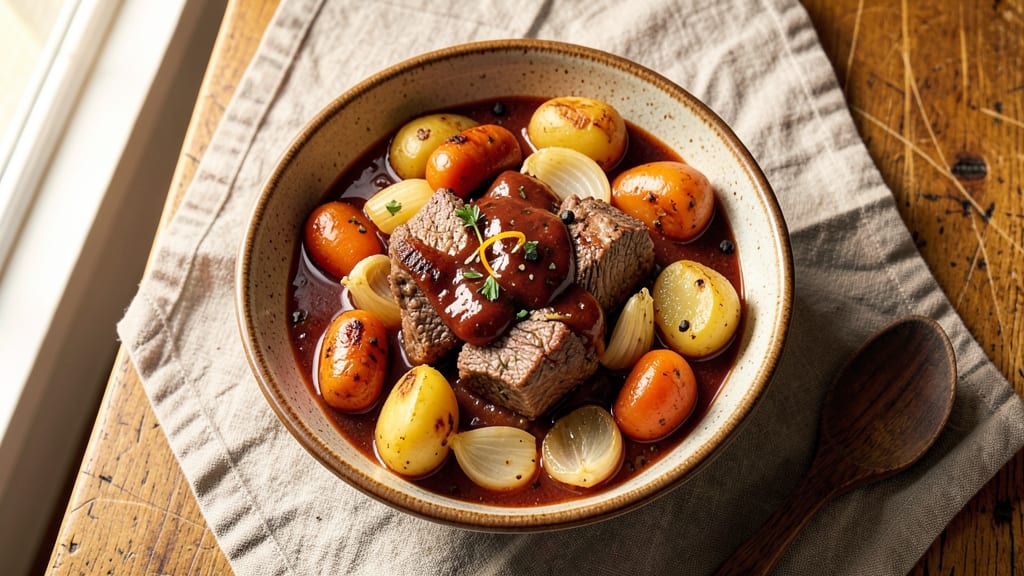
This beef and sausage stew recipe transforms tough cuts into melt-in-your-mouth perfection with deep umami flavors and caramelized root vegetables. 🔥 The secret lies in slow cooking—browning the meat first creates a rich, flavorful base that simmers into a velvety, hearty stew.
I’ve perfected this over years of testing, balancing traditional techniques with modern shortcuts for weeknight ease. What sets this recipe apart is the combination of beef and sausage, which adds layers of savory depth while keeping the texture rich and satisfying.
Caramelized onions, garlic, and root vegetables like carrots and potatoes develop natural sweetness as they cook, rounding out the dish with a perfect balance of heartiness and comfort. The long simmer ensures every bite is tender, making it ideal for feeding a crowd or prepping ahead.
The result is a deeply aromatic stew with a glossy, reduced sauce that clings to every forkful. The crusty edges of the sausage contrast beautifully with the tender beef, while the vegetables add texture and natural sweetness.
Serve with crusty bread to soak up every last drop of that flavorful broth—it’s the kind of meal that feels like a hug in a bowl. Whether you’re cooking for a cozy family dinner or a special occasion, this stew delivers restaurant-quality results without the fuss.
The recipe scales easily, and leftovers reheat beautifully, making it a versatile addition to your meal rotation. Let’s get started on creating this comforting classic.
Ingredients for beef and sausage stew
Pantry staples plus a few key ingredients for restaurant-style beef and sausage stew.
| Ingredient | Amount | Notes |
|---|---|---|
| Chuck Roast 🥩 | 2 lb | Cut into 1.5-inch cubes |
| Italian Sausages 🌭 | 2 whole | Remove casings, crumbled |
| Yellow Onions 🧅 | 3 whole | Thinly sliced for caramelizing |
| Carrots 🥕 | 1 ½ lb | Cut into 1-inch chunks |
| Russet Potatoes 🥔 | 2 lb | Cut into 1-inch chunks |
| Garlic Cloves 🧄 | 6 cloves | Minced for depth of flavor |
| Tomato Paste 🍅 | ½ cup | For rich umami base |
| Beef Broth 💧 | 4 cups | Low-sodium preferred |
| Red Wine 🍷 | 1 cup | Bold dry variety |
| Olive Oil 🫒 | ¼ cup | For browning meat |
| Fresh Thyme 🌿 | ¼ cup | Leaves only, chopped |
| Fresh Rosemary 🌿 | 1 tbsp | Chopped, for aroma |
| Salt 🧂 | 1 ½ tsp | Kosher or sea salt |
| Black Pepper 🌶️ | 1 tsp | Freshly ground |
| Bay Leaves 🌿 | 2 whole | For subtle earthiness |
The beef and sausage are the stars—chuck roast for tender chunks and Italian sausage for flavor. Grab the chuck from the meat counter (it's usually pre-cut, saving you time), or ask for it cubed if you're feeling fancy. Costco or local butchers often have the best prices, but the regular grocery store stuff works fine. The sausage? Bobby Flay or Johnsonville are reliable brands, but any good-quality Italian sausage will do. Look for good marbling in the beef—it means more flavor as it cooks. Skip the pre-shredded onions and carrots; freshly sliced caramelizes way better.
No red wine? Beef broth with a splash of balsamic works just as well. Fresh thyme and rosemary are ideal, but dried works at half the amount if that's what you've got. The tomato paste can be from a tube or a can—just make sure it's San Marzano if possible for that sweet, rich flavor. Short on time? Baby carrots and diced potatoes cut the prep work in half. The bay leaves add depth without overpowering—don't skip them, but remove them before serving.
This stew tastes even better the next day as flavors meld. Keeps 5-6 days in the fridge, freezes for 3 months. I always make a double batch—one for dinner, one for leftovers. Store in airtight containers with a splash of broth to keep it moist. Reheat gently on the stove with a little extra broth if it's too thick. Serve with crusty bread to soak up every last drop of that rich sauce.
Why You'll Love This Recipe
- One-Pot Magic: I swear by this—just toss everything in a Dutch oven, let it simmer, and walk away. No chopping boards to clean, no extra pots, just pure, hands-off cooking.
- Deep, Smoky Richness: That chuck roast gets fork-tender while the Italian sausage crumbles into the broth, releasing all its herby, garlicky goodness. Honestly, the first bite makes you forget about salads for a week.
- Leftovers That Beg for More: This stew actually improves the next day—more flavor melded, potatoes softer, meat falling apart. I pack it for lunches, freeze portions, and still crave seconds straight from the pot.
- Budget-Friendly Powerhouse: A chuck roast and a pack of sausages stretch into five or six meals without breaking the bank. Between us? This is how I feed my family well without stressing over grocery bills.
Step-by-step instructions for beef and sausage stew
Here's how to build a rich, hearty stew with layers of flavor and tender meat.
🔥 Step 1: Brown the Meat in Batches
Heat the 0.25 cup olive oil in a large Dutch oven over medium-high heat. Working in batches, add the 2 lb chuck roast cut into 1.5-inch cubes and the 2 whole Italian sausages removed from casings and crumbled. Don't overcrowd the pan—this ensures a good sear.
Cook the meat for 3-4 minutes per side until it develops a deep golden-brown crust. You'll see the edges start to crisp—that's your signal to flip. Remove the meat and set it aside. Here's the thing—this browning step creates the Maillard reaction, which builds that deep umami flavor we're after.
🍳 Step 2: Caramelize the Vegetables
In the same Dutch oven, add the 3 whole yellow onions sliced thinly and the 1.5 lb carrots cut into 1-inch chunks. Cook for 8-10 minutes until the onions soften and turn golden brown. You want them caramelized—not burned—so keep an eye on them.
Add the 2 lb russet potatoes cut into 1-inch chunks and cook for another 5 minutes to let them start softening. Stir occasionally to ensure even cooking. This step builds sweetness and depth that'll shine through in your stew. If the vegetables start sticking, add a splash of the 4 cups beef broth to deglaze.
🍳 Step 3: Build the Flavor Foundation
Stir in the 6 cloves garlic minced, 0.5 cup tomato paste, 1 cup red wine, 0.25 cup fresh thyme, 1 tbsp fresh rosemary, 1.5 tsp salt, and 1 tsp black pepper. Let this mixture bubble away for 3-4 minutes until the alcohol smell from the wine completely evaporates.
Add the 2 whole bay leaves and pour in the remaining 4 cups beef broth. Bring everything to a gentle simmer, scraping up any browned bits from the bottom of the pot. These bits are pure flavor—don't miss this step! Return the browned meat to the pot and stir to combine.
⏰ Step 4: Slow Braise to Tender Perfection
Cover the Dutch oven and transfer it to a 325°F oven. Let the stew cook for 2.5-3 hours until the meat is fork-tender and easily pulls apart. You'll know it's ready when a knife slides in and out of the largest piece of meat with minimal resistance.
Here's where patience pays off—the slow cooking breaks down the tough muscle fibers in the chuck roast, transforming it into melt-in-your-mouth tenderness. The vegetables should be soft but still hold their shape. If the liquid reduces too much before the meat is tender, add a splash of water or broth to maintain the right consistency.
🍽️ Step 5: Finish and Serve
Remove the stew from the oven and let it rest for 10 minutes before serving. This resting time allows the flavors to meld and the juices to redistribute throughout the stew. Skim off any excess fat that has risen to the surface if desired.
Taste and adjust seasoning if needed—this is your chance to perfect the balance of flavors. Serve the stew hot in deep bowls, garnished with additional fresh thyme or rosemary if you like. Each spoonful should deliver rich, savory meat, sweet caramelized vegetables, and a perfect balance of herbs and spices. Leftovers keep well in the refrigerator for up to 5 days.
Pro Tips For Making Beef And Sausage Stew
- SEAR THE SAUSAGES FIRST: Pop those Italian sausages in a dry skillet over medium-high heat before you even think about the chuck roast. The casings will blister and crack open, releasing flavor into the pan—skip this, and you’re basically missing half the point of using them. I used to toss them in raw with everything, and the stew always tasted underwhelming until I learned this.
- CUT POTATOES LARGE: Russets break down fast, so aim for 2-inch chunks—yes, even if it looks rustic. Smaller pieces turn to mush, and you’ll end up with a gluey stew. My grandmother swore by this, and she was right: bigger potatoes hold their shape while soaking up the broth, not dissolving into it.
- BROWN THE CHUCK ROAST: A deep, dark crust on the chuck roast isn’t just for looks—it’s where the Maillard reaction happens, and that’s what makes the stew taste deep. Don’t rush it; let it sit in the pan for 3-4 minutes per side until it’s got a good sear. I learned this the hard way—my first few stews tasted bland because I kept moving the meat around.
- ADD CARROTS LAST: Tossing carrots in at the start means they’ll turn to mush before the potatoes even get tender. Instead, add them with the potatoes in the last 20 minutes of cooking—this keeps them crisp-tender and bright orange, not sad and limp. Sounds weird, but it works: the stew stays cohesive, and the texture’s actually better.
Pro cooking tips for this dish
Browning Matters
Never skip browning the meat—this step creates the Maillard reaction, which builds deep, complex flavors. Use a heavy-bottomed Dutch oven like All-Clad or Le Creuset to ensure even heat distribution. Work in batches to avoid steaming, and don’t overcrowd the pan—this ensures a proper sear.
I like to brown the meat until it’s deep golden brown with crisp edges, which takes about 3-4 minutes per side. The result? A rich, caramelized crust that dissolves into the stew, creating layers of umami. 🔥
Deglaze Like a Pro
After browning, scrape up those browned bits from the bottom of the pot—they’re packed with flavor! Add 1 cup red wine (or beef broth if avoiding alcohol) and let it simmer for 2-3 minutes until the alcohol smell evaporates.
This creates a flavorful base for your stew. If using wine, opt for a bold dry variety like Cabernet Sauvignon or Merlot—their tannins add depth. Don’t rush this step; let the wine reduce slightly to concentrate its flavors. 🍷
Slow Cooking Secrets
The key to tender meat is low-and-slow cooking. After adding all ingredients, cover the pot and transfer it to a 325°F oven for 2.5-3 hours. If using a slow cooker, cook on low for 8 hours or high for 5-6 hours.
The goal is to break down the tough muscle fibers in the chuck roast without drying it out. Check the liquid level occasionally—if it reduces too much, add a splash of broth to keep the stew moist. Patience here makes all the difference! ⏰
Vegetable Timing
Add potatoes last (after onions and carrots) to prevent them from turning mushy. Carrots and onions need 8-10 minutes of caramelizing to develop sweetness, while potatoes only need 5 minutes to soften slightly before the long braise.
If your stew feels too thick at the end, stir in 2-3 tablespoons of broth to loosen it up. The vegetables should be tender but still hold their shape—this ensures a perfect bite. 🥔
Resting for Flavor
Let the stew rest for 10 minutes before serving. This allows the juices to redistribute, making every bite more flavorful. Skim off any excess fat if you prefer a lighter stew, but don’t skip this step—it’s what transforms a good stew into a restaurant-quality dish.
Taste and adjust seasoning with salt, pepper, or a splash of wine if needed. Serve with crusty bread to soak up every last drop of that rich sauce. 💫
Nutrition facts
Frequently asked questions
Can I substitute ground beef for chuck roast?
Yes, but the texture will differ. Ground beef will cook faster and won't have the same tender, melt-in-your-mouth quality. If substituting, use 1.5 lbs of 80% lean ground beef and brown it thoroughly. For best results, add 1 tablespoon tomato paste to the ground beef before browning to help replicate the depth of flavor from the chuck roast. The cooking time will also be shorter—simmer for 1.5 hours instead of 2.5-3 hours.
How can I make this stew in a slow cooker?
Brown the meat and caramelize the vegetables as directed, then transfer everything to your slow cooker. Add the remaining ingredients and cook on low for 8 hours or high for 5-6 hours. The slow cooker's gentle heat will tenderize the meat beautifully. For extra richness, stir in 2 tablespoons of flour with the broth to thicken the sauce slightly. The slow cooker method is perfect for busy weeknights!
What's the best way to reheat leftovers?
Reheat gently on the stove over medium-low heat for 5-7 minutes, stirring occasionally and adding a splash of broth or water if the stew thickens too much. Avoid microwaving—it can make the stew rubbery. For best results, cover the pot and let the stew warm through slowly. If you prefer microwave reheating, use 30-second intervals on 50% power, stirring between each interval. Leftovers taste even better the next day!
Can I make this stew ahead of time?
This stew is perfect for meal prep! It actually tastes better the next day as the flavors meld. Cook it fully, then let it cool completely before transferring to airtight containers. Store in the fridge for up to 5 days or freeze for 3 months. Thaw overnight in the fridge before reheating. The long cooking time makes this an ideal make-ahead dish for busy schedules. Freeze portions in single-serving containers for easy grab-and-go meals!
What if my stew is too thick or too thin?
If your stew is too thick, stir in 2-3 tablespoons of beef broth or water to loosen it up. For a thicker stew, mix 1 tablespoon of cornstarch with an equal amount of cold water, then stir it into the stew and simmer for 2-3 minutes until thickened. If the stew is too thin, uncover the pot and simmer uncovered for 10-15 minutes to reduce the liquid. Always taste as you go—this is your best guide for perfect consistency!