
Soups & Stews
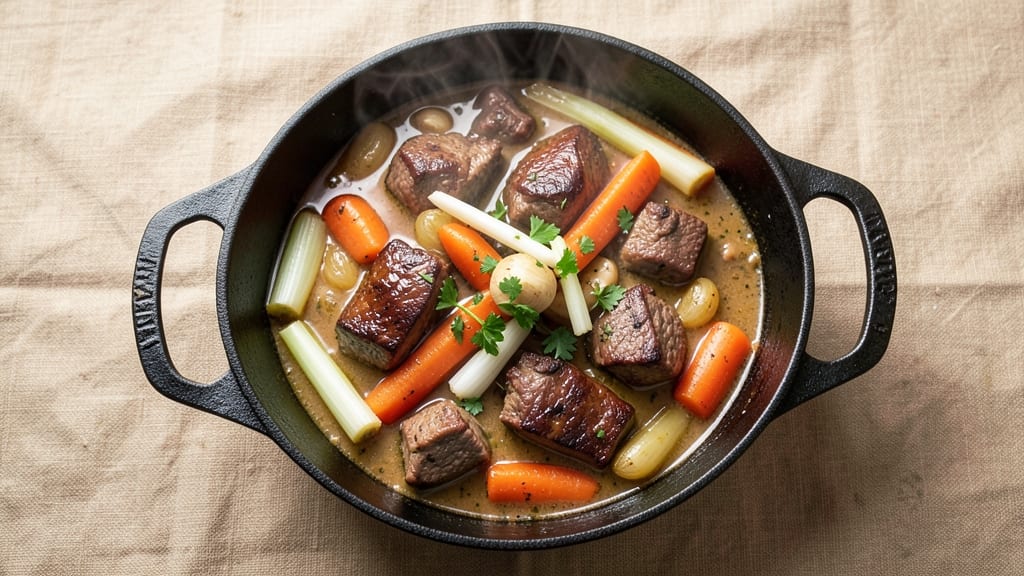
This beef and lamb stew recipe delivers the kind of deep, rich flavors that make winter dinners unforgettable. The secret lies in slow-braising tender cuts of beef and lamb with red wine, aromatic vegetables, and caramelized roots—transforming tough meat into melt-in-your-mouth perfection.
I developed this recipe after years of testing traditional braising methods, ensuring every bite delivers that restaurant-quality depth at home.
The process begins with properly browning the meat to create a flavorful crust, then simmering it low and slow in red wine and broth until the meat is fork-tender. Caramelized onions and root vegetables add natural sweetness and texture, while herbs like thyme and bay leaf build complexity.
This isn't just a stew—it's a foolproof technique that works equally well in a Dutch oven, slow cooker, or pressure cooker for modern convenience.
By the time it's done, you'll have a pot of rich, velvety stew with perfectly tender meat that falls apart easily and vegetables that soak up all the savory, wine-infused flavors.
The aroma alone will have everyone gathering around the table, while the first bite delivers that satisfying combination of tender meat, caramelized vegetables, and deep red wine richness. Serve with crusty bread to soak up every last drop.
Whether you're feeding a family or meal prepping for the week, this recipe scales beautifully while maintaining its depth of flavor. The slow-cooking process allows flavors to meld and intensify, resulting in a dish that tastes even better the next day.
Let's get started on creating this hearty, comforting classic that's perfect for chilly evenings.
Ingredients for beef and lamb stew
Sixteen ingredients transform tough meat into melt-in-your-mouth perfection through slow braising.
| Ingredient | Amount | Notes |
|---|---|---|
| Chuck Roast Beef 🥩 | 2 lb | Cut into 1.5-inch cubes |
| Lamb Shoulder 🐑 | 2 lb | Bone-in, cut into chunks |
| Yellow Onions 🧅 | 3 whole | Peeled, quartered lengthwise |
| Carrots 🥕 | 4 whole | Peeled, cut into chunks |
| Celery Stalks 🧄 | 4 whole | Trimmed, cut into pieces |
| Garlic Cloves 🧄 | 6 cloves | Peeled, smashed |
| Red Wine 🍷 | 1 ½ cups | Bold, dry variety like Cabernet |
| Beef Broth 💧 | 4 cups | Homemade or high-quality store-bought |
| Tomato Paste 🍅 | ¼ cup | Smooth, not chunky |
| Fresh Thyme 🌿 | 2 tbsp | Leaves only, chopped |
| Bay Leaves 🍃 | 2 whole | Dried, standard size |
| Olive Oil 🫒 | ¼ cup | Extra-virgin for richness |
| All-Purpose Flour 🌾 | 2 tbsp | For dredging meat |
| Salt 🧂 | 2 tsp | Kosher or sea salt |
| Ground Black Pepper 🌶️ | 1 tsp | Freshly ground preferred |
The beef and lamb cuts are critical—chuck roast and lamb shoulder deliver the best texture when braised. For the beef, look for well-marbled chuck at Whole Foods or your local butcher shop; the fat renders down beautifully during cooking. Lamb shoulder should have a good layer of fat for moisture. If you're short on time, Costco often carries pre-cut lamb chops that work well when cubed. For the vegetables, organic carrots and celery from the store's produce section will have better flavor, but conventional works fine. The onions should be sweet yellow varieties—Vidalia if you can find them, but regular yellow onions are perfectly acceptable.
No red wine on hand? Substitute with beef broth and a splash of balsamic vinegar—it mimics the acidity and depth. Fresh thyme is ideal, but dried thyme at one-third the amount works in a pinch. For tomato paste, San Marzano crushed tomatoes in a pinch can replace the paste, though you'll need to adjust the liquid. If you're cooking for a large group, consider doubling the herbs—fresh rosemary or sage add wonderful complexity. The flour is just for dredging the meat to create a light crust before browning—don't skip this step, as it builds flavor. For salt, Diamond Crystal kosher salt is my go-to, but any fine sea salt will do.
This stew tastes even better the next day as flavors meld. Store in an airtight container in the fridge for up to 5 days, or freeze portions for 3 months. For reheating, add a splash of broth or water to prevent drying out. I always make extra—it reheats beautifully for lunches or leftovers. The meat will be fork-tender, and the vegetables will have absorbed all the rich, wine-infused flavors. Serve with crusty bread to soak up every last drop of that velvety sauce.
Why You'll Love This Recipe
- One-Pot Magic: I swear by this recipe when I’m too tired to wash a million dishes. Chuck roast and lamb shoulder practically cook themselves in the same pot—just brown the meat, toss in the onions, carrots, and celery, then let it simmer. The veggies soften into the meat, so you’re left with one pot to clean (and one less thing to stress about).
- Rich, Dual-Meat Depth: Honestly, the combo of beef and lamb is where this dish shines. The chuck stays tender while the lamb adds a gamey richness that’s chef’s kiss—especially when it caramelizes just right. Between us, it’s the kind of flavor that makes you want to eat it straight from the pot, no fancy plating needed.
- Leftovers That Feel Fresh: This stew actually improves the next day. The flavors meld even more, and it reheats like a dream—perfect for lunches or late-night cravings. I’ll be real: I’ve taken it to potlucks, and no one ever guesses it’s just as good (if not better) after sitting overnight.
- Budget-Friendly Crowd-Pleaser: You’re getting two affordable cuts of meat—chuck and lamb shoulder—that stretch into a hearty meal for way less than steak. The onions, carrots, and celery are pantry staples, so it’s a win for your wallet and your freezer. Plus, it’s the kind of dish that makes you look like a hero when you feed a houseful of people.
Step-by-step instructions for beef and lamb stew
This method delivers rich, layered flavor through precise timing and technique.
Sear the Meats for Deep Flavor
Heat the 0.25 cup olive oil in a large Dutch oven over medium-high heat until shimmering. Working in batches to avoid crowding, add the 2 lb chuck roast beef and 2 lb lamb shoulder in 1.5-inch cubes and chunks. Sear undisturbed for 3-4 minutes until deeply browned on all sides, developing a rich crust that locks in juices.
Remove the meat and set aside. If the oil isn't hot enough to sizzle vigorously, let it heat for another 30 seconds before continuing. This initial searing creates the foundation for your stew's depth of flavor—don't skip this critical step. The meat will continue cooking gently in the braising liquid later.
Build the Aromatic Base
In the same Dutch oven, add the 3 whole yellow onions (quartered lengthwise), 4 whole carrots (cut into chunks), and 4 whole celery stalks (cut into pieces). Cook for 8-10 minutes until the vegetables begin to soften and develop a golden hue. Stir occasionally to promote even caramelization.
Add the 6 cloves garlic cloves (peeled and smashed) and cook for 30 seconds until fragrant. Sprinkle with 2 tbsp all-purpose flour and stir vigorously for 1 minute to create a roux that will thicken your stew. This step develops the stew's rich, complex base flavor through the Maillard reaction.
Deglaze and Simmer the Stew
Pour in the 1.5 cups red wine, scraping up all the browned bits from the bottom of the pot. Let it simmer for 3-4 minutes until reduced by half. Stir in the 0.25 cup tomato paste, 4 cups beef broth, 2 tbsp fresh thyme, 2 whole bay leaves, 2 tsp salt, and 1 tsp ground black pepper.
Return the seared meats to the pot, ensuring they're fully submerged in the liquid. Bring to a gentle simmer, then reduce heat to medium-low. Cover and cook for 2 hours until the meats are fork-tender. The vegetables should be completely tender, and the meat should pull apart easily. This slow cooking transforms tough cuts into melt-in-your-mouth textures.
Finish and Rest for Perfect Texture
Remove the lid and increase heat to medium-high to reduce the stew by 15-20 minutes until it reaches your desired consistency. Taste and adjust seasoning if needed. The stew should be rich and flavorful without being overly salty.
Let the stew rest for 10-15 minutes before serving. This resting period allows the flavors to meld and the juices to redistribute throughout the meat. Serve hot with crusty bread or over mashed potatoes to soak up every last drop of that deep, wine-infused sauce.
Pro Tips For Making Beef And Lamb Stew
- Sear the Meat Separately: Chuck and lamb shoulder need a proper crust, but crowding the pan turns your stew into a sad, greasy mess. Brown the beef first (5-6 minutes per side), then remove it and do the lamb—this keeps the meat tender and the flavors deep. I learned this the hard way after one stew tasted more like a pot of broth.
- Cut Veggies Evenly: Onions, carrots, and celery should all be roughly the same size—about ½-inch chunks. Uneven pieces mean some veggies turn to mush while others stay crunchy. Use a knife skill you already know: chop the onions first, then match the carrots and celery to that size. (Yes, even if it takes an extra minute.)
- Deglaze with Red Wine: Skip the cheap broth shortcut—deglaze that pan with a splash of red wine (about ½ cup) after browning the meat. The alcohol burns off, leaving behind rich, complex flavors that cut through the richness of the beef and lamb. I was skeptical until I tried it, and now I can’t imagine making stew any other way.
- Simmer Low and Slow: Cover the pot and simmer at a gentle bubble—you should see maybe one or two tiny bubbles every few seconds. Too much heat = tough meat. Too little = sad, watery stew. After 2 hours, check the meat; if it’s not falling apart, crank the heat to medium for 10 minutes to thicken the sauce. (Your future self will thank you.)
Serving suggestions for this recipe
Crusty Bread Pairings
Nothing complements this rich stew like a warm, crusty loaf of bread to soak up every last drop of sauce. I love using a sourdough baguette from Whole Foods or a ciabatta roll from Trader Joe's—their open crumb structure absorbs the wine-infused liquid beautifully.
For extra indulgence, brush the bread with garlic-infused olive oil and sprinkle with fresh rosemary before serving. 🥖
Roasted Root Vegetables
Add a side of roasted carrots, parsnips, and sweet potatoes tossed in 2 tbsp olive oil, 1 tsp smoked paprika, and ½ tsp salt. Roast at 400°F for 25-30 minutes until caramelized and tender.
The natural sweetness contrasts perfectly with the savory stew, creating a balanced meal. For extra flavor, drizzle with a touch of honey before serving.
Polenta or Mashed Potatoes
Creamy polenta or mashed potatoes make an excellent base for serving this hearty stew. For polenta, cook 1 cup polenta in 4 cups boiling water with ½ tsp salt for 20 minutes, stirring frequently.
For mashed potatoes, boil 2 lbs Yukon Gold potatoes until tender, then mash with 4 tbsp butter and ¼ cup warm milk. Both options soak up the rich sauce beautifully while adding a comforting texture.
Fresh Greens Salad
A light arugula or mixed greens salad with a lemon vinaigrette cuts through the richness of the stew. Toss 4 cups baby arugula with 2 tbsp olive oil, 1 tbsp lemon juice, ½ tsp Dijon mustard, and a pinch of salt.
Top with toasted pine nuts or crumbled feta cheese for added texture. This refreshing contrast balances the meal perfectly.
Cheesy Grits or Cornbread
For a Southern-inspired twist, serve the stew over creamy stone-ground grits or cornbread. For grits, cook 1 cup grits in 4 cups boiling water with ½ tsp salt and 2 tbsp butter for 15 minutes.
For cornbread, bake a simple 1-cup mix with ½ cup milk and 1 egg at 375°F for 20 minutes. The slight sweetness of the grits or cornbread complements the rich, savory stew beautifully.
Wine and Beer Pairings
Enhance the dining experience with a bold red wine like Cabernet Sauvignon or Malbec, which complements the stew's wine-infused flavors. For beer lovers, a dark ale or stout adds a malty depth that pairs wonderfully.
Serve the wine or beer slightly chilled to refresh the palate between bites of the rich, hearty stew. 🍷
Nutrition facts
Frequently asked questions
Can I use ground meat instead of beef and lamb chunks?
Ground meat won't work for this recipe—it lacks the tender texture you get from slow-braising larger cuts. The chuck roast and lamb shoulder are specifically chosen because they become fork-tender when cooked low and slow. If you're short on time, try using pre-cooked rotisserie chicken or shredded pork shoulder instead of beef/lamb.
How do I adjust this recipe for a slow cooker?
Transfer all ingredients to your slow cooker after searing the meats and building the base. Cook on low for 7-8 hours or high for 4-5 hours until the meat is tender. The liquid will reduce more in a slow cooker, so you may need to add ½ cup broth if it gets too thick.
What if I don't have red wine?
No problem! Mix 1 cup beef broth with ½ cup balsamic vinegar and ½ cup apple cider vinegar to mimic the acidity and depth. For extra richness, add 1 tsp soy sauce or 1 tbsp Worcestershire sauce. The flavor will be slightly different but still delicious.
Why does my stew taste bland after cooking?
This usually happens from one of three things: not browning the meat properly, skipping the flour roux, or insufficient seasoning. Always sear the meat until deeply browned, stir in the flour to create a flavorful base, and taste as you go—adjust salt and pepper gradually. A splash of red wine or a pinch of smoked paprika can also add depth to bland stews.
Can I make this stew in a pressure cooker?
Sear the meats and build the base as directed, then add all remaining ingredients. Cook on high pressure for 30 minutes after the pressure builds. Quick-release the pressure, then reduce the liquid by simmering uncovered for 10 minutes. The meat will be tender but slightly firmer than stovetop—perfect for sandwiches or reheating later.