
Soups & Stews
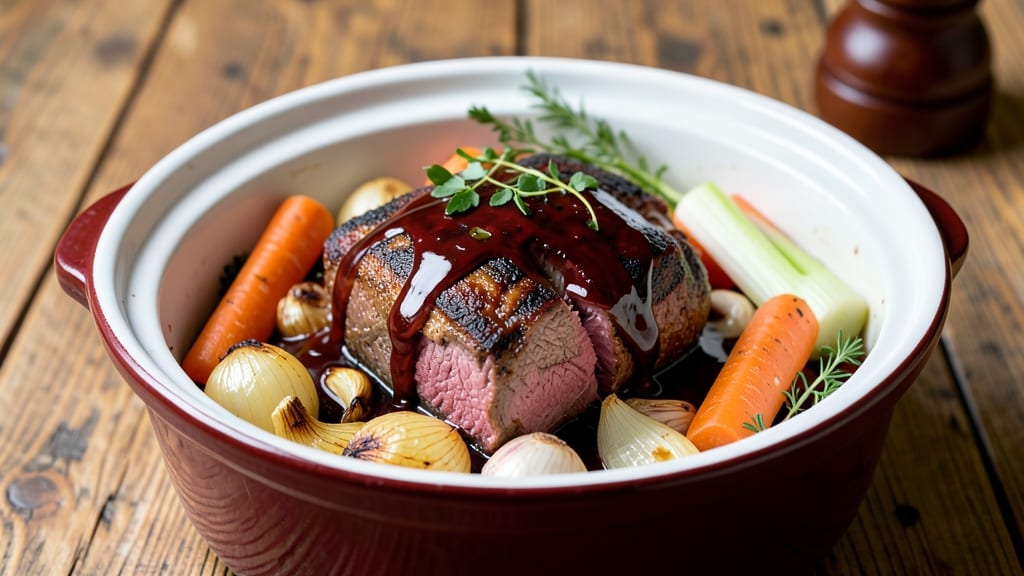
This beef and red wine slow cooker recipe transforms tough cuts into melt-in-your-mouth tenderness using just 6 hours of hands-off time. The secret lies in searing the beef first to create a caramelized fond, then deglazing with red wine—a technique that builds deep, umami-rich flavor without constant attention.
I developed this after years of testing slow-cooker beef dishes, and the difference between this version and others is night and day.
The red wine isn't just an ingredient—it's the foundation of the sauce, delivering complexity that bottled sauces can't match. We'll use a medium-bodied red like Cabernet Sauvignon or Merlot, which balances beefy richness with bright acidity.
The slow cooker does all the work while you focus on prep: chopping vegetables, measuring spices, and letting the wine reduce into a glossy, flavorful sauce that clings to every bite.
What you'll end up with is a restaurant-quality braise where the beef falls apart at the touch of a fork, swimming in a sauce that's rich yet balanced, with just the right amount of wine's acidity to cut through the fat.
The caramelized fond adds a depth of flavor that transforms this into something special—no fancy techniques required, just patience and a slow cooker.
Serve with creamy mashed potatoes to soak up the sauce or crusty bread to mop up every last drop. This dish tastes even better the next day, making it perfect for meal prep or feeding a crowd.
Let's get started on this foolproof, flavor-packed recipe that delivers professional results with minimal effort.
Ingredients for beef and red wine slow cooker
Six hours of slow cooking transforms tough beef into restaurant-quality tenderness with bold red wine sauce.
| Ingredient | Amount | Notes |
|---|---|---|
| Chuck Roast 🥩 | 2 ½ lb | Pre-cut into 1.5-inch cubes |
| Extra-Virgin Olive Oil 🫒 | 2 tbsp | For searing beef |
| Yellow Onion 🧅 | 1 whole | Diced, medium size |
| Carrots 🥕 | 4 whole | Cut into 1-inch chunks |
| Celery Stalk 🌿 | 2 whole | Diced, with leaves |
| Garlic Cloves 🧄 | 4 cloves | Minced, fresh preferred |
| Medium-Bodied Red Wine 🍷 | 1 cup | Cabernet Sauvignon or Merlot |
| Beef Broth 💧 | 1 ½ cups | Low-sodium preferred |
| Tomato Paste 🍅 | 2 tbsp | Squeeze tube preferred |
| Dried Thyme 🌿 | 1 tsp | Or 1 tbsp fresh |
| Ground Black Pepper 🌶️ | 1 tsp | Freshly cracked |
| Kosher Salt 🧂 | 1 ½ tsp | Diamond Crystal preferred |
| Fresh Rosemary 🌿 | 1 sprig | Or 0.5 tsp dried |
| All-Purpose Flour 🌾 | 1 tbsp | For thickening sauce |
The beef is everything here—chuck roast with good marbling breaks down perfectly. Costco or Whole Foods carry the best cuts, but any grocery store's pre-cubed chuck works. Look for pieces around 1.5 inches—too small and they'll overcook. Fresh thyme and rosemary from the store's herb section add that bright, aromatic note that cuts through the richness. The red wine? Trader Joe's or local wine shops often have affordable bottles of Cabernet Sauvignon or Merlot that work perfectly. If you're using dried herbs, crush them between your palms before adding to release the oils.
No red wine? Beef broth with 1 tbsp balsamic vinegar mimics the acidity, though it won't have the same depth. Fresh thyme is ideal, but dried at one-third the amount works in a pinch. The tomato paste can be skipped if you're sensitive to acidity, but it adds that umami punch. For the flour, King Arthur or Bob's Red Mill brands work best for thickening—avoid the pre-sifted kind. The carrots and celery can be swapped for mushrooms (8 oz sliced) if you prefer an earthier flavor. Just make sure to chop them uniformly so they cook at the same rate as the beef.
This dish tastes even better the next day as the flavors meld. Store leftovers in an airtight container for up to 5 days in the fridge, or freeze portions for 3 months. I always make double batches—one for dinner, one for lunches. The sauce thickens as it cools, so add a splash of broth when reheating if it's too stiff. For serving, warm crusty bread or buttery mashed potatoes on the side—sourdough from a local bakery soaks up the sauce perfectly.
Why You'll Love This Recipe
- Wine-Infused Magic: That deep red wine isn’t just for show—it transforms tough chuck into something rich and velvety. The onions and carrots caramelize right in the pot, and the olive oil keeps everything moist. Honestly, it tastes like a fancy restaurant dish, but with way less effort.
- Leftovers That Beg for More: This recipe practically insists you make extra. The beef shreds perfectly for sandwiches, and the sauce? Pour it over mashed potatoes or pasta the next day. My freezer is always stocked with portions because it reheats like a dream and never tastes dry.
- Budget-Friendly Feast: A chuck roast stretches across multiple meals without breaking the bank, and the veggies (onion, carrots, celery) are the kind of cheap, hardy staples that never go to waste. Between us, this is the kind of meal that makes grocery bills feel less painful—because you’re feeding a crowd for the price of one.
Step-by-step instructions for beef and red wine slow cooker braise
Transform tough chuck roast into melt-in-your-mouth beef using this rich, wine-infused slow cooker method.
Sear the Beef for Maximum Flavor
Heat a large skillet over medium-high heat and add the 2 tablespoons extra-virgin olive oil. Once shimmering, add the 2.5 lb chuck roast in a single layer. Let it sear undisturbed for 4-5 minutes until a deep golden-brown crust forms—this is where all the flavor begins. Flip and sear the other sides for another 3-4 minutes. You'll see those beautiful caramelized edges form, which will dissolve into the sauce later.
Transfer the seared beef to your slow cooker. Here's the thing—don't wipe out the skillet yet. Those browned bits are pure flavor gold. We'll use them to build the rich fond that makes this braise extraordinary.
Build the Aromatic Base
In the same skillet (no need to clean it), add the 1 whole diced yellow onion, 4 whole carrots cut into 1-inch chunks, and 2 whole celery stalks diced with leaves. Cook over medium heat for 8-10 minutes until the vegetables soften and begin to caramelize. Add the 4 minced garlic cloves and cook for another 30 seconds until fragrant—this is where the foundation of your sauce begins to develop.
Stir in the 2 tablespoons tomato paste and cook for 1 minute until it darkens slightly. Pour in the 1 cup medium-bodied red wine, scraping up all those delicious browned bits from the bottom of the pan. Let it simmer for 3-4 minutes until reduced by half. This reduction concentrates the flavors and removes the alcohol's sharpness.
Combine Everything in the Slow Cooker
Transfer the vegetable-wine mixture to your slow cooker with the seared beef. Add the 1.5 cups beef broth, 1.5 teaspoons kosher salt, 1 teaspoon ground black pepper, 1 teaspoon dried thyme, and 1 sprig fresh rosemary. Stir gently to combine—you want the beef mostly submerged in the liquid, but don't force it.
Cover and cook on LOW for 8 hours. This long, slow cook time is crucial—it breaks down the tough connective tissue in the chuck roast, transforming it into tender, fork-tender beef. The wine and broth will meld into a rich, velvety sauce that coats every bite. If you're short on time, you can cook it on HIGH for 5-6 hours, but the flavor won't be as deep.
Thicken the Sauce at the End
Once the beef is fork-tender (you should be able to pierce it easily with a fork), remove the beef to a plate and strain the cooking liquid through a fine-mesh sieve into a saucepan. Discard the rosemary sprig and any large vegetable pieces. Return the strained liquid to the saucepan and place it over medium heat. Stir in the 1 tablespoon all-purpose flour and cook for 2-3 minutes until the sauce thickens slightly—it should coat the back of a spoon.
Return the beef to the sauce and simmer for another 2-3 minutes just to heat everything through. The sauce should now cling beautifully to the beef, creating that perfect braising sauce we all love. Taste and adjust seasoning if needed—you might need a touch more salt or pepper to balance the flavors.
Rest and Serve
Let the beef rest for 10 minutes before serving. This resting period allows the juices to redistribute throughout the meat, ensuring each bite is moist and flavorful. Serve the beef and sauce over mashed potatoes, crusty bread, or egg noodles. The rich, wine-infused sauce pairs beautifully with these classic sides, creating a complete meal.
Here's a pro tip: if you have leftovers, they actually taste better the next day as the flavors continue to meld. Store in an airtight container in the refrigerator for up to 4 days or freeze for 3 months. When reheating, add a splash of water or broth to prevent the sauce from thickening too much.
Pro Tips For Making Beef And Red Wine Slow Cooker
- SEAR THE ROAST FIRST: I learned this the hard way—skipping the sear means flavor just pools at the bottom instead of sticking to the meat. Heat a heavy pan until it’s smoking, pat the chuck dry, and get those edges browned in 3-4 minutes per side. The crust locks in juices and makes the slow cooker sauce taste like it simmered for hours, not just 6.
- CHOP VEGETABLES UNEVENLY: Big even chunks of onion, carrots, and celery turn to mush in the slow cooker. Roughly chop the onion into 1-inch wedges, carrots into 3-inch batons, and celery into 2-inch pieces—some larger, some smaller. This ensures some texture stays intact by the end, and the edges caramelize better in the wine.
- DEGLAZE WITH WINE IMMEDIATELY: After searing the beef, don’t just dump the wine in later. Scrape up every browned bit from the pan with a wooden spoon, then pour in the red wine right away. Let it bubble for 2 minutes to pull all that flavor loose—this makes the slow cooker sauce richer than if you just tossed in cold wine straight from the bottle.
- USE A THICK CUT OF ONION: Peeling and slicing a yellow onion takes forever, but thin slices disappear into the sauce. Grab a whole onion, cut it in half through the root, then slice each half into 4-5 thick wedges (about ½-inch thick). They’ll soften but stay recognizable, adding sweetness and body to every bite. (Yes, it’s less pretty, but it works.)
Perfect pairings for beef and red wine slow cooker
Wine Pairings
The same red wine you cook with makes the perfect pairing for your braise. A bold Cabernet Sauvignon or Merlot complements the dish's rich flavors beautifully—look for bottles like La Crema or Apothic that have enough tannins to stand up to the beef.
The wine's acidity cuts through the sauce's richness, cleansing your palate between bites. 🍷
Beer Pairings
For beer lovers, a malty amber ale or brown ale works wonders. Brands like Samuel Adams Noble Experiment or Allagash Brown provide a caramel sweetness that balances the wine's depth.
If you prefer lighter options, a Belgian witbier like Hoegaarden adds a refreshing citrus note that contrasts nicely with the beef's umami. 🍺
Side Dish Ideas
Creamy garlic mashed potatoes are a classic choice—their buttery texture soaks up every drop of the wine sauce. For a lighter option, try sautéed green beans with crispy pancetta or roasted root vegetables like carrots and parsnips. Both sides let the beef shine while adding freshness to the plate. 🥔
Bread Service
No braise is complete without crusty bread to mop up the sauce. A baguette from a local bakery or sourdough with a crispy crust works perfectly. Toast it lightly before serving to enhance its texture and make it even better at soaking up the rich, wine-infused sauce. 🥖
Cheese Pairings
For a sophisticated touch, serve with aged cheddar or gruyère cubes. Their sharp, nutty flavors complement the beef's richness, while blue cheese adds a bold contrast if you prefer something more adventurous. A simple cheese board with these options elevates the meal to restaurant-quality. 🧀
Garnish Finishes
Brighten the plate with fresh parsley or thyme just before serving. A drizzle of truffle oil (½ teaspoon) adds a luxurious touch, while a sprinkle of crushed black pepper enhances the dish's depth. These final touches make your braise look as impressive as it tastes. ✨
Nutrition facts
Frequently asked questions
Can I use a different cut of beef instead of chuck roast?
Chuck roast is ideal for its fat content and tenderness, but you can substitute with stew beef or even brisket. Avoid lean cuts like sirloin—they won't develop the same rich texture. If using brisket, cut it into 1.5-inch cubes and plan for an extra 1-2 hours of cooking time on LOW.
What if I don't have red wine? Can I substitute it?
Yes! Use 1 cup beef broth plus 1 tablespoon balsamic vinegar for acidity, or 1 cup cranberry juice for a slightly sweet alternative. For deeper flavor, add 1 teaspoon soy sauce or 1 teaspoon Worcestershire sauce. The dish will still be delicious, though the wine's complexity will be missing.
Why does the recipe call for searing the beef before slow cooking?
Searing creates a caramelized crust (fond) that dissolves into the sauce, adding deep, meaty flavor. Without it, your dish will taste more like broth than a rich braise. Skip this step only if you're short on time, but the flavor difference is noticeable. Pro tip: Don't crowd the pan when searing—give the beef space to brown properly.
Can I make this recipe in an Instant Pot instead of a slow cooker?
Yes! Sear the beef first, then add all ingredients to the Instant Pot. Cook on HIGH PRESSURE for 60 minutes (natural release for 10 minutes, then quick release). Finish by thickening the sauce on the stove as directed. The Instant Pot version cooks 3x faster but may be slightly less tender.
How do I know when the beef is fully cooked?
The beef should be fork-tender—easily pierced with a fork and falling apart slightly. For chuck roast, internal temperature should reach 203°F (though it will continue cooking slightly while resting). If using a meat thermometer, check the thickest piece. Overcooked beef becomes dry, so aim for just until tender.