
Main Courses
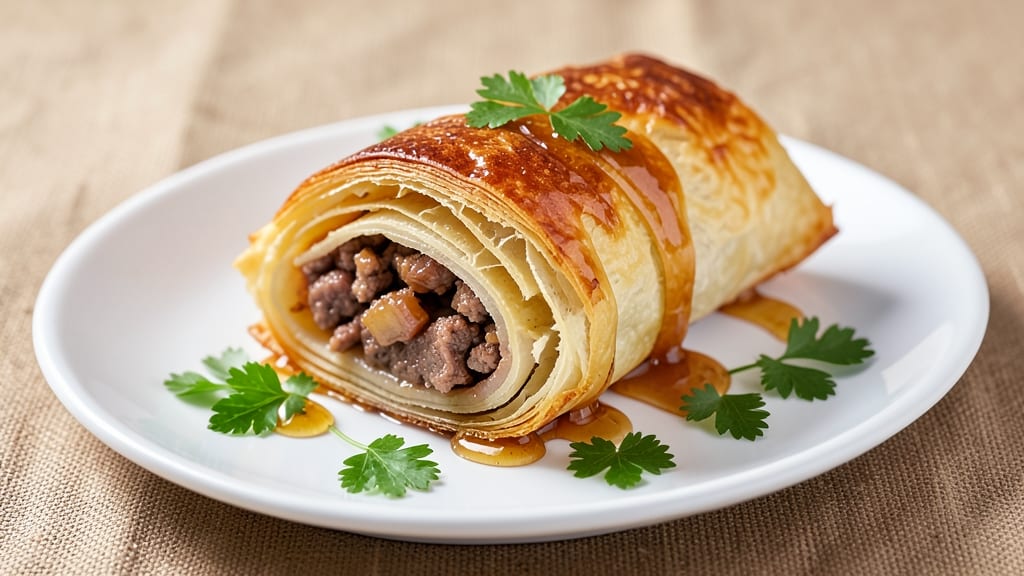
Beef and pork sausage rolls deliver the perfect balance of flaky, golden layers and rich, savory meat filling—every bite is a harmony of textures and flavors. I perfected this recipe after years of testing different pastry techniques and meat blends, ensuring the filling stays juicy while the pastry achieves that signature crispness. The secret lies in using a mix of beef and pork for depth, combined with just the right amount of seasoning to enhance, not overpower, the natural flavors.
What sets these sausage rolls apart is the foolproof method for achieving restaurant-quality results at home. Whether you choose traditional puff pastry for that signature flakiness or a quick bread dough for a lighter texture, the process is straightforward—no advanced techniques required.
The filling cooks gently in the oven, ensuring it stays tender and juicy, while the pastry crisps to golden perfection. This recipe also includes optional garnishes like mustard seeds or grated cheese for added flavor complexity.
By the time you pull these from the oven, you'll have a dish that's crisp on the outside, tender on the inside, and packed with savory goodness. The aroma alone will have everyone gathering around the table, and the first bite delivers that satisfying contrast of textures.
This recipe is designed to impress, whether you're serving a crowd or treating yourself to a comforting meal. Let's get started on creating these irresistible sausage rolls!
For those who love customization, you can experiment with different herbs or spices in the filling, or even swap out the pastry for a whole wheat version. The beauty of this recipe lies in its versatility—it's a classic with room for your own creative touches.
The key is patience, especially when handling the pastry, to ensure those perfect flaky layers. Trust me, the effort is worth every bite.
Ingredients for beef and pork sausage roll
Pantry staples meet butcher counter finds for restaurant-style sausage rolls at home.
| Ingredient | Amount | Notes |
|---|---|---|
| Ground Beef 🥩 | ½ lb | 80% lean for juiciness |
| Ground Pork 🐖 | ½ lb | Lean or fatty works |
| Puff Pastry Sheets 🍞 | 2 whole | Store-bought or homemade |
| All-Purpose Flour 🌾 | 1 cup | For bread dough option |
| Unsalted Butter 🧈 | ¼ cup | Cold, cubed for dough |
| Milk 🥛 | ¼ cup | Cold for dough |
| Yellow Onion 🧅 | 1 whole | Finely diced |
| Garlic Cloves 🧄 | 2 cloves | Minced for filling |
| Fresh Parsley 🌿 | ¼ cup | Chopped, for freshness |
| Dried Thyme 🌿 | 1 tsp | Or 1 tbsp fresh |
| Ground Black Pepper 🌶️ | ½ tsp | Freshly cracked |
| Salt 🧂 | 1 tsp | Kosher or sea salt |
| Mustard Seeds 🌶️ | ½ tsp | Optional for garnish |
| Egg 🥚 | 1 whole | For egg wash |
| Milk 🥛 | 2 tbsp | For egg wash |
The meat blend is key—ground beef and pork give that classic sausage roll depth. Costco or local butchers usually have pre-ground mixes, but if you're doing it yourself, 80% lean beef keeps it juicy. I always grab extra pork for that rich fat content. Fresh parsley is a must (the good stuff, not the dried kind)—it brightens up the filling. For the pastry, Pepperidge Farm puff pastry is my go-to for foolproof flakiness, but homemade works too if you're feeling ambitious.
No fresh parsley? Dried parsley at half the amount works in a pinch. Want more flavor? Add 1 tsp smoked paprika to the filling. Swapping puff pastry? A homemade bread dough (flour, butter, milk, pinch of salt) gives a lighter texture. The egg wash is non-negotiable—1 egg + 2 tbsp milk brushed on before baking ensures that golden finish. Mustard seeds are optional but add a nice crunch if sprinkled on top right after baking.
Keep the meat mixture in the fridge for up to 2 days before wrapping. Puff pastry? Use within 1 day of opening. These reheat beautifully—350°F for 10 minutes in the oven keeps them crispy. I always make a double batch and freeze half wrapped in foil—3 months in the freezer with no texture loss. Perfect for quick weeknight dinners!
Why You'll Love This Recipe
- Five-Ingredient Magic: I swear, the combo of ground beef and pork makes these rolls richer than anything store-bought. The pastry’s buttery layers melt into a flaky embrace, while the flour-butter seal keeps them juicy—no soggy nightmares here.
- Zero-Fuss Assembly: Honestly, rolling these takes less time than arguing with a picky eater. Spread the seasoned meat, fold, chill, bake—no fancy techniques, just a knife and a sheet pan. My kids even "help" (read: make a mess) and still love the result.
- Lunchbox Legend: Between us, these freeze like a dream. Reheat for a packed lunch or pull them straight from the freezer for game day snacks. The puff pastry stays crisp, the filling’s still warm—perfect for when you’re too busy to think.
- Budget Booster: Ground beef and pork stretch farther than you’d think, and puff pastry feels like a splurge but costs less than takeout. I make a double batch, freeze half, and suddenly "dinner" is solved for weeks—without breaking the bank.
Step-by-step instructions for beef and pork sausage rolls
Here's how to create restaurant-worthy sausage rolls with perfectly flaky pastry and savory filling.
Prepare the Savory Meat Filling
In a large skillet, combine the 0.5 lb ground beef and 0.5 lb ground pork over medium heat. Cook for 5-7 minutes, breaking it apart with a wooden spoon until it loses its raw color and starts to brown. This process helps render the natural fats, which will keep your filling juicy.
Add the finely diced yellow onion and cook for another 3-4 minutes until softened and translucent. Stir in the minced garlic cloves, 1 tsp dried thyme, 0.5 tsp ground black pepper, and 1 tsp salt. Cook for 1 minute until fragrant—this releases the aromatics that will infuse your filling with deep flavor. Remove from heat and let cool for 10 minutes before assembling.
Roll Out the Puff Pastry
Preheat your oven to 400°F and line two baking sheets with parchment paper. Place one of the puff pastry sheets on a lightly floured surface and gently roll it out to about 12x15 inches if needed—just enough to cover the sheet pan. Keep the second sheet chilled and covered until ready to use.
I like to use a rolling pin with even pressure to maintain consistent thickness. If the pastry resists, let it sit at room temperature for 5 minutes to soften slightly. The goal is to create an even layer that will puff beautifully in the oven. Cut the pastry into 4 equal rectangles (about 6x8 inches each) for easy handling.
Assemble the Sausage Rolls
Spread about 1/4 cup of the meat filling onto the short end of each pastry rectangle, leaving a 1-inch border at the top. Using a spoon or offset spatula, spread the filling evenly across the width, leaving about 1/2 inch of space at the bottom edge. This ensures you'll have enough pastry to seal the rolls properly.
Roll up tightly from the bottom, using your fingers to press the edges firmly as you go. The filling should be completely enclosed, with no gaps showing. Place the completed sausage rolls seam-side down on the prepared baking sheet, about 1 inch apart. Repeat with the remaining pastry and filling.
Create the Golden Egg Wash
In a small bowl, whisk together the 1 whole egg and 2 tbsp milk until fully combined. This egg wash will give your sausage rolls that beautiful golden finish and help create a crispy, flaky crust. Brush the mixture evenly over the tops of all sausage rolls, making sure to get into the crevices where the pastry layers meet.
Sprinkle the 0.5 tsp mustard seeds (if using) lightly over the tops for a subtle crunch and visual appeal. The mustard seeds add a nice contrast to the flaky pastry and complement the savory meat filling. Let the egg wash sit for 2-3 minutes while you prepare for baking—this gives it time to set slightly for better adhesion.
Bake to Flaky Perfection
Bake the sausage rolls in the preheated 400°F oven for 20-25 minutes until they're golden brown and puffed. You'll know they're ready when the pastry turns a deep golden color and the filling is heated through. For extra flakiness, I like to bake them on the middle rack where the heat is most even.
If the tops brown too quickly before the filling is fully heated, tent loosely with aluminum foil for the last 5-10 minutes of baking. Let the sausage rolls rest for 5 minutes before serving—this allows the juices to redistribute and prevents the filling from oozing out when you cut into them. Serve warm with your favorite dipping sauce or simply enjoy them as-is!
Pro Tips For Making Beef And Pork Sausage Roll
- CHILL THE SAUSAGE MIX: After mixing ground beef and pork with flour and butter, pop the filling in the fridge for 20-30 minutes before rolling. Cold meat holds its shape better when wrapped in puff pastry—no more sad, squished rolls that look like they’ve been run over by a truck.
- BRUSH WITH EGGS, NOT MILK: Skip the water or milk for egg wash—beat 1 egg with a splash of water (about 1 tablespoon) and brush it on the puff pastry after shaping the rolls. The egg sets faster and gives you that golden, glossy finish without making the pastry soggy underneath.
- SEAL THE EDGES WITH WATER: Before baking, dampen the edges of the puff pastry with a pastry brush and water. Press them together firmly—this creates an airtight seal that keeps the sausage filling from oozing out like a poorly wrapped burrito.
- BAKE ON HIGH, THEN CRANK DOWN: Start the rolls at 425°F (220°C) for the first 10 minutes to get that initial rise and crust. Then drop the heat to 375°F (190°C) for the remaining 15-20 minutes. High heat first = flaky layers; low heat after = even cooking without burning.
Troubleshooting this dish
Pastry Too Tough
If your sausage rolls turn out tough instead of flaky, the issue is likely overworked pastry or insufficient butter layers. I've found that puff pastry needs gentle handling—never stretch it, and avoid pressing too hard with your rolling pin.
For homemade dough, ensure you've incorporated enough cold butter (0.25 cup cubed) and chilled the dough for 30 minutes before rolling. Overworking the dough releases gluten, which makes it dense rather than tender. 💡
Filling Too Dry
Dry filling happens when the meat mixture loses moisture during cooking. To prevent this, cook the beef and pork over medium heat—never high heat—which helps render fat gradually instead of burning it off.
Add 1 tbsp water or beef broth to the pan during the last 2 minutes of cooking to restore moisture. Also, avoid overcooking the onions; they should be soft but not mushy. Let the filling cool completely before assembling to avoid melting the pastry prematurely.
Rolls Falling Apart
If your sausage rolls unravel during baking, the filling might be too loose or the pastry wasn't sealed properly. Spread the filling in a 1-inch-wide band along the short end of the pastry, leaving a 1-inch border at the top.
Roll tightly from the bottom, pressing edges firmly to create a tight seal. For extra security, brush the sealed edge with egg wash before baking. If using homemade dough, ensure it's fully kneaded and rested—underworked dough lacks structure and can't hold the filling.
Uneven Browning
Spotty browning usually means the egg wash wasn't distributed evenly or the oven temperature fluctuates. Whisk the egg wash thoroughly and use a pastry brush to coat the rolls completely, including the crevices. For even baking, rotate the pans halfway through the 20-25 minutes in the oven.
If your oven runs hot, reduce the temperature to 375°F and bake for 5-10 minutes longer. A dark baking sheet can also cause uneven browning—use parchment paper or a light-colored pan instead.
Freezer Burn or Dryness
Freezer burn happens when air reaches the pastry or filling. Wrap each sausage roll individually in plastic wrap, then place them in a freezer-safe bag, squeezing out excess air. For extra protection, add a layer of parchment paper between rolls.
When reheating, bake from frozen at 375°F for 25-30 minutes until internal temperature reaches 165°F. Avoid microwaving—it steams the pastry, making it soggy. Store in the freezer for up to 3 months for best texture.
Pastry Not Puffing
Puff pastry needs steam to rise properly. Place a small baking sheet on the lower oven rack 10 minutes before baking and add 1 cup hot water to create steam. If using homemade dough, ensure you've folded the butter layers at least 3 times during preparation.
Avoid opening the oven door during the first 15 minutes of baking—temperature drops prevent proper rising. For extra flakiness, brush the pastry with melted butter before adding the filling.
Nutrition facts
Frequently asked questions
Can I use ground turkey instead of beef and pork?
You can substitute ground turkey, but it will change the texture and flavor profile. Use a 50/50 blend of ground turkey and pork to maintain juiciness, as turkey tends to dry out more quickly. For best results, add 1 extra tablespoon of water or broth to the filling during cooking. The flavor will be lighter, so boost it with extra herbs like rosemary or sage.
How do I make these sausage rolls ahead of time?
These reheat beautifully! Assemble the sausage rolls and refrigerate them unbaked for up to 24 hours before baking. For freezing, wrap each roll individually in plastic wrap, then place in a freezer bag. Bake from frozen at 375°F for 30-35 minutes until golden and heated through. Thaw overnight in the fridge if you prefer a gentler reheat.
What's the best way to reheat store-bought versions?
For maximum crispiness, reheat store-bought sausage rolls in a 375°F oven for 10-12 minutes on a baking sheet. Wrap them in foil for 5 minutes first to warm through, then unwrap and crisp for the last 2-3 minutes. A toaster oven works too—set to 350°F for 8-10 minutes. Microwaving makes them soggy, so avoid it whenever possible.
Can I make these with a different type of pastry?
For a lighter texture, try phyllo dough (thin layers with a crispy finish) or fillo dough for Mediterranean-style rolls. A homemade pie crust works too—just roll it slightly thinner than puff pastry. For extra flakiness, brush each layer with melted butter before adding filling. Avoid dense doughs like biscuit dough, as they won't hold the filling well.
Why does my homemade dough turn out dense?
Dense dough usually comes from overworking the gluten or insufficient fat. Use cold butter (never softened) and handle the dough minimally. Chill it for 30 minutes between folds if making puff pastry from scratch. For bread dough, ensure you've rested it for 1 hour before rolling. Over-kneading releases too much gluten, making the texture tough instead of tender.