
Main Courses
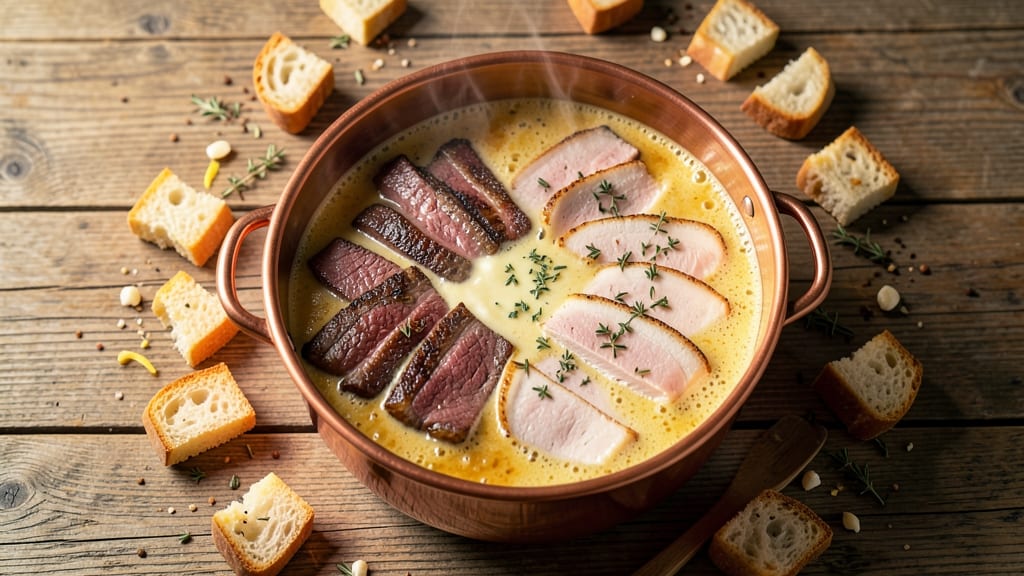
This beef and chicken fondue recipe transforms a cozy dinner into an interactive feast where every bite becomes a moment of indulgence.
The secret lies in a velvety cheese sauce—Gruyère and white wine create a rich, golden base that melts effortlessly—while seared beef and chicken strips add hearty texture for dipping.
What sets this apart is the crispy bread bites, toasted to perfection so they hold up against the warm cheese without turning soggy.
The foundation of a great fondue starts with precise technique: maintaining a gentle simmer in the sauce to keep it smooth, not grainy, while ensuring the proteins are cooked just enough to stay tender yet sturdy for dipping.
A fondue pot with a built-in burner makes this easier, but a double boiler works too—just keep the heat low and steady. The result? A bubbling, aromatic cheese bath that’s ready to be dipped into at a moment’s notice.
By the time you’re ready to serve, you’ll have a table full of golden bread bites, perfectly seared beef and chicken strips, and a pot of luscious cheese sauce that invites everyone to dig in.
The contrast of crispy bread against the creamy cheese, paired with the savory proteins, creates a balance that’s impossible to resist. This isn’t just a meal—it’s an experience that turns dinner into a shared adventure.
Serve with an assortment of vegetables—bell peppers, broccoli, and carrots work beautifully—and a crisp white wine to complement the flavors. The key to success? Keep the fondue pot warm and the dippers coming—this recipe is all about the communal joy of sharing. Let’s get started!
Ingredients for beef and chicken fondue
Six ingredients transform this fondue into a restaurant-worthy centerpiece with crispy bites and rich cheese sauce.
| Ingredient | Amount | Notes |
|---|---|---|
| Gruyère Cheese 🧀 | 2 cups | Freshly grated, aged 18+ months |
| Emmental Cheese 🧀 | 1 cup | Shredded, mild flavor |
| Dry White Wine 🍷 | 1 cup | Sauvignon Blanc or Chardonnay |
| Beef Tenderloin 🥩 | 1 lb | Thinly sliced into strips |
| Boneless Chicken Breast 🍗 | 1 ½ lbs | Cut into 1-inch strips |
| Baguette 🍞 | 1 whole | Crust removed, cut into cubes |
| Unsalted Butter 🧈 | 2 tbsp | For toasting bread bites |
| Garlic Cloves 🧄 | 4 cloves | Minced for bread bites |
| Fresh Thyme 🌿 | ¼ cup | Chopped, for cheese sauce |
| All-Purpose Flour 🌾 | 1 tbsp | For dredging proteins |
| Kosher Salt 🧂 | 1 ½ tsp | Fine grain preferred |
| Black Pepper 🌶️ | 1 tsp | Freshly ground |
| Cornstarch 🌾 | 1 tbsp | For thickening sauce |
| Vegetable Oil 🫒 | ½ cup | For searing proteins |
| Lemon Juice 🍋 | 1 tbsp | Freshly squeezed |
The cheese is non-negotiable—Gruyère and Emmental create that signature fondue texture. Grab a block of Gruyère from the cheese counter (pre-shredded loses flavor fast) and look for Emmental with good melt. The wine should be dry and crisp—Sauvignon Blanc adds brightness, while Chardonnay brings richness. For the proteins, beef tenderloin stays tender when sliced thin, while chicken breast holds shape better than thigh. Both should be cut into even strips for consistent cooking. The baguette? Fresh is key—day-old bread gets gummy when toasted.
No Gruyère? Comté or extra-sharp cheddar work in a pinch, but the flavor won't be the same. Short on white wine? Dry vermouth or apple cider adds acidity. For the bread bites, sourdough cubes if you're feeling adventurous. The cornstarch is your secret weapon—it keeps the sauce silky without breaking the cheese. If you're prepping ahead, sear the proteins first and store them separately until serving. And trust me on the lemon juice—it brightens the whole dish.
Cheese sauce reheats beautifully—just keep it at a low simmer. The bread bites stay crispy for about 20 minutes after toasting, so make a fresh batch if you're serving a crowd. Store leftovers in airtight containers: cheese sauce keeps 2 days in the fridge, while proteins should be eaten within 1 day. For a crowd, double the cheese and wine—just use a larger fondue pot. And pro tip: keep the fondue pot warm with a small candle underneath (no flame!) for serving.
Why You'll Love This Recipe
- Here’s the secret: this recipe actually makes more than you think. The fondue sauce thickens beautifully for dipping bread the next day, and the cooked beef and chicken reheat like a dream—tender, juicy, and still packed with flavor. I’ll be real: I’ve repurposed the extra fondue into a quick pasta sauce or even stuffed it into potatoes. Waste? Never.
- One-Pot Magic: I swear by this—just melt the Gruyère and Emmental together in a fondue pot, pour in that dry white wine, and let the cheese do the work. No chopping, no frying, no messier-than-a-kitchen-sink cleanup. The wine reduces into a silky sauce while you slice the beef and chicken, and suddenly, you’ve got a restaurant-worthy dish that feels like a lazy Sunday.
- Rich, Melty Obsession: That combo of Gruyère and Emmental? It’s like a hug in cheese form—nutty, slightly sweet, and so creamy it practically dissolves on your tongue. The wine cuts through the richness, balancing it with a bright, tangy lift, while the beef tenderloin and chicken soak up the flavor like sponges. Honestly, I’ve never met a fondue that didn’t disappear faster than my willpower.
- Dinner Party or Tuesday: Between us, this recipe is exactly what you need when you’re feeding a crowd but don’t want to slave over the stove. The fondue pot keeps everything warm and gooey while you chat, and the beef and chicken cook in minutes—no second-guessing. My daughter’s friends devoured it at her birthday party, and my husband made it for a “just us” night because, yes, it’s that good. No occasion is too small or too fancy.
Step-by-step instructions for beef and chicken fondue
Master the art of fondue with this method—rich cheese sauce meets perfectly seared proteins.
Prepare the Bread Bites for Crispy Perfection
Preheat your oven to 375°F. Cut the 1 whole baguette into 1-inch cubes, removing the crust as instructed. In a large bowl, toss the bread cubes with 2 tablespoons unsalted butter, 4 cloves minced garlic, 0.25 cup chopped fresh thyme, 1.5 teaspoons kosher salt, and 1 teaspoon black pepper until evenly coated.
Spread the bread cubes in a single layer on a baking sheet and toast for 12-15 minutes until golden brown and crispy. Stir halfway through for even browning. Keep them warm in a 200°F oven while you prepare the rest of the components. The crispy texture is essential for dipping—don't skip this step.
Sear the Beef and Chicken for Maximum Flavor
Pat the 1 lb beef tenderloin strips and 1.5 lbs chicken breast strips dry with paper towels. Heat 0.5 cup vegetable oil in a large skillet over medium-high heat until shimmering. Working in batches to avoid overcrowding, add the beef strips and cook for 2-3 minutes per side until deep golden brown and cooked to 145°F internally.
Remove the beef and set aside on a plate. In the same skillet, add the chicken strips and cook for 4-5 minutes per side until 165°F internally and golden brown. The proteins should be seared on the outside but still juicy inside. Season both batches lightly with kosher salt and black pepper as you go. Keep warm while you prepare the cheese sauce.
Create the Cheese Sauce Foundation
In a medium saucepan, combine the 2 cups Gruyère cheese and 1 cup Emmental cheese with the 1 cup dry white wine. Stir over low heat until the cheese melts completely and the mixture becomes smooth. This process should take about 5-7 minutes. The sauce should be thick but pourable—if it's too thick, add 1-2 tablespoons hot water to loosen it.
Remove the saucepan from heat and stir in the 1 tablespoon cornstarch and 1 tablespoon lemon juice. Place the saucepan back over low heat and stir continuously for 2-3 minutes until the sauce thickens to a velvety consistency. Taste and adjust seasoning with additional kosher salt or black pepper if needed. The sauce should be rich but not overly salty.
Assemble and Serve the Fondue
Transfer the cheese sauce to a fondue pot or heatproof serving dish and keep it warm over a low flame or in a 170°F oven. Arrange the seared beef and chicken strips around the pot on a serving platter. Serve the crispy bread bites on a separate plate for dipping.
For an authentic fondue experience, use long-handled forks for dipping. Keep the cheese sauce at a gentle simmer—it should be hot enough to melt cheese on the bread bites but not so hot that it burns. Serve immediately while everything is warm and crispy. The contrast of the rich cheese sauce with the crispy bread and tender proteins creates the perfect fondue experience.
Pro Tips For Making Beef And Chicken Fondue
- Prep Meat in Batches: Cut beef and chicken into 1-inch cubes before heating the fondue pot—this keeps your hands out of the melting cheese mess. I learned this the hard way when I tried to slice while balancing the pot; the cheese seized up faster than my patience.
- Shred Cheese Like a Pro: Use a box grater for Gruyère and Emmental—it melts faster and creates a silkier texture than pre-shredded cheese (which has anti-caking agents). For extra smoothness, pulse the cheese in a food processor for 5 seconds, then grate it by hand.
- Don’t Boil the Wine: Keep the white wine at a gentle simmer—just enough to hear tiny bubbles, not a full rolling boil. I used to rush this, and the fondue turned grainy and lost its bright acidity. Low and slow keeps the flavors intact.
- Sear Meat First: Pat the beef and chicken dry, then sear them in a separate pan with oil and garlic until golden before dipping. This adds depth of flavor and prevents the fondue from turning into a sad, watery dip. (Yes, even if you’re impatient like me.)
Storing and reheating this recipe
Cheese Sauce Storage
Store the cheese sauce in an airtight container in the fridge for up to 2 days. When reheating, transfer it to a saucepan and warm over low heat, stirring constantly until smooth.
Avoid microwaving—it can create hot spots that scorch the cheese. I like to reheat mine in a fondue pot on the stovetop to maintain that creamy texture. 🧀
Protein Freshness
The seared beef and chicken strips should be eaten within 1 day of cooking for best quality. Store them in a separate airtight container and reheat in a skillet over medium heat for 2-3 minutes until warmed through.
Never reheat in the microwave—it makes the proteins rubbery. For a crowd, double the batch but serve immediately for optimal freshness.
Bread Bites Revival
Toasted bread bites lose crispiness quickly, but you can revive them! Place them on a baking sheet and broil for 1-2 minutes at 375°F until golden again. For extra crunch, brush with melted butter before broiling.
I keep a fresh batch ready during fondue gatherings—it’s worth the effort to maintain that perfect texture contrast. 🍞
Fondue Pot Warmth
Keep your fondue pot warm between uses by placing it on a low flame or transferring to a 170°F oven. For serving, I use a candle warmer underneath (no flame!) to maintain temperature without risk.
Never leave the pot unattended—cheese sauce can overheat and separate. The ideal serving temperature is 160-170°F. ⚡
Freezing Components
Freeze the cheese sauce for up to 1 month in a sealed container. Thaw overnight in the fridge, then reheat gently. The proteins freeze well too—separate them on a tray first to prevent sticking, then transfer to a freezer bag for up to 2 months.
Thaw in the fridge before reheating. I freeze components separately for flexibility during busy weeks.
Make-Ahead Tips
Prep the bread bites and proteins ahead, but assemble everything 30 minutes before serving. The cheese sauce reheats best when fresh, and the bread stays crispy longer when made last.
For a stress-free dinner, I prep all components the night before and reheat as needed. The secret? Keep everything warm but not hot until serving time. 💡
Nutrition facts
Frequently asked questions
Can I use a fondue set without a built-in burner?
If you don’t have a fondue pot with a burner, use a double boiler on the stovetop or transfer the cheese sauce to a small heatproof dish and place it in a 170°F oven while serving. The key is keeping the sauce warm without letting it boil—this prevents graininess. A candle warmer (no flame!) also works well for maintaining temperature during the meal.
What if my cheese sauce gets too thick or grainy?
If the sauce thickens too much, whisk in 1-2 tablespoons hot water or white wine to loosen it. For graininess, stir in 1 tablespoon cornstarch mixed with 1 tablespoon cold water and heat gently until smooth. Never let the sauce boil—this causes separation. The ideal consistency is thick but pourable, like heavy cream.
How do I keep the bread bites crispy for longer?
Toast the bread bites fresh before serving and keep them warm in a 200°F oven in a single layer. For extra crispiness, brush with melted butter before toasting. If they start to soften, revive them by broiling for 1-2 minutes at 375°F until golden again. The secret is never stacking them—they lose crispness fast when piled.
Can I substitute the wine with something else?
Yes! If you don’t have white wine, use dry vermouth or apple cider for acidity. For a non-alcoholic option, try chicken or vegetable broth with a splash of lemon juice. Avoid heavy cream—it makes the sauce too rich. The wine’s purpose is to balance the cheese and add brightness, so any acidic, dry substitute works.
Is it safe to leave the fondue pot unattended?
Never leave the fondue pot unattended, especially with an open flame. Cheese sauce can overheat and separate, or even boil over. Use a low flame or candle warmer for safety, and keep the sauce at a gentle simmer (160-170°F). If you must step away, transfer the pot to a 170°F oven or cover it tightly. Safety first!