
Main Courses
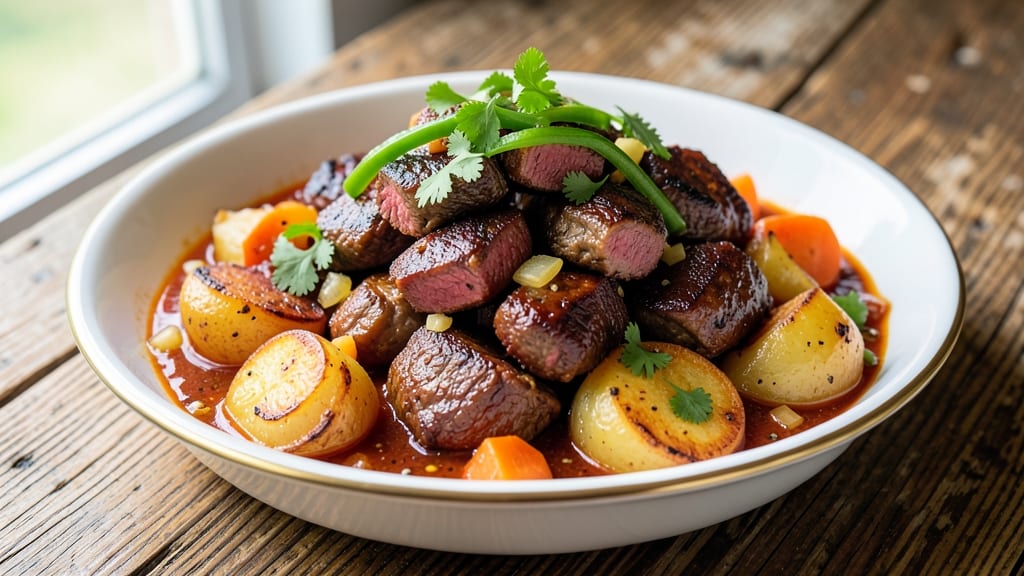
This beef afritada panlasang Pinoy recipe delivers restaurant-quality Filipino comfort food with tender beef chunks simmered in a rich, tangy tomato-soy sauce. The secret lies in slow cooking—transforming tough beef into melt-in-your-mouth pieces while balancing sweet, savory, and slightly acidic flavors.
What sets this dish apart is the layered technique: searing the beef first for depth, then braising it with potatoes, carrots, and bell peppers until everything melts together in a velvety, aromatic sauce.
The sauce itself is where the magic happens—a perfect harmony of tomatoes, soy sauce, vinegar, and spices that caramelize beautifully as they simmer. Unlike many adaptations, this version stays true to Filipino roots by using traditional methods like deglazing the pan to capture every bit of flavor.
The result? A dish that’s hearty enough for a family dinner but simple enough for a weeknight, served best with steamed rice to soak up every last drop of that rich, tangy sauce.
What you’ll achieve is tender beef that falls apart easily, paired with perfectly cooked vegetables that stay firm yet flavorful. The sauce is thick enough to coat each bite but still bright enough to cut through the richness.
This isn’t just another beef stew—it’s a taste of home, a dish that brings warmth and nostalgia to the table, and one that’s sure to become a staple in your recipe rotation.
Ready in about 1 hour with minimal prep, this recipe is designed for home cooks who want restaurant-quality results without the fuss. Whether you’re feeding a crowd or meal prepping for the week, the slow-cooked method ensures every bite is packed with flavor. Let’s get cooking!
Ingredients for beef afritada panlasang pinoy
Sixteen ingredients for a dish that tastes like home—rich, tangy, and full of layers.
| Ingredient | Amount | Notes |
|---|---|---|
| Beef Chuck Roast 🥩 | 2 ½ lb | Cut into 1.5-inch chunks |
| Russet Potatoes 🥔 | 2 medium | Peeled and quartered |
| Carrots 🥕 | 3 whole | Peeled and sliced into rounds |
| Green Bell Peppers 🌶️ | 2 whole | Sliced into strips |
| Yellow Onion 🧅 | 1 large | Thinly sliced |
| Garlic Cloves 🧄 | 6 cloves | Minced |
| Canned Crushed Tomatoes 🍅 | 1 28-oz can | San Marzano preferred |
| Soy Sauce 🥢 | ½ cup | Light or regular |
| White Vinegar 🍶 | ¼ cup | Distilled preferred |
| Olive Oil 🫒 | ¼ cup | Extra-virgin for richness |
| Salt 🧂 | 1 ½ tsp | Kosher or sea salt |
| Black Peppercorns 🌶️ | 1 tsp | Freshly ground |
| Bay Leaves 🌿 | 2 whole | Dried |
| Ground Black Pepper 🌶️ | ½ tsp | Freshly ground |
| Sugar 🍚 | 1 tbsp | White granulated |
The beef is non-negotiable here—chuck roast gives you that melt-in-your-mouth texture after slow cooking. Costco or Walmart usually carry it pre-cut, but if you're buying a whole roast, ask the butcher to cube it for you. Look for good marbling, not lean cuts. The potatoes should be russets—they hold up best to long cooking. Trader Joe's often has them at a good price, but any grocery store will do. For the tomatoes, San Marzano cans are worth the splurge—they're sweeter and less acidic, which balances the tangy sauce perfectly.
No soy sauce? Coconut aminos work in a pinch, though the flavor will be slightly different. Short on vinegar? Lemon juice at half the amount gets you close. The bell peppers can be swapped for red or yellow peppers—just keep the quantity the same. If you're making this ahead, freeze the raw ingredients in a bag until ready to cook. The bay leaves? Don't skip them—they're essential for that authentic Filipino flavor. For extra depth, toast the garlic cloves lightly before mincing, but it's not required.
This dish tastes even better the next day—make extra and freeze portions for quick meals. Store leftovers in the fridge for 5 days or freeze for 3 months. The sauce thickens as it cools, so add a splash of water or broth when reheating. Serve over steamed rice to soak up every last drop of that rich, tangy sauce. For meal prep, portion the beef and sauce separately—reheat the sauce first, then add the beef to warm through.
Why You'll Love This Recipe
- One-Pan Magic: I swear by this—just toss everything into a single pot and let it simmer. No chopping like a pro, no fancy techniques: thick-cut onions caramelize while the beef tenderizes, and those potatoes? They soak up all the rich sauce like sponges.
- Sauce Obsession: That tangy, slightly sweet tomato-peanut base? It’s the star. The beef comes out fall-apart tender, the carrots melt into the sauce, and the bell peppers add just enough crunch to keep it interesting. Honestly, I’ve made it for friends who aren’t even Filipino fans, and they’ve asked for seconds.
- Leftovers for Days: Between us, this dish begs to be made in bulk. The flavors deepen overnight, and reheating it is a crime if you don’t have at least three servings packed for lunch. My kids actually look forward to their school lunches when this is in the fridge—yes, even on a Tuesday.
- Budget Beef Boost: Chuck roast is cheap, and this recipe stretches it into something restaurant-worthy. The potatoes and veggies bulk it up without breaking the bank, and the peanut sauce makes it feel special. I’ll be real: I’ve served this at potlucks, and no one’s ever guessed it’s not a $20-plate dish.
Step-by-step instructions for beef afritada panlasang Pinoy
Here's how to create a rich, tender beef stew with perfect balance of tangy tomato and savory soy flavors.
Sear the Beef for Deep Flavor
Heat the 0.25 cup olive oil in a large Dutch oven over medium-high heat. Working in batches, add the 2.5 lb beef chuck roast cut into 1.5-inch chunks, letting each piece brown undisturbed for 2-3 minutes until deeply golden. This step develops the Maillard reaction for maximum flavor.
Once all beef is browned, remove it from the pot and set aside. The beef should be caramelized with a rich crust, not pale. If your pot isn't large enough, work in two batches to avoid crowding - this ensures proper browning rather than steaming.
Sauté Vegetables and Aromatics
In the same Dutch oven, add the 1 large yellow onion and 3 whole carrots sliced into rounds. Cook for 4-5 minutes until the onions soften and begin to caramelize. Add the 2 whole green bell peppers sliced into strips and cook for another 3 minutes until slightly softened.
Stir in the 6 cloves minced garlic and cook for 30 seconds until fragrant. The vegetables should be tender but still hold their shape. This layering of flavors forms the base of your stew, so don't rush this step - proper cooking develops the vegetable sweetness essential to the dish.
Build the Tangy Tomato-Soy Base
Pour in the 1 28-oz can crushed tomatoes, 0.5 cup soy sauce, and 0.25 cup white vinegar. Stir well to combine with the vegetables. Add the 1.5 tsp salt, 1 tbsp sugar, 1 tsp black peppercorns, 2 whole bay leaves, and 0.5 tsp ground black pepper. Bring the mixture to a gentle boil.
The sugar helps balance the acidity from the vinegar while the bay leaves add aromatic depth. The soy sauce and vinegar combination creates that signature Filipino tanginess. Let it simmer for 5 minutes to allow the flavors to meld before adding the beef back in.
Simmer Until Tender
Return the browned beef to the pot and add the 2 medium russet potatoes cut into quarters. Reduce heat to low and cover partially. Let it simmer for 1.5 to 2 hours, stirring occasionally, until the beef is fork-tender and the potatoes are easily pierced with a fork.
Here's the key: the beef should pull apart easily when tested with a fork, but still hold its shape. If the liquid reduces too quickly, add 1-2 cups of water to maintain the proper consistency. The potatoes should be tender but not falling apart - they'll continue cooking slightly after removing from heat.
Adjust Seasoning and Serve
Remove the bay leaves and adjust seasoning if needed - you might need to add a bit more soy sauce for saltiness or white vinegar for tang. The stew should have a rich, balanced flavor with both sweet and tangy notes.
Serve hot with steamed rice to soak up the flavorful sauce. The beef should be fork-tender with a rich, caramelized crust from the initial searing. Each bite should deliver that perfect combination of tender beef, sweet vegetables, and that signature Filipino tangy-savory sauce.
Pro Tips For Making Beef Afritada Panlasang Pinoy
- SEAR THE BEEF FIRST: Don’t skip browning that chuck roast—even if you’re in a hurry. The Maillard reaction from a 3-4 minute sear on high heat (until deep golden, not black) builds flavor that simmering alone can’t match. I learned this the hard way after making a pale, bland afritada that tasted more like stew than the rich, caramelized dish it should be.
- CUT POTATOES UNIFORM: Big chunks of potato stay tough; tiny ones turn to mush. Aim for 1.5-inch cubes—big enough to hold shape but small enough to cook through in the same time as the beef. My grandmother swore by this, and she was right: uneven pieces mean some parts are rubbery while others fall apart.
- DON’T OVERCROWD THE PAN: If you’re frying onions and peppers first, work in batches. A packed pan steams instead of sizzles, and you’ll end up with soggy vegetables instead of crisp, flavorful bits. I was skeptical until I tried it—now I swear by it for that deep, caramelized base.
- ADD TOMATOES LAST: Toss in the crushed tomatoes and sauce only after the beef and veggies have simmered for 20 minutes. This keeps the sauce bright and tangy instead of turning into a murky, one-note liquid. (Yes, even if you’re impatient like me.) The potatoes and carrots will soak up just enough flavor without losing texture.
Troubleshooting great beef afritada panlasang pinoy
Beef Too Tough?
If your beef remains chewy after cooking, it likely didn’t simmer long enough. Chuck roast needs at least 1.5-2 hours on low heat to break down properly. For extra tenderness, add 1 cup beef broth when returning the beef to the pot—this helps tenderize the meat through collagen breakdown. 💡
Sauce Too Thin?
A watery sauce usually means the tomatoes or broth weren’t reduced enough. After adding the beef and potatoes, simmer uncovered for the last 15-20 minutes to thicken naturally. If it’s still too thin, mash 1-2 potatoes with a fork to release starch, which will help thicken the sauce.
For a quick fix, mix 1 tbsp cornstarch with 2 tbsp water and stir in at the end.
Vegetables Overcooked?
If your carrots or potatoes turn mushy, they were likely added too early. Potatoes should go in last, about 30 minutes before the beef is done.
For extra insurance, parboil the potatoes for 5 minutes before adding them to the stew. This ensures they’re tender without turning to mush. 🥔
Flavor Too Mild?
A bland dish often means the sauce needs more depth. Boost flavor by toasting the garlic for 1 minute before adding it, or browning the onions for 8-10 minutes until deeply caramelized.
For an extra kick, add 1 tbsp fish sauce or 1 tsp calamansi juice (or sub with lemon) at the end. The acidity will brighten the entire dish.
Sauce Too Tangy?
If the vinegar or soy sauce overpowers, balance it with 1 tbsp sugar or 1 tsp honey to mellow the acidity. For a smoother finish, simmer the sauce uncovered for 5 minutes to let some of the liquid evaporate, which intensifies the flavors.
Taste as you go—Filipino dishes should have a harmony of sweet, sour, and salty, not just one dominant note.
Pot Too Crowded?
If your Dutch oven is overflowing, cook the beef in two batches for even browning. For vegetables, sauté them in a separate pan first if needed, then transfer to the stew pot.
Overcrowding steams the food instead of browning it, which dulls the flavor. A 6-quart Dutch oven is ideal for this recipe—if yours is smaller, cook in stages. 🔥
Nutrition facts
Frequently asked questions about beef afritada panlasang Pinoy
Can I use a different cut of beef for this recipe?
While chuck roast is ideal for its marbling and tenderness, you can substitute with brisket or short ribs. Avoid lean cuts like sirloin—they won’t become tender enough. If using brisket, slice it against the grain after cooking for the best texture.
How can I make this recipe faster?
For a quicker version, use a pressure cooker (30 minutes high pressure) or slow cooker (6-8 hours on low). Skip the initial searing and brown the beef directly in the slow cooker. The flavors will still develop, though the sauce may be slightly less caramelized.
What vegetables can I add or swap?
You can add green beans, zucchini, or eggplant—they hold up well in the sauce. Swap bell peppers for tomatoes (add fresh or canned) or mushrooms for an umami boost. Just avoid delicate veggies like lettuce that won’t survive the long cooking time.
Can I make this dish ahead of time?
This recipe tastes even better the next day! Store leftovers in the fridge for 5 days or freeze for 3 months. Reheat gently on low heat, adding a splash of water if the sauce thickens too much. The flavors meld beautifully overnight.
What's the secret to the perfect tangy sauce?
The balance of soy sauce, vinegar, and sugar creates that signature tang. For extra depth, let the sauce reduce uncovered for the last 15 minutes of cooking. A splash of fish sauce or calamansi juice at the end adds authentic Filipino brightness.