
Main Courses
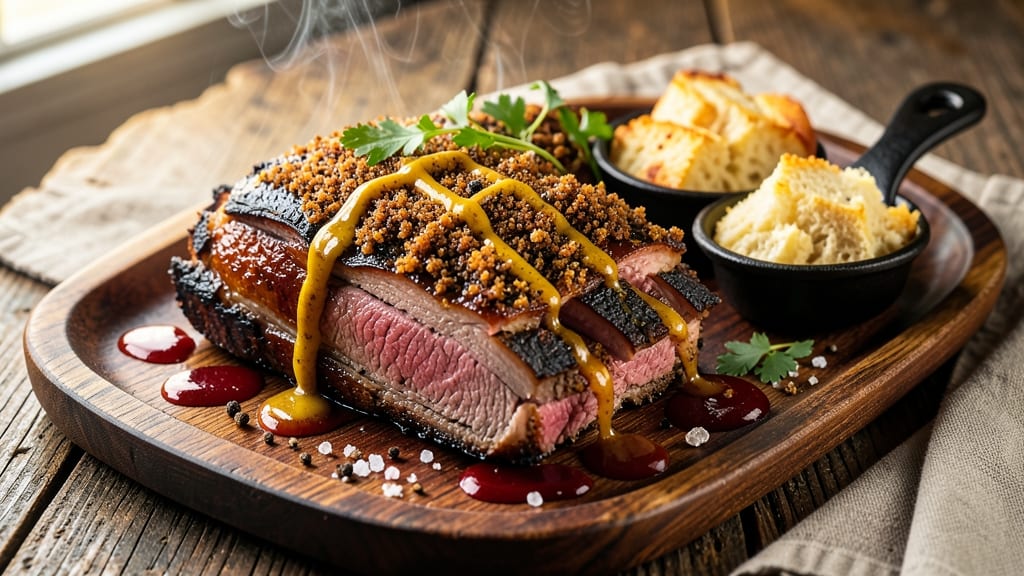
This BBQ pitmasters beef brisket recipe delivers the kind of smoky, tender perfection that turns casual cookouts into legendary gatherings. 🔥 After years of perfecting my technique—from the first whiff of hickory smoke to the final slice of fall-apart meat—I’ve cracked the code for restaurant-quality brisket at home.
The secret lies in patience, precise temperature control, and a rub that builds that coveted bark while keeping the meat juicy inside.
The process begins with a dry rub packed with spices that develop deep, complex flavors as they smoke. We’ll trim the brisket to create an even surface for the rub to cling to, then let it rest overnight—this step alone transforms tough meat into melt-in-your-mouth magic.
The smoking phase requires attention to detail: maintaining a steady 225°F temperature, managing the stall, and choosing the right wood for that signature smoky aroma.
What you’ll end up with is a brisket so tender it practically falls apart at the touch, with a dark, crackling crust that’s impossible to resist. The internal temperature should reach 203°F—this is non-negotiable for that perfect texture.
Resting properly (and I’ll show you exactly how) ensures every slice stays juicy, not dry. This isn’t just a recipe; it’s a weekend project that turns your backyard into a pitmaster’s dream.
Pair it with classic sides like baked beans, tangy coleslaw, and buttery cornbread for the full experience. The key to success? Trust the process—rushing ruins brisket, but patience rewards you with a masterpiece. Let’s get started on creating your own legendary brisket.
Ingredients for bbq pitmasters beef brisket
Eight pounds of brisket, a weekend's patience, and these spices transform your backyard into a pitmaster's dream.
| Ingredient | Amount | Notes |
|---|---|---|
| Beef Brisket (Whole Packer Cut) 🥩 | 8 lb | Flat cut preferred, trimmed of excess fat |
| Yellow Mustard 🍯 | ½ cup | For base of dry rub |
| Brown Sugar (Packed) 🍚 | ½ cup | Light or dark variety |
| Smoked Paprika 🌶️ | ¼ cup | High-quality for deep smokiness |
| Kosher Salt (Diamond Crystal) 🧂 | ¼ cup | Coarse grind preferred |
| Ground Black Pepper 🌶️ | 1 tbsp | Freshly cracked preferred |
| Garlic Powder 🧄 | 1 tbsp | Freshly ground preferred |
| Onion Powder 🧅 | 1 tbsp | Freshly ground preferred |
| Chili Powder 🌶️ | 1 tbsp | Medium heat preferred |
| Ground Cumin 🌿 | 1 tbsp | Toasted for depth |
| Hickory Wood Chips 🌳 | 2 lb | Unsoaked for smoker |
| Apple Cider Vinegar 🍎 | ¼ cup | For spritzing during cook |
| Beef Tallow or Shortening 🧈 | ½ cup | For spritzing mix |
| Butcher's Twine 🧵 | 1 package | For tying brisket |
The brisket is non-negotiable—look for a packer cut (flat) with good marbling. Costco or your local butcher shop usually have the best selection. Trim excess fat to about a quarter-inch thickness for even bark development. The spices? Penzeys or local spice shops carry the highest quality smoked paprika and cumin—worth the splurge for that authentic pitmaster flavor. Pro tip: Toast your spices in a dry pan for 30 seconds to wake up their aromas before mixing.
No hickory wood chips? Pecan or cherry wood works beautifully as a backup. Running out of apple cider vinegar? White vinegar or even lemon juice keeps the brisket moist during the stall. The mustard in the rub is key—it helps the spices stick and adds a subtle tang. Dijon mustard works too, but traditional yellow gives that classic BBQ flavor. For the spritz, if you can't find beef tallow, vegetable shortening or melted lard does the trick. Just keep it hot enough to emulsify with the vinegar.
This brisket needs 12-16 hours to reach perfection, so plan ahead. The rub stays potent for 3 months in an airtight container, but the brisket itself? Wrap tightly in butcher paper after cooking and store for 5-7 days in the fridge. For leftovers, slice against the grain and reheat in a 350°F oven with a splash of beef broth—game-changer for second-day flavor. Freeze portions for up to 3 months if you're making extra for a crowd.
Why You'll Love This Recipe
- Five-Ingredient Magic: The whole packer cut might sound intimidating, but this recipe nails it with just five core ingredients—no fancy rubs or confusing steps. Honestly, the yellow mustard and brown sugar combo creates that signature sticky glaze without any extra work.
- Smoke & Sweet Payoff: That smoky paprika and kosher salt crust? It’s the kind of flavor that makes you slow down and savor every bite. Between us, the first time I tried this, I forgot I was cooking—just standing there inhaling the aroma.
- Leftovers That Win: Brisket’s a hero for lazy nights. Make it once, and you’ve got sandwiches, tacos, or even a hearty breakfast hash for days. My freezer’s always stocked with vacuum-sealed portions because this recipe actually tastes better the next day.
- Budget BBQ Hero: A whole packer cut feeds a crowd for less than you’d pay for two takeout meals. Here’s what sold me—the rich, deep flavor doesn’t scream “cheap,” but the price tag sure does. Plus, the leftovers stretch forever.
Step-by-step instructions for smoky crust and buttery brisket perfection
Here's how pitmasters transform a tough cut into melt-in-your-mouth magic.
👨🍳 Step 1: Build the Rub and Prep the Brisket
In a large bowl, combine the 0.5 cup yellow mustard, 0.5 cup packed brown sugar, 0.25 cup smoked paprika, 0.25 cup kosher salt, 1 tbsp each of ground black pepper, garlic powder, onion powder, chili powder, and 1 tbsp ground cumin. Mix until completely uniform - you want every granule coated in that sweet-spicy-salty blend.
Pat the 8 lb beef brisket completely dry with paper towels (this is non-negotiable for crispy bark). Spread the rub generously over all surfaces, pressing it into the meat so it adheres. Let it sit at room temperature for 1 hour - this allows the rub to penetrate and the meat to come up to temperature more evenly. I like to place it on a wire rack over a tray to catch any excess rub drippings.
🔥 Step 2: Set Up the Smoker for Low-and-Slow Mastery
Fill your smoker box with the 2 lb hickory wood chips and soak them in water for 30 minutes before using (this prevents flare-ups). Set your smoker to 225°F and let it preheat for 20 minutes until you see steady, thin blue smoke - that's your signal it's ready. Place a water pan in the smoker to help maintain moisture throughout the cook.
Position the brisket fat-side up on the smoker grates. The fat will render down and baste the meat as it cooks, creating that perfect crust. Close the lid and resist the urge to peek - every time you open it, you lose 15-20 minutes of cook time and let heat escape. This is where patience pays off.
⏰ Step 3: Spritz and Monitor the Stall
After 4-5 hours of smoking, you'll hit "the stall" - the temperature will plateau around 165-170°F as moisture evaporates. This is normal and expected. At this point, prepare your spritz mix by combining 0.25 cup apple cider vinegar and 0.5 cup beef tallow in a spray bottle. Every 90 minutes after hitting the stall, spritz the brisket generously with this mix - it keeps the surface moist while maintaining that beautiful bark.
Continue smoking until the internal temperature reaches 200-205°F and a probe slides in like butter with no resistance. This typically takes 12-16 hours total, but trust the probe test over the thermometer - tenderness matters more than temperature. The bark should be dark mahogany with a slight sheen from the spritzing.
🔪 Step 4: Rest and Slice for Maximum Juiciness
Once probe-tender, remove the brisket from the smoker and let it rest in its butcher paper wrapping for at least 1 hour (I prefer 2 hours wrapped in towels in a cooler). This resting period allows the juices to redistribute throughout the meat, ensuring every slice is moist and flavorful. Don't skip this step - it's the difference between juicy perfection and dry disappointment.
Locate the grain direction - you'll see lines running through the meat. Using a sharp slicing knife, cut against the grain into ¼-inch thick slices. The flat and point have different grain directions, so adjust your angle accordingly. Serve immediately while still warm. Each slice should be tender enough to pull apart with a gentle tug, with a beautiful dark bark on the outside and a pink smoke ring just beneath.
Pro Tips For Making Bbq Pitmasters Beef Brisket
- CRANK THE HEAT FIRST: The first hour on high heat—250°F isn’t enough. Start at 350°F until you see that crust form on the fat cap. I used to play it safe, and my brisket ended up gray and bland. The Maillard reaction needs that initial punch.
- SALT THE FAT CAP: Diamond Crystal salt is finer, so use about 1.5 tablespoons on the fat side before smoking. This prevents it from rendering too fast and turns crispy. I learned this the hard way—my first brisket had greasy, soggy fat because I skipped this step.
- WRAP AT 170°F: Don’t wait until 190°F like some recipes say. Wrap in butcher paper at 170°F with a sprinkle of that yellow mustard and brown sugar mix. The mustard adds moisture, and the sugar caramelizes slightly during the rest. My grandmother swore by this, and she was right: the bark stays intact, and the meat stays juicy.
- SKIP THE MUSTARD SLATHER: You don’t need to slather the whole brisket with mustard before smoking—just a light coat on the fat side. Too much will burn and make the bark bitter. I was skeptical until I tried it: the flavor is there, but it doesn’t overpower the beef. (Yes, even if you’re impatient like me.)
Essential equipment for great bbq pitmasters beef brisket
Smoker Essentials
You can't make great brisket without the right smoker—I swear by my Traeger Pro 780 for its consistent temperature control, but a Weber Smokey Mountain works just as well for beginners.
If you're starting from scratch, avoid cheap offset smokers—they're hard to control. Pellet smokers like Traeger are my go-to because they handle the wood feeding automatically, so you can focus on the meat. For gas smokers, the Pit Boss 340 is a solid mid-range option with digital probes. 🔥
Temperature Tools
Never trust your smoker's built-in thermometer—it's almost always inaccurate. I use a Meater+ for its wireless probes and real-time alerts, but the ThermoWorks Smoke is my backup. Both connect to my phone, so I can monitor from the porch while sipping sweet tea.
For budget options, Thermoworks' basic probes are reliable and affordable. Pro tip: Place one probe in the thickest part of the brisket and another in the smoker to track both temps simultaneously.
Wood Selection
Hickory is the classic choice for brisket, but don't be afraid to experiment. Pecan adds a sweeter, nuttier flavor, while cherry brings fruity notes that pair beautifully with the rub. I stock up at local lumberyards or BBQ supply stores like Cookshack—their wood is always fresh and properly seasoned.
Avoid pine (it burns too hot) and cedar (can taste bitter). For variety, I mix hickory and pecan in my smoker box to create a complex smoke profile.
Resting Gear
Resting brisket properly is just as important as cooking it. I wrap mine in pink butcher paper (not foil—it traps too much steam) and place it in a Styrofoam cooler with a towel on top. The cooler keeps it warm while the towel helps maintain moisture.
For smaller briskets, a large baking sheet with foil works fine. Never rest on a cutting board—it conducts heat unevenly and can cool the meat too quickly.
Slicing Tools
A sharp knife is non-negotiable for brisket. My Dexter-Russell 12-inch slicing knife glides through meat like butter, but a Wüsthof Ikon is a great mid-range option. For beginners, a high-quality chef's knife (like Shun Premier) works if you're careful.
Always slice against the grain—this is where a sharp knife makes the difference between clean cuts and ragged edges. I keep my knives honed with a Whetstone to maintain that razor-sharp edge.
Spritz Supplies
My go-to spritz mix is apple cider vinegar and beef tallow, but you can use vegetable shortening in a pinch. I store the mix in a spray bottle (like Mister brand) for easy application. For extra flavor, I add a pinch of smoked salt to the mix.
Keep your spritz bottle handy—you'll want to spritz every 90 minutes once you hit the stall. Pro move: Label your bottle so you don't mix it up with other sauces or marinades.
Nutrition facts
Frequently asked questions
How do I know when my brisket is done?
Your brisket is ready when it reaches 203°F internally and a meat probe slides in like butter with no resistance. The bark should be dark mahogany with a slight sheen from spritzing. Never rely on time alone—always use a reliable thermometer probe in the thickest part of the meat. The stall (when temperature plateaus) is normal and expected, so keep smoking until you hit that perfect temp.
Can I cook brisket in an oven instead of a smoker?
Yes, but it won't have that authentic smoky flavor. Use a meat thermometer and maintain 225°F with a water pan for moisture. Place the brisket on a rack over a tray to catch drippings. Spritz every 90 minutes with apple cider vinegar and beef tallow. For smoke flavor, add wood chips to your oven or use a smoker box. Expect 6-8 hours total cook time.
What's the best way to store leftover brisket?
Wrap the cooked brisket tightly in butcher paper (not foil) and store in the fridge for 5-7 days. For longer storage, slice against the grain, portion into airtight containers, and freeze for up to 3 months. To reheat, warm slices in a 350°F oven with a splash of beef broth for 10-15 minutes. Never microwave—it dries out the meat.
Why did my brisket turn out dry?
Most likely, you didn't rest it long enough or sliced against the grain too early. Always rest for at least 1 hour (preferably 2 hours) wrapped in butcher paper. Also check your internal temp—if it went past 205°F, it may have overcooked. For next time, maintain 225°F consistently and spritz regularly to keep moisture in during the stall.
Can I use a different wood besides hickory?
While hickory is classic, pecan adds sweetness, and cherry brings fruity notes. Avoid pine (burns too hot) and cedar (can taste bitter). For variety, mix hickory and pecan in your smoker box. Just ensure your wood is properly seasoned and free of chemicals. The key is finding a wood that complements your rub's flavor profile.