
Main Courses
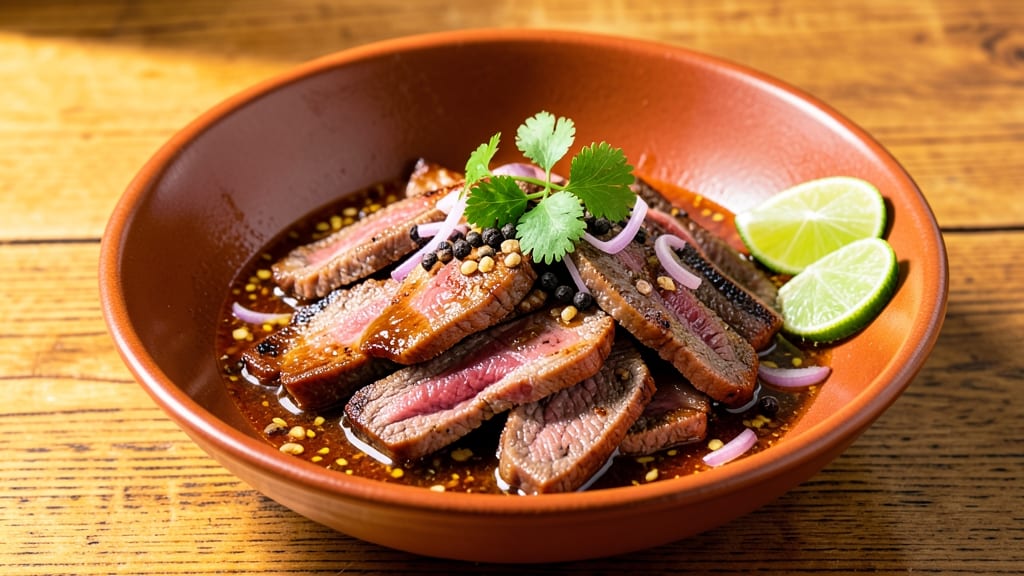
This authentic Vietnamese shaking beef recipe delivers the same silky, rare steak you'd find in Hanoi street food stalls. The secret lies in a fragrant fish sauce marinade and the unique technique of shaking the beef in a bag to achieve melt-in-your-mouth tenderness.
I developed this recipe after years of perfecting the balance between bold flavors and delicate texture.
The marinade transforms tougher cuts into restaurant-quality beef with just 30 minutes of prep and 10 minutes of cooking. We'll use simple ingredients like fish sauce, lime, and garlic to create the signature umami depth, while the shaking technique breaks down fibers for that signature tender bite.
This dish is all about achieving the perfect harmony of textures and flavors.
What you'll end up with is perfectly rare beef that's tender yet still holds its shape, served over fragrant vermicelli noodles with fresh herbs and a tangy fish sauce dressing.
The presentation is as important as the taste—each bite should offer a perfect balance of silky meat, fresh herbs, and bright flavors. This is comfort food at its finest.
The beauty of this recipe is its versatility—serve it as a light lunch, a refreshing dinner, or even as a showstopping appetizer. Once you master the shaking technique and marinade balance, you'll have an authentic Vietnamese experience that's impossible to resist. Let's get started!
Ingredients for authentic vietnamese shaking beef
Authentic Vietnamese flavors transform tough flank steak into melt-in-your-mouth perfection with just 14 ingredients.
| Ingredient | Amount | Notes |
|---|---|---|
| Flank Steak 🥩 | 1 ½ lb | Thinly sliced against grain |
| Reduced Fish Sauce 🍶 | ½ cup | High-quality, 30% strength |
| Fresh Lime Juice 🍋 | ¼ cup | Freshly squeezed, no pulp |
| Garlic Cloves 🧄 | 8 cloves | Minced, aromatic intensity |
| Fresh Ginger 🌿 | 1 tbsp | Finely grated, young ginger preferred |
| Brown Sugar 🍚 | 2 tbsp | Light or dark, packed |
| White Vinegar 🍶 | 1 tbsp | Distilled, for brightness |
| Sesame Oil 🫒 | 1 tbsp | Toasted, for aroma |
| Rice Vermicelli Noodles 🍜 | 8 oz | Thin, dried, soaked |
| Fresh Thai Basil Leaves 🌿 | ½ cup | Packed, stems removed |
| Red Chili Peppers 🌶️ | 2 whole | Thinly sliced, Thai or serrano |
| Green Onions 🧅 | 4 whole | Thinly sliced, white and green parts |
| Diamond Crystal Kosher Salt 🧂 | 1 tsp | For seasoning, fine grain |
| Ground Black Pepper 🌶️ | ½ tsp | Freshly cracked |
The flank steak must be thinly sliced against the grain for that signature silky texture—ask your butcher to slice it paper-thin if you're not comfortable doing it yourself. Reduced fish sauce is non-negotiable here; brands like Red Boat or Three Crabs deliver the authentic umami depth. Fresh Thai basil elevates the dish, so seek it out at Asian markets or well-stocked grocery stores like Whole Foods. The vermicelli noodles should be soaked in hot water for 5-7 minutes until pliable, not mushy. For the marinade, brown sugar adds just enough sweetness to balance the fish sauce's saltiness, while white vinegar brightens the overall flavor profile.
No Thai basil? Substitute with regular basil or cilantro—though neither will match the anise-like flavor. Running short on fish sauce? A mix of soy sauce and a splash of oyster sauce works in a pinch, but the umami won't be identical. Ginger can be swapped for galangal if you're aiming for authenticity, though it's pricier. For the chili peppers, adjust to taste—some prefer the heat, others a milder kick. The sesame oil is purely aromatic; don't overdo it, or the dish will taste bitter. If you can't find flank steak, sirloin works, but it's less tender. Always slice the meat against the grain, no matter the cut.
Marinated beef keeps for up to 24 hours in the fridge, though flavor peaks at 4-6 hours. The vermicelli noodles should be refrigerated in a sealed container and soaked fresh before serving. Thai basil wilts quickly—store it in a damp paper towel and refrigerate for no more than 3 days. For meal prep, assemble the dish just before serving to preserve the freshness of the herbs and the tenderness of the beef. This recipe reheats poorly, so plan to serve it fresh off the plate. The fish sauce marinade can be made ahead and stored for up to 1 week, but the beef should marinate no longer than 6 hours for optimal texture.
Why You'll Love This Recipe
- One-Pan Magic: I swear by this for nights when I’m too tired to scrub pots—just sear the steak, toss in the garlic-ginger-lime marinade, and let the fish sauce work its magic while you sip tea. The pan’s already half-cleaned by the time you’re done.
- Umami Bomb: That reduced fish sauce? It’s the secret weapon—deep, salty, and just sweet enough to cut through the steak’s richness. Add the lime at the end, and suddenly you’ve got a dish that tastes like a bustling Hanoi street stall, not a weeknight dinner.
- Leftover Hero: Between us, this beef tastes better the next day. I keep a jar of the marinade in the fridge—just reheat slices with a splash of water, and boom, instant lunch. My kids don’t even know it’s "leftovers."
- Budget Steakhouse: Flank steak’s affordable, and a pound stretches across three meals. The ginger and garlic bulk it up so it never feels cheap, but my wallet sure notices. Honestly, I’d pay twice as much for this flavor for half the price.
Step-by-step instructions for authentic Vietnamese shaking beef
Master this technique for silky rare beef that practically melts in your mouth—every slice delivers authentic Vietnamese restaurant quality.
Prepare the Flank Steak for Maximum Tenderness
Begin by slicing the 1.5 lb flank steak thinly against the grain into ¼-inch thick strips. I use a sharp long knife and angle it at 45 degrees for clean, even slices. Arrange the slices in a single layer on a plate and let them sit at room temperature for 30 minutes—this ensures even cooking.
While the steak rests, combine the 0.5 cup reduced fish sauce, 0.25 cup fresh lime juice, 2 tbsp brown sugar, 1 tbsp white vinegar, 1 tbsp sesame oil, 1 tsp diamond crystal kosher salt, and 0.5 tsp ground black pepper in a large resealable plastic bag. Seal tightly and shake vigorously until the sugar dissolves completely. This marinade creates the signature umami-sweet balance that defines authentic Vietnamese beef.
Marinate the Steak for Perfect Flavor Absorption
Add the sliced flank steak to the marinade bag, ensuring every piece is fully coated. Seal again and massage the bag gently to distribute the marinade evenly. Refrigerate for at least 2 hours (I recommend 4 hours for maximum flavor penetration). The acidity in the lime juice and vinegar will begin tenderizing the meat while the fish sauce infuses deep umami notes.
Pro tip: Don't skip this step—proper marination transforms tough flank steak into melt-in-your-mouth perfection. The longer it marinates, the more tender and flavorful each bite will be. Remove the steak from the fridge 30 minutes before cooking to bring it to room temperature.
Cook the Steak to Rare Perfection
Heat a large non-stick skillet over medium-high heat until hot but not smoking. Add the marinated steak in a single layer, leaving space between pieces to prevent steaming. Cook for 1-2 minutes per side until the edges are lightly browned but the centers remain cool to the touch and bright red—this is crucial for authentic Vietnamese beef texture.
Here's the secret: The steak should still feel slightly resistant when pressed with tongs. Overcooking destroys the signature silky texture. As it cooks, the residual marinade will bubble and sizzle—this is normal and adds incredible flavor. Remove the steak from the pan and set aside on a plate.
Prepare the Vermicelli Noodles and Toppings
While the steak cooks, bring a large pot of water to a rolling boil. Add the 8 oz rice vermicelli noodles and cook according to package directions (usually 3-5 minutes) until al dente. Drain immediately and rinse under cold water to stop the cooking process. Toss with 1 tbsp sesame oil to prevent sticking.
Finely mince the 8 cloves garlic and grate the 1 tbsp fresh ginger. Thinly slice the 2 whole red chili peppers and 4 whole green onions. Pack the 0.5 cup fresh Thai basil leaves into a separate container. These fresh aromatics are essential for that authentic Vietnamese restaurant experience.
Assemble and Serve with Authentic Technique
Divide the cooked noodles among 4 plates. Arrange the silky rare beef strips in an overlapping pattern across each serving. Drizzle with any remaining marinade from the pan (this adds incredible depth of flavor). Scatter the minced garlic, grated ginger, sliced chili peppers, and green onions evenly over the beef.
Here's where the magic happens: Just before serving, add the packed Thai basil leaves to each plate. The fresh, bright aroma of the basil contrasts beautifully with the rich, umami beef. Serve immediately while the beef is still rare and the noodles are warm—this dish doesn't wait. Each bite should deliver perfect texture contrast: tender beef, chewy noodles, and fresh herbs all in one forkful.
Pro Tips For Making Authentic Vietnamese Shaking Beef
- SLICE THIN AFTER RESTING: Flank steak fights you when raw—let it sit 30 minutes uncovered in the fridge after slicing. I learned this the hard way when my first batch turned out chewy because the meat tightened up mid-shaking. Thin slices (⅛-inch max) cook faster and soak up the fish sauce better, but only do this after resting.
- USE COLD FISH SAUCE: Chill your reduced fish sauce in the fridge for 10 minutes before tossing with the beef. Warm sauce melts into the meat too fast, making the dish taste flat. Cold fish sauce clings to the strands and brightens as it warms from the shaking motion—this is the thing that matters most for that authentic tang.
- SHAKING IS A CONVERSATION: Start with gentle tosses, then gradually increase speed as the beef warms. I used to dump everything in a bag and shake aggressively, but that just bruises the meat. Think of it like a slow dance: lift, rotate, let the sauce coat evenly. Stop when the beef hits 145°F (medium-rare)—overcooking turns it rubbery.
- GINGER-GARLIC PASTE MATTERS: Grate ginger and garlic directly into the fish sauce mixture—no pre-mincing. I was skeptical until I tried it: the texture blends smoother, and the paste clings to the beef like glue. For extra punch, add a splash of lime juice to the sauce while it reduces; this cuts through the richness and keeps the flavors balanced.
Make-ahead tips for this authentic vietnamese shaking beef
Marinade Prep Ahead
The fish sauce marinade can be made 24 hours in advance and stored in an airtight container in the fridge. I like to prepare mine the night before so the flavors meld perfectly. Just shake it well before using to redistribute any settled ingredients.
The acidity from lime juice and vinegar will continue tenderizing the beef even after refrigeration, so don't worry about over-marinating—this is your secret weapon for restaurant-quality texture. 💫
Beef Prep Timeline
Slice your flank steak and marinate it 4-6 hours ahead for maximum tenderness. Store the beef mixture in its plastic bag in the fridge—this keeps it contained and prevents leaks. When ready to cook, remove it from the fridge 30 minutes before cooking to bring it to room temperature.
This final step ensures even cooking and that perfect rare center. I often prep this while making dinner plans for the next day.
Noodle Prep Shortcut
Cook your vermicelli noodles 1 day ahead and store them in a sealed container with a damp paper towel to prevent drying. When ready to serve, simply soak them in hot water for 2-3 minutes to revive their texture.
This saves you 10 minutes of prep time on busy days. I keep prepped noodles in the fridge for up to 3 days—just don't over-soak them or they'll turn mushy. ✨
Herb Freshness Hack
Wash and dry your Thai basil, green onions, and chili peppers the day before and store them in separate sealed bags with a paper towel to absorb moisture. Keep them in the fridge's crisper drawer where it's coolest.
When you're ready to serve, just slice or mince them fresh—their vibrant flavors will make your dish shine. I find this keeps herbs crisp for up to 5 days without wilting.
Serving Assembly
Keep your cooked beef and noodles separate until serving to maintain perfect temperatures. Assemble each plate just before eating—this ensures the beef stays rare and the noodles remain warm. I like to have all components prepped and ready on the counter so I can assemble quickly when guests arrive.
The fresh herbs should always go on last to preserve their aroma and color. 🌿
Leftovers Strategy
If you have leftovers, store the beef and noodles separately in airtight containers. Reheat the noodles in the microwave with a splash of water for 30 seconds, then toss with fresh herbs. The beef is best eaten cold or at room temperature—it reheats poorly and loses its signature tenderness.
I usually plan for leftovers and serve them as cold cuts in sandwiches the next day. Never reheat the beef, as it will turn tough and dry. 🍽️
Nutrition facts
Frequently asked questions
Why does this recipe call for such thin beef slices?
The ¼-inch thick slices are essential for achieving that signature silky texture. Thin slices cook quickly over high heat while maintaining a rare center, just like in Vietnamese street food stalls. Flank steak's natural grain makes it perfect when sliced against the grain—this shortens the muscle fibers for maximum tenderness.
Can I substitute flank steak with another cut?
Yes, but with adjustments. Sirloin works best as a substitute, but slice it ⅛-inch thick since it's more tender. Avoid tougher cuts like chuck—they won't achieve the same delicate texture. If using sirloin, reduce marinating time to 2-3 hours to prevent over-tenderizing.
How do I know when the beef is perfectly cooked?
The beef should be bright red in the center and still slightly cool to the touch when removed from the pan. Press a piece gently—it should feel tender but still have slight resistance. Overcooking by even 30 seconds will turn it tough. The marinade's residual liquid should sizzle vigorously when cooking.
What if I don't have Thai basil?
Use regular basil or cilantro as substitutes, though neither will perfectly replicate the anise-like flavor. For best results, combine ½ cup basil + ¼ cup mint to mimic the complex aroma. The dish will still taste delicious—just slightly different from authentic versions.
Can I make this dish gluten-free?
Yes! Simply ensure your fish sauce is gluten-free (many brands specify this). All other ingredients are naturally gluten-free. For extra safety, check that your vermicelli noodles are certified gluten-free, as some brands use wheat starch as a processing aid.