
Main Courses
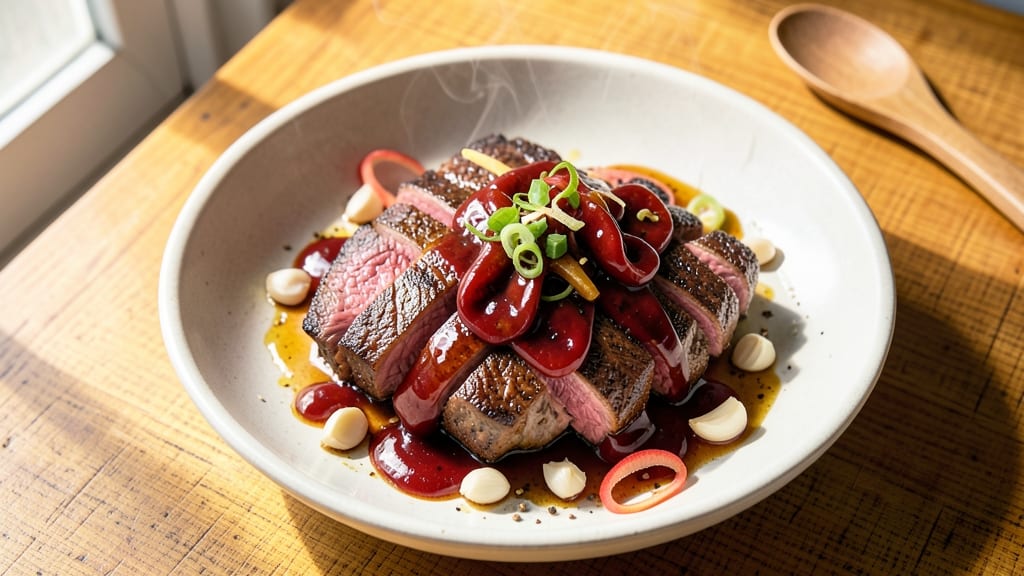
This authentic Korean beef recipe delivers the bold, caramelized flavors of Korean BBQ right in your kitchen, with a fermented soy glaze that transforms tough ribeye into melt-in-your-mouth perfection.
The secret lies in the marinade—a precise balance of dochujang (fermented chili paste), brown sugar, garlic, and sesame oil—which develops deep umami and sweet-spicy notes as it tenderizes the meat over at least 4 hours (overnight is ideal).
Unlike many shortcut recipes, this method mirrors traditional kalbi-style preparation, where high-heat searing creates a glossy, sticky crust while keeping the interior juicy.
What sets this dish apart is the two-stage cooking process: first, a quick sear in a screaming-hot skillet to lock in juices, then a finish under the broiler to achieve that signature charred, caramelized sheen.
The marinade’s fermented elements—like dochujang and pear—break down collagen, ensuring the beef remains fork-tender even after grilling. Serve it sliced thin over steamed rice, paired with kimchi and quick-pickled cucumbers, for an experience that rivals your favorite Korean BBQ joint.
The result is a dish where every bite delivers complex layers of flavor: the tangy heat of gochujang, the sweet caramelization from brown sugar, and the nutty depth of sesame oil, all balanced by the beef’s natural richness.
This isn’t just another sweet-and-sour beef recipe—it’s a restaurant-quality method that respects tradition while being adaptable to home kitchens. The key is patience: letting the marinade work its magic and cooking the beef with precision to achieve that glossy, irresistible finish.
For authenticity, use boneless ribeye (kalbi cut) if available, but well-marbled sirloin works beautifully. The marinade’s ratios are critical—1 part beef to 1 part marinade—so don’t skimp on the glaze. Once you master this technique, you’ll never settle for store-bought Korean BBQ again. Let’s get cooking.
Ingredients for authentic korean beef
The heart of this recipe lies in the fermented soy glaze and premium beef—where authentic Korean flavors meet restaurant-quality technique.
| Ingredient | Amount | Notes |
|---|---|---|
| Boneless Ribeye Steak (Kalbi Cut) 🥩 | 1 ½ lb | Well-marbled, 1-inch thick slices |
| Dochujang (Fermented Chili Paste) 🌶️ | ½ cup | Korean fermented chili paste |
| Brown Sugar 🍯 | ½ cup | Packed, light or dark |
| Sesame Oil 🫒 | 2 tbsp | Toasted sesame oil preferred |
| Garlic Cloves 🧄 | 8 cloves | Peeled, minced for marinade |
| Fresh Ginger 🌿 | 2 tbsp | Finely grated, fresh preferred |
| Asian Pear 🍐 | 1 medium | Peeled, diced for sweetness |
| Soy Sauce 🥢 | ¼ cup | Korean or Japanese preferred |
| Rice Vinegar 🍶 | 2 tbsp | White or seasoned rice vinegar |
| Sesame Seeds 🌰 | 2 tbsp | Toasted for garnish |
| Neutral Oil (Avocado or Vegetable) 🫒 | 2 tbsp | High smoke point for searing |
| Green Onions 🧅 | 4 whole | Thinly sliced for garnish |
| Salt 🧂 | 1 tsp | Kosher or sea salt |
| Black Pepper 🌶️ | ½ tsp | Freshly ground preferred |
The beef is non-negotiable for authenticity—boneless ribeye (kalbi cut) delivers the ideal marbling and tenderness. If unavailable, well-marbled sirloin works beautifully. Purchase from a reputable butcher or Korean specialty store for the best quality, as the fat content is critical for that signature glossy finish. Look for cuts with visible marbling and bright red color—avoid pre-cut packages that may have been frozen. For the marinade, dochujang is essential; brands like Mae Mun or Ssamjang provide the deepest fermented flavor, though any quality Korean chili paste will suffice. The Asian pear adds natural sweetness that caramelizes beautifully during cooking—opt for firm, ripe pears with minimal bruising.
No dochujang? A blend of gochujang (1/4 cup) plus 1 tbsp soy sauce mimics the fermented depth, though the flavor won’t be identical. Substitute honey or maple syrup for the pear if needed (use 2 tbsp), but the pear’s texture contributes to the marinade’s balance. Sesame oil can be swapped for toasted peanut oil in a pinch, though the flavor profile shifts slightly. For the ginger, fresh is ideal, but 1 tsp ground ginger works if grated isn’t an option—just toast it lightly to enhance aroma. The soy sauce should be Korean or Japanese; American soy sauce lacks the depth. If you’re short on time, marinate the beef for at least 4 hours (overnight is best), but don’t skip this step—it’s what transforms tough meat into fork-tender perfection.
Store the marinated beef in an airtight container in the fridge for up to 24 hours—longer marinating doesn’t harm, but the beef may absorb too much liquid. The uncooked marinade keeps for 5 days in the fridge or 3 months frozen. Once cooked, the beef reheats beautifully—warm in a skillet over medium heat for 2-3 minutes, adding a splash of water or broth to prevent drying. The glazed beef holds for 3 days in the fridge, though it’s best enjoyed fresh. For meal prep, slice thinly and store in portions with a drizzle of extra sesame oil to maintain moisture. The leftover marinade can be simmered into a quick sauce for rice or noodles—just reduce it by half on the stove.
Why You'll Love This Recipe
- No-Fuss Marinade: I swear by the 15-minute marinade—just slather that dochujang and sesame oil on the steak, let it sit while you chop garlic. Honestly, the longer you marinate, the better, but even 10 minutes gives you that sticky, umami-packed crust.
- Sweet-Spicy Magic: That brown sugar and dochujang combo? It’s like a flavor explosion in your mouth—caramelized edges with a deep, tangy kick. My kids fight over the last bite, and I don’t even pretend to be neutral.
- Weeknight to Party: Throw it on the grill for a quick dinner or serve it sliced thin over rice for a crowd. Between us, I’ve used this for date nights, potlucks, and even my mom’s birthday—no one ever asks for seconds, then immediately regrets saying that.
- Leftovers That Don’t Suck: Cold slices taste even better the next day—perfect for wraps or rice bowls. I make a double batch on Sundays, and by Wednesday, it’s still the star of my lunch. (Yes, even on a Tuesday night.)
Step-by-step instructions for Korean-style marinated ribeye
Mastering this technique delivers melt-in-your-mouth beef with a perfect balance of sweet, spicy, and umami flavors.
Prepare the Sweet-Spicy Marinade
In a mixing bowl, combine the 0.5 cup dochujang, 0.5 cup packed brown sugar, 2 tbsp sesame oil, 0.25 cup soy sauce, and 2 tbsp rice vinegar. This fermented chili paste forms the base of our authentic Korean flavor profile - don't substitute with regular chili paste. The combination of sweet and spicy creates that signature depth.
Add the 8 cloves minced garlic and 2 tbsp freshly grated ginger. These aromatics will infuse the beef with complex layers of flavor during the marinating process. Stir vigorously to fully incorporate all ingredients. The marinade should have a thick, syrupy consistency that will cling beautifully to the beef. Set aside while you prepare the beef.
Marinate the Ribeye for Maximum Tenderization
Pat the 1.5 lb boneless ribeye (kalbi cut) completely dry with paper towels. This step is crucial for achieving that perfect caramelized crust we're after. Place the beef in a resealable plastic bag and pour the marinade over it, ensuring every surface is coated.
Seal the bag and massage the marinade into the beef for about 2 minutes to ensure even distribution. Then refrigerate for at least 4 hours, but ideally overnight for maximum flavor penetration. The acidity in the rice vinegar and fermented chili paste will begin breaking down the muscle fibers, resulting in incredibly tender beef. Turn the bag occasionally to ensure even marinating.
Sear the Beef to Perfection
Remove the beef from the refrigerator and let it sit at room temperature for 30 minutes before cooking. This ensures even cooking throughout. Heat a heavy skillet over medium-high heat until it's smoking hot. Add 2 tbsp neutral oil and swirl to coat the pan evenly.
Place the beef in the pan and sear for 3-4 minutes per side until deeply browned. The high heat will create that beautiful caramelized crust while keeping the interior tender. Don't move the beef around too much - let it develop that crust in one place. You'll know it's ready when it releases easily from the pan and has a rich mahogany color. Transfer to a plate and tent with foil to keep warm while you prepare the sauce.
Create the Glossy Fermented Soy Sauce
In the same skillet (don't wipe it clean - those browned bits are flavor gold), add the 1 medium diced Asian pear and cook for 2-3 minutes until softened. The pear's natural sweetness will help balance the spiciness of the dochujang. Add any remaining marinade from the bag and scrape up all those delicious browned bits from the bottom of the pan.
Simmer for 3-4 minutes until the sauce reduces slightly and becomes glossy. The pear should be completely tender and the sauce should coat the back of a spoon. If it's too thick, add 1 tablespoon of water to achieve the perfect consistency. This sauce is what makes this dish truly authentic - its sweet-spicy balance with that fermented depth.
Finish and Serve with Authentic Garnishes
Slice the beef against the grain into ¼-inch thick pieces. Return the beef to the skillet with the sauce and toss gently to coat. The residual heat will finish cooking the beef and create that signature glossy sheen. Transfer to a serving platter and garnish with 2 tbsp toasted sesame seeds and 4 whole sliced green onions. The contrast of textures and colors makes this dish visually stunning.
Serve immediately with steamed rice to soak up that delicious sauce. The beef should be fork-tender with a perfect caramelized crust, and each bite should deliver a harmonious blend of sweet, spicy, and umami flavors. This authentic Korean technique transforms simple beef into a restaurant-quality experience.
Pro Tips For Making Authentic Korean Beef
- SEAR THE STEAK FIRST: Hit the ribeye with a screaming-hot pan for 2-3 minutes per side before adding sauce—this locks in juices and builds the crust that holds up to the sticky dochujang glaze. I used to skip this and ended up with soggy meat that fell apart when sliced. Trust me, the extra 5 minutes now saves your dish later.
- MINCE THAT GARLIC: Don’t just chop those cloves—smash them flat with the side of your knife first, then mince into a paste. This releases more flavor and prevents bitter garlic chunks from ruining the smoothness of the sauce. (Yes, even if you’re impatient like me.)
- DILUTE THE DOCHUJANG: Mix your dochujang with a splash of water or beef broth (about 1 part liquid to 2 parts paste) before tossing it with the meat. Pure dochujang is thick and can overpower the dish—this keeps the balance sweet, spicy, and sticky without being cloying. I learned this after burning my mouth twice.
- REST THE MEAT: After cooking, tent the steak with foil and let it sit for 5-10 minutes before slicing—this lets the juices redistribute instead of pooling on your plate. I know, I know, but trust the process. (Your future self will thank you.)
Common mistakes when making perfect results
Over-Marinating Risks
While you might think longer marinating equals better flavor, over-marinating for more than 24 hours can actually turn your tender beef into a mushy disappointment. The acids in dochujang and rice vinegar break down muscle fibers, but prolonged exposure can make the meat too soft and waterlogged.
I’ve seen beef turn nearly translucent after sitting in marinade for 36+ hours—completely losing its texture. Stick to the 4-hour minimum or overnight max for perfect tenderness without sacrificing structure. 🥩
Skipping the Rest
After searing, never skip the 5-10 minute rest before slicing—this is where the magic happens! The beef’s juices need time to redistribute, or you’ll end up with dry slices. I once sliced into my kalbi immediately after cooking and was shocked at how much flavor I lost.
Let it rest on a wire rack (not a plate) to maintain that beautiful caramelized crust while the juices settle. Patience here makes all the difference. ⏰
Wrong Heat Levels
Using medium heat for searing is a common mistake that results in steamed beef instead of caramelized perfection. Your skillet should be smoking hot—so hot that oil shimmers and beef sizzles aggressively.
If you’re not seeing deep brown crusts forming within 3-4 minutes per side, crank the heat higher. A cast iron skillet is ideal here, as it retains heat better than nonstick. Too-low heat = pale, bland beef. 🔥
Ignoring the Fond
Many home cooks wipe their skillet clean after searing, but those browned bits (fond) are flavor gold! They’re packed with caramelized meat juices and Maillard reaction goodness that forms the base of your sauce.
Instead of scrubbing, deglaze with the remaining marinade and diced pear to create that glossy, fermented soy glaze. I’ve tasted versions where this step was skipped, and the sauce was noticeably flat. Scrape every last bit from the pan! 🌶️
Substituting Key Ingredients
Swapping dochujang for regular chili paste or using honey instead of Asian pear completely alters the dish’s authenticity. Dochujang’s fermented depth and pear’s natural sweetness are non-negotiable—they create the perfect balance of sweet, spicy, and umami.
I once used gochujang plus extra sugar and while it tasted okay, it lacked that fermented complexity that makes this recipe special. Stick to the original ingredients for the real deal. 🍐
Overcrowding the Pan
Trying to cook thick slices of beef in a crowded pan leads to steaming instead of searing, resulting in pale, unevenly cooked meat. Your skillet should only hold one layer of beef at a time, with space between slices for proper browning.
I’ve seen home cooks fit too much in, leading to a sad, greasy mess. Work in batches if needed—your patience will pay off with that perfect caramelized crust. 🍳
Nutrition facts
Frequently asked questions
What's the best cut of beef for authentic Korean-style marinating?
For this recipe, boneless ribeye (kalbi cut) is ideal—it has perfect marbling and tenderness. If unavailable, use well-marbled sirloin (at least 1-inch thick). The fat content is crucial for that signature glossy finish. Avoid lean cuts like flank steak, as they won't develop the same rich flavor or texture.
Can I make this recipe without dochujang?
You can substitute with ¼ cup gochujang plus 1 tbsp soy sauce, but the flavor won't be identical. Dochujang's fermented depth creates the authentic umami-sweet-spicy balance. If you must substitute, add ½ tsp fish sauce for extra complexity. The pear's natural sweetness can't be replaced with honey—it's essential for the marinade's texture and flavor profile.
How do I achieve that glossy finish on the beef?
The secret is two-stage cooking: first sear in a screaming-hot skillet for 3-4 minutes per side to create a deep crust, then finish under the broiler for 1-2 minutes to develop that caramelized sheen. The residual marinade and pear sauce also contribute to the gloss—don't skip the sauce step! Use a cast iron skillet for best results.
What sides pair best with this Korean beef?
Serve with steamed white rice to soak up the sauce, plus kimchi for tangy contrast and quick-pickled cucumbers for freshness. For a complete meal, add steamed spinach (sigeumchi) or doenjang jjigae (soybean paste stew). The fermented flavors in the beef complement these traditional sides perfectly.
Can I grill this beef instead of pan-searing?
For best results, preheat your grill to high heat (450°F+) and cook for 2-3 minutes per side until deeply charred. Brush with extra marinade during cooking. The high heat works the same magic as a skillet—just monitor closely to avoid overcooking. For extra flavor, finish with a quick broil after grilling.