
Main Courses
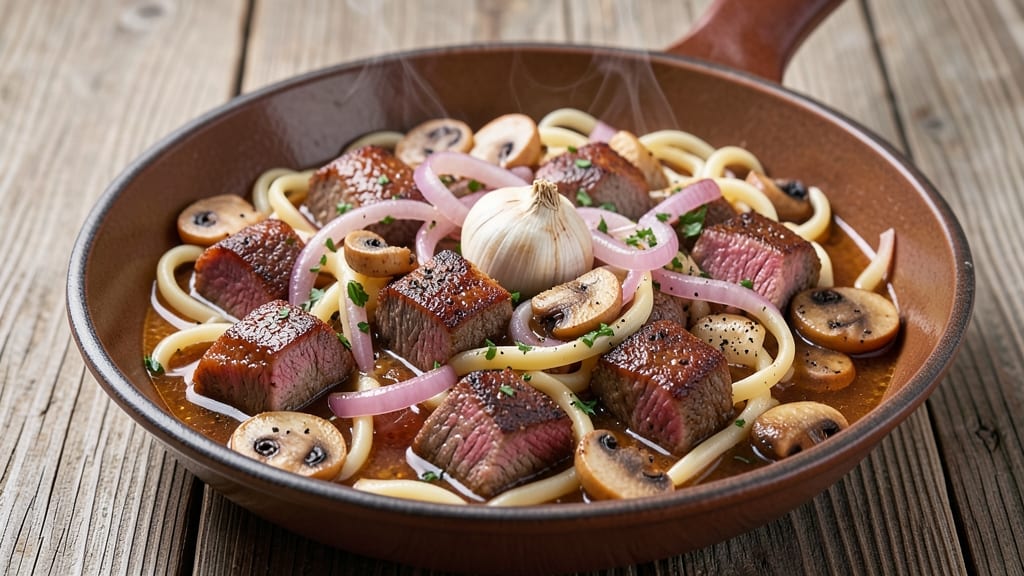
This authentic German beef stroganoff recipe brings hearty, comforting flavors to your table with a rich mushroom-wine sauce and tender beef—just like your favorite German restaurant. The secret lies in slow-cooked onions, German mustard for depth, and a touch of sour cream for that signature tang. I’ve perfected this version over years of testing, ensuring every bite delivers the bold, savory essence of German home cooking.
The sauce starts with a deep onion base, simmered until golden, then enriched with red wine and beef broth for a velvety texture. Sautéed mushrooms add earthy richness, while a splash of German mustard and a dollop of sour cream at the end balance the flavors perfectly.
The beef stays tender and flavorful, never dry, thanks to a quick sear and careful simmering. This isn’t your typical stroganoff—it’s a true taste of Germany, simplified for home cooks.
Pair it with buttery egg noodles or fluffy spaetzle for the full experience, and you’ll have a dish that’s both restaurant-quality and deeply satisfying. The aroma alone—warm, savory, and slightly tangy—will have everyone at the table asking for seconds.
Ready to make this German classic your new favorite? Let’s get started.
What sets this recipe apart is the authenticity without the fuss. No complicated techniques, just a few key ingredients and a method that respects tradition while keeping it approachable. The result?
A dish that feels like a warm hug on a chilly evening, with flavors that linger long after the last bite. Perfect for family dinners or cozy weeknights.
Ingredients for authentic german beef stroganoff
German comfort food starts with these hearty ingredients—tender beef, rich mushrooms, and bold flavors.
| Ingredient | Amount | Notes |
|---|---|---|
| Beef Chuck Roast 🥩 | 1 ½ lb | Cut into 1-inch cubes |
| Yellow Onions 🧅 | 2 whole | Thinly sliced, about 3 cups |
| White Mushrooms 🍄 | 8 oz | Sliced, fresh or frozen |
| Garlic Cloves 🧄 | 4 cloves | Minced, fresh preferred |
| Dry Red Wine 🍷 | ½ cup | Bold variety like Cabernet |
| Beef Broth 💧 | 1 ½ cups | Low-sodium preferred |
| German Mustard 🍯 | 1 tbsp | Dijon works if unavailable |
| Sour Cream 🧀 | ½ cup | Full-fat for best texture |
| Unsalted Butter 🧈 | 3 tbsp | For sautéing mushrooms |
| All-Purpose Flour 🌾 | 1 tbsp | For thickening sauce |
| Egg Noodles 🍜 | 8 oz | Fresh or dried, wide egg noodles |
| Salt 🧂 | 1 tsp | Kosher or sea salt |
| Black Pepper 🌶️ | ½ tsp | Freshly ground preferred |
| Fresh Parsley 🌿 | ¼ cup | Chopped, for garnish |
The beef makes all the difference here. Chuck roast cuts into tender cubes when cooked low and slow—sirloin stays tough. Grab it pre-cubed from the deli section to save time, or ask your butcher to cut it for you. German markets or specialty stores often carry better-quality cuts, but the regular supermarket beef works fine if you're in a pinch. Look for good marbling—it keeps the meat juicy during the long simmer. The onions? Yellow onions add that classic sweetness when caramelized, but red onions work too if you're in a hurry.
No German mustard? Dijon mustard is the closest substitute, though it lacks that signature tang. Fresh mushrooms are ideal, but frozen cremini mushrooms work perfectly—just don’t thaw them before cooking. The red wine can be any bold variety you have open—Cabernet Sauvignon, Merlot, or Pinot Noir all shine here. Short on beef broth? Chicken broth with a splash of soy sauce gets you close. The egg noodles? Fresh pasta is traditional, but dried works too—just cook them al dente and toss with a little butter at the end.
This dish tastes even better the next day—honestly, the flavors meld into something magical. Store leftovers in an airtight container for up to 4 days in the fridge, or freeze for 3 months. I always double the sauce and freeze half for lazy weeknights. The noodles reheat best separately and tossed with a little extra butter. Garnish with fresh parsley right before serving—it brightens up the rich flavors. If you've got extra sour cream, a dollop on each serving takes it from good to restaurant-quality.
Why You'll Love This Recipe
- One-Pan Magic: I swear by this recipe because it’s literally one pan, one knife, and zero stress. Sear the beef chuck in the same skillet where the onions and mushrooms caramelize—no extra pots, no sticky messes. The wine deglazes everything in minutes, and suddenly you’ve got a restaurant-worthy sauce without the fuss.
- Wine-Infused Richness: That splash of dry red wine isn’t just for show—it cuts through the beef’s richness while adding depth you won’t find in store-bought versions. The mushrooms soak it up like a sponge, and the garlic? Oh, it’s there, but in the best way—warm, aromatic, and impossible to resist.
- Leftover Goldmine: Between us, this dish tastes better the next day. The flavors meld overnight, and reheating it? Just a quick stir on the stove. I make a double batch on Sundays because it’s my go-to for lazy weeknights or when unexpected company drops by—no one ever complains.
- Budget-Friendly Feast: Beef chuck roast is affordable, and a single cut feeds four (or two very hungry people). The onions, mushrooms, and wine stretch the meal further, and the creamy sauce makes it feel indulgent without breaking the bank. Honestly, it’s the kind of recipe that makes grocery shopping less painful.
Step-by-step instructions for authentic German beef stroganoff
Here's how to make this rich, comforting dish with deep wine-mushroom flavors and tender beef.
Prepare the Beef and Sauté the Onions
Cut the 1.5 lb beef chuck roast into 1-inch cubes and pat them dry with paper towels. This helps create a better sear later. In a large skillet, melt 2 tablespoons of the unsalted butter over medium-high heat. Add the beef in a single layer and don't stir immediately—let it develop a deep brown crust for 2-3 minutes per side. This builds flavor foundation.
Once browned, remove the beef and set aside. In the same skillet, add the remaining 1 tablespoon butter and the 2 whole yellow onions (thinly sliced). Cook over medium heat for 5-6 minutes, stirring occasionally, until the onions soften and turn golden. You'll smell that sweet, caramelized aroma—this is where the depth of flavor begins. Keep the onions in the skillet; they'll form the base of your sauce.
Cook the Mushrooms and Garlic
Add the 8 oz sliced white mushrooms to the skillet with onions. Cook over medium heat for 6-8 minutes, stirring occasionally, until they release their moisture and turn golden brown. You want them tender but still holding their shape—overcooking will make them mushy. This step is crucial for that authentic earthy flavor.
Stir in the 4 minced garlic cloves and cook for 30 seconds until fragrant. The garlic should sizzle slightly but not burn—burnt garlic tastes bitter and ruins the dish. Here's where it gets good: pour in the ½ cup dry red wine and scrape up all the browned bits from the bottom of the pan with a wooden spoon. Let the wine simmer for 2-3 minutes until reduced by half. This deglazing step captures all those meaty, onion, and mushroom flavors.
Build the Sauce with Broth and Mustard
Pour in the 1.5 cups beef broth and bring to a gentle simmer. Stir in the 1 tablespoon German mustard—this adds that signature tangy depth. Return the beef to the skillet and simmer for 15-20 minutes until the beef is tender. You'll know it's ready when it easily pulls apart with a fork. The sauce should thicken slightly as it cooks, but if it gets too thick, add a splash of water or broth.
In a small bowl, whisk together the 1 tablespoon all-purpose flour and ½ cup sour cream to create a smooth paste. This helps thicken the sauce while keeping it creamy. Stir this mixture into the skillet and cook for 2-3 minutes until the sauce coats the back of a spoon. The flour will help thicken it without making it gluey, while the sour cream adds that rich, velvety texture.
Cook the Noodles and Combine
While the beef cooks, prepare the 8 oz egg noodles according to package instructions until al dente—about 2 minutes less than the package suggests. Drain and set aside. The noodles should be tender but still have a slight bite. Don't rinse them; the starch helps the sauce cling.
To serve, combine the cooked noodles with the beef stroganoff in the skillet. Toss gently to coat the noodles evenly with the rich sauce. The noodles will absorb some of the sauce, but there should still be plenty of flavorful liquid clinging to each strand. Taste and adjust seasoning with salt and black pepper if needed. The dish should be rich but not overly salty.
Garnish and Serve
Transfer the beef stroganoff to serving plates and garnish with ¼ cup chopped fresh parsley. The parsley adds a bright, fresh contrast to the rich, creamy sauce. Serve immediately while the noodles are hot and the sauce is silky. This dish tastes best straight from the skillet—every bite should deliver tender beef, earthy mushrooms, and that perfect balance of tangy, creamy sauce.
For an authentic touch, serve with a simple green salad or crusty bread on the side. Pair it with a bold red wine to complement the deep flavors of the dish. The leftovers actually improve the next day as the flavors meld even more, so you'll have an excuse to enjoy this comforting meal again!
Pro Tips For Making Authentic German Beef Stroganoff
- SEAR THE CHUCK ROAST: After slicing the beef chuck thin, don’t skip the sear—it’s what makes stroganoff taste like home. Hit a screaming-hot pan with just a drizzle of oil (about 2 tablespoons) and work in batches so the meat gets that golden crust before it releases into the sauce. I learned this the hard way—rushed searing means bland, mushy beef in the end.
- SOAK THE MUSHROOMS: Toss sliced mushrooms in a bowl with 1 tablespoon of cold water and a pinch of salt for 10 minutes before cooking. This draws out bitterness and keeps them from turning to mush in the wine. Yes, it’s an extra step, but the texture stays firm and the flavor stays bright—no one wants rubbery mushrooms in their stroganoff.
- DEGLAZE WITH WINE IMMEDIATELY: As soon as the beef comes out of the pan, pour in that dry red wine right away—don’t let those browned bits sit. Scrape up every last bit with a wooden spoon while the pan’s still hot, or you’ll lose half the flavor. This isn’t the time to walk away; the sauce starts building now.
- SIMMER LOW AND SLOW: After adding the sour cream (or crème fraîche, if you’re fancy), drop the heat to a bare simmer—think tiny bubbles, not a rolling boil. Stroganoff needs time to meld, not race. I used to rush it, and the sauce would split or taste raw. Give it 15 minutes minimum, and the sauce will be velvety, not curdled.
Storing and reheating this recipe
Refrigerator Storage
Let your beef stroganoff cool to room temperature for no more than 2 hours before storing. Transfer to an airtight glass container—I love using Pyrex with snap-on lids—and refrigerate at 40°F or below.
The flavors actually deepen overnight as the spices and sour cream meld together beautifully. Store for up to 4 days, but I recommend eating within 3 days for peak texture. 🌱
Freezer Prep
For longer storage, divide the stroganoff into quart-sized freezer bags (leave 1 inch headspace for expansion) or airtight containers. Label with the date—this dish freezes beautifully for up to 3 months.
I always freeze the sauce and beef separately from the noodles to prevent mushiness. When ready to reheat, thaw overnight in the fridge for best results. ❄️
Stovetop Reheating
My preferred method preserves the sauce’s creamy texture. Pour the stroganoff into a heavy-bottomed skillet (like my Lodge cast iron) and heat over medium-low heat for 8-10 minutes, stirring occasionally. If the sauce thickens too much, add 1-2 tablespoons beef broth or water.
The noodles might absorb some moisture, so toss them with a splash of warm broth at the end. 🔥
Microwave Method
For quick reheating, transfer a portion to a microwave-safe dish and cover loosely with a damp paper towel. Heat on 70% power for 2-3 minutes, stir, then continue in 30-second intervals until reaching 165°F.
The key is low power to avoid breaking the sauce’s emulsion. Add a dollop of fresh sour cream if the sauce looks separated. ✨
Noodle Revival
Reheated noodles can get gummy, so I always cook fresh noodles separately when serving leftovers. Toss them with 1 tablespoon butter and a pinch of salt, then mix with the reheated stroganoff just before serving.
This keeps the dish light and delicious. The secret? Don’t overcook the fresh noodles—they should be al dente. 💫
Garnish Refresh
Always finish with fresh garnishes to brighten reheated stroganoff. Sprinkle with chopped parsley and a pinch of black pepper. For extra richness, drizzle with a little sour cream or a pat of cold butter.
The contrast of cold garnishes against warm stroganoff makes it taste almost as good as fresh! 💛
Nutrition facts
Frequently asked questions
Why does this recipe use German mustard instead of Dijon?
German mustard adds a unique tangy depth that's harder to replicate with Dijon. The Düsseldorf-style mustard has a slightly sweeter, more complex flavor profile that complements the wine reduction perfectly. If you can't find it, use Dijon—but you'll notice the difference in that authentic German tang.
Can I substitute the red wine with something else?
If you don't have red wine, use 1 cup beef broth + 1 teaspoon balsamic vinegar for similar acidity. For a non-alcoholic version, try 1 cup cranberry juice or apple cider vinegar + 1 teaspoon sugar. The wine's job is to deglaze and add depth—any acidic liquid works.
How do I keep the beef tender when cooking?
The secret is in the chuck roast and proper timing. Cut into 1-inch cubes and sear them first to lock in juices. Then simmer gently for 15-20 minutes—never boil. The slow cook time breaks down the connective tissue without overcooking. If your beef is tough, it likely cooked too long.
What's the best way to make this dish ahead of time?
Make the stroganoff 1 day ahead—it tastes even better! Store the sauce and beef separately in airtight containers (up to 4 days in fridge). Reheat the sauce separately, then toss with freshly cooked noodles. The flavors meld beautifully overnight, and reheating separately keeps the noodles from getting mushy.
Can I make this gluten-free?
Yes! Replace the egg noodles with gluten-free pasta or cauliflower rice. For the sauce, use cornstarch or arrowroot powder (1 tsp) instead of flour to thicken. Just whisk it with the sour cream before adding to the pan. The texture will be slightly different but still delicious.