
Main Courses
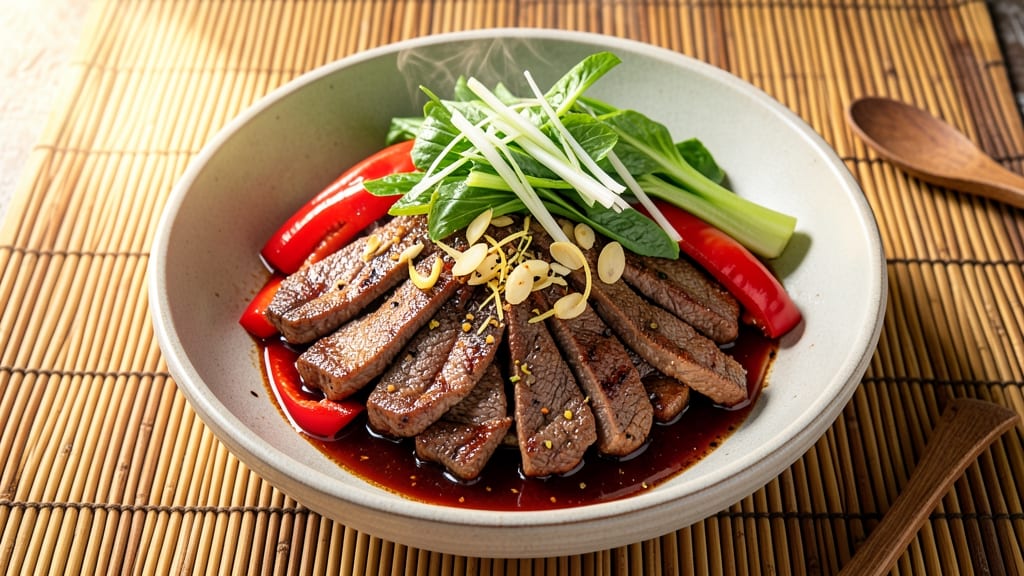
This authentic Chinese beef stir-fry delivers the smoky wok hei, tender beef, and silky soy-ginger sauce that define Cantonese home cooking. The secret lies in high-heat searing and quick cooking—transforming tough flank steak into melt-in-your-mouth strips while preserving crisp vegetables.
I’ve perfected this recipe after years of testing, ensuring every bite captures that restaurant-quality balance of umami, sweetness, and aromatic depth.
What sets this dish apart is the two-stage cooking method: first browning the beef in a screaming-hot wok to develop deep caramelized flavors, then tossing in vegetables and sauce at the perfect moment to lock in their vibrant textures.
Traditional ingredients like oyster sauce, Shaoxing wine, and fresh ginger create that signature glossy finish, while a light cornstarch slurry thickens the sauce just enough to coat every bite without overwhelming the natural flavors.
The result is a dish that’s restaurant-authentic at home—crisp-tender beef, bright bell peppers, and wilted bok choy all bathed in a glossy sauce that clings perfectly.
The aroma alone will have your kitchen smelling like a bustling Cantonese street market, and the first bite delivers that satisfying contrast of smoky, sweet, and savory. This is the stir-fry I make when I want to recreate the flavors of my grandmother’s kitchen.
Serve it over steamed jasmine rice to soak up every last drop of that silky sauce, or pair it with buttery egg noodles for a heartier meal. The technique scales easily, so you can adjust the portion sizes without sacrificing authenticity. Ready to master this classic?
Ingredients for authentic chinese beef stir fry
Here's what you need to recreate that bustling Cantonese street market flavor at home.
| Ingredient | Amount | Notes |
|---|---|---|
| Flank Steak 🥩 | 1 ½ lb | Thinly sliced against grain |
| Red Bell Peppers 🍅 | 2 whole | Cut into 1-inch strips |
| Bok Choy 🥬 | 2 whole | Trimmed, quartered lengthwise |
| Garlic Cloves 🧄 | 6 cloves | Minced, aromatic |
| Fresh Ginger 🌿 | 1 inch | Julienned, peeled |
| Oyster Sauce 🍶 | 3 tbsp | High-quality, umami-rich |
| Shaoxing Wine 🍷 | 2 tbsp | Dry, aromatic |
| Light Soy Sauce 🍶 | 2 tbsp | Kikkoman preferred |
| Dark Soy Sauce 🍶 | 1 tbsp | For color depth |
| Cornstarch 🌾 | 1 tbsp | For sauce slurry |
| Neutral Oil 🫒 | 3 tbsp | Peanut or vegetable |
| Sesame Oil 🫒 | 1 tsp | Toasted, for aroma |
| White Sugar 🍚 | 1 tbsp | Balances flavors |
| Green Onions 🧅 | 3 whole | Sliced, for garnish |
| Jasmine Rice 🍚 | 2 cups | Uncooked, for serving |
The beef is non-negotiable—flank steak gives you that signature tender-yet-firm texture when sliced thin against the grain. Look for it at Asian markets or the meat counter—they'll usually slice it for you. Fresh ginger and garlic are next-level here; skip the jarred minced garlic—freshly minced makes all the difference. Bok choy should have crisp stems and bright green leaves. If you can't find Shaoxing wine, dry sherry works in a pinch, but it won't be quite the same. The oyster sauce should be thick and glossy—Lee Kum Kee is the gold standard, but any good brand will do.
No Shaoxing wine? Dry white wine or even rice vinegar can stand in, though you'll lose some depth. Subbing bell peppers? Broccoli or snap peas work great—just adjust cooking time. The cornstarch slurry is key for that glossy sauce; arrowroot powder works too. For extra umami, add a splash of fish sauce (if not vegetarian). The sesame oil should be toasted—store-bought is fine, but if you have whole sesame seeds, toast them yourself for deeper flavor. And that sugar? It balances the acidity—brown sugar works too, but white keeps things clean.
Store the cooked sauce in an airtight container for up to 5 days—it tastes even better reheated. The beef reheats best in a wok or skillet over medium heat. For the rice, steam it fresh when serving—it soaks up that silky sauce perfectly. Freeze portions of the sauce in ice cube trays for quick future meals. And if you're prepping ahead, marinate the beef for up to 2 hours—just don't overdo it or it'll get mushy.
Why You'll Love This Recipe
- One-Pan Magic: I swear by this recipe when I’m too tired to scrub pots—just sear the flank steak, toss in the peppers and bok choy, and let the wok’s heat do the work. That crisp-tender beef? Zero fuss, all flavor.
- Umami Bomb: The combo of fresh ginger and minced garlic hitting the hot wok first? It’s where the magic happens—deep, savory layers that make this taste like a takeout order, not a homemade hack. (Between us, my picky husband actually asks for seconds.)
- Lunchbox Hero: Between us, this is my go-to for meal prep—tastes just as good cold the next day, and the bok choy stays crisp. Pack it with rice, and suddenly you’ve got a weeknight win that doesn’t involve sad desk salads.
- Budget Powerhouse: Flank steak stretches ridiculously well, and bell peppers/bok choy last forever in the crisper. Honestly, I make this twice a month just to avoid grocery panic—plus, the leftovers reheat like a dream (microwave or wok, no judgment).
Step-by-step instructions for authentic Chinese beef stir-fry
Here's how to recreate that wok-heated crunch and silky sauce at home—just like the ones you've loved in Chinese restaurants.
Prep the Ingredients for Perfect Texture
Start by slicing the 1.5 lb flank steak against the grain into thin strips—about ¼-inch thick. This ensures tender bites that cook quickly in the wok. Pat them dry with paper towels to remove any moisture, which helps achieve that signature sear.
Cut the 2 whole red bell peppers into 1-inch strips and trim the 2 whole bok choy, then quarter them lengthwise. Mince the 6 cloves garlic and julienne the 1-inch fresh ginger (peel it first). Slice the 3 whole green onions into ½-inch pieces, keeping the whites and greens separate for garnish. The key here is uniformity—similar-sized pieces cook evenly in the wok.
Marinate the Beef for Maximum Flavor
In a bowl, combine the sliced flank steak with 2 tbsp light soy sauce, 1 tbsp dark soy sauce, and 1 tbsp white sugar. Let it marinate for 15-20 minutes while you prep the rest. This step infuses the beef with deep umami and a touch of sweetness, balancing the bold flavors of the stir-fry.
Don't skip the marinade—it's what transforms tough flank steak into tender, flavorful strips. If you're short on time, even 10 minutes will help, but longer marinating yields better results. Once marinated, drain any excess liquid but leave the beef glistening with the marinade.
Cook the Jasmine Rice for a Neutral Base
Rinse the 2 cups jasmine rice under cold water until the water runs clear, then cook it according to package instructions. I like to use a rice cooker for foolproof results, but a pot method works too. The rice should be fluffy and slightly undercooked when done—it'll finish steaming while the stir-fry cooks.
While the rice cooks, prepare your wok or large skillet. Heat it over high heat until it's screaming hot—this is crucial for that authentic wok hei (breath of the wok) flavor. Add 3 tbsp neutral oil and let it shimmer for 30 seconds before adding the beef.
Stir-Fry the Beef to Perfection
Working quickly, add the marinated beef to the wok in a single layer. Let it sear undisturbed for 1-2 minutes until the edges turn deep golden brown. This initial sear locks in juices and builds flavor. Then, stir-fry vigorously for another 2-3 minutes until the beef is 80% cooked—it'll finish in the sauce.
Remove the beef and set it aside. Add another splash of neutral oil if needed, then stir-fry the red bell peppers and bok choy for 2-3 minutes until they soften but still retain a slight crunch. Push the vegetables to one side of the wok and add the minced garlic and julienned ginger, cooking for 30 seconds until fragrant.
Build the Sauce and Finish the Stir-Fry
In a small bowl, whisk together 3 tbsp oyster sauce, 2 tbsp Shaoxing wine, 1 tbsp cornstarch, and 1 tsp sesame oil. Pour this mixture into the wok with the vegetables and stir quickly to combine. The cornstarch will thicken the sauce into a glossy, silky consistency.
Return the beef to the wok and toss everything together for 1-2 minutes until the sauce coats the beef and vegetables evenly. The stir-fry is done when the sauce is smooth and glossy, and the beef reaches 160°F internally. Taste and adjust seasoning with a pinch of light soy sauce if needed—it should balance sweet, salty, and umami flavors.
Serve with Style
Transfer the stir-fry to a serving platter and garnish with the sliced green onion whites (for color) and greens (for freshness). Serve immediately over the jasmine rice, letting diners scoop up the beef and vegetables together. The contrast of the silky sauce, tender beef, and crisp vegetables makes every bite unforgettable.
Pro tip: If you're serving a crowd, keep the stir-fry warm in a 200°F oven while you finish cooking the rice. This dish is best enjoyed fresh, so don't let it sit too long after cooking.
Pro Tips For Making Authentic Chinese Beef Stir Fry
- Slice the Steak Thinly: Grab a sharp knife and cut the flank steak against the grain—about ¼-inch thick slices, not paper-thin but not thick either. I used to rush this and end up with chewy beef; take your time, or your stir-fry will pay for it.
- Blanch Bok Choy First: Toss the bok choy in boiling water for 30 seconds before stir-frying—just enough to soften the core. This keeps it from turning mushy later, especially when you’re juggling beef and peppers. (Yes, even if you’re impatient like me.)
- Don’t Overcrowd the Pan: Stir-fry in batches if needed—beef, peppers, then bok choy. I learned this the hard way after a soggy, uneven cook. A crowded pan steams instead of sears, and nobody wants limp bell peppers in their beef stir-fry.
- Use High Heat, Then Lower: Start with the wok or pan screaming hot, then drop the heat once everything’s in. The beef needs that initial sear, but the veggies will burn if you don’t adjust. (Your future self will thank you.)
Make-ahead tips for this authentic chinese beef stir fry
Marinate Ahead
The beef marinade can be prepped up to 2 hours in advance—this is my go-to trick for busy weeknights. Store the marinated beef in an airtight container in the fridge, then let it sit at room temperature for 10 minutes before cooking to ensure even searing.
I often marinate mine the night before and keep it in the fridge, ready to cook the next day. 💪
Sauce Prep
Make the sauce ahead of time and store it in a small airtight container for up to 5 days in the fridge. When ready to cook, simply reheat the sauce in a small saucepan over medium heat until it's smooth and glossy again.
This shortcut saves you from measuring ingredients during the stir-fry rush. Just add the fresh garlic, ginger, and vegetables right before combining everything in the wok. ✨
Partial Cooking
For meal prep, you can partially cook the beef and vegetables separately, then combine them when ready to serve. Sear the beef as directed, then store it in an airtight container. Cook the vegetables until just tender-crisp, then store them separately.
When reheating, combine everything in a wok or skillet over high heat and add the pre-made sauce to finish. This method keeps the textures perfect—just like fresh! 🔥
Freezer-Friendly
Freeze the cooked stir-fry (without rice) in a single layer on a tray, then transfer to a freezer bag for up to 3 months.
When ready to eat, thaw overnight in the fridge, then reheat in a wok or skillet over medium-high heat with a splash of water or broth to restore moisture. The sauce will thicken back up beautifully, and the beef stays tender.
I love this for quick lunches—just grab and reheat! ❄️
Rice Prep
Cook the jasmine rice ahead of time and store it in an airtight container for up to 2 days. Reheat it in a steamer basket or microwave until warm and fluffy. For extra flavor, add a splash of water and cover while reheating.
The rice should be slightly warm when serving to complement the hot stir-fry. I often make a big batch on Sunday to use all week—it pairs perfectly with this dish! 🍚
Garnish Fresh
Always add the green onion garnish fresh at the last minute—it brightens up the dish and adds that restaurant-quality finish. Slice the green onions just before serving so they stay crisp and vibrant.
If you're prepping ahead, store the whites and greens separately in the fridge and slice them together right before plating. This small step makes a big difference in presentation! 🧅
Nutrition facts
Frequently asked questions
What cut of beef works best for this stir-fry?
Use flank steak or sirloin—both slice thin against the grain for tender results. Avoid tougher cuts like chuck; they won't get tender enough in the quick cooking time. Ask your butcher to slice it paper-thin (about ¼-inch) for perfect texture.
Can I substitute Shaoxing wine with something else?
Yes! Use dry sherry or white wine in a pinch, but Shaoxing adds depth. For a non-alcoholic version, try rice vinegar or even a splash of apple cider vinegar. Just reduce other liquids slightly to balance flavors.
Why does my stir-fry sauce turn watery?
This happens when the cornstarch slurry isn't cooked long enough. Always stir the sauce vigorously for 30-60 seconds until it thickens. If it still separates, mix ½ tsp cornstarch with 1 tsp water and stir in. The sauce should coat the back of a spoon.
How do I get that smoky wok hei flavor at home?
Use a carbon steel wok or cast iron skillet—heat it until it's ripping hot before adding oil. Keep the fire high and work quickly to create smoke. A gas stove works best, but electric burners can mimic it with a little patience.
What if I don't have bok choy?
Swap it for broccoli, snap peas, or Chinese cabbage. Adjust cooking time—broccoli needs 2-3 minutes while cabbage takes 1 minute. The key is keeping vegetables crisp-tender. For extra authenticity, add shiitake mushrooms for umami depth.