
Soups & Stews
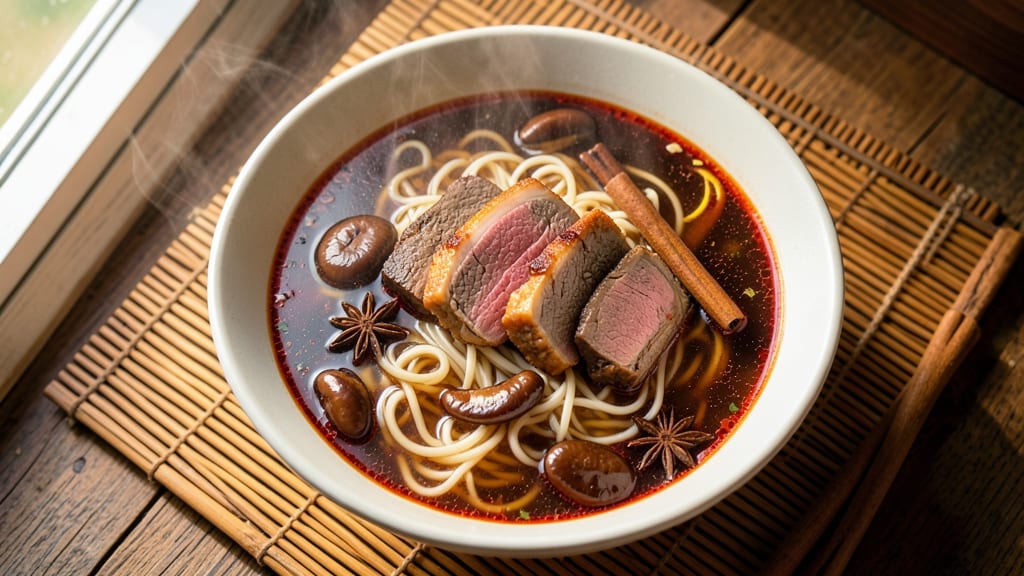
This authentic Chinese beef noodle soup recipe brings the soul-warming flavors of a bustling Beijing street stall into your kitchen. 🌟 The secret lies in slow-simmering a fragrant broth with star anise, cinnamon, and fermented bean paste—a technique that transforms tough beef into melt-in-your-mouth tenderness while infusing the noodles with deep, savory richness.
What sets this recipe apart is the balance of textures: silky wheat noodles, tender beef slices, and crisp vegetables, all harmonized in a broth that’s both comforting and complex.
Unlike simplified versions, this method respects tradition by charring aromatics for depth and simmering the broth for hours, ensuring every spoonful delivers layers of umami and warmth.
The result is a bowl of soup that’s as nourishing as it is flavorful—perfect for chilly evenings or when you crave a meal that feels like a hug.
The broth is rich but never heavy, the beef falls apart with ease, and the noodles absorb just enough flavor to make each bite unforgettable. This is the kind of dish that turns a simple meal into a memorable experience.
Whether you’re recreating a Cantonese classic or a Sichuan-inspired twist, this recipe stays true to its roots while being approachable for home cooks. The optional garnishes—like cilantro, chili oil, or lime—let you customize it to your taste, but the core remains authentic and deeply satisfying.
Ingredients for authentic chinese beef noodle soup
Fragrant spices, tender beef, and silky noodles—this one-pot recipe delivers restaurant-quality depth.
| Ingredient | Amount | Notes |
|---|---|---|
| Beef Chuck Roast 🥩 | 1 ½ lb | Cut into 1-inch cubes, marbled for tenderness |
| Dried Wheat Noodles 🍜 | 8 oz | Fresh egg noodles preferred, or udon |
| Star Anise Pods 🌿 | 2 whole | Whole pods for infusing broth |
| Cinnamon Sticks 🌿 | 2 whole | 1-inch pieces for aroma |
| Fermented Black Bean Paste 🥫 | 2 tbsp | Douchi, for umami depth |
| Dried Shiitake Mushrooms 🍄 | 4 whole | Rehydrated for earthy flavor |
| Daikon Radish 🥕 | 1 whole | Peeled, cut into thick slices |
| Carrots 🥕 | 2 medium | Peeled, cut into thick rounds |
| Green Onions 🧅 | 4 whole | White and green parts separated |
| Garlic Cloves 🧄 | 6 cloves | Charred for smoky depth |
| Ginger Root 🌿 | 1 inch | Sliced thinly, charred |
| Soy Sauce 🍶 | ¼ cup | Light soy for balance |
| Sesame Oil 🫒 | 1 tbsp | Toasted, for finishing |
| Salt 🧂 | 1 ½ tsp | Kosher or sea salt |
| White Peppercorns 🌶️ | ½ tsp | Ground fresh for warmth |
The beef and aromatics are non-negotiable for authenticity. Beef chuck roast with good marbling is a must—Costco or Whole Foods carry it pre-cut, but if you're buying a whole roast, ask the butcher to cube it. For the spices, Penzeys Spices sells whole star anise and cinnamon sticks that stay potent for months. The fermented black bean paste? Asian markets have it in jars—if you can't find it, sub with 1 tbsp soy sauce plus 1 tsp miso. The shiitake mushrooms should be dried, not fresh—Trader Joe's sells them in packs, and they're a game-changer for that umami punch.
No daikon radish? Substitute extra carrots or parsnips—they'll add sweetness but won't mimic the crisp texture. Running low on soy sauce? Coconut aminos at half the amount works in a pinch, though the flavor won't be identical. The noodles can be any wheat variety, but fresh egg noodles from the Asian aisle absorb the broth beautifully. If you're charring the garlic and ginger, use a dry pan over medium heat until blackened—this adds smoky depth that can't be replicated with pre-minced garlic. For the sesame oil, toasted is key—look for bottles labeled 'toasted' at H Mart or 99 Ranch.
Broth keeps for 5 days in the fridge and freezes beautifully for 3 months—portion it into containers before freezing. The noodles are best cooked fresh, but you can parboil them ahead and store separately. Garnish with cilantro or chili oil if you're feeling fancy, but the soup stands strong on its own. Leftovers? Double the batch—this soup always tastes better the next day as the flavors meld.
Why You'll Love This Recipe
- One-Pot Magic: I swear by the slow simmer—just toss in the beef chuck, star anise, and cinnamon sticks, then let it work its flavor while I prep the rest. No fancy gadgets, no stress, just rich broth building itself.
- Umami Bomb: That fermented black bean paste? It’s the secret weapon—salty, funky, and packed with depth. One taste and you’ll understand why street stalls in Shanghai sell out fast.
- Lunchbox Hero: Between us, this soup reheats like a dream. I make a double batch on Sundays, and by Wednesday, I’m still pulling out containers with zero complaints. (Yes, even from my picky teen.)
- Budget Winner: Beef chuck is cheap, noodles last forever, and those spices? A few pods go a long way. I’ve fed six people for under $15—no guilt, just flavor. The kind that makes you forget you’re saving money.
Step-by-step instructions for authentic Chinese beef noodle soup
Here's how to build a rich, aromatic broth that captures the soul of Chinese home cooking.
🔥 Step 1: Char the Aromatics for Deep Flavor
Heat a dry skillet over medium-high heat until very hot. Add the 6 cloves garlic and 1-inch ginger root, sliced thinly. Let them char for 2-3 minutes until deeply golden with blackened spots—this smoky flavor is essential for authentic taste. Transfer to a cutting board and finely chop.
In the same skillet, add the 2 whole star anise pods and 2 cinnamon sticks. Toast for 30 seconds until fragrant, then remove and set aside with the charred garlic and ginger. This quick toasting releases their essential oils, which will infuse the broth with complexity.
🍳 Step 2: Sear the Beef for Rich Broth Foundation
Cut the 1.5 lb beef chuck roast into 1-inch cubes, ensuring you keep some fat attached—this will render down into flavorful oil. Pat the beef dry with paper towels to promote better browning. Heat 1 tablespoon sesame oil in a large pot over medium-high heat until shimmering.
Working in batches, add the beef cubes and sear for 2-3 minutes per side until deeply browned. Don't crowd the pot—this creates steam instead of the caramelized crust we want. Transfer the browned beef to a plate as you work. You'll have about 2 tablespoons of rich fond at the bottom—this is pure flavor.
🥘 Step 3: Build the Fragrant Broth Base
Return the pot to medium heat and add 8 cups water (yes, it looks like too much, but trust me). Scrape up all those browned bits from the bottom with a wooden spoon—this deglazing captures all that meaty flavor. Add the charred aromatics, 2 tbsp fermented black bean paste, 1.5 tsp salt, and 0.5 tsp ground white peppercorns.
Bring to a boil, then reduce heat to medium-low to maintain a gentle simmer. Skim off any foam that rises to the surface during the first 10 minutes—this ensures a clear broth. The beef should simmer for 1.5 hours until fork-tender. If the broth reduces too much, add ½ cup hot water to maintain level.
🍳 Step 4: Prepare Vegetables and Noodles
While the beef cooks, prepare the vegetables. Peel and cut the 1 whole daikon radish into ¼-inch thick slices and the 2 medium carrots into ¼-inch thick rounds. Separate the 4 whole green onions into white and green parts. Soak the 4 whole dried shiitake mushrooms in hot water for 20 minutes until plump, then slice.
For the noodles, if using dried wheat noodles, cook them according to package directions in a separate pot until al dente. Drain and rinse briefly with cold water to stop cooking. Fresh egg noodles or udon should be cooked until just tender—2-3 minutes less than package directions. They'll finish cooking in the broth.
🥘 Step 5: Finish and Assemble the Soup
Once the beef is tender, remove it from the broth and let it rest for 5 minutes. Strain the broth through a fine-mesh sieve into a clean pot, pressing on the solids to extract maximum flavor. Return the broth to medium heat and add the 0.25 cup soy sauce. Taste and adjust seasoning—you want it balanced between savory and slightly salty.
Add the prepared vegetables to the broth and simmer for 5 minutes until just tender. Return the beef to the pot along with any accumulated juices. Add the cooked noodles and heat through for 1-2 minutes. Ladle into bowls, garnishing each serving with the green onion tops and a drizzle of sesame oil. Serve immediately with extra green onions on the side for stirring into your bowl.
Pro Tips For Making Authentic Chinese Beef Noodle Soup
- BLANCH THE BEAN PASTE: I learned this the hard way—fermented black bean paste needs a quick splash of hot water (about 30 seconds) before adding it to the broth. Otherwise, it’ll clump like glue and sink to the bottom, ruining the silky texture everyone loves. Just stir it into a small bowl with a spoonful of broth first, then pour it in.
- SIMMER LOW AND LONG: This isn’t the time for rushing. After the initial sear and boiling, drop the heat to a gentle simmer—just small bubbles breaking the surface—and let the beef cook for at least 2.5 hours. I used to cut corners, and the meat turned out chewy. Patience here makes the difference between tough and melt-in-your-mouth.
- SKIP THE OVERCROWDED POT: If you’re using a small pot, resist the urge to cram in all the aromatics at once. Start with just the beef, star anise, and cinnamon sticks in the broth—give them space to infuse properly. Adding everything later (like the fermented bean paste or noodles) keeps the flavors balanced and stops the broth from turning bitter.
- SEAR THE BEEF IN BATCHES: High heat. Seriously, crank it up and sear the beef chuck roast in 2-inch-thick batches until it’s deeply browned—this builds flavor that no amount of simmering can replicate. I was skeptical until I tried it: the first bite of that crusty, caramelized beef in the soup changed everything. Use a heavy pot, don’t skimp on the oil.
Storing and reheating your authentic chinese beef noodle soup
Broth Storage Secrets
The fragrant beef broth is the heart of this soup, and it keeps beautifully for later use. Store it in airtight glass containers (like Le Parfait jars) in the refrigerator for up to 5 days.
The flavors actually deepen overnight as the spices meld further. For longer storage, freeze the broth in 1-cup portions—this makes reheating easy for single servings. Just thaw overnight in the fridge before reheating. 🥣
Noodle Prep Ahead
Cook your noodles al dente and rinse them with cold water to stop cooking. Store them in a separate resealable plastic bag in the fridge for up to 2 days.
When reheating, simply add them to the hot broth for 1-2 minutes to warm through—no need to cook them again. Fresh egg noodles work best for this method, but dried wheat noodles will also absorb the broth beautifully. ✨
Vegetable Prep Tips
Prep all your vegetables (daikon, carrots, shiitake mushrooms) and store them in separate airtight containers in the fridge for up to 3 days. When reheating, add them directly to the hot broth for 5 minutes before adding the noodles.
The daikon and carrots will soften perfectly without turning mushy. For shiitake mushrooms, soak them fresh each time if possible—they hold their texture better. 🥕
Reheating Like a Pro
For the best texture, reheat the broth and beef separately. Bring the broth to a gentle simmer over medium-low heat until hot. Add the beef back in and warm through for 2-3 minutes. Then stir in the noodles and vegetables.
If the broth seems too thick after reheating, add ¼ cup hot water to restore its silky consistency. Always finish with a drizzle of toasted sesame oil for that authentic aroma. 🔥
Garnish Freshness Matters
Store fresh garnishes like green onions and cilantro in resealable bags with a paper towel to absorb moisture. They’ll stay fresh for 3-4 days in the fridge. For chili oil, keep it in its original bottle in a cool, dark place—it’ll last for months.
Add these garnishes fresh when serving to maintain their vibrant colors and bright flavors. A sprinkle of white pepper right before eating also adds a nice finishing touch. 🌿
Freezer-Friendly Tips
If you're freezing the complete soup, assemble it in a freezer-safe container with 1 inch of headspace for expansion. Thaw overnight in the fridge, then reheat gently. The texture of the noodles may soften slightly, but the broth will still be rich and flavorful.
For best results, I recommend freezing just the broth and beef separately, then reheating and adding fresh noodles when ready to serve. 🧊
Nutrition facts
Frequently asked questions
Why does this recipe use star anise and cinnamon?
These spices are essential for authentic flavor! Star anise adds a subtle licorice-like depth, while cinnamon brings warmth—together they create the complex aromatic base that defines traditional Chinese beef noodle soup. The charring step releases their essential oils for maximum impact.
Can I make this soup with ground beef instead of chuck roast?
Ground beef works but won't give the same tender texture. For authenticity, use chuck roast cut into cubes—it becomes fork-tender when slow-simmered. If you must use ground beef, brown it well first and simmer for 1 hour instead of 1.5 hours to prevent drying out.
How do I adjust the spice level for sensitive eaters?
Skip the fermented black bean paste and reduce the chili oil garnish. For extra mildness, omit the star anise (substitute with ½ tsp ground coriander) and use ½ tsp white pepper instead of 0.5 tsp. The soup will still be rich and savory without being spicy.
What's the best way to make this soup vegetarian?
Replace the beef with mushrooms (shiitake + king oyster) and tofu (pressed and cubed). Use 1 tbsp soy sauce for umami and add 1 tsp miso paste to the broth. The same charred aromatics and slow-simmer technique will create a deeply flavorful vegetarian version.
Why does the broth need to simmer for so long?
Slow simmering is key for two reasons: First, it tenderizes the beef by breaking down collagen. Second, it allows the spices and aromatics to fully infuse without becoming bitter. The 1.5-hour simmer transforms tough cuts into melt-in-your-mouth pieces while building that restaurant-quality depth.