
Sauces & Condiments
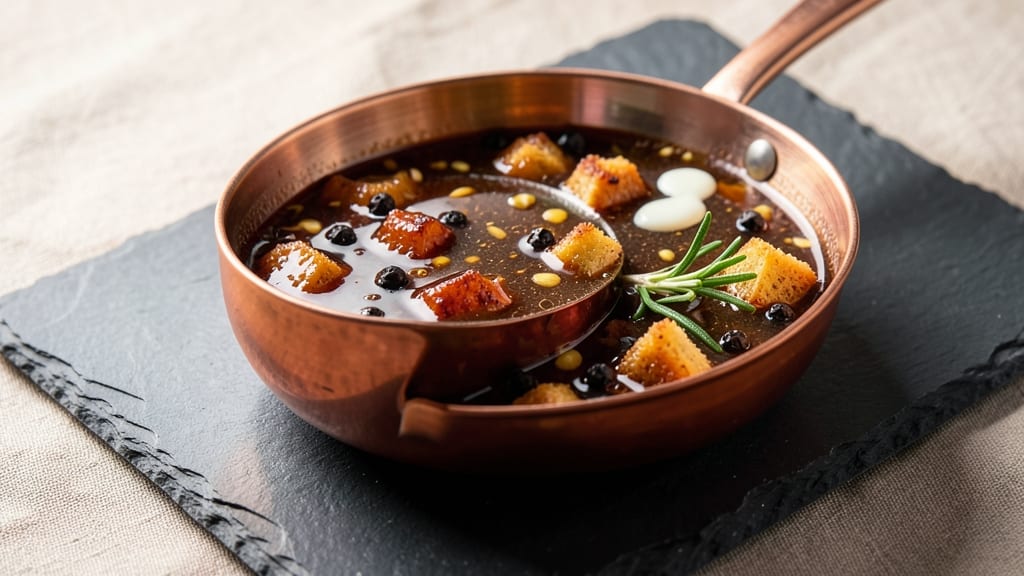
This au jus sauce recipe with beef broth turns simple pan drippings into restaurant-worthy magic in just 15 minutes—no fancy techniques required. The secret lies in balancing rich beef broth with a splash of red wine and aromatic shallots, then reducing until silky and deeply flavorful.
I developed this after years of testing what makes the difference between bland pan juices and a sauce worth drizzling over every bite.
The process is straightforward but precise: deglaze the pan with wine to lift all those flavorful browned bits, then build depth with beef broth and aromatics. A quick cornstarch slurry thickens it just enough to coat without turning gluey.
What you end up with is a glossy, savory sauce that clings beautifully to roasted beef, transforming leftovers into a gourmet meal.
Perfect for elevating Sunday roasts, holiday leftovers, or even weeknight steaks, this sauce keeps well in the fridge for up to 5 days. The key is letting it cool slightly before storing—this prevents skin formation and maintains its velvety texture.
Serve it warm over sliced beef or use it to moisten pan-seared meats for that restaurant-quality finish.
Between you and me, this recipe works wonders when you're short on time but still want flavor that feels special. The beauty of au jus is that it uses ingredients you likely already have—no need for special shopping trips.
Let's make dinner taste like you spent hours in the kitchen when the reality is just 15 minutes of focused effort.
Ingredients for au jus sauce recipe with beef broth
Pantry staples plus a few key ingredients transform ordinary drippings into restaurant-quality sauce.
| Ingredient | Amount | Notes |
|---|---|---|
| Beef Broth 🍲 | 2 cups | Homemade or quality store-bought |
| Red Wine 🍷 | ½ cup | Bold, dry variety like Cabernet |
| Shallots 🧅 | 2 whole | Minced finely for aromatic flavor |
| Garlic Cloves 🧄 | 3 cloves | Peeled and minced |
| Pan Drippings 🥩 | 1 cup | From roasted beef |
| Cornstarch 🌾 | 1 tbsp | For thickening slurry |
| Cold Water 💧 | 2 tbsp | For cornstarch slurry |
| Black Peppercorns 🌶️ | ½ tsp | Freshly cracked for heat |
| Salt 🧂 | ½ tsp | Kosher or sea salt |
| Fresh Parsley 🌿 | 2 tbsp | Chopped for garnish |
The beef broth is your flavor foundation—homemade is ideal, but Swanson or Pacific Foods work in a pinch. Red wine adds depth, so grab whatever bold, dry bottle you've got open (Cabernet or Merlot). Shallots and garlic? Fresh is non-negotiable—they make all the difference. I always buy shallots pre-peeled at Whole Foods to save time, but regular grocery stores carry them too. The pan drippings should be rich and browned—if yours are pale, add a splash of extra beef broth to intensify the flavor. Freshly cracked peppercorns give better heat than pre-ground, but if that's all you have, it'll still work.
No red wine? Beef broth with a splash of balsamic vinegar mimics the acidity. Short on shallots? Extra garlic plus a pinch of onion powder gets you close. The cornstarch slurry is key—mix it well to avoid lumps. If your sauce gets too thick, thin it with a splash of warm water. Garnish with parsley if you've got it, but dried parsley at half the amount works in a bind. The sauce should coat the back of a spoon but still be silky, not gluey. If it's too thin, reduce it longer—just don't let it boil hard or it'll seize.
This sauce tastes even better the next day once flavors meld. Store it in an airtight container in the fridge for up to 5 days. For leftovers, reheat gently on the stove—never microwave, or it'll turn grainy. I always make extra because it's perfect for drizzling over roasted potatoes or steak the next night. Freeze portions in ice cube trays for quick single servings later. The sauce thickens when cold, so thin it with a splash of broth if needed before serving.
Why You'll Love This Recipe
- Uses What You Have: I swear by this sauce because it turns yesterday’s roast drippings into today’s star. No fancy ingredients—just what’s left in your pan, a splash of wine, and 10 minutes of stirring while you sip coffee.
- Rich Without Effort: That deep, savory punch from reduced red wine and beef broth? It’s the kind of flavor that makes you pause mid-bite. The shallots and garlic caramelize just enough to add sweetness, but the wine keeps it bright and complex.
- Dinner Party Ready: Serve it over grilled steak for a restaurant-worthy finish, or drizzle it on mashed potatoes for a cozy twist. Honestly, I’ve used it in tacos, pasta, and even as a soup base—it’s my secret weapon for making ordinary meals feel special.
- Budget-Friendly Magic: A few dollars of broth and a bottle of wine go a long way here. Make a big batch, store it in the fridge, and you’ve got a flavor boost for next week’s leftovers—no extra cost, just pure taste.
Step-by-step instructions for pan-drippings magic in 15 minutes
Here's how to transform simple ingredients into a rich, velvety au jus that elevates any beef dish.
Sauté Shallots and Garlic Until Fragrant
Heat the 1 cup pan drippings in a medium saucepan over medium heat. Add the 2 whole shallots and 3 cloves garlic cloves, both minced finely. Cook for 3-4 minutes until the shallots soften and turn translucent, and the garlic releases its aromatic oils. Stir frequently to prevent burning—you want them to caramelize slightly but not brown.
This step builds the flavor foundation. The shallots and garlic should smell deeply savory, almost like they're melting into the fat. If the pan drippings start to smoke, reduce the heat slightly. You're not trying to brown here; just develop those aromatic compounds that will carry through your sauce.
Deglaze with Red Wine and Beef Broth
Pour in the 0.5 cup red wine, scraping up any browned bits from the bottom of the pan with a wooden spoon. Let it simmer for 2-3 minutes until reduced by half. Then add the 2 cups beef broth, bring to a gentle boil, and reduce heat to medium-low. Simmer uncovered for 5 minutes to blend all the flavors together.
The wine should sizzle and reduce quickly, leaving behind concentrated flavor. If it boils too vigorously, the alcohol will evaporate too fast, losing some of its depth. After adding the broth, you should see a rich, reddish liquid that smells like a cross between beef and wine—this is where the magic starts happening.
Season and Thicken the Sauce
Add the 0.5 tsp salt and 0.5 tsp black peppercorns (cracked fresh for maximum heat). In a small bowl, whisk together the 1 tbsp cornstarch and 2 tbsp cold water to make a smooth slurry. Slowly pour the slurry into the simmering sauce while stirring constantly. Let it thicken for 2-3 minutes until it coats the back of a spoon.
This is where the sauce transforms from brothy to velvety. The cornstarch slurry should blend seamlessly, creating a glossy sheen. If it thickens too quickly, add 1-2 tablespoons of hot water to adjust the consistency. You want it to coat the back of a spoon but still be pourable—not gluey or pasty.
Finish and Serve
Remove the sauce from heat and stir in the 2 tbsp chopped fresh parsley. Let it sit for 1-2 minutes to settle, then taste and adjust seasoning if needed. Serve immediately over sliced beef or as a dipping sauce for crusty bread.
The parsley adds a bright, fresh finish that cuts through the richness. This sauce should be rich but not heavy, with a perfect balance of beefy depth and wine brightness. If you made it ahead, simply reheat gently on the stove—no need to thicken again unless it separates. The result? A restaurant-quality au jus in just 15 minutes.
Pro Tips For Making Au Jus Sauce Recipe With Beef Broth
- DEGLAZE HOT, NOT HURRY: The pan drippings are liquid gold—don’t let them cool before scraping. I learned this the hard way: cold drippings turn to grease sludge when you pour in wine. Keep the pan on medium-high, add wine immediately after searing, and use a wooden spoon to aggressively scrape every browned bit off the bottom. (Yes, even the ugly, charred corners.)
- SWEEP SHALLOTS FAST: Shallots should caramelize, not burn. After mincing them, toss them in the pan with a pinch of salt and let them sit for 30 seconds before stirring. This jumpstarts the softening process, and you’ll only need 3-4 minutes of cooking—any longer and they turn bitter. (I used to rush this and ended up with a sauce that tasted like overcooked onions.)
- STRAIN TWICE, TASTE ONCE: After simmering, strain the sauce through a fine-mesh sieve first, then a cheesecloth-lined strainer for ultra-smoothness. The first pass catches herbs; the second removes any lingering starch or sediment. Taste before adding salt—red wine and beef broth are sneaky with saltiness, and you’ll regret overcorrecting later.
- USE DRY RED WINE: The wine’s job is to deglaze and add depth, not water down the sauce. If yours has sediment, strain it first. And for heaven’s sake, don’t use cooking wine—it’s vinegary and will make your sauce taste like regret. A cheap but dry Cabernet or Merlot works just fine; just skip the fancy label. (I know, I know—it’s not the wine’s fault if you’re lazy.)
Essential equipment for au jus sauce recipe with beef broth
Saucepan Essentials
Start with a medium-sized saucepan—I recommend a 3-quart stainless steel like the All-Clad Stainless for even heat distribution. The saucepan should have a tight-fitting lid to help with reduction. If you don’t have stainless steel, a heavy-bottomed enameled cast iron (like Le Creuset) works beautifully too.
Avoid thin, lightweight pans—they can cause hot spots that burn your sauce. 🔥
Deglazing Tools
A wooden spoon is your best friend for scraping up those flavorful browned bits from the pan. I use a long-handled silicone spatula for deeper pans—it’s heat-resistant and won’t scratch.
For scraping stubborn bits, a small offset spatula works wonders. Pro tip: Keep a small bowl nearby to catch any drippings that splatter during deglazing.
Whisk for Smooth Slurry
For the cornstarch slurry, a balloon whisk is ideal—it creates a smooth, lump-free mixture quickly. If you don’t have one, a fork or small whisk will do in a pinch.
The key is to whisk vigorously for 30 seconds to ensure the cornstarch fully dissolves before adding it to the sauce. A small mixing bowl (like a 2-cup Pyrex) is perfect for this step.
Fine-Mesh Strainer
If your pan drippings are particularly cloudy or contain small meat particles, a fine-mesh strainer (like OXO Good Grips) helps create a silky-smooth sauce. Place it over a small bowl to catch the strained drippings.
This step is optional but makes a noticeable difference in texture. I keep one in my kitchen specifically for sauces and soups.
Measuring Tools
Precision matters for the cornstarch slurry—use a small measuring spoon for the 1 tbsp cornstarch and a 2-tbsp liquid measuring spoon for the water. A digital kitchen scale is helpful if you prefer grams (1 tbsp cornstarch ≈ 14g).
For the red wine and beef broth, a liquid measuring cup ensures accurate pours. I love the Pyrex glass measuring cups for their clarity and durability.
Storage Containers
For leftovers, transfer the sauce to an airtight container—I prefer glass jars with tight-sealing lids (like Ball Mason jars) for fridge storage. They keep the sauce fresh for up to 5 days and are easy to reheat.
For freezing, use small freezer-safe containers (like Rubbermaid Brilliance) to portion out single servings. Label them with the date to track freshness.
Nutrition facts
Frequently asked questions
Can I make this au jus sauce without red wine?
Yes! For a wine-free version, replace the 0.5 cup red wine with 0.5 cup beef broth plus 1 tablespoon balsamic vinegar or 1 teaspoon Worcestershire sauce to add depth. The acidity helps balance the richness just like wine would. For extra umami, add 1 teaspoon soy sauce instead of the vinegar.
What if my pan drippings are too pale or flavorless?
No problem! If your drippings lack color, boost flavor by adding 1 teaspoon soy sauce or 1/2 teaspoon smoked paprika to the pan before deglazing. For extra richness, stir in 1 tablespoon butter at the end. The key is building depth—don't skip the shallots and garlic, even if they're the only aromatics you have.
How do I fix a sauce that's too thick or too thin?
For a sauce that's too thick, thin it with 1-2 tablespoons warm beef broth while stirring constantly. If it's too thin, simmer uncovered for 2-3 more minutes to reduce. Never add more cornstarch slurry—it'll turn gluey. The perfect consistency should coat the back of a spoon but still be pourable.
Can I make this sauce ahead of time?
This sauce actually improves overnight. Store it in an airtight container in the fridge for up to 5 days. When reheating, warm it gently on the stove (never microwave) and stir in 1 teaspoon cold water if it thickens too much. The flavors meld beautifully, making it perfect for meal prep.
What are the best ways to use leftover au jus?
Beyond drizzling over beef, try it as a dipping sauce for roasted potatoes, a base for beef stews, or a marinade for grilled meats. Freeze extras in ice cube trays for quick single servings later. The sauce also works wonders in place of gravy for mashed potatoes or as a glaze for roasted vegetables.