
Sauces & Condiments
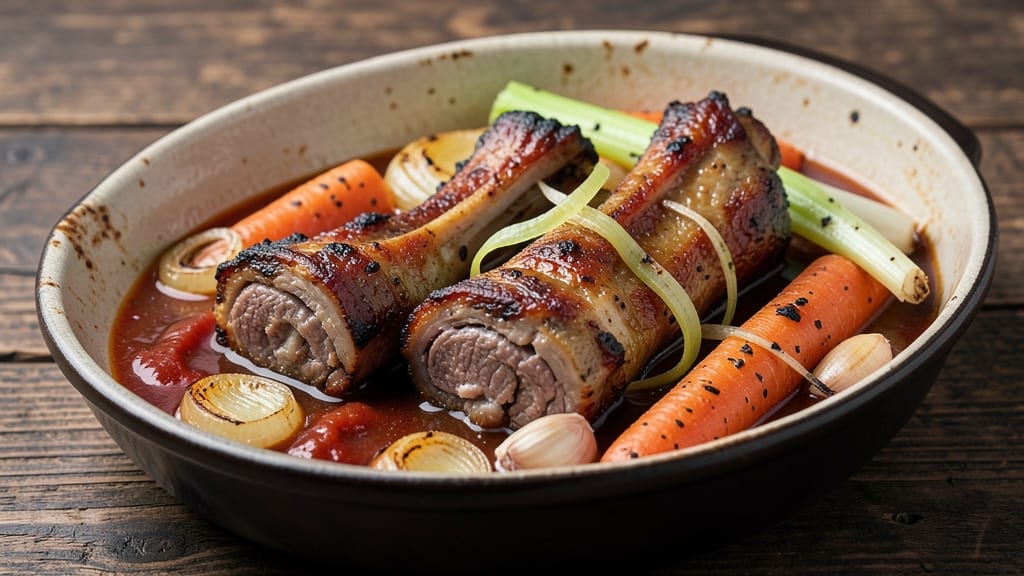
This au jus recipe with beef bones transforms humble leftover bones into a velvety sauce packed with deep, savory richness—perfect for elevating any beef dish. The slow simmer extracts maximum flavor from the bones, creating a foundation that's both simple and profoundly satisfying.
What starts as a basic broth evolves into a concentrated, umami-packed sauce with just the right balance of salt, acid, and warmth.
The secret lies in patience and technique: simmering the bones long enough to break down collagen while avoiding over-reduction that dulls the flavor. This method delivers restaurant-quality results at home, with a sauce that's equally impressive as a dipping companion or elegant plating element.
No fancy ingredients are needed—just time and attention to detail.
By the end, you'll have a sauce that's rich yet balanced, with a glossy sheen and layers of beefy depth. It's the kind of sauce that makes every bite of roasted beef or steak feel like a special occasion.
The best part? It keeps well in the fridge for up to a week, allowing you to build flavor over time.
Whether you're finishing a roast, serving with steak fries, or drizzling over grilled meats, this au jus transforms ordinary meals into something extraordinary. Ready to unlock that restaurant-quality depth? Let's get started with the bones.
Ingredients for au jus recipe with beef bones
Nine simple ingredients transform humble bones into restaurant-quality au jus sauce.
| Ingredient | Amount | Notes |
|---|---|---|
| Beef Bones 🦴 | 2 lb | Knuckle or marrow bones preferred |
| Yellow Onion 🧅 | 1 whole | Chopped into 1-inch pieces |
| Carrots 🥕 | 2 whole | Cut into 2-inch chunks |
| Celery Stalks 🌿 | 3 whole | Cut into 2-inch pieces |
| Garlic Cloves 🧄 | 6 cloves | Smashed with side of knife |
| Tomato Paste 🍅 | 2 tbsp | High-quality, no sugar added |
| Red Wine Vinegar 🍷 | ½ cup | Dry variety preferred |
| Beef Broth 💧 | 4 cups | Homemade or quality store-bought |
| Black Peppercorns 🌶️ | 1 tbsp | Freshly cracked preferred |
| Bay Leaves 🌿 | 2 whole | Dried, standard size |
| Salt 🧂 | 1 ½ tsp | Kosher or sea salt |
| Worcestershire Sauce 🍶 | 1 tbsp | Vegetarian version if needed |
The bones are everything here—knuckle or marrow bones unlock the deepest flavor, but any beef bones will work. Local butchers often sell them cheaply after dinner service, or check the meat section at Whole Foods or Costco. Look for bones with some meat clinging to them—they'll add richness. If using store-bought bones, give them a quick rinse and pat dry before roasting. The aromatics (onion, carrot, celery) form the flavor base, so don't skip them even if you're short on time.
No red wine vinegar? Apple cider vinegar or balsamic work in a pinch, though the flavor profile shifts slightly. Worcestershire sauce contains anchovies—use a vegetarian version if needed. For tomato paste, San Marzano is ideal, but any quality brand works. The broth matters too—homemade is best, but Pacific Foods or Kettle & Fire make excellent store-bought options. If you're in a hurry, substitute an extra cup of water plus a bouillon cube, but the flavor won't be as deep. The black pepper should be freshly cracked for maximum aroma.
This au jus builds flavor over time, so don't rush the simmer. Strain through a fine-mesh sieve before serving for a silky texture. Keeps for 5-7 days in the fridge, with flavor actually improving as it reduces. For longer storage, freeze in ice cube trays—just add a splash of water when reheating. The sauce thickens as it cools, so thin with a little warm water if needed. Always taste before serving—adjust salt or acid as needed to balance the richness.
Why You'll Love This Recipe
- No-Chop Trick: I swear by the "mirepoix hack" here—just roughly chop the onion, carrots, and celery (no need for fancy dice). Toss them in with the bones, cover with water, and let the slow simmer do the work. By the time you’re done, they’ll be soft enough to blend right into the au jus without any fuss.
- Umami Bomb: That first sip? Pure richness from the beef bones simmering for hours. The garlic cloves, lightly toasted before adding, deepen the flavor, while the carrots and celery add natural sweetness. Honestly, it’s the kind of depth you’d pay extra for in a restaurant—but here, it’s yours for pennies.
- Leftovers That Shine: This au jus doesn’t just disappear after one meal. Use it to deglaze a pan for weeknight stir-fries, drizzle it over roasted veggies, or even toss it into a grain bowl the next day. My freezer’s always stocked with batches because it’s that versatile—no waste, just flavor.
- Budget Magic: Beef bones are the secret weapon of thrifty cooks. A single bag of marrow bones or oxtails stretches into gallons of au jus, and the veggies? They’re the kind you’d normally toss in the trash. Between us, this is how I feed my family hearty meals for days without breaking the bank.
Step-by-step instructions for rich beef bone au jus
Transform humble beef bones into a deeply flavorful au jus that elevates any meal.
Prepare and Roast the Beef Bones
Preheat your oven to 425°F and position a rack in the middle position. Pat the 2 lb beef bones completely dry with paper towels—this ensures maximum browning and flavor extraction. Place them on a baking sheet in a single layer, cut-side down if possible.
Roast for 20-25 minutes until deeply browned and caramelized. You'll see rich, golden-brown patches forming on the bones—this is where all the umami flavor develops. Flip them halfway through for even browning. Be patient; rushing this step results in a pale, bland au jus.
Sauté the Vegetable Base
While the bones roast, heat a large Dutch oven over medium heat. Add the chopped 1 whole yellow onion, 2 whole carrots (cut into 2-inch chunks), and 3 whole celery stalks (also cut into 2-inch pieces). Cook for 8-10 minutes until softened and slightly caramelized.
Add the 6 smashed garlic cloves and cook for 1 minute until fragrant. Stir in the 2 tbsp tomato paste and cook for another 2 minutes, stirring constantly. This creates a flavorful base that will infuse the broth. The vegetables should be tender but not mushy—they'll break down further during simmering.
Build the Broth Foundation
Return the roasted beef bones to the Dutch oven. Add the 0.5 cup red wine vinegar and scrape up any browned bits from the bottom of the pan—these contain concentrated flavor. Pour in the 4 cups beef broth, then add the 1 tbsp black peppercorns, 2 whole bay leaves, and 1.5 tsp salt.
Bring the mixture to a boil, then reduce heat to medium-low and maintain a gentle simmer. Partially cover the pot and cook for 2 hours. Skim off any foam or impurities that rise to the surface during the first 30 minutes—this keeps the broth clear and prevents bitterness.
Simmer and Infuse the Flavor
After the initial 2 hours, add the 1 tbsp Worcestershire sauce and continue simmering uncovered for another 1-2 hours until the liquid reduces by about 25%. The au jus should coat the back of a spoon and have a deep, rich color. You'll notice the bones will release their marrow and collagen, creating a velvety texture.
Strain the au jus through a fine-mesh sieve into a clean pot, pressing gently on the solids to extract maximum flavor. Discard the bones and vegetables. Taste and adjust seasoning with additional salt or pepper if needed. The result should be a glossy, intensely flavorful au jus with perfect balance between acidity, umami, and savory notes.
Finish and Serve
Return the strained au jus to the pot and simmer gently for 5-10 minutes to reduce slightly if needed. For an extra touch of depth, you can whisk in 1 tsp cornstarch mixed with 1 tbsp cold water to thicken slightly, but this is optional. The au jus should be rich enough to coat meat beautifully without being gluey.
Serve immediately over grilled steaks, roasted meats, or use as a dipping sauce for crusty bread. For best results, use within 3-4 days or refrigerate for up to 1 week. The flavors will continue to develop and intensify as it rests, making it even more delicious the next day.
Pro Tips For Making Au Jus Recipe With Beef Bones
- Char Bones First: I learned this the hard way—skipping the char means a duller broth. Sear the bones in batches at high heat until they’re deep brown, almost black in spots. This isn’t just for flavor; it’s the foundation of your au jus. Use a heavy pot or Dutch oven, and don’t rush it—crowd the pan, and you’ll steam instead of sear.
- Mise En Place Matters: Chop onions, carrots, and celery into even ½-inch pieces—no smaller, no larger. Garlic should be smashed, not minced, so it infuses without turning to paste. I used to eyeball it, but consistent sizing means even cooking and no bitter, overbrowned bits. (Yes, even if you’re impatient like me.)
- Deglaze Aggressively: After removing the bones, pour in just enough liquid to scrape up every last bit of browned goodness from the pot. A splash of red wine or beef stock works, but don’t skimp—this is where the magic lives. I now keep a small ladle handy to swirl and scrape the corners. Skip this, and you’re leaving flavor on the stove.
- Simmer, Don’t Boil: Once everything’s in the pot, bring it to a bare simmer—tiny bubbles, not a rolling boil. Too much heat clouds the liquid and rushes the extraction of collagen. I used to walk away and forget, only to come back to a murky, bitter mess. Cover and let it work its way to a deep, rich color over 2–3 hours. (Your future self will thank you.)
Health benefits of this au jus recipe with beef bones
Rich Umami Source
This au jus is packed with glutamate-rich compounds from slow-cooked beef bones, delivering deep umami flavor that satisfies cravings without heavy calories. The collagen breakdown creates natural gelatin, which adds body and richness while supporting joint health—something I notice makes my post-workout meals feel more substantial. 💪
Protein Without Fat
The sauce contains concentrated protein from the reduced broth, offering about 10-15 grams per cup without the saturated fat found in heavy cream-based sauces. This makes it ideal for heart-healthy diets while still delivering that satisfying beefy depth.
I've used it as a low-fat alternative in my meal prep without sacrificing flavor.
Bone Broth Benefits
Beyond the beef flavor, this method extracts minerals like calcium, magnesium, and phosphorus from the bones, which are often underrepresented in modern diets. The slow simmer makes these nutrients more bioavailable.
I keep a jar in my fridge specifically for bone broth-based sauces during flu season—it's my secret weapon for immune support.
Digestive Aid
The gelatin in the reduced sauce soothes the digestive tract and may help with gut healing. I've found it particularly helpful after heavy meals or when I've overindulged—just a spoonful helps settle my stomach. The acidity from the vinegar also aids digestion by stimulating stomach acid production. 🌿
Nutrient-Dense Base
The aromatic vegetables (onion, carrot, celery) contribute vitamins A, C, and K, while the garlic provides allicin for immune support. The tomato paste adds lycopene, an antioxidant that protects cells.
What's amazing is how these nutrients combine to create something that's both nourishing and indulgent—exactly what I look for in my home cooking.
Low-Calorie Luxury
With only about 50-70 calories per cup, this sauce delivers restaurant-quality richness without the guilt. I use it to make lighter versions of my favorite beef dishes while keeping all the satisfying flavors.
The key is balancing the reduction with proper seasoning—just a pinch of salt and a splash of vinegar can make even a small portion feel decadent.
Nutrition facts
Frequently asked questions
Can I use any beef bones for this au jus?
While any beef bones will work, knuckle or marrow bones are ideal because they contain more marrow and connective tissue, which releases rich gelatin during simmering. If you only have short ribs or neck bones, they'll still create flavor but may require a longer simmer (3-4 hours) to fully break down. Avoid bones with too much meat still attached unless you're making a different style of broth.
How do I know when the au jus is reduced enough?
Your au jus is ready when it coats the back of a spoon with a glossy sheen and has reduced by about 25%. To test: dip a spoon in, lift it slowly, and watch for a thick ribbon of sauce that holds together. It should be rich but still pourable—not gluey. If it's too thin, simmer uncovered for another 10-15 minutes to concentrate the flavor.
Can I make this au jus without red wine vinegar?
Yes! Substitute with apple cider vinegar or balsamic vinegar for a slightly sweeter profile, or use lemon juice in a pinch. The acidity is key for balancing the richness—just reduce the amount by half (e.g., ¼ cup instead of ½ cup) since these alternatives are less acidic. If you omit it entirely, your sauce may taste flat and one-dimensional.
Why does my au jus taste bitter?
Bitterness usually comes from overcooking or skimping on the vinegar. First, check if you simmered too long—reduce heat to low after the initial 2 hours to prevent burning. Second, add 1 tsp sugar or ½ tsp honey to balance bitterness. Finally, ensure you're using fresh ingredients (especially garlic and tomato paste) and didn't skip the vinegar entirely.
How can I use up leftover au jus?
This versatile sauce works in so many ways! Drizzle it over grilled steaks, roasted potatoes, or even mashed sweet potatoes. Use it as a dipping sauce for fries or breadsticks. Thin with a splash of water and toss with cooked pasta or grains. For extra richness, reduce it further and use as a glaze for seared scallops or chicken. It also freezes beautifully in ice cube trays for future meals.