
Main Courses
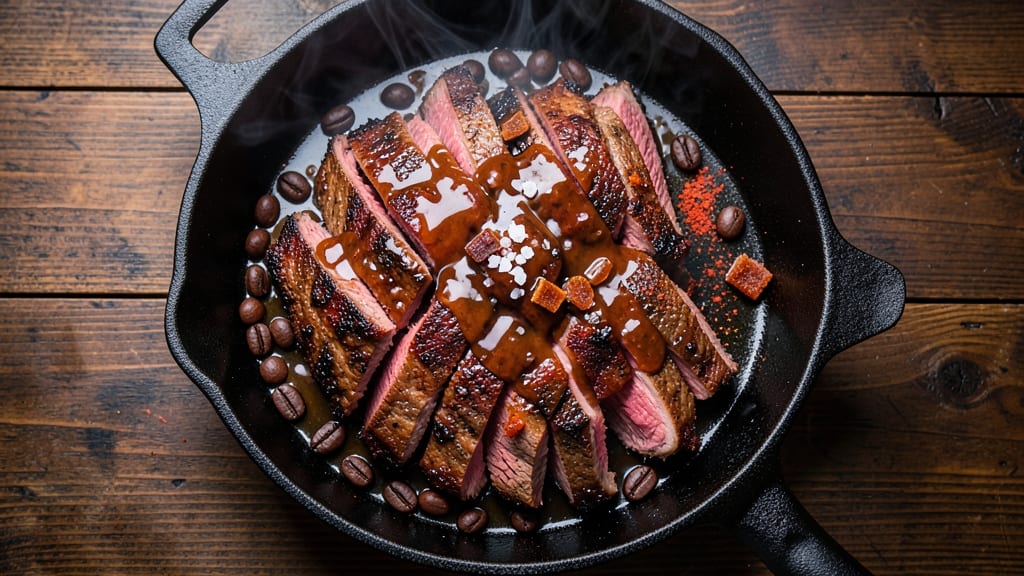
Atlanta-style beef brisket transforms tough cuts into melt-in-your-mouth perfection with a coffee-chili rub and slow-smoked magic. This recipe honors Georgia BBQ traditions, where brisket becomes the centerpiece of a full Southern feast—crispy bark, tender layers, and smoky depth that lingers long after the last bite. The key? A 24-hour marinade and 12-hour smoke at 225°F, using hickory wood for that authentic Georgia flavor.
The dry rub—ground coffee, chili powder, and brown sugar—creates that iconic dark crust while keeping the meat juicy inside. Atlanta pitmasters swear by this balance, and it’s what makes this brisket stand out from Texas-style versions.
Every bite delivers smoky, spiced layers that pair perfectly with classic sides like collard greens and cornbread. The slow cook transforms tough meat into something so tender, it nearly falls apart.
After the smoke, the brisket rests for 2 hours before slicing—this is non-negotiable for juiciness. Serve it on a cutting board with a spritz of apple cider vinegar for brightness, and watch as the smoky aroma fills your kitchen.
This isn’t just a recipe; it’s a celebration of Southern tradition, where every element comes together for a meal worth gathering around.
For a complete Atlanta-style spread, pair this brisket with mac and cheese, buttery mashed potatoes, and a crisp slaw. The contrast of textures and flavors—crispy brisket, creamy sides, and tangy vinegar—makes this a showstopper for holidays or weekend feasts.
Let’s get started on a dish that’s as much about technique as it is about taste.
Ingredients for atlanta beef brisket
Sixteen ingredients for a brisket that delivers Atlanta BBQ perfection with smoky depth and buttery tenderness.
| Ingredient | Amount | Notes |
|---|---|---|
| Beef Brisket (Packer Cut) 🥩 | 8 lb | Whole packer cut preferred |
| Freshly Ground Coffee ☕ | ½ cup | Dark roast preferred |
| Chili Powder 🌶️ | 2 tbsp | Medium heat preferred |
| Brown Sugar 🍚 | ½ cup | Light or dark variety |
| Smoked Paprika 🌶️ | 1 tbsp | For authentic smoky flavor |
| Kosher Salt 🧂 | 1 ½ tbsp | Diamond Crystal preferred |
| Black Peppercorns 🌶️ | 1 tbsp | Freshly cracked preferred |
| Garlic Powder 🧄 | 1 tbsp | Not garlic salt |
| Onion Powder 🧅 | 1 tbsp | Freshly ground preferred |
| Apple Cider Vinegar 🍎 | ¼ cup | For post-smoke spritz |
| Hickory Wood Chips 🌳 | 2 lb | Unsoaked, for smoking |
| Yellow Mustard 🧂 | 2 tbsp | For injection marinade |
| Beef Broth 💧 | 1 cup | For injection marinade |
| Worcestershire Sauce 🍶 | 2 tbsp | For injection marinade |
The beef brisket is the foundation, and packer cut is non-negotiable—it's what gives you that iconic fall-apart texture. Look for a whole packer cut (about 8-10 lbs) at specialty butchers or high-end grocery stores like Whole Foods or Harris Teeter in the Southeast. If you're buying from a regular supermarket, check the packaging for 'packer cut'—it should include both the flat and point. The fat cap should be intact; this is what creates that coveted bark. For the coffee, Starbucks dark roast works in a pinch, but a local roaster's freshly ground beans will elevate your rub significantly.
No freshly ground coffee? Instant espresso powder at half the amount works, though it lacks depth. Swapping smoked paprika? Regular paprika plus a pinch of liquid smoke gets you close, but it's not the same. The injection marinade—yellow mustard, beef broth, and Worcestershire—is where the magic happens. If you can't find authentic Worcestershire (some contain anchovies), Lee & Perrins is a reliable vegetarian option. For the vinegar spritz, raw apple cider vinegar adds brightness, but white vinegar in a pinch works too. The key is balancing sweet, smoky, and tangy flavors—adjust the brown sugar to taste if you prefer less sweetness.
Store your brisket in the coldest part of the fridge for up to 3 days before smoking. The rub can be prepped 2 days ahead and stored in an airtight container. Hickory wood chips keep for 6-12 months in a cool, dry place, but they lose potency after opening. Once smoked, the brisket rests for 2 hours before slicing—this is critical for juiciness. Leftovers reheat beautifully; wrap tightly and store for 4-5 days in the fridge, or freeze for 3 months. For a restaurant-quality experience, slice against the grain and serve with a spritz of vinegar.
Why You'll Love This Recipe
- One-Pan Magic: I swear by this recipe because it’s actually hands-off after the first 10 minutes. The coffee and spices do all the work—just rub, sear, and let it slow-cook while you do anything else. (Yes, even binge a show.)
- Deep, Smoky Soul: That coffee isn’t just for flavor—it’s the secret weapon. It cuts through the richness of the brisket while the brown sugar and smoked paprika give it a caramelized crust that’s dangerously good. One bite and you’ll understand why people drive for hours for this.
- Leftovers That Shine: Between us, this recipe makes way more than you’ll eat in one sitting—and that’s a good thing. Shred the extras into tacos, sandwiches, or even breakfast hash the next day. (My kids beg for it cold in wraps. Yes, really.)
- Budget Beef Win: Packer-cut brisket is cheaper than prime, and the spices cost pennies. You’re feeding a crowd for less than takeout, with a dish that tastes like it came from a food truck. Honestly, it’s the kind of recipe that makes you feel like a hero without breaking the bank.
Step-by-step instructions for Atlanta beef brisket
Master this technique for brisket with a smoky-spiced crust and melt-in-your-mouth tenderness.
Prepare the Brisket for Injection
Pat the 8 lb Beef Brisket (Packer Cut) completely dry with paper towels, focusing on the fat cap and any moisture pockets. This drying step is critical—it ensures maximum bark formation during smoking. In a separate bowl, combine the 1 cup Beef Broth, 2 tbsp Worcestershire Sauce, and 2 tbsp Yellow Mustard for the injection marinade. Use a meat injector to evenly distribute this mixture throughout the brisket, working in a grid pattern about 1 inch apart. The marinade will tenderize the meat while adding depth of flavor.
Next, create the dry rub by thoroughly mixing 1.5 tbsp Kosher Salt, 1 tbsp Black Peppercorns (freshly cracked), 1 tbsp Garlic Powder, 1 tbsp Onion Powder, 2 tbsp Chili Powder, 1 tbsp Smoked Paprika, and 0.5 cup Brown Sugar. Press this rub firmly into all surfaces of the brisket, including the fat cap. The sugar will caramelize during smoking, contributing to that signature Atlanta-style bark. Let the brisket rest uncovered in the refrigerator for at least 4 hours, preferably overnight. This resting period allows the rub to penetrate deeply and the meat to come to a uniform temperature.
Set Up the Smoker and Begin Cooking
Preheat your smoker to 225°F using the 2 lb Hickory Wood Chips. Hickory provides that classic Southern smoke flavor without overpowering the brisket. Place a water pan in the smoker to maintain moisture levels and prevent the brisket from drying out. Once the smoker reaches temperature and you see clean, blue smoke (not thick white steam), place the brisket fat-side up on the grill grates. The fat cap will render and baste the meat as it cooks, creating a self-basting effect.
Close the smoker lid and maintain a consistent temperature of 225°F. This low-and-slow approach is essential for achieving tender brisket. The brisket will go through several phases: an initial rapid temperature rise, followed by a stall around 165°F, and finally a gradual climb to 203°F. This process typically takes 12-16 hours, but don't rush it. The key is patience—the longer the cook, the more tender the meat becomes. Resist the urge to open the smoker during this time, as each time you do, you add 15-20 minutes to the cook time.
Apply the Coffee Spritz and Monitor for Doneness
Around the 8-hour mark, prepare the coffee spritz by combining 0.5 cup Freshly Ground Coffee and 0.25 cup Apple Cider Vinegar in a spray bottle. This mixture serves two purposes: the coffee enhances the bark formation, while the vinegar helps break down collagen for even more tenderness. Spritz the brisket generously on all sides, then return it to the smoker. The brisket should now have a dark, sticky crust forming on the exterior.
Continue smoking until the internal temperature reaches 203°F at the thickest part of the brisket. This is the probe-tender stage, where the meat should be so tender that it falls apart with minimal pressure. The bark should be deep mahogany brown, almost black in some areas, with a thick, crispy texture. If the bark isn't forming as expected, spritz the brisket again with the coffee mixture and return it to the smoker for another 1-2 hours. The bark is a crucial component of Atlanta-style brisket, so don't be afraid to let it develop fully.
Rest and Slice for Serving
Once the brisket reaches 203°F, remove it from the smoker and transfer it to a cutting board. Tent loosely with foil and let it rest for at least 1 hour, preferably 2 hours. This resting period allows the juices to redistribute throughout the meat, ensuring every slice is moist and flavorful. The brisket will continue to rise in temperature during this time, reaching a final internal temperature of 210-215°F. This carryover cooking is normal and results in even more tender meat.
After resting, slice the brisket against the grain into ¼-inch thick slices. The grain direction will be visible as lines running through the meat. Serve immediately, as the brisket is at its peak tenderness and flavor. Each slice should have a crispy, smoky bark on the outside and buttery, tender meat on the inside. The injection marinade should be detectable in every bite, adding a subtle tanginess that complements the rich, smoky flavors. Pair with classic sides like coleslaw, cornbread, and baked beans for a complete Atlanta-style brisket experience.
Pro Tips For Making Atlanta Beef Brisket
- Trim the Fat First: Slice off that thick fat cap before rubbing—it’ll render into crispy, coffee-infused shavings while cooking, but if you leave it too thick, you’ll end up with greasy, uneven heat. My first batch came out soggy because I skipped this; now I trim it down to about ¼-inch for perfect texture.
- Toast the Coffee: Freshly ground coffee loses its punch when raw—toss it in a dry pan over medium heat for 30 seconds until it smells deep and aromatic. I learned this the hard way when my brisket tasted bland; the toasted coffee grounds add a smoky, almost bacon-like depth that cuts through the sweetness.
- Don’t Rush the Rub: Let that chili-brown sugar-paprika mix sit on the brisket for at least 30 minutes (or overnight if you’re patient). The spices need time to cling and start breaking down—rushing it means half the flavor gets scraped off during cooking. I used to slap it on and jump straight to the oven; now I treat it like a marinade.
- Check Internal Temp Twice: Pull the brisket when the thickest part hits 195°F, but probe the flat and the point—those lean sections dry out faster and can trick you. I’ve overcooked briskets by trusting one spot; always confirm with a second reading, then rest it 15 minutes under foil before slicing.
Essential equipment for this recipe
Smoker Essentials
Your smoker is the heart of this recipe, and I can't stress enough how important it is to maintain a consistent 225°F temperature. For beginners, I recommend starting with a Traeger Pellet Grill—it’s user-friendly and maintains temperature beautifully.
If you're working with a traditional offset smoker, invest in a quality thermometer like the Meater or ThermoWorks Smoke to avoid temperature swings. These tools are game-changers for precision. 🌡️
For wood selection, stick with hickory chips—they’re the classic choice for Atlanta-style brisket, delivering that deep, authentic smoke flavor. Avoid fruitwoods like cherry or apple, as they can overpower the meat. If you’re using a pellet grill, use 100% hickory pellets for the entire cook.
Pro tip: Soak your wood chips for 30 minutes before use if your smoker runs hotter than 250°F.
Meat Injector
The meat injector is non-negotiable for this recipe—it’s what creates that tender, flavorful interior. I swear by the Ozeri Touchless Injector because it’s easy to use and minimizes mess.
Fill it with your marinade (beef broth, Worcestershire, and mustard) and inject the brisket in a grid pattern, about 1 inch apart. This ensures even distribution of flavor and moisture.
If you don’t have an injector, you can make small slits in the meat with a sharp knife and spoon the marinade into them, but it’s less precise.
Don’t skip the injection step—it’s what makes the difference between good brisket and exceptional brisket. The marinade not only tenderizes the meat but also adds layers of flavor that you won’t get from a dry rub alone.
Think of it as a flavor infusion that works from the inside out. 💡
Probe Thermometer
A meat probe thermometer is your best friend when smoking brisket. I use the ThermoWorks Smoke because it’s durable, accurate, and has a built-in alarm for when the brisket hits 203°F. Insert the probe into the thickest part of the brisket, avoiding any fat pockets.
The probe should stay in place for the entire cook—no guessing, no overcooking. If you’re using a cheaper thermometer, double-check it with an instant-read thermometer to ensure accuracy. Trust me, there’s nothing worse than pulling brisket too early and ending up with tough meat.
Pro tip: Place the probe in the brisket before you start smoking. This way, you can monitor the temperature in real time without opening the smoker lid, which would disrupt the cooking process.
The goal is to hit 203°F at the thickest part—this is the probe-tender stage, where the meat is at its most tender. 🔥
Spray Bottle
The coffee spritz is what gives Atlanta-style brisket its iconic dark bark, and you’ll need a spray bottle to apply it evenly. A simple glass spray bottle (like those used for salad dressings) works perfectly.
Mix ½ cup freshly ground coffee and ¼ cup apple cider vinegar in the bottle and spritz the brisket generously around the 8-hour mark. This isn’t just about flavor—it’s about creating that crispy, crackling crust that’s a hallmark of Atlanta BBQ.
If you don’t have a spray bottle, you can use a pastry brush, but it won’t be as even or effective.
Spritz the brisket every 2-3 hours after the initial application if the bark isn’t forming quickly enough. The coffee enhances the Maillard reaction (that’s the fancy term for browning), while the vinegar helps tenderize the meat further.
It’s a small step, but it makes a huge difference in the final result. ✨
Cutting Board and Knife
Once your brisket is done, you’ll need a sharp carving knife and a sturdy cutting board to slice it properly. I use a Dexter-Russell 12-inch slicing knife—it’s long, sharp, and designed for clean cuts.
A serrated knife won’t work here; you need a smooth, even edge to slice against the grain. For the cutting board, go for a hardwood board (like maple or walnut) to protect your knife and provide stability.
Slice the brisket against the grain—this is the key to tender bites. The grain runs in different directions on the flat and point, so you may need to rotate the board mid-slice.
After slicing, serve the brisket immediately. The resting period ensures the juices redistribute, but once you cut into it, the magic starts to fade. A good rule of thumb: slice the brisket right before serving and let guests serve themselves.
This keeps the meat at its best texture and temperature. 🥩
Nutrition facts
Frequently asked questions
Why does Atlanta-style brisket use coffee in the rub?
The coffee grounds in the rub create that signature dark, crackling bark while adding a subtle depth of flavor. The acidity helps tenderize the meat, and the bitterness balances the sweetness of the brown sugar. Atlanta pitmasters swear by it—it's what gives their brisket that iconic look and taste!
Can I substitute hickory wood chips with another type?
Hickory is the traditional choice for Atlanta-style brisket, but you can use oak or a 50/50 hickory-oak blend if needed. Avoid fruitwoods like cherry or apple—they can overpower the meat's natural flavor. For pellet grills, stick to 100% hickory pellets for authentic results.
How do I know when the brisket is done?
The brisket is done when the internal temperature reaches 203°F at the thickest part, measured with a meat probe thermometer. It should be probe-tender—meaning it should fall apart easily when pressed. The bark should be deep mahogany brown, almost black in spots. Never rely on time alone!
What's the deal with the 24-hour marinade?
The 24-hour marinade (injection + rub) is crucial for two reasons: it tenderizes the tough brisket fibers and allows the flavors to penetrate deeply. The injection marinade (beef broth, Worcestershire, mustard) works from the inside, while the dry rub creates that iconic crust. Skipping this step can result in tougher meat.
Can I make this brisket in an oven instead of a smoker?
You can try an oven method, but it won't replicate the smoky depth of a real smoker. For best results, use a smoker oven or pellet grill set to 225°F. If using a conventional oven, place the brisket on a rack over a water pan and use a smoke tube with hickory wood chips for flavor. Expect less bark development.