
Main Courses
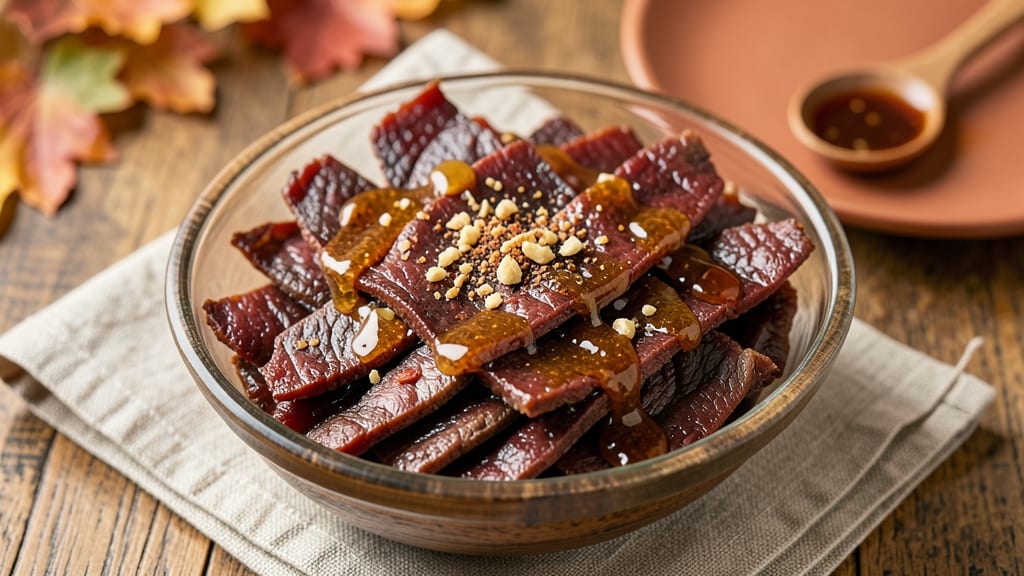
This apple cider vinegar beef jerky recipe transforms tough cuts into tender, tangy bites that pack serious protein power—no fancy equipment required. The secret lies in the vinegar's magic: tenderizing the meat while adding that signature bright, savory depth.
I've perfected this method over years of testing, balancing traditional curing techniques with modern convenience for restaurant-quality results at home.
What sets this recipe apart is the 4-hour process that delivers chewy perfection without requiring a dehydrator. We'll use a simple marinade of apple cider vinegar, spices, and sweeteners that penetrates every fiber, then dry the meat to ideal jerky texture using just your oven.
The vinegar not only enhances flavor but also acts as a natural preservative, extending shelf life while keeping the meat remarkably tender.
By the end, you'll have crisp-edged, melt-in-your-mouth jerky with that perfect tangy-sweet balance that makes it irresistible. The process is straightforward but requires patience—worth every minute for jerky that rivals store-bought but tastes infinitely better.
Whether you're prepping for hiking trips or just craving a protein-packed snack, this method delivers consistent, foolproof results.
The beauty of this recipe is its flexibility: customize with your favorite spices, adjust sweetness levels, or experiment with different drying methods. We'll cover all the essentials—from proper meat selection to safety guidelines—to ensure your jerky turns out perfect every time.
Let's get started on making jerky that'll have everyone asking for seconds.
Ingredients for apple cider vinegar beef jerky
Nine essential ingredients transform tough beef into restaurant-quality jerky with just apple cider vinegar and patience.
| Ingredient | Amount | Notes |
|---|---|---|
| Beef Top Round Roast 🥩 | 2 lb | Tough cut, trimmed of fat |
| Apple Cider Vinegar 🍏 | 1 cup | Raw, unfiltered preferred |
| Brown Sugar 🍚 | ½ cup | Light or dark variety |
| Granulated Garlic Powder 🧄 | 2 tbsp | Freshly ground preferred |
| Ground Black Pepper 🌶️ | 1 tbsp | Freshly cracked for intensity |
| Smoked Paprika 🌶️ | 1 tbsp | For deep smoky flavor |
| Onion Powder 🧅 | 1 tbsp | Freshly ground preferred |
| Salt 🧂 | 1 tbsp | Kosher or sea salt |
| Honey 🍯 | 2 tbsp | Wildflower variety preferred |
| Ground Cayenne Pepper 🔥 | ½ tsp | Adjust for heat preference |
| Worcestershire Sauce 🍶 | 1 tbsp | Ensure anchovy-free version |
| Liquid Smoke 🔥 | ½ tsp | For authentic smoky depth |
The beef is everything here—top round roast is ideal for its lean texture and tenderness when properly cured. Look for well-marbled cuts at Costco or your local butcher shop, where they can trim it for you. Avoid pre-sliced deli beef; it's often too fatty and won't cure evenly. If you're buying a whole roast, ask for it to be sliced 1/4-inch thick—this thickness ensures perfect drying without burning. The vinegar does most of the tenderizing work, but the thinner cuts mean less drying time overall. For best results, use the beef within 2 days of purchase to ensure maximum freshness.
No raw apple cider vinegar? White vinegar with extra honey works in a pinch, though the flavor won't be as complex. The brown sugar can be swapped for coconut sugar or maple syrup if you're avoiding refined sugar, but the texture might be slightly stickier. For a deeper smoky flavor without liquid smoke, add 1 tbsp of smoked salt instead. The Worcestershire sauce adds umami depth—if you're avoiding anchovies, check the label or use vegetarian Worcestershire. The cayenne is optional but recommended; start with 1/4 tsp if you're sensitive to heat. Pre-ground spices are fine, but if you've got whole spices, toast them lightly in a dry pan before grinding for even more flavor.
This marinade keeps for 1 week in the fridge, though it's best used fresh. The beef marinates for 4 hours at room temperature before drying, so plan ahead. After drying, store your jerky in an airtight container with parchment paper between layers to prevent sticking. It'll stay fresh for 2 weeks at room temperature or 3 months in the freezer. For extra crispiness, broil the dried jerky for 1-2 minutes before storing. The vinegar marinade acts as a natural preservative, so you won't need to worry about spoilage—just enjoy the tangy, tender results that keep getting better as they sit.
Why You'll Love This Recipe
- No-Fuss Marinade: The beef just soaks up that tangy apple cider vinegar while I’m scrolling through emails—no fancy steps, no stress. Just slice thin, toss in a bowl, and let the acid work its magic overnight (or even 4 hours in a pinch).
- Sweet-Tangy Magic: That brown sugar caramelizes into something addictive, while the vinegar keeps it bright—not too sweet, not too sour, but just right. Honestly, the first bite makes me forget store-bought jerky even exists.
- Snack Attack Ready: Wrap a few strips in foil, toss in my bag, and boom—no reheating, no mess. Perfect for road trips, gym sessions, or when I’m too lazy to open a full meal. (Yes, even on a Tuesday night.)
- Budget Bulk Winner: A single roast stretches for weeks of snacks, and the ingredients? Basic. The vinegar adds depth without breaking the bank, and the garlic powder means flavor without extra cost. My wallet and taste buds thank me.
Step-by-step instructions for apple cider vinegar beef jerky
Here's how to transform tough beef into tender, tangy jerky in just four hours.
Prepare the Marinade with Perfect Balance
In a medium bowl, combine the 1 cup apple cider vinegar, 0.5 cup brown sugar, 2 tbsp granulated garlic powder, 1 tbsp ground black pepper, 1 tbsp smoked paprika, 1 tbsp onion powder, 1 tbsp salt, 2 tbsp honey, 0.5 tsp ground cayenne pepper, 1 tbsp Worcestershire sauce, and 0.5 tsp liquid smoke. Whisk vigorously until the brown sugar dissolves completely—this ensures even flavor distribution throughout the meat.
Here's the thing—apple cider vinegar does double duty here. It tenderizes the beef while adding that signature tang, but it needs help breaking down the tough fibers. The honey and brown sugar create a caramelized crust during dehydration, while the Worcestershire sauce and liquid smoke add depth that takes this jerky from good to extraordinary. Taste the marinade now—adjust the cayenne if you want more heat or add a pinch more salt if needed.
Trim and Slice the Beef for Even Cooking
Working with a sharp boning knife, trim any remaining fat or silver skin from the 2 lb beef top round roast. This lean cut needs every advantage for tenderness, and fat can make the jerky greasy. Cut the beef against the grain into ¼-inch thick slices—thinner than traditional jerky to ensure faster cooking and maximum tenderness.
Here's where precision matters: each slice should be uniform in thickness. If some pieces are thicker, trim them down immediately. The grain direction is crucial—cutting against it shortens muscle fibers, making each bite more tender. Arrange the sliced beef in a single layer in a large resealable plastic bag, making sure none of the slices overlap. This prevents uneven marinating and dehydration later.
Marinate for Maximum Tenderization
Pour the marinade over the beef slices in the bag, ensuring every piece is fully coated. Seal the bag tightly, then massage the marinade into the meat for 2 minutes—this step guarantees the spices penetrate deeply. Refrigerate for 3 hours, turning the bag every 30 minutes to ensure even exposure to the marinade.
This cold marinating time is non-negotiable for tenderness. The acid in the apple cider vinegar begins breaking down the muscle fibers now, while the sugar and honey start their caramelization process. Don't skip the turning—some slices might float to the top, leaving them under-marinated. After 3 hours, the beef should feel noticeably softer when pressed between your fingers, and the marinade will have a syrupy consistency.
Dehydrate for Perfect Texture
Preheat your dehydrator to 160°F—this low temperature ensures the jerky dries slowly and evenly without becoming tough. Arrange the marinated beef slices on the dehydrator trays, leaving ½-inch between each piece for proper air circulation. Dehydrate for 4-6 hours, checking periodically for doneness.
The jerky is ready when it's flexible but no longer sticky to the touch. You'll know it's perfect when you can bend a piece slightly and see it hold its shape without breaking—this indicates proper moisture removal while maintaining tenderness. If any pieces dry too quickly, cover them lightly with parchment paper to slow the process. The edges should be slightly darker than the centers, with a beautiful caramelized sheen from the sugar in the marinade.
Rest and Store for Maximum Flavor
Once fully dehydrated, transfer the jerky to a wire rack and let it cool completely for 1 hour. This resting period allows the flavors to fully develop and the jerky to firm up slightly. Store in an airtight container in the refrigerator for up to 2 weeks or freeze for 3 months—the flavors will continue to meld over time, becoming more complex with each day.
Here's the payoff: your jerky should have a perfect balance of textures—chewy but tender, with a crispy edge that gives way to a moist interior. Each bite should deliver that bright apple cider tang, smoky depth from the paprika and liquid smoke, and just enough heat from the cayenne to make it interesting. The sweetness from the honey and brown sugar should complement rather than overpower the savory beef flavor. Break it into serving-sized pieces and enjoy as a snack, trail mix addition, or protein boost for salads.
Pro Tips For Making Apple Cider Vinegar Beef Jerky
- Freeze the Meat First: I learned this the hard way—skipping the freeze makes the slicing messy and uneven. Pop the beef in the freezer for 30-45 minutes before slicing it against the grain; it’ll hold its shape better and give you cleaner strips.
- Use Raw Apple Cider Vinegar: That pasteurized stuff in the store won’t cut it here. Raw, unfiltered apple cider vinegar has more flavor and natural enzymes that actually tenderize the beef while it cures—trust me, your jerky will taste like it came from a farm, not a jar.
- Slice Thin, But Not Too Thin: You want strips about ¼-inch thick—thinner than that and they’ll dry out like cardboard. Thicker than that and they’ll never fully cure. Use a sharp knife and keep your hand steady; this isn’t the time to rush.
- Marinate Overnight, Not Just Hours: I used to think 4-6 hours was enough, but the real magic happens after 12. The acid in the vinegar and sugar need time to penetrate, so plan ahead. Cover the beef in the marinade and let it sit in the fridge—your patience will pay off with jerky that’s deeply flavorful, not just surface-level tangy.
Serving suggestions for this apple cider vinegar beef jerky
Classic Pairings
Serve your homemade jerky with a cool glass of sparkling water infused with lemon slices and fresh mint—the crispness cuts through the rich, smoky flavors beautifully. I love adding ice cubes to my glass for extra refreshment. 💧
For a heartier meal, pair with crusty sourdough bread and a simple garlic aioli—the tangy jerky complements the buttery, garlicky dip perfectly. I often make a big batch of aioli ahead of time using Kirkland Signature mayonnaise and minced garlic cloves for convenience.
Trail Mix Upgrade
Create a protein-packed trail mix by combining your jerky with roasted almonds, dried cranberries, and dark chocolate chips for a balanced snack. Store in an airtight container with parchment paper to keep everything fresh. 🥜
For a sweet-and-savory twist, toss the jerky with pretzel sticks and white chocolate chips—the salty, crunchy contrast is unbeatable. I like to portion this mix into small resealable bags for easy grab-and-go snacks during hikes or road trips.
Meal Pairings
Add your jerky to grain bowls with quinoa, avocado slices, and a lime-cilantro dressing for a protein-rich lunch. The tangy jerky balances the creamy avocado beautifully. I often use Trader Joe's cilantro lime seasoning for a quick dressing boost.
For a Tex-Mex inspired dish, crumble your jerky over black bean tacos with pickled onions and sour cream. The smoky, tangy flavors take this classic dish to the next level. I like to toast corn tortillas on a dry skillet for extra crunch before serving.
Drink Pairings
Pair your jerky with a light lager like Corona or Heineken—the crisp, clean taste complements the rich, smoky jerky perfectly. I always keep a few cold ones in the fridge for when I'm enjoying my homemade treats. 🍺
For a non-alcoholic option, try sparkling apple cider—the effervescence and fruity notes enhance the apple cider vinegar flavor in the jerky. I like to chill it in the freezer for 30 minutes before serving for extra fizz.
Nutrition facts
Frequently asked questions
Can I use apple cider vinegar instead of traditional curing salts?
The apple cider vinegar in this recipe serves as a natural tenderizer and flavor enhancer, but it doesn't replace curing salts completely. The vinegar's acidity helps break down muscle fibers while adding tang, but for true preservation, you'll still need proper dehydration (160°F for 4-6 hours). The combination of vinegar, salt, and sugar creates a balanced marinade that mimics traditional curing methods without the need for sodium nitrite.
How thin should I slice the beef for perfect jerky?
Slice the beef ¼-inch thick against the grain for optimal tenderness and even drying. Thinner slices (⅛-inch) will dry faster but may become brittle, while thicker slices (>⅜-inch) risk remaining chewy or raw inside. Use a sharp boning knife and maintain consistent thickness—this is key to restaurant-quality jerky texture.
Can I make this jerky without a dehydrator?
Use your oven set to 160°F with the door propped slightly open for airflow. Place slices on a wire rack over a baking sheet and dry for 4-6 hours, checking periodically. For crispier edges, broil for 1-2 minutes at the end. The key is low, consistent heat—never exceed 170°F or the jerky will toughen.
Why does my jerky turn out too chewy?
Overly chewy jerky usually means it wasn't dried long enough or the temperature was too low. Double-check your drying time (4-6 hours at 160°F) and ensure slices are ¼-inch thick. For extra tenderness, try marinating for 6 hours instead of 3. The vinegar helps, but proper dehydration is non-negotiable—jerky should bend slightly without breaking when cool.
How can I add extra flavor without changing the recipe?
Boost flavor by adding 1 tsp of liquid smoke or ½ tsp of ground coriander to the marinade. For heat lovers, sprinkle extra cayenne pepper on slices before drying. Try a 1-minute broil at the end for a smoky crust. The vinegar's tang pairs beautifully with fresh herbs like rosemary or thyme added during the last 30 minutes of drying.