
Salads
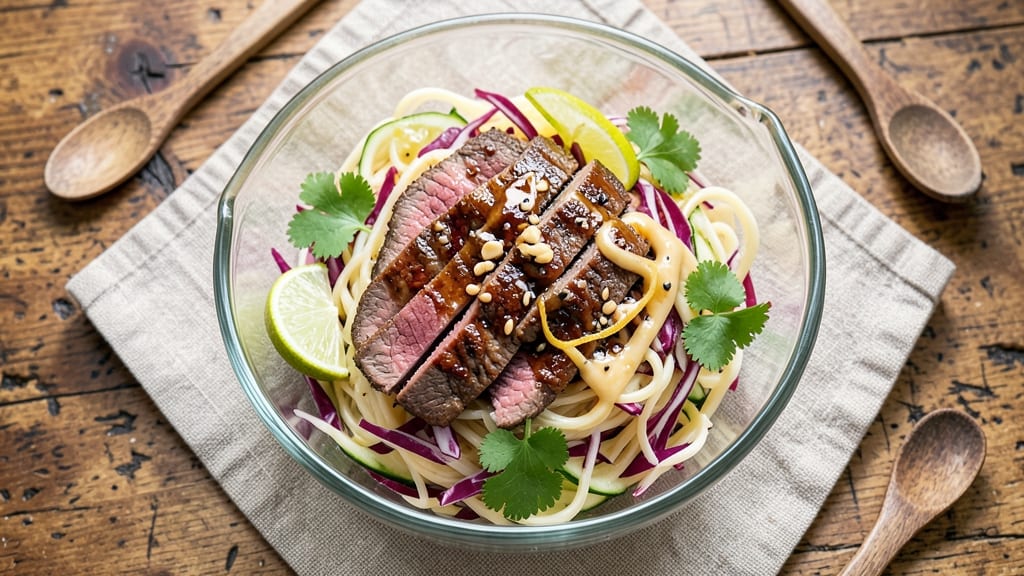
This Asian beef salad recipe delivers a perfect balance of tender, savory beef and crispy noodles tossed in a rich peanut dressing that's tangy, nutty, and impossible to resist.
The secret lies in marinating the beef with a blend of soy, ginger, and garlic—transforming tough cuts into melt-in-your-mouth slices—while the salad's crunch comes from toasted rice noodles and fresh vegetables that stay vibrant even after mixing.
The dish combines classic Asian flavors with restaurant-quality technique, starting with a quick sear or stir-fry for the beef to lock in juices, followed by a peanut dressing that's creamy yet bright thanks to lime juice and a touch of chili.
Every bite delivers a satisfying mix of textures: tender beef, crisp noodles, and fresh toppings like cucumber, bell peppers, and scallions that add freshness to cut through the richness.
What sets this salad apart is how effortlessly it comes together—no fancy equipment needed, just a few simple steps that yield a dish worthy of your favorite Asian bistro.
The dressing can be made ahead, and the beef can be prepped in advance, making this perfect for meal prep or last-minute dinners when you crave something flavorful without the fuss.
Serve it over a bed of mixed greens for extra freshness or as-is for maximum crunch, and don’t forget the garnish of crushed peanuts and sesame seeds for that final touch of authenticity.
This salad is equally at home as a light lunch or a hearty dinner when paired with steamed rice or dumplings.
Ingredients for asian beef salad
Here's what you need to make this restaurant-style Asian beef salad with crispy noodles and tangy peanut dressing.
| Ingredient | Amount | Notes |
|---|---|---|
| Flank Steak 🥩 | 1 lb | Thinly sliced against grain |
| Rice Noodles 🍜 | 8 oz | Thin or medium width |
| Peanut Butter 🥜 | ½ cup | Natural, unsweetened preferred |
| Soy Sauce 🍶 | ¼ cup | Low-sodium for balance |
| Lime Juice 🍋 | ¼ cup | Freshly squeezed |
| Sesame Oil 🫒 | 1 tbsp | Toasted sesame preferred |
| Garlic Cloves 🧄 | 4 cloves | Minced for marinade |
| Fresh Ginger 🌿 | 1 tbsp | Grated, peeled |
| Red Bell Pepper 🌶️ | 1 whole | Thinly sliced |
| Cucumber 🥒 | 1 whole | English or Persian, sliced |
| Green Onions 🧅 | 4 whole | Thinly sliced |
| Crushed Peanuts 🥜 | ¼ cup | Toasted for garnish |
| Sesame Seeds 🌱 | 1 tbsp | Toasted for garnish |
| Vegetable Oil 🫒 | 2 tbsp | For stir-frying |
| Red Chili Flakes 🌶️ | ½ tsp | Adjust to taste |
| Honey 🍯 | 1 tbsp | For peanut dressing |
| Mixed Greens 🥬 | 4 cups | Butter lettuce or spring mix |
The beef is the star—flank steak gives you that perfect tender texture when sliced thin against the grain. Trader Joe's and Asian markets usually carry pre-sliced versions, but if you're slicing yourself, freeze it for 30 minutes first for cleaner cuts. Look for good marbling, and don't skip the marinade—soy, ginger, and garlic work magic here. For the noodles, rice vermicelli is ideal, but any thin rice noodles work. Soak them in hot water for 5-7 minutes until pliable but still slightly firm—over-soaking makes them mushy.
No sesame oil? Toasted peanut oil works in a pinch, though it's not the same. Running low on peanut butter? Almond butter gives a similar texture, but add a splash more lime to cut the richness. The dressing can be made ahead—just store it in a jar and shake before using. For extra crunch, toast your crushed peanuts in a dry pan for 2-3 minutes until fragrant. And if you can't find English cucumbers, regular cucumbers with seeds removed work fine. The bell pepper can be swapped for shredded carrots if you prefer something sweeter.
This salad keeps beautifully—store the dressing separately in the fridge for up to 5 days. The beef and veggies can be prepped ahead and tossed together right before serving to keep everything crisp. For meal prep, portion the dressing into small containers and store with the salad components. The noodles? Cook them fresh or store dry—they'll last 6-12 months in a cool, dark place. Garnish just before serving so the peanuts stay crispy, and always add the sesame seeds last for that final pop of flavor.
Why You'll Love This Recipe
- No Fuss, Big Payoff: I swear by this one—just slice the steak thin, toss it in soy sauce and lime while the noodles soak, then drizzle peanut butter and a splash of hot water for that creamy sauce. Five minutes of active work, and the rest is letting flavors meld.
- Umami Bomb: That peanut butter isn’t just for crunch—it’s the secret weapon. The salty-sweet punch from the soy and lime cuts through the richness of the steak, while the peanut butter adds this weirdly addictive depth. Honestly, I’ve had people ask for the sauce recipe alone.
- Lunchbox Hero: Between us, this is my go-to for packed lunches or last-minute dinner guests. The noodles hold up for days, the steak stays tender, and you can swap in veggies (shredded carrots, cucumber, whatever) to make it fresh every time. Even my picky teen eats it cold the next day.
- Budget Flex: Flank steak stretches farther than you’d think when sliced thin, and peanut butter is one of the cheapest pantry upgrades you’ll ever make. A single jar lasts for months across recipes, and the noodles? They’re a steal compared to pre-made salads. My wallet and my taste buds win.
Step-by-step instructions for crunchy Asian beef salad with peanut dressing
Here's how to assemble this vibrant salad with perfectly seared beef and a rich peanut dressing.
Marinate and Slice the Flank Steak
In a medium bowl, combine the 0.25 cup soy sauce, 0.25 cup lime juice, 1 tbsp sesame oil, 4 minced garlic cloves, 1 tbsp grated fresh ginger, 0.5 tsp red chili flakes, and 1 tbsp honey. Whisk until fully blended. Add the 1 lb flank steak and turn to coat completely. Cover and refrigerate for at least 30 minutes, or up to 4 hours for deeper flavor.
After marinating, remove the steak and slice it thinly against the grain into ¼-inch thick strips. The grain runs lengthwise, so look for those muscle fibers and cut perpendicular to them. This ensures tender bites that won't be chewy. Keep the sliced steak in the marinade until ready to cook.
Cook the Rice Noodles and Prepare Vegetables
Bring a large pot of water to a boil and add the 8 oz rice noodles. Cook according to package instructions (usually 4-6 minutes) until tender but still slightly firm. Drain and rinse under cold water to stop the cooking process and prevent them from sticking. Toss with 1 tbsp sesame oil to keep them from drying out.
While the noodles cook, prepare the vegetables. Thinly slice the 1 whole red bell pepper and 1 whole cucumber into ¼-inch thick strips. Thinly slice the 4 whole green onions and separate the white and green parts. Wash and dry the 4 cups mixed greens, removing any wilted leaves. Keep all vegetables separate until ready to assemble.
Stir-Fry the Beef and Make the Peanut Dressing
Heat a large skillet or wok over high heat until very hot. Add the 2 tbsp vegetable oil and swirl to coat the pan. Working in batches if needed, add the marinated steak strips and cook for 2-3 minutes until they develop a golden-brown crust and are cooked through. Remove from the pan and set aside.
In a small bowl, whisk together the 0.5 cup peanut butter, 0.25 cup soy sauce (reserve 1 tbsp for later), 0.25 cup lime juice, 1 tbsp sesame oil, and 2 tbsp water to thin. The dressing should be smooth and pourable. Taste and adjust seasoning with additional soy sauce or lime juice if needed.
Assemble the Salad
In a large serving bowl, combine the cooked rice noodles, sliced red bell pepper, cucumber, and mixed greens. Drizzle the peanut dressing evenly over the salad and toss gently to coat everything. Add the cooked beef strips and toss again to distribute them evenly. Sprinkle the white parts of the green onions over the top for freshness.
For garnish, toast the 0.25 cup crushed peanuts and 1 tbsp sesame seeds in a dry skillet over medium heat for 2-3 minutes until fragrant and lightly golden. Sprinkle over the salad just before serving. Serve immediately while the noodles are still warm and the dressing is fresh.
Pro Tips For Making Asian Beef Salad
- Slice Thin, Slice Fast: Flank steak’s tough fibers need a sharp knife and a steady hand—cut against the grain at a 45-degree angle for tender bites. I used to rush this and end up with chewy strips; take your time, or you’ll regret it later.
- Blanch Noodles First: Toss rice noodles in hot water for 30 seconds before draining—this softens them just enough to handle without turning to mush. Skipping this step means soggy noodles that’ll clump like glue in your salad.
- Peanut Butter Trick: Thin your peanut sauce with hot water, not cold, to avoid grainy clumps. Start with 1 tablespoon of peanut butter per 2 tablespoons of liquid, then adjust—this keeps the sauce silky without separating.
- Rest the Steak Right: After cooking, tent the steak with foil and let it sit for 5 minutes. This traps heat and keeps it juicy; cutting into it too soon means dry, stringy meat that ruins the whole dish. (Yes, even if you’re impatient like me.)
Essential equipment for asian beef salad
Wok or Skillet
A 14-inch carbon steel wok or heavy-bottomed skillet is my go-to for stir-frying the beef—it heats up fast and distributes heat evenly, which is key for that perfect sear. If you don’t own a wok, a stainless steel skillet like All-Clad or a cast iron pan works just as well.
Just make sure it’s preheated over high heat for 2-3 minutes before adding oil. For extra crispiness, I sometimes use a nonstick skillet like GreenPan, but avoid overcrowding the pan to prevent steaming instead of searing. 🔥
Cutting Board & Knife
Precision slicing is everything for this salad. A sharp chef’s knife (I love the Wüsthof Classic) and a cutting board with a non-slip surface (like Teakhaus bamboo) make quick work of the flank steak and vegetables.
For the beef, freeze it for 30 minutes before slicing to get cleaner cuts. A mandoline with a ¼-inch thick blade is a game-changer for even slices of bell pepper and cucumber—just be careful with your fingers! 🔪
Mixing Bowls
Use a large mixing bowl (at least 8-quart capacity) for tossing the salad—something with high sides to contain any dressing splatters. I prefer stainless steel bowls because they’re durable and easy to clean, but glass or ceramic bowls work too.
For the marinade, a medium bowl (like OXO Good Grips) is perfect for mixing the soy, lime, and spices. Pro tip: Use a whisk (like Cuisinart Stainless Steel) to emulsify the peanut dressing smoothly—it prevents clumps and ensures a silky texture. 🥣
Measuring Tools
Accurate measurements are crucial for balancing flavors. A set of stainless steel measuring cups (like OXO Stainless Steel) and a spoon rest (to keep your counters clean) are essential. For the peanut dressing, a small measuring cup with ¼-cup and 2-tbsp markings helps avoid guesswork.
A digital kitchen scale (like Escali Primo) is optional but handy for precise ingredient weights, especially if you’re scaling the recipe up or down. 📏
Tongs & Spatula
Long-handled tongs (I use T-fal Silicone-Tipped) are perfect for tossing the salad without crushing the noodles or greens. A heat-resistant spatula (like Mercer Culinary Genesis) helps flip the beef strips quickly during stir-frying.
For the peanut dressing, a small rubber spatula ensures you scrape every last bit from the bowl. Keep these tools nearby while cooking to streamline the process—no more switching pans or bowls mid-recipe! 🍴
Nutrition facts
Frequently asked questions
Can I substitute flank steak with another cut?
Flank steak is ideal for its tenderness when sliced thin, but skirt steak or sirloin work just as well. Just slice against the grain and marinate for at least 30 minutes. For a leaner option, try top round, but it benefits from a longer marinade time (2-4 hours) to tenderize.
How do I make the peanut dressing less thick?
If your dressing is too thick, add 1-2 teaspoons of warm water at a time while whisking until smooth. For extra creaminess, stir in 1 teaspoon of honey or maple syrup. Avoid cold water—it can cause the peanut butter to separate. Always taste as you go!
Can I make this salad ahead of time?
Yes! Prep the dressing and store it separately in the fridge for up to 5 days. Cook the beef and chop veggies in advance, but toss everything together right before serving to keep the noodles crisp. For the noodles, cook them fresh or store dry—they’ll last 6-12 months in a cool place.
What if I don’t like peanuts? Are there alternatives?
No problem! Swap peanut butter for almond butter (add extra lime juice to balance) or cashew butter for a creamier texture. For a nut-free option, try a sesame-ginger dressing with tahini, rice vinegar, and a touch of honey instead.
How do I prevent the noodles from getting soggy?
Undercook the noodles slightly (by 1 minute) and rinse them in cold water after draining. Toss with 1 teaspoon of sesame oil to create a protective layer. Add the dressing just before serving, and keep the beef warm separately until ready to combine.