
Soups & Stews
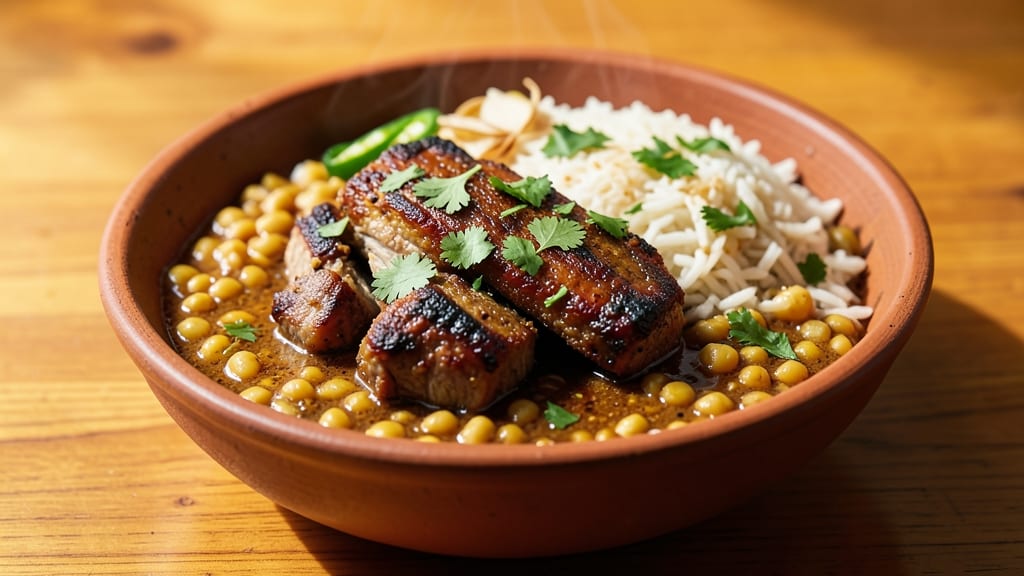
This beef bhuna khichuri recipe brings the soul of Bengali home cooking to your kitchen with its rich, layered flavors and comforting simplicity. 🌟 The dish marries tender beef slow-cooked in aromatic spices with fragrant rice and lentils, creating a one-pot wonder that's both hearty and deeply satisfying.
What makes it special is the balance—spicy, tangy, and savory all in one bite, achieved through traditional techniques like tempering and careful layering of flavors.
The recipe begins with the bhuna, where beef simmers in a blend of panch phoron, cumin, and coriander until fall-apart tender, infused with the essence of ginger, garlic, and tomatoes. Meanwhile, the khichuri—a mix of rice and lentils—cooks separately, absorbing the subtle warmth of mustard oil and cumin seeds.
The magic happens when these two components come together, creating a dish that's as nourishing as it is flavorful.
What you'll end up with is a restaurant-quality Bengali classic that's perfect for family dinners or special occasions. The dish is rich enough to stand alone but pairs beautifully with raita or achar for a complete meal.
The slow-cooked beef melts in your mouth, while the khichuri provides the perfect balance of texture and heartiness. This recipe is a celebration of tradition, where every spoonful tells a story.
Whether you're a seasoned home cook or new to Bengali cuisine, this recipe delivers authenticity without compromise. The step-by-step instructions guide you through each phase—from spice tempering to assembling the final dish—ensuring you capture the essence of this beloved Bengali comfort food.
Ready to create a dish that's as much about love as it is about flavor?
Ingredients for beef bhuna khichuri recipe bengali
The heart of Bengali home cooking starts with these aromatic ingredients.
| Ingredient | Amount | Notes |
|---|---|---|
| Beef Chuck Roast 🥩 | 1 ½ lb | Cut into 1-inch cubes |
| Basmati Rice 🌾 | 1 cup | Uncooked, long-grain preferred |
| Yellow Lentils (Moong Dal) 🥜 | ½ cup | Rinsed thoroughly |
| Panch Phoron 🌶️ | 1 tsp | Traditional Bengali spice blend |
| Ground Cumin 🌿 | 1 tsp | Toasted for deeper flavor |
| Fresh Ginger 🧄 | 2 tbsp | Finely grated, skin-on |
| Garlic Cloves 🧄 | 6 cloves | Minced, skin-on preferred |
| Yellow Onion 🧅 | 1 whole | Medium size, finely chopped |
| Medium Tomatoes 🍅 | 2 whole | Ripe, chopped, seeds removed |
| Mustard Oil 🫒 | ¼ cup | Lightly infused with cumin |
| Ghee 🧈 | 2 tbsp | Clarified butter, unsalted |
| Ground Turmeric 🌿 | ½ tsp | Freshly ground preferred |
| Red Chili Powder 🌶️ | 1 tsp | Adjust for heat preference |
| Coriander Powder 🌿 | 1 tsp | Freshly ground preferred |
| Salt 🧂 | 1 ½ tsp | Adjust to taste |
| Fresh Green Chilies 🌶️ | 2 whole | Slit lengthwise, seeds removed |
| Fresh Cilantro 🌿 | ¼ cup | Chopped, for garnish |
The beef chuck roast is non-negotiable for authentic texture—it melts into tender, spice-infused strands. Look for well-marbled cuts at your local Indian grocery store or butcher section (avoid lean cuts). Whole Foods or Patel Brothers usually carry the best quality. For the panch phoron, this five-spice blend is the soul of the dish—spice shops or bulk bins at Whole Foods will have it, but if unavailable, mix equal parts fenugreek, nigella, fennel, black pepper, and cumin. The yellow lentils should be rinsed until the water runs clear—this removes bitterness and ensures silky texture.
No mustard oil? Vegetable oil works in a pinch, but the nutty aroma is essential. Fresh ginger and garlic can be swapped for powdered versions at half the amount, though fresh is always better. The tomatoes are crucial—San Marzano if you can find them, or any ripe, flavorful variety. For the khichuri base, jasmine rice can replace basmati, though it's slightly stickier. The green chilies? Serrano peppers work if you can't find fresh green ones, but remove seeds for milder heat. And that cilantro garnish? Don't skip it—it brightens the dish immediately.
Store the cooked khichuri base (rice and lentils) in an airtight container for 3-4 days—it only gets better as flavors meld. The bhuna beef reheats beautifully, but add a splash of water to keep it moist. For longer storage, freeze portions for up to 3 months. Pro tip: Double the bhuna and freeze half—perfect for lazy weeknights. The spices lose potency after opening, so transfer them to small jars for freshness. Keep the panch phoron in the freezer for up to 6 months if you won't use it all at once.
Why You'll Love This Recipe
- One-Pot Magic: I swear by this recipe when I’m too tired to wash dishes—just brown the beef, toss in rice and lentils, and let it simmer. The panch phoron does all the flavor work while you sip tea.
- Deep, Smoky Richness: That slow-cooked beef chuck becomes melt-in-your-mouth tender, kissed by cumin and garlic until it’s dangerously good. Honestly, the first bite makes me forget I’m eating a weeknight dinner.
- Leftovers That Beg for Seconds: This dish actually improves overnight—the rice softens just right, and the beef stays juicy. I’ll be real: my freezer is half-full of reheated portions because it’s that good.
- Budget-Friendly Feast: A single beef chuck roast stretches across three meals, and moong dal keeps costs low without skimping on flavor. Perfect for when you want hearty comfort without breaking the bank.
Step-by-step instructions for beef bhuna khichuri
Here's how to create this comforting Bengali masterpiece where tender beef and fragrant rice sing together in one aromatic pot.
🍳 Step 1: Sauté the Aromatic Base
Heat the 0.25 cup mustard oil in a heavy-bottomed pot over medium heat until it shimmers. Add the 1 tsp toasted ground cumin and 1 tsp panch phoron, stirring constantly for 30 seconds until the spices sizzle and release their fragrance.
Add the 1 whole finely chopped yellow onion and cook for 5-6 minutes until golden brown. Here's where the magic happens - you're building that deep, complex flavor base that defines bhuna dishes. The onions should soften but not caramelize completely, as we'll develop more color later.
🔥 Step 2: Cook the Beef Until Tender
Push the onions to one side of the pot and add the 1.5 lb cubed beef chuck roast to the empty space. Sear the beef for 3-4 minutes until it develops a deep brown crust. This initial searing locks in juices and creates that rich bhuna color.
Stir the beef into the onions, then add 2 tbsp freshly grated ginger, 6 minced garlic cloves, 0.5 tsp ground turmeric, 1 tsp red chili powder, and 1 tsp coriander powder. Cook for 2-3 minutes until the raw garlic smell disappears and the spices bloom. This is your flavor foundation - don't rush this step.
🥘 Step 3: Simmer the Beef in Tomato Gravy
Add the 2 chopped medium tomatoes (with seeds removed) and 2 slit green chilies to the pot. Cook for 5-6 minutes until the tomatoes break down into a thick sauce. The mixture should reduce by about half, creating a rich, glossy consistency.
Pour in 2 cups water (just enough to cover the beef) and add 1.5 tsp salt. Bring to a gentle boil, then reduce heat to low and simmer uncovered for 1 hour to 1 hour 15 minutes, stirring occasionally. The beef is done when it's fork-tender with just a slight resistance - this low-and-slow cooking develops deep, caramelized flavors.
🍳 Step 4: Prepare the Rice-Lentil Mixture
While the beef simmers, rinse the 1 cup basmati rice and 0.5 cup yellow lentils (moong dal) thoroughly under cold water until the water runs clear. In a separate bowl, combine the rice and lentils with 3 cups water and let soak for 20 minutes.
In a separate pot, heat 2 tbsp ghee over medium heat. Add the soaked rice-lentil mixture and cook for 3-4 minutes until the rice becomes translucent at the edges. This step ensures each grain absorbs the rich beef flavors later. Don't let it brown - we want al dente rice.
🥘 Step 5: Combine and Finish the Khichuri
Carefully transfer the cooked rice-lentil mixture to the beef pot. Gently stir to combine, then add 1 cup water to create the perfect khichuri consistency - slightly thick but still spoonable. The rice should be just covered with liquid, allowing it to absorb the beef's rich flavors.
Simmer uncovered over low heat for 15-20 minutes, stirring occasionally, until the rice is tender and the liquid has reduced slightly. The khichuri is ready when the rice is cooked through but still has a slight bite, and the beef is falling apart tender. Garnish with 0.25 cup chopped fresh cilantro just before serving.
Pro Tips For Making Beef Bhuna Khichuri Recipe Bengali
- Sear the Beef First: After cutting the chuck roast into chunks, hit the pan with 2 tablespoons of oil and sear the beef on high heat until deep brown—this isn’t just for flavor, it locks in juices so your bhuna doesn’t turn out dry. I used to skip this, and the beef always ended up tough no matter how long I simmered it.
- Toast the Moong Dal: Dry-roast the yellow lentils in the same panch phoron-infused oil until they smell nutty and aromatic—about 2-3 minutes. This step makes a real difference in the dal’s texture and depth; raw lentils just blend into the background. (Yes, even if you’re impatient like me.)
- Simmer Low and Slow: Once the beef is cooked through, reduce the heat to the lowest setting and let the bhuna simmer uncovered for at least 15 minutes. The evaporation thickens the sauce naturally, and the flavors meld without burning. I learned this the hard way—rushing this step leaves you with a watery mess.
- Bloom the Spices: Add the ground cumin and panch phoron to the hot oil first, and let them sizzle for 30 seconds before adding anything else. This releases their oils and builds the base flavor—skipping this step means your spices will just taste like dust. (Your future self will thank you.)
Troubleshooting great beef bhuna khichuri recipe bengali
Beef Too Tough
If your beef isn't tender after simmering, you likely didn't cook it long enough or used the wrong cut. Always use beef chuck roast—it's marbled enough to stay juicy.
For tougher cuts, extend simmering to 2 hours at low heat and add 1 extra cup water halfway to prevent drying. I've found that covering the pot during simmering helps trap moisture and tenderize the meat more effectively. 🔥
Khichuri Too Dry
The khichuri might be dry if you didn't add enough water when combining with the beef. For every 1 cup rice, use 1.5 cups liquid (water or beef broth) to maintain the right consistency.
If it's still dry after cooking, add 2-3 tablespoons water and simmer for another 5 minutes. Pro tip: Use a heavy-bottomed pot to prevent burning and ensure even heat distribution.
Spices Too Overpowering
If the dish tastes too spicy, you likely used too much panch phoron or red chili powder. Start with ½ tsp panch phoron and ½ tsp chili powder, then adjust to taste.
For a milder version, replace 1 green chili with ½ tsp mild paprika. I always taste as I go—add spices gradually and let them bloom before committing to the full amount.
Khichuri Too Mushy
Overcooking the rice-lentil mixture makes khichuri mushy. Cook the rice and lentils separately in a 1:1.5 rice-to-water ratio (e.g., 1 cup rice to 1.5 cups water) for 12-15 minutes until just tender.
Avoid stirring constantly—this breaks the grains. For extra texture, add ¼ cup cooked peas or chopped carrots to the khichuri base before combining with the beef.
Mustard Oil Burnt
Mustard oil burns easily at high heat, creating a bitter taste. Always heat it on low-medium heat until it shimmers but doesn't smoke. If it starts smoking, remove from heat immediately and let it cool slightly before proceeding.
For a smoother flavor, infuse the oil with ½ tsp cumin seeds for 5 minutes before using it in the recipe. This step adds depth without overpowering the dish. 💡
Flavor Too Bland
Blandness usually means the spices didn't bloom properly or the beef didn't absorb enough flavor. Toast your cumin seeds and panch phoron in a dry pan for 30 seconds before adding to the oil—this intensifies their aroma.
For extra depth, add 1 tbsp tomato paste with the tomatoes to enhance umami. I also recommend finishing with a tempering of 1 tsp mustard oil, ½ tsp asafoetida (hing), and 2 tbsp fried onions just before serving.
Nutrition facts
Frequently asked questions
Can I substitute chicken or lamb for beef in this recipe?
Chicken works well—use 1.5 lbs boneless thighs and reduce cooking time to 45-50 minutes. For lamb, opt for 1.5 lbs shoulder and simmer for 1 hour 30 minutes. The key is using a cut with good fat content. Adjust salt accordingly, as lamb can be saltier than beef.
What's the best way to make this dish vegetarian?
Replace beef with 1.5 lbs paneer or tofu (extra-firm) cut into cubes. Cook paneer for 10-12 minutes after adding spices, then proceed with the recipe. For extra protein, add ½ cup chickpeas with the lentils. Use ½ tsp turmeric and 1 tsp garam masala to enhance flavor. The khichuri base remains the same.
How do I store and reheat leftovers?
Store in airtight containers for 3-4 days in the fridge. Reheat gently on low heat with 2-3 tbsp water to prevent drying. For freezing, portion the bhuna beef separately—it keeps for 3 months. Thaw overnight in the fridge before reheating. The khichuri reheats best when combined with fresh rice.
What's the secret to getting that authentic Bengali flavor?
The magic lies in mustard oil and panch phoron. Heat the oil on low heat until it shimmers but doesn't smoke—this preserves its nutty aroma. For panch phoron, toast it in a dry pan for 30 seconds until fragrant before adding to the oil. Finish with a tempering of ½ tsp asafoetida (hing) and 2 tbsp fried onions—this adds depth that store-bought spices can't replicate.
Can I make this dish in a pressure cooker or Instant Pot?
Yes! For an Instant Pot, brown the beef first, then add all ingredients (except cilantro) and cook on high pressure for 25 minutes. Let pressure release naturally for 10 minutes. For khichuri, use 1:1 rice-to-water ratio and cook for 8 minutes on high pressure. The Instant Pot cuts cooking time by half but requires careful monitoring to avoid overcooking.