
Soups & Stews
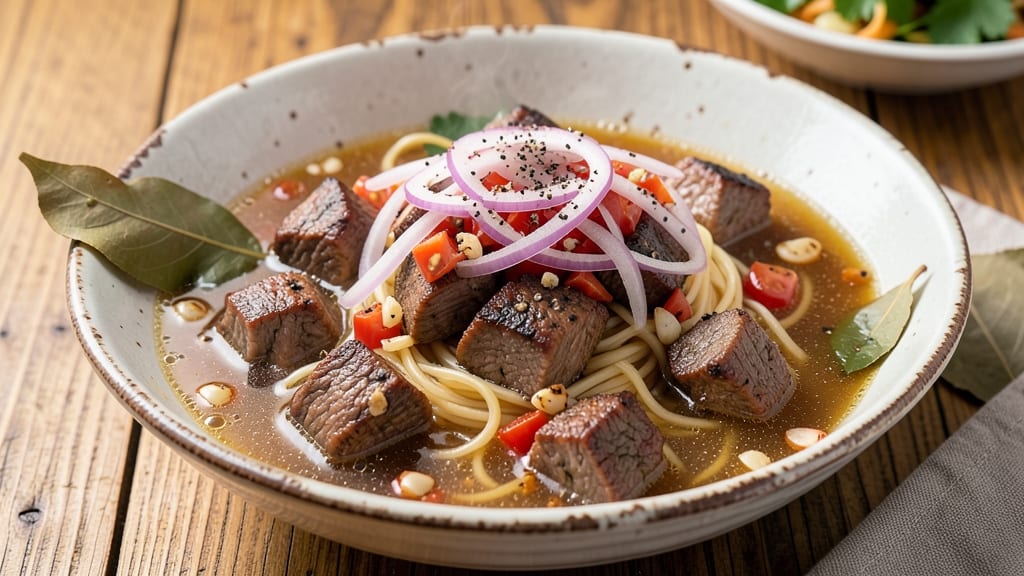
This beef batchoy recipe brings the rich, comforting flavors of Filipino comfort food to your kitchen with its signature silky egg noodles floating in a deeply spiced beef broth.
The secret lies in slow-cooked beef and pork bones that create a velvety, aromatic broth—infused with tomatoes, garlic, and a blend of spices that transform simple ingredients into something extraordinary.
After years of perfecting this dish, I've found the key is patience: letting the broth develop layers of flavor over time, while the egg noodles cook just until tender, absorbing every last drop of that savory goodness.
The beauty of batchoy is its versatility—whether you prefer the Cebu-style with more pork and a lighter broth, or the Iloilo-style with richer beef flavors, this recipe adapts to your taste.
The dish comes together in stages: first building the broth with beef, pork, and vegetables, then simmering it until it's rich and fragrant.
The egg noodles are cooked separately to maintain their signature silky texture, and finally, everything is assembled with crispy pork slices, hard-boiled eggs, and fresh vegetables for a harmonious balance of textures and flavors.
What makes this recipe truly special is how it transforms a simple bowl of noodles into a hearty, satisfying meal that feels like a warm embrace. The broth is deeply flavorful yet balanced, with just the right amount of spice and acidity from the tomatoes.
The egg noodles, cooked al dente, soak up the broth while retaining their delicate texture, creating a dish that's both comforting and restaurant-quality. Each spoonful delivers a symphony of flavors—savory, slightly sweet, and just spicy enough to keep you coming back for more.
Perfect for a cozy family dinner or a gathering with friends, this beef batchoy recipe is designed to impress without requiring advanced cooking skills. The slow-cooked broth ensures deep, complex flavors, while the assembly is straightforward, making it a dish you can enjoy any night of the week.
Serve it with extra toppings like crispy pork, sliced eggs, and fresh herbs to elevate every bite. Let's get cooking!
Ingredients for beef batchoy
Simple ingredients transform into restaurant-style Filipino comfort food with rich broth and silky noodles.
| Ingredient | Amount | Notes |
|---|---|---|
| Beef Chuck Roast 🥩 | 1 ½ lb | Cut into 1-inch cubes |
| Pork Bones 🦴 | 1 ½ lb | Marrow-rich for broth |
| Egg Noodles 🍜 | 8 oz | Fresh or dried, silky texture |
| Canned Tomatoes 🍅 | 1 can | 28 oz, crushed preferred |
| Onions 🧅 | 2 whole | Yellow or red, sliced |
| Garlic Cloves 🧄 | 6 cloves | Minced for depth of flavor |
| Ginger 🌿 | 1 tbsp | Freshly grated, aromatic |
| Bay Leaves 🍃 | 2 whole | Dried for subtle earthiness |
| Ground Black Pepper 🌶️ | 1 tsp | Freshly cracked for heat |
| Salt 🧂 | 1 tbsp | Kosher or sea salt |
| Crispy Pork Slices 🥓 | 1 cup | Store-bought or homemade |
| Hard-Boiled Eggs 🥚 | 2 whole | Sliced for garnish |
| Green Onions 🧅 | 4 whole | Sliced for freshness |
| Vegetable Oil 🫒 | ½ cup | For frying pork slices |
| Soy Sauce 🥢 | 2 tbsp | For umami depth |
The beef and pork bones are the heart of this dish. Look for chuck roast with good marbling—it melts into the broth beautifully. Pork bones with marrow add that unmistakable richness. I grab mine from Costco when possible, but any quality butcher will have them. Fresh ginger and garlic are non-negotiable here—they make all the difference in that aromatic base. If you can't find fresh ginger, substitute with 1 tbsp ground ginger, but it won't be quite the same. The egg noodles should be fresh if you can find them, but dried works in a pinch—just cook them separately to keep that signature silky texture.
No pork bones? Substitute with beef bones or even chicken thighs—just add an extra hour to the simmering time. The tomatoes can be fresh if you prefer, but canned crushed tomatoes work perfectly fine. Fresh bay leaves are ideal, but dried work at half the amount. For the crispy pork slices, store-bought lechon kawali from Asian markets is a game-changer, but you can pan-fry regular pork slices until crispy. The soy sauce adds that perfect umami balance—don't skip it. If you're feeling adventurous, add a dash of fish sauce for extra depth, but it's optional.
This broth gets better the next day—honestly, it's worth making a double batch. Store it in the fridge for up to 5 days or freeze for 3 months. The egg noodles cook in just 2 minutes, so keep them ready to go. Assemble everything right before serving so the noodles stay silky. Garnish with extra green onions and crispy pork slices—everyone will ask for seconds. Leftovers reheat beautifully, just add a splash of water to loosen the broth.
Why You'll Love This Recipe
- One-Pot Magic: I swear by this recipe when I’m too tired to wash dishes. Simmer the beef chuck, pork bones, and onions together—no extra pans, no stress. The broth thickens right in the pot, and by the time the noodles are done, everything’s ready to serve.
- Rich Without Effort: Between us, the pork bones and canned tomatoes create a depth of flavor that’s ridiculously satisfying. You don’t even need fancy spices—just salt, pepper, and a little soy sauce, and the beef practically melts in your mouth. Honestly, it’s the kind of dish that makes you wonder why you ever ordered takeout.
- Leftovers That Don’t Suck: Batchoy is one of those rare meals where leftovers taste better the next day. The flavors meld overnight, and reheating it with a splash of water turns it into a hearty soup. I’ve fed my family for days with just one big pot—no waste, no fuss.
- Budget-Friendly Feast: Beef chuck and pork bones stretch across multiple meals, and canned tomatoes add acidity without breaking the bank. It’s my go-to when I need to feed a crowd without spending a fortune. Plus, the egg noodles? Cheap, filling, and always a crowd-pleaser.
Step-by-step instructions for silky egg noodles in spiced tomato-broth bliss
Here's how to craft the heart of batchoy—a rich, aromatic broth that transforms simple egg noodles into a comforting masterpiece.
Build the Flavor-Packed Broth
In a large pot, combine the 1.5 lb pork bones and 1.5 lb beef chuck roast cut into 1-inch cubes. Add 2 whole onions (sliced), 6 cloves garlic cloves (minced), 1 tbsp ginger (freshly grated), 2 whole bay leaves, 1 tbsp salt, and 1 tsp ground black pepper. Pour in 1 can canned tomatoes (crushed) and 2 tbsp soy sauce. Cover with 8 cups water—enough to submerge everything by 2 inches. Bring to a boil over high heat, then immediately reduce to a gentle simmer. Skim off any foam that rises to the surface during the first 10 minutes—this ensures a clear, clean broth.
Simmer uncovered for 2 hours, stirring occasionally. You'll notice the broth darkens and develops a deep, aromatic scent—this is where the magic happens. The pork bones will release their marrow, enriching the broth with velvety texture. If the liquid reduces too much, add hot water to maintain the 2-inch liquid level. The broth is ready when it's rich, slightly thickened, and smells intensely savory.
Prepare the Crispy Pork Slices
While the broth simmers, heat 0.5 cup vegetable oil in a separate skillet over medium-high heat until it shimmers. Add the 1 cup crispy pork slices and fry for 2-3 minutes until they're deep golden brown and crispy. Remove them with a slotted spoon and drain on paper towels. These crispy slices will add a delightful textural contrast to your batchoy—don't skip this step!
If you're making the pork slices from scratch, use 1 lb pork shoulder cut into thin strips. Fry them in batches until crispy, then drain well. The key here is ensuring they're fully cooked and crispy—this prevents sogginess when added to the noodles later.
Cook the Egg Noodles Al Dente
Bring a separate pot of salted water to a rolling boil. Add the 8 oz egg noodles and cook for 2 minutes less than the package instructions—you want them al dente so they finish cooking in the hot broth. Drain the noodles, reserving 1 cup of pasta water, and set aside. The noodles should be tender but still hold a slight bite—this ensures they don't turn mushy when combined with the broth.
Here's a pro tip: Toss the drained noodles with 1 tbsp vegetable oil to prevent sticking. This also helps them absorb the broth's flavors more evenly. Keep them warm while you prepare the final assembly.
Assemble the Batchoy
Return the broth to a gentle simmer over medium-low heat. Add the cooked egg noodles and let them simmer for 2-3 minutes, stirring gently to coat them evenly in the broth. The noodles should look glossy and silky—this indicates they're absorbing the flavors perfectly. If the broth seems too thick, add reserved pasta water 1 tablespoon at a time until it reaches a smooth, silky consistency.
Divide the noodles among 4 bowls, ladling the hot broth over the top. Arrange the crispy pork slices on each serving, followed by 2 slices of hard-boiled eggs and 1 whole green onion (sliced). The contrast of textures—silky noodles, crispy pork, and tender eggs—is what makes batchoy so irresistible.
Serve with Confidence
Serve the batchoy immediately while the broth is steaming hot. The aroma alone will make everyone gather around the table. Each bite should deliver a harmonious blend of rich broth, tender noodles, and crispy pork slices—a perfect balance of textures and flavors. For extra depth, offer soy sauce and black pepper on the side so everyone can adjust to their taste.
This dish tastes even better the next day, so don't hesitate to make extra. Store leftovers in the refrigerator for up to 3 days, or freeze for up to 3 months. When reheating, add a splash of water or broth to maintain the silky texture. Enjoy your homemade batchoy—it's comfort food at its finest!
Pro Tips For Making Beef Batchoy
- Brown the Bones First: I learned this the hard way—skipping the initial browning means flavorless broth. Sear pork bones in batches over high heat until deeply caramelized (10-15 minutes total), scraping up those crispy bits. That’s where the umami magic lives, and it’s the foundation for your batchoy’s rich sauce.
- Slice Beef Against Grain: Thinly sliced beef chuck roast is non-negotiable, but cutting against the grain makes all the difference. If you’re not sure which way that is, look for the longest muscle fibers and slice perpendicular—this turns tough chunks into tender, fork-friendly bites. (Your future self will thank you.)
- Simmer Tomatoes Low and Long: Canned tomatoes taste like cardboard if you rush them. After adding them to the pot, reduce heat to the lowest setting and let them simmer uncovered for at least 20 minutes. The acid softens, the flavors meld, and you avoid that vinegary aftertaste that ruins everything.
- Reserve Noodle Water: Sounds weird, but it works: Before draining your egg noodles, scoop out 1 cup of starchy cooking water and set it aside. Toss the noodles with a splash of this water after cooking—it coats them like a silky glue, keeping them from turning mushy in the broth. (Yes, even if you’re impatient like me.)
Perfect pairings for this dish
Broth-Based Sides
Serve batchoy with a side of Filipino-style garlic rice—steamed jasmine rice sautéed with minced garlic, butter, and a pinch of salt. The mild, buttery flavor complements the rich broth beautifully.
I like to make a big batch of rice and keep it warm in a rice cooker while the batchoy simmers. 🍚
For a lighter option, try sautéed bok choy with garlic and soy sauce. The crisp-tender greens add freshness to balance the hearty noodle dish. Toss 1 bunch bok choy (about 1 lb) with 2 tbsp soy sauce, 1 tbsp vegetable oil, and 2 minced garlic cloves.
Sauté for 3-4 minutes until just wilted.
Crispy Toppings
Add fried shallots for extra crunch and depth of flavor. These golden, crispy bits elevate every spoonful of batchoy. I like to use ½ cup frozen fried shallots from the Asian market—just sprinkle them generously over the finished dish.
For homemade, thinly slice 4 shallots, fry in ½ cup oil at 350°F until crispy, then drain on paper towels.
Fresh Garnishes
Brighten the dish with quick-pickled cucumbers—thinly sliced cucumbers tossed with 1 tbsp rice vinegar, 1 tsp sugar, and a pinch of salt. The tangy crunch cuts through the richness of the broth.
I prepare these last-minute to keep them crisp. Serve on the side or sprinkle directly over the batchoy.
Drink Pairings
A cold San Miguel beer is the classic Filipino pairing for batchoy. The crisp, slightly malty flavor cleanses your palate between rich bites. For a non-alcoholic option, try ginger tea—steep 1 tbsp fresh ginger slices in 2 cups hot water for 5 minutes.
The spicy warmth complements the dish perfectly. 🍺
Sweet Endings
Finish the meal with halo-halo-inspired mango slices—ripe mangoes tossed with a pinch of salt and a drizzle of honey. The sweet-tart contrast balances the savory flavors of the batchoy.
I like to serve them chilled on the side for a refreshing finish. For extra flair, add a sprinkle of toasted sesame seeds.
Nutrition facts
Frequently asked questions
What’s the secret to making batchoy broth rich and flavorful?
The key lies in slow-cooking the beef and pork bones for at least 2 hours—this extracts deep, savory flavors from the marrow. Skim off foam during the first 10 minutes to keep the broth clear, and don’t rush the simmering process. The longer it cooks, the more complex the taste becomes!
Can I make batchoy ahead of time?
The broth tastes even better the next day—make a double batch and store it refrigerated for up to 5 days or frozen for 3 months. Reheat gently and add extra water or broth to maintain the silky texture. Just cook the noodles fresh before serving to keep them tender.
What’s the difference between Cebu-style and Iloilo-style batchoy?
Cebu-style uses more pork and a lighter broth, while Iloilo-style leans heavier on beef for a richer, deeper flavor. The noodles and toppings (like crispy pork and eggs) remain similar. For this recipe, we’re making the Iloilo-style version—adjust the beef-to-pork ratio if you prefer Cebu’s lighter take.
Why are my noodles turning mushy?
Overcooking is the most common culprit! Cook the egg noodles just 2 minutes less than package instructions, then finish them in the hot broth. Also, avoid stirring too vigorously when assembling—they’ll soften faster. Toss them with a little oil after draining to help preserve their texture.
Can I substitute beef with chicken for batchoy?
While you can use chicken, it won’t give you the same rich, beefy depth. If you must, use chicken thighs and bones (dark meat adds more flavor) and simmer for 3+ hours to compensate. For authentic results, stick with beef—it’s worth the effort for that signature umami punch!