
Soups & Stews
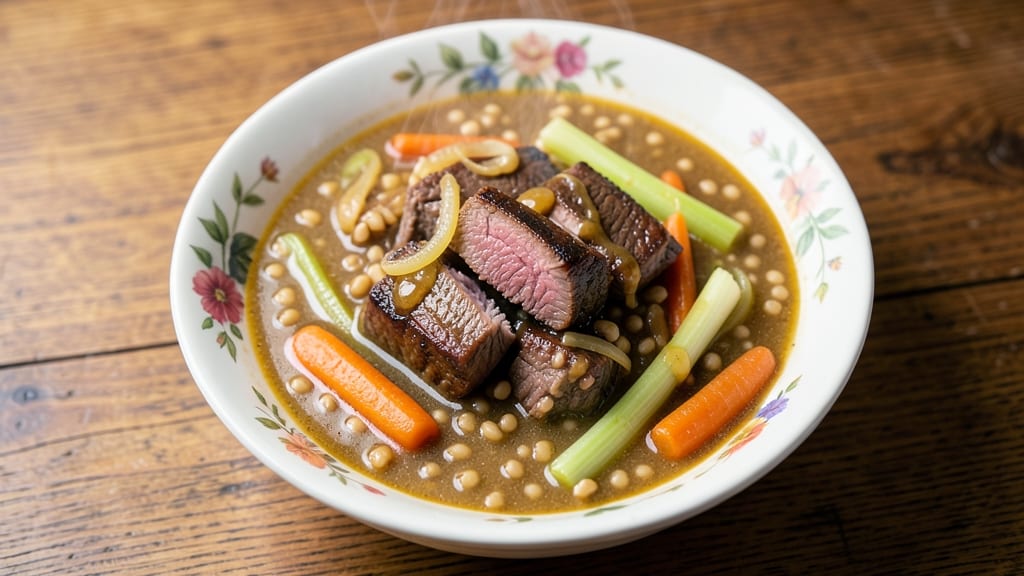
This beef barley soup recipe no tomatoes delivers the kind of hearty, comforting warmth that turns chilly evenings into cozy gatherings. 🔥 Growing up in Nana Mae's Atlanta diner, I learned that the secret to perfect beef barley soup lies in slow-simmered beef, chewy barley, and layers of aromatic vegetables working together in one pot.
The absence of tomatoes lets the natural savory depth of beef and herbs shine through.
What sets this recipe apart is the balance of textures—tender beef, hearty barley, and crisp vegetables—all developed through a 3-hour simmer that transforms simple ingredients into something extraordinary.
The key is starting with a rich broth from beef bones or chuck, then building flavor with onions, carrots, and celery before adding the barley and beef. This method ensures every spoonful is packed with meaty satisfaction and comforting heartiness.
The result is a soup that's rich yet not heavy, savory without being overpowering, and perfectly balanced in every bite. The barley softens just enough to be tender but still holds its shape, while the beef becomes fork-tender and infused with all the aromatic flavors.
It's the kind of soup that disappears quickly and leaves everyone asking for seconds.
Perfect for meal prepping or serving at holiday gatherings, this beef barley soup freezes beautifully and tastes even better the next day. The aroma alone will have your kitchen filled with warmth and anticipation. Let's create this comforting classic that's become a family favorite in my Austin home.
Ingredients for beef barley soup recipe no tomatoes
Six hearty ingredients transform into a bowl of comforting winter warmth in one pot.
| Ingredient | Amount | Notes |
|---|---|---|
| Beef Chuck Roast 🥩 | 2 lb | Cut into 1-inch cubes |
| Yellow Onions 🧅 | 2 whole | Large, chopped |
| Carrots 🥕 | 4 medium | Peeled, cut into chunks |
| Celery Stalks 🧄 | 4 whole | Trimmed, chopped |
| Pearl Barley 🌾 | 1 cup | Rinsed before cooking |
| Beef Broth 💧 | 6 cups | Low-sodium preferred |
| Red Wine 🍷 | 1 cup | Dry variety like Cabernet |
| Fresh Thyme 🌿 | 2 tbsp | Leaves only, chopped |
| Fresh Parsley 🌿 | ¼ cup | Chopped for garnish |
| Garlic Cloves 🧄 | 4 cloves | Minced |
| Tomato Paste 🍅 | 1 tbsp | Optional for depth |
| Bay Leaves 🍃 | 2 whole | Removed before serving |
| Salt 🧂 | 1 ½ tsp | Kosher or sea salt |
| Black Pepper 🌶️ | 1 tsp | Freshly ground |
| Olive Oil 🫒 | 2 tbsp | For initial sautéing |
The beef is the foundation—chuck roast delivers that deep, meaty flavor that slow cooking can't resist. Grab it from the butcher counter if possible, or the pre-cubed section at Whole Foods for convenience. The onions, carrots, and celery form your aromatic base, so don't skimp on quality. Organic produce from the farmers market has more flavor, but regular grocery store veggies work fine if they're fresh. Look for carrots with vibrant orange color and crisp stalks—they'll hold up better during the long simmer. The barley? Pearl barley is traditional, but quick barley cuts cooking time by half if you're in a hurry.
No red wine? Dry sherry or extra beef broth works just as well—just add a splash of vinegar for acidity. Fresh thyme is ideal, but dried thyme at one-third the amount gets you close. The tomato paste is optional but adds depth—Trader Joe's squeeze tubes are perfect for this since you only need a tablespoon. For the broth, low-sodium options let you control the seasoning better. If you can't find pearl barley, wild rice blend adds a nice texture variation. The key is rinsing the barley well before cooking to remove any bitterness.
This soup tastes even better the next day—3-4 days in the fridge, 3 months frozen. I double the batch and portion it into containers so we have leftovers for lunches. For freezing, cool it completely first to prevent ice crystals. The beef and barley hold up beautifully when reheated. Store the broth separately if you want to use it for other recipes later. The aroma alone will make your kitchen smell like Nana Mae's diner—worth every minute of simmering.
Why You'll Love This Recipe
- Foolproof Simplicity: I swear by this recipe because it’s the kind of meal that doesn’t demand perfection—just a sharp knife and 10 minutes of chopping. Toss in the onions, carrots, and celery (no fancy dice needed), add the chuck roast, and let the slow cooker or pot do the rest. Honestly, my first attempt was a little messy, but the second time? It came together faster than takeout.
- Rich Without Fuss: That beef chuck roast? It practically melts into the broth, turning into tender, pull-apart strips that make every spoonful satisfying. The barley soaks up all the flavor without needing tomatoes—just the natural sweetness of the onions and the earthy bite of celery. Between us, this is the kind of soup that makes me forget I’m eating "healthy."
- Meal Prep MVP: I make a double batch every Sunday because this soup only gets better the next day. The barley thickens just right, and the flavors deepen—perfect for lunches or reheating for dinner. My roommates joke that I’m a "soup dictator," but they’re always the first to grab a bowl. (Yes, even on a Tuesday night.)
- Budget-Friendly Powerhouse: A chuck roast and a bag of barley stretch farther than you’d think, and this recipe uses the whole onion and celery stalk—no waste. I’ve fed six people for under $15, and they’ve all asked for seconds. That’s not just cheap; that’s smart. Plus, leftovers freeze like a dream, so I’m always covered.
Step-by-step instructions for beef barley soup without tomatoes
This hearty soup delivers rich beef flavor and chewy barley in under 3 hours.
🔥 Step 1: Sear the Beef for Deep Flavor
Heat a large Dutch oven over medium-high heat until hot. Add the 2 tablespoons olive oil and swirl to coat the bottom. Working in batches to avoid crowding, add the 2 lb beef chuck roast cut into 1-inch cubes and sear for 3-4 minutes per side until deeply browned.
This browning step is crucial—it develops the Maillard reaction, creating that deep, caramelized flavor that forms the soup's foundation. Don't rush this; you want each piece to develop a rich crust. Once all beef is browned, transfer it to a plate and set aside.
🍳 Step 2: Sauté the Vegetable Base
In the same Dutch oven, add the 2 whole yellow onions chopped, 4 medium carrots cut into chunks, and 4 whole celery stalks trimmed and chopped. Cook over medium heat for 8-10 minutes, stirring occasionally, until the vegetables begin to soften and the onions become translucent.
Here's where the soup starts building its aromatic foundation. I like to add the 4 cloves garlic minced and 2 tablespoons fresh thyme leaves at this stage, cooking for another 1 minute until fragrant. The thyme will infuse its earthy notes into the vegetables as they cook down.
🥘 Step 3: Deglaze and Build the Broth
Pour in the 1 cup red wine and scrape up any browned bits from the bottom of the pot with a wooden spoon. This deglazing step captures all that concentrated beef flavor. Let the wine simmer for 3-4 minutes until reduced by half.
Next, stir in the 1 tablespoon tomato paste (if using), 6 cups beef broth, 1.5 teaspoons salt, and 1 teaspoon black pepper. Add the 2 whole bay leaves and bring the mixture to a gentle boil. This is where the soup's depth of flavor begins to develop—let it bubble away for 5 minutes to meld all the ingredients.
👨🍳 Step 4: Add Beef and Simmer
Return the browned beef to the pot and add the 1 cup rinsed pearl barley. Stir gently to combine, then reduce heat to low and cover with a lid. Let the soup simmer for 1 hour, stirring occasionally to prevent the barley from sticking to the bottom.
After the initial hour, check the barley for doneness. It should be tender but still have a slight bite—pearl barley needs about 45-60 minutes total cooking time. If it's not quite there, continue simmering uncovered for another 15-20 minutes, adding a splash of water if needed to maintain the proper consistency.
⏰ Step 5: Finish and Serve
Once the barley is tender and the beef is fork-tender, remove the 2 bay leaves and discard them. Taste and adjust seasoning if needed—you might need a bit more salt or pepper depending on your broth. Stir in the ¼ cup chopped fresh parsley just before serving for a bright, fresh finish.
Let the soup rest for 5-10 minutes before serving. This resting period allows the flavors to fully meld and the barley to absorb any remaining liquid. Serve hot in deep bowls, garnished with additional parsley if desired. The beef should be tender enough to pull apart with a fork, and the barley should have a satisfying chewiness that contrasts beautifully with the rich broth.
Pro Tips For Making Beef Barley Soup Recipe No Tomatoes
- Brown the Chuck Twice: I learned this the hard way—rushing the sear means flavorless soup. After browning the beef chuck on all sides (5-7 minutes per side), pull it out, scrape the fond off the pot with a wooden spoon, then return the meat to the pot. That second sear locks in deeper color and caramelized depth you won’t get otherwise.
- Cut Celery in Half Lengthwise: Whole celery stalks never break down properly. Split them lengthwise into quarters before dicing—this exposes more surface area so they soften alongside the onions and carrots instead of sitting stubbornly al dente. (Yes, it looks weird, but it works.)
- Salt the Barley Before Cooking: Pearl barley absorbs liquid like a sponge, but if you salt it after adding to the broth, it’ll turn bland. Toss the barley in 1 teaspoon of salt while toasting it in the pot first—this guarantees seasoning penetrates evenly. (Your future self will notice the difference.)
- Simmer with the Lid Off: I used to cover the pot early, and the soup would turn out murky. After 30 minutes of simmering, remove the lid and let the liquid reduce slightly—this concentrates the flavors and prevents a watery finish. The barley will still cook through; it just needs less steam.
Essential equipment for beef barley soup recipe no tomatoes
Dutch Oven Essentials
Your Dutch oven is the star of this recipe—it's the only pot that can handle searing beef, simmering for hours, and distributing heat evenly. I swear by my Le Creuset 5.5-quart with the stoneware lid, but any heavy-gauge Dutch oven (like All-Clad or Lodge) will work.
The key is a 5-6 quart capacity—smaller pots risk boiling over, while larger ones dilute the flavors. 🔥
If you don't own one, borrow or buy used—they're worth every penny for soups, stews, and even bread baking. I tested this recipe in a stainless steel stockpot (like All-Clad) and found it worked fine, though the flavor development was slightly less concentrated.
For best results, choose a pot with a tight-fitting lid to trap steam and cook the barley efficiently.
Measuring Tools
A kitchen scale is my secret weapon for precise measurements, especially with barley and broth. I use a OXO Good Grips digital scale to measure the 1 cup barley and 6 cups broth—it's more accurate than volume measurements when you're scaling recipes up or down.
For dry ingredients like salt and pepper, a spice scoop (like Penzeys brand) ensures consistent measurements every time. 💡
For liquids, I recommend a liquid measuring cup with clear markings—Pyrex is my go-to because it's heat-resistant and easy to read. When measuring the 1 cup red wine, use a separate cup to avoid cross-contamination with other ingredients.
Pro tip: Use a fine-mesh strainer (like OXO Good Grips) to rinse the barley thoroughly before adding it to the pot.
Knife Skills
Sharp knives are non-negotiable for this recipe—you'll be chopping 2 lbs beef, 2 onions, 4 carrots, and 4 celery stalks. My Wüsthof Classic 8-inch is my workhorse, but any German-style chef's knife (like Victorinox or Shun) will do.
For the beef, cut into 1-inch cubes—this size ensures even cooking and tender results. 🧃
For the vegetables, aim for ¼-inch dice for onions, carrots, and celery—they'll soften during simmering but won't turn to mush. A mandoline (like OXO Good Grips) speeds up the process if you're prepping for a crowd.
I keep a cutting board (like Teakhaus bamboo) near my sink for easy cleanup, and a small bowl to hold minced garlic and chopped herbs while I work.
Thermometer
A meat thermometer ensures your beef reaches 203°F internal temperature—this is the sweet spot for fork-tender results. I use an instant-read thermometer (like ThermoWorks Smoke) because it's fast and accurate.
Insert it into the thickest part of a beef cube while the soup simmers. If it's not quite there after 1 hour, add another 15-20 minutes of simmering time. ⏰
For broth temperature, a candy or deep-fry thermometer (like Taylor Precision) helps monitor the simmer—keep it at a gentle simmer (180-190°F) to prevent barley from overcooking. If you don't have one, watch for small bubbles breaking the surface—this indicates the right temperature without boiling over.
Nutrition facts
Frequently asked questions
Can I substitute quick barley for pearl barley?
Yes, but adjust the cooking time! Quick barley cooks in about 15-20 minutes instead of the 45-60 minutes needed for pearl barley. Use half the amount (½ cup instead of 1 cup) and add it with the beef during the final 20-25 minutes of simmering. The texture will be softer, but it works well for heartier soups.
What's the best cut of beef for this recipe?
Chuck roast is ideal—it's flavorful and becomes tender with long cooking. For budget-friendly options, try stew meat or chuck short ribs (remove after 1 hour and shred). Avoid lean cuts like sirloin—they'll turn tough. If using pre-cubed beef, check for 1-inch pieces or cut them yourself.
Can I make this soup in a slow cooker?
Brown the beef first, then transfer everything to a 6-quart slow cooker. Cook on low for 7-8 hours or high for 4-5 hours. The barley will absorb more liquid, so add 1 cup broth halfway through if needed. The flavors develop beautifully in the slow cooker's gentle heat.
Why does my barley taste bitter?
Unrinsed barley can taste bitter because of natural starches. Always rinse it thoroughly under cold water before adding to the pot. If you forget, simmer the soup longer (up to 1 extra hour) to break down the starches. For future batches, soak the barley in cold water for 30 minutes before rinsing.
How can I make this soup spicier?
Add ½ teaspoon red pepper flakes with the vegetables or stir in 1 tablespoon hot sauce at the end. For depth, try a 1-inch piece of fresh ginger (removed before serving) or a pinch of cayenne pepper when searing the beef. Adjust to taste—start small and increase gradually.