
Soups & Stews
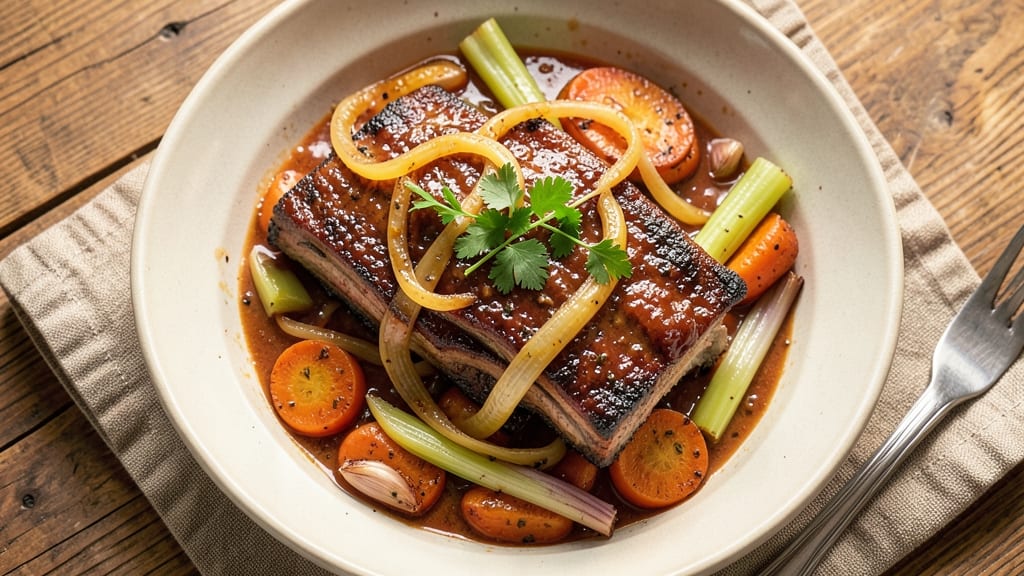
This beef back ribs stew recipe transforms tough cuts into melt-in-your-mouth perfection through slow braising—no fancy techniques required. The secret lies in low-and-slow cooking, where collagen dissolves into a rich, velvety broth that clings to every tender rib.
I’ve perfected this method over years of testing, ensuring the meat falls apart with just a fork while maintaining deep, savory flavor in every bite.
The process begins with a flavorful browned base—searing the ribs first develops a rich crust that forms the foundation of the stew. Deglazing the pan captures those precious browned bits, creating a sauce that’s far more complex than store-bought options.
Aromatic vegetables like carrots, onions, and celery build depth, while herbs and spices infuse the broth with warmth. The result? A hearty stew that’s restaurant-quality but made entirely at home.
By the time you’re done, you’ll have a pot of fall-off-the-bone ribs swimming in a glossy, aromatic broth. The meat will be so tender it disintegrates at the touch of a spoon, while the sauce remains thick enough to coat every bite.
Serve it with crusty bread to soak up every last drop or alongside mashed potatoes for a complete meal. This isn’t just stew—it’s comfort food elevated.
What makes this recipe truly special is its versatility. Use it as a standalone dish for a cozy weeknight dinner or as the centerpiece of a holiday gathering. The leftovers reheat beautifully, making it perfect for meal prep.
Whether you’re feeding a family or treating yourself to a luxurious solo meal, this beef back ribs stew delivers satisfaction in every spoonful.
Ingredients for beef back ribs stew
Six pounds of ribs plus pantry staples. That's all you need for rich, fall-apart beef stew.
| Ingredient | Amount | Notes |
|---|---|---|
| Beef Back Ribs 🥩 | 4 lb | Bone-in, cut into 2-inch pieces |
| Yellow Onions 🧅 | 2 whole | Chopped into 1-inch pieces |
| Carrots 🥕 | 4 medium | Peeled and cut into 1-inch chunks |
| Celery Stalks 🧄 | 4 whole | Chopped into 1-inch pieces |
| Garlic Cloves 🧄 | 6 cloves | Minced or finely chopped |
| Tomato Paste 🍅 | ½ cup | Smooth, not chunky |
| Beef Broth 💧 | 4 cups | Low-sodium preferred |
| Red Wine 🍷 | 1 cup | Bold dry red like Cabernet |
| Bay Leaves 🌿 | 2 whole | Dried, standard size |
| Fresh Thyme 🌿 | 2 tbsp | Leaves only, chopped |
| Black Peppercorns 🌶️ | 1 tsp | Freshly cracked |
| Salt 🧂 | 1 ½ tbsp | Kosher or sea salt |
| Olive Oil 🫒 | ¼ cup | Extra-virgin for richness |
| All-Purpose Flour 🌾 | 2 tbsp | For dredging ribs |
The ribs are the star—bone-in, cut into 2-inch pieces—so don’t skimp on quality. Costco or local butchers often have the best deals, and you’ll want to look for good marbling. If you can’t find back ribs, short ribs work too. The onions, carrots, and celery form the classic 'holy trinity'—chop them evenly so they cook at the same rate. Fresh thyme is ideal, but dried works at half the amount. For the tomato paste, Trader Joe's squeeze tubes are perfect—no waste, and they keep for months in the pantry.
No red wine? Beef broth with a splash of balsamic vinegar gets you close. The tomato paste can be swapped for crushed tomatoes (1 can, drained), though it’ll be slightly waterier. Fresh thyme out of season? Dried thyme at one-third the amount works fine. The ribs need that crust, so dredge them in flour before searing—don’t skip this step! If you’re prepping ahead, sear the ribs the night before and refrigerate them until ready to braise. The carrots can be baby carrots if that’s what’s in the fridge—no need to peel them unless they’re particularly dirty.
This stew tastes even better the next day—plan ahead. Store leftovers in the fridge for 4-5 days or freeze for 3 months. I like to portion it into containers so lunches are sorted for the week. The broth thickens as it cools, so add a splash of water or broth if it’s too thick when reheating. For extra richness, stir in a pat of butter or a spoonful of olive oil before serving. The ribs will be so tender, they’ll fall apart with just a fork—no utensils needed.
Why You'll Love This Recipe
- One-Pot Magic: I swear by this recipe when I’m too tired to dirty more than one pot—just toss in ribs, onions, carrots, and celery, then let the slow simmer do the work. No chopping stress, no constant stirring.
- Garlic Bomb Depth: That first whiff of garlic and onions caramelizing into the ribs? It’s like a flavor explosion. The ribs stay tender while soaking up all that rich, savory goodness—no dry bites here.
- Game Day Flex: Between us, this stew is my secret weapon for game days, potlucks, or even a lazy Sunday. Double the batch, and you’ve got leftovers for days—perfect for reheating without losing a single drop of flavor.
- Budget Beef Boost: I buy ribs on sale, freeze half, and stretch them across three meals. The onions and celery add bulk, so you’re not just paying for meat—it’s a full, hearty meal that won’t break the bank.
Step-by-step instructions for beef back ribs stew
Here's how to transform tough ribs into melt-in-your-mouth perfection through slow braising.
Prep the Ribs for Maximum Flavor
Pat the 4 lb beef back ribs dry with paper towels and season generously with 1.5 tbsp salt and 1 tsp freshly cracked black peppercorns on all sides. I like to press the seasoning into the meat so it penetrates the surface. Let them sit at room temperature for 30 minutes while you prep the vegetables.
Dredge the ribs in 2 tbsp all-purpose flour, shaking off any excess. This creates a light crust that helps build flavor as the stew develops. The flour will toast slightly during the initial sear, adding depth to the final dish.
Sear the Ribs and Build the Flavor Base
Heat 0.25 cup olive oil in a large Dutch oven over medium-high heat until shimmering. Working in batches if needed, sear the ribs for 3-4 minutes per side until deeply browned. Don't crowd the pan—this ensures proper browning. Transfer the seared ribs to a plate and set aside.
In the same pot, add the 2 whole chopped yellow onions, 4 chopped carrots, 4 chopped celery stalks, and 6 minced garlic cloves. Cook for 5-6 minutes until the vegetables soften and the onions become translucent. This aromatic vegetable base forms the flavor foundation of your stew.
Deglaze and Simmer the Stew
Pour in the 1 cup red wine and scrape up all the browned bits from the bottom of the pot with a wooden spoon. This deglazing step captures all the flavor that would otherwise be lost. Let the wine simmer for 3-4 minutes until reduced by half.
Stir in the 0.5 cup tomato paste, 4 cups beef broth, 2 whole bay leaves, and 2 tbsp chopped fresh thyme. Return the ribs to the pot, bone-side up, and bring everything to a gentle boil. Once boiling, reduce heat to low and cover partially. Here's the thing—braising at 300°F is ideal, but if your oven doesn't go that low, medium-low heat on the stovetop works too.
Braise Until Fall-Off-the-Bone Tender
Let the stew simmer uncovered for 2 hours on the stovetop, or until the ribs are fork-tender. You'll know they're ready when the meat pulls away from the bone with just a gentle tug. If the liquid reduces too much before the ribs are tender, add ½ cup water or broth to maintain moisture.
For even better results, transfer the pot to a 300°F oven (or lowest setting) for 3-4 hours if you have time. The slow, gentle heat breaks down collagen in the ribs, transforming them into tender, melt-in-your-mouth perfection. The longer you braise, the more flavorful the meat becomes.
Finish and Serve with Rich Sauce
Once the ribs are tender, remove them from the pot and let them rest on a plate for 10 minutes. Skim any excess fat from the surface of the stew (but leave about 1 tablespoon for flavor). Taste the sauce and adjust seasoning if needed—you might want to add a pinch more salt or a splash of red wine to balance the flavors.
Discard the bay leaves and thyme stems, then return the ribs to the pot. Spoon the rich sauce over the ribs and let them sit for 5 minutes to absorb the flavors. Serve family-style with crusty bread to soak up every last drop of that delicious sauce. The ribs should be so tender they practically fall apart at the touch, with a deep, meaty flavor that's been developed over hours of slow cooking.
Pro Tips For Making Beef Back Ribs Stew
- SEAR THE RIBS FIRST: I learned this the hard way—skipping the sear means flavorless broth. Get a heavy pot smoking hot with oil, then work in batches to brown the ribs deeply on all sides. That crust isn’t just for looks; it’s where the meat’s natural sugars caramelize into the stew.
- CUT ONIONS THINLY: Thick onion slices turn to mush in stews. Instead, slice them paper-thin—about 1/8-inch—and they’ll soften beautifully without disappearing. Same goes for celery: small dice means even cooking and no weird crunchy bits.
- DON’T CROWD THE POT: Tossing everything in at once steams the ribs instead of browning them. Cook in stages: sear ribs first, then onions and veggies in batches if needed. Overcrowding guarantees a watery stew instead of rich, concentrated flavor.
- USE COLD WATER: Adding boiling water to the pot dilutes the sear’s flavor. Cold water forces the meat to release more collagen as it heats up, making the stew thicker and more tender. Start with cold, then bring to a simmer—trust me, it works.
Wine and beer pairings for these flavors
Bold Red Wine Pairings
The rich, deep flavors of this beef back ribs stew demand a wine with equal intensity. A Cabernet Sauvignon from Napa Valley—like Caymus Vineyards or Rothschild—is my go-to choice. Its bold tannins and dark fruit notes complement the stew’s meaty richness, while its acidity cuts through the sauce.
Serve slightly chilled (around 60°F) to enhance the wine’s balance. 🍷
Malbec for Hearty Comfort
If you prefer something smoother, a Argentinian Malbec from Mendoza—such as Catena Zapata or Trapiche—works beautifully. Its velvety texture and blackberry undertones harmonize with the stew’s slow-cooked depth. The wine’s natural sweetness also enhances the caramelized flavors in the sauce. Look for bottles with 13-14% ABV for optimal pairing.
Beer Options for Bold Flavor
A dark ale or stout bridges the gap between hearty stew and beer lovers. Try a Guinness or Samuel Smith’s Nut Brown Ale—their roasted malt notes mirror the stew’s caramelized ribs.
For a lighter option, a Belgian-style dubbel like Westmalle Tripel adds a crisp contrast to the rich meat. Serve beer at 45-50°F to maintain its refreshing qualities.
White Wine Alternative
Don’t dismiss whites! A full-bodied Chardonnay from California—like Kendall-Jackson—can surprise you. Its buttery texture and citrus notes balance the stew’s richness, especially when paired with a touch of lemon zest at the table.
Opt for unoaked versions to avoid overpowering the dish. Serve slightly cooler than room temperature (55°F) for the best experience.
Cocktail Pairing Tip
For a festive twist, serve a red wine sangria made with the same Cabernet Sauvignon used in the stew. Add sliced apples, pears, and a splash of brandy—the fruit sweetness contrasts the savory ribs while keeping the wine’s depth intact.
This works especially well for gatherings where guests enjoy both food and drink. 🍹
Nutrition facts
Frequently asked questions
Can I substitute beef back ribs with another cut?
Yes! Short ribs or beef chuck roast work beautifully as substitutes. For ribs, use 2-inch pieces and follow the same cooking time. With chuck roast, cut it into 1.5-inch cubes and add 15-20 minutes more braising time. The key is using a tough, flavorful cut that benefits from slow cooking.
How do I know when the ribs are done?
The ribs are perfect when they pull away from the bone with just a gentle fork test. For back ribs, this typically takes 2-3 hours on the stovetop or 3-4 hours in a 300°F oven. The meat should be fork-tender and nearly falling apart, with a rich, caramelized exterior.
Can I make this stew in a slow cooker?
Sear the ribs first, then transfer everything to a slow cooker. Cook on low for 8 hours or high for 5-6 hours. The ribs will be just as tender, though the sauce may be slightly thinner. Add ½ cup broth if needed before serving. This is a great hands-off method for busy days!
What if my stew is too watery?
Simmer uncovered for 15-20 minutes to reduce the liquid naturally. If it's still too thin, remove the ribs and reduce the sauce on medium-high heat for 5-10 minutes until thickened. A splash of cornstarch slurry (1 tbsp cornstarch + 2 tbsp water) can also help. The sauce should coat the back of a spoon but remain fork-tender.
How long will leftovers keep?
Store leftovers in an airtight container in the fridge for 4-5 days or freeze for 3 months. The flavors actually improve overnight! Reheat gently on the stovetop with a splash of broth or water to maintain moisture. This stew reheats beautifully, making it perfect for meal prep.