
Main Courses
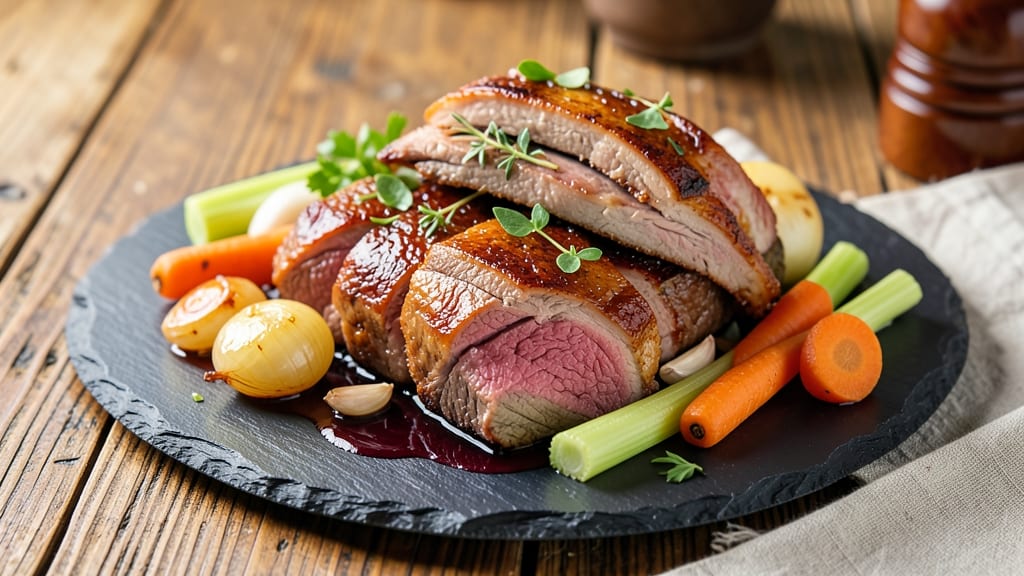
This beef and pork recipe transforms humble cuts into a restaurant-worthy meal where rich, caramelized roots meet tender meats in a single pan. 💛 I developed this after years of testing braising techniques that preserve moisture while building deep, complex flavors—perfect for weeknight dinners that feel like a celebration.
The secret lies in the slow cook's ability to melt collagen from both beef and pork simultaneously, creating a sauce so velvety it clings to every bite.
What makes this dish special is its balance: the beef's depth contrasts beautifully with pork's natural sweetness, while caramelized roots add texture and natural sweetness that cuts through the richness. You'll start with a simple sear to develop fond, then braise everything together until the meats fall apart effortlessly.
The result is a dish that's hearty enough for a family dinner but elegant enough for guests, all with minimal cleanup.
By the time you serve it, you'll have a plate that's impossible to resist—tender beef and pork swimming in a glossy, aromatic sauce, surrounded by caramelized vegetables that add both color and crunch.
The flavors develop as they cook, transforming simple ingredients into something extraordinary. This is the kind of meal that makes you want to cook all week.
The beauty of this recipe is its versatility. Serve it over crusty bread to soak up every last drop of sauce, or pair it with a bright green salad to balance the richness.
Leftovers reheat beautifully, making it perfect for meal prep. Let's create this one-pan masterpiece that brings comfort and sophistication together.
Ingredients for beef and pork
Six ingredients transform humble cuts into restaurant-worthy braised perfection in one pan.
| Ingredient | Amount | Notes |
|---|---|---|
| Chuck Roast 🥩 | 2 lb | Well-marbled for tenderness |
| Pork Shoulder 🐖 | 2 lb | Bone-in preferred |
| Yellow Onions 🧅 | 3 whole | Cut into even wedges |
| Carrots 🥕 | 4 whole | Baby carrots or thick sticks |
| Celery Stalks 🧄 | 4 whole | Cut into 2-inch pieces |
| Garlic Cloves 🧄 | 8 cloves | Smashed for flavor |
| Tomato Paste 🍅 | ½ cup | Smooth, not chunky |
| Red Wine 🍷 | 1 cup | Bold dry variety |
| Beef Broth 💧 | 3 cups | Low-sodium preferred |
| Olive Oil 🫒 | ¼ cup | Extra-virgin for richness |
| Fresh Thyme 🌿 | ¼ cup | Leaves only, stems removed |
| Fresh Rosemary 🌿 | ⅛ cup | Finely chopped sprigs |
| Bay Leaves 🌿 | 2 whole | Dried, standard size |
| Salt 🧂 | 1 ½ tbsp | Kosher or sea salt |
| Black Peppercorns 🌶️ | 1 tsp | Freshly cracked |
The beef and pork cuts are the foundation—chuck roast for beef's deep flavor and pork shoulder for natural sweetness. Look for marbled cuts at your local butcher or the meat department (I swear by Whole Foods or Costco for quality). If you can't find bone-in pork shoulder, bone-in chops work too—just trim excess fat. The vegetables? Organic carrots and celery from the store's produce section keep best, but any firm, fresh veggies will do. For the aromatics, garlic from the bulk bin has more punch than pre-minced jars—just smash the cloves with the side of your knife before adding.
No red wine? Dry sherry or beef broth works in a pinch—just add a splash of balsamic for depth. Fresh herbs wilt fast, so dried thyme and rosemary (at half the amount) are fine if you're short. The tomato paste can be the squeeze-tube kind from Trader Joe's—it's perfect for small batches and lasts forever. For extra richness, add 1 tbsp of unsalted butter at the end. The bay leaves? Standard dried leaves are fine, but fresh ones infuse more flavor if you've got them. If you're prepping ahead, par-cook the vegetables first—they'll caramelize faster during the braise.
This dish tastes even better the next day—plan ahead and make extra. Store in the fridge for up to 5 days or freeze portions for 3 months. I like to portion into glass containers for easy reheating—just add a splash of broth if it's too thick. The sauce thickens as it cools, so thin with warm water if needed. For serving, crusty bread soaks up every last drop, and a simple arugula salad with lemon vinaigrette cuts through the richness. Leftovers reheat beautifully—just cover the pan and warm on low heat.
Why You'll Love This Recipe
- One-Pot Magic: I swear by this—just toss the chuck roast, pork shoulder, and those classic veggies (onion, carrots, celery) into one pot with broth, and let it simmer. No chopping boards cluttered, no extra pans to wash. That’s my kind of dinner.
- Deep, Savory Love: The beef and pork melt together into something rich and tender, while the onions caramelize just enough to add that sweet, smoky depth. Honestly, the first bite makes me forget it’s a weeknight meal.
- Leftovers That Beg for More: This recipe practically demands seconds, which means I get to enjoy it again for lunch or pack it for work. The flavors only get better after a night in the fridge—trust me, I’ve tested it.
- Budget-Friendly Powerhouse: Chuck roast and pork shoulder stretch for a crowd without breaking the bank, and the veggies add bulk for next to nothing. It’s the kind of dish that makes me feel like I’m feeding a football team, even if it’s just my family.
Step-by-step instructions for beef and pork braising masterpiece
Here's how to transform tough cuts into melt-in-your-mouth perfection.
🔥 Step 1: Sear the Meats for Deep Flavor
Heat the 0.25 cup olive oil in a large Dutch oven over medium-high heat until shimmering. Pat the 2 lb chuck roast and 2 lb pork shoulder completely dry with paper towels—this ensures maximum browning. Season both pieces generously with 1.5 tbsp salt and 1 tsp black peppercorns, pressing the spices into the meat so they stick.
Sear the chuck roast on all sides for 4-5 minutes per side until deeply browned. Remove and set aside. Repeat with the pork shoulder, then transfer both meats to a plate. You want that rich, caramelized crust—it's the foundation of your braising liquid's flavor. Don't rush this step; patience here makes all the difference.
👨🍳 Step 2: Build the Caramelized Vegetable Base
In the same Dutch oven, add the 3 whole yellow onions (cut into even wedges), 4 whole carrots (cut into 2-inch pieces), and 4 whole celery stalks (cut into 2-inch pieces). Cook over medium heat for 8-10 minutes, stirring occasionally, until the vegetables begin to soften and develop golden spots. This is where that sweet, caramelized flavor starts building.
Add the 8 cloves garlic cloves (smashed) and cook for another 1 minute until fragrant. Stir in the 0.5 cup tomato paste, spreading it evenly across the bottom of the pot. This will form the rich, deep base for your braising liquid. The paste might look like too much at first, but trust me—it's exactly what you need for that perfect balance of sweetness and depth.
🍳 Step 3: Deglaze and Simmer the Braising Liquid
Pour in the 1 cup red wine and scrape up all those delicious browned bits from the bottom of the pot with a wooden spoon. This deglazing step captures all the meaty flavors that would otherwise get lost. Let the wine simmer for 3-4 minutes until it reduces by about half, concentrating its flavors.
Add the 3 cups beef broth, 0.25 cup fresh thyme, 0.125 cup fresh rosemary, and 2 whole bay leaves. Return the meats to the pot, along with any accumulated juices from the plate. Bring everything to a gentle simmer—you should see small bubbles forming, but it shouldn't be a rolling boil. This gentle cooking is what transforms tough cuts into tender perfection.
⏰ Step 4: Braise Until Fork-Tender
Cover the Dutch oven and transfer it to a 325°F oven. Here's where the magic happens: braise for 3-3.5 hours until the meats are fork-tender. You'll know they're ready when a knife slides in easily and the meat pulls apart with gentle pressure. The pork shoulder should be falling off the bone, and the chuck roast should be incredibly tender.
I check for doneness by piercing the thickest part of the chuck roast with a meat thermometer—it should read 205°F. If you don't have a thermometer, cut into the thickest piece to check for tenderness. The vegetables should be completely tender as well, absorbing all those rich flavors from the braising liquid. This is the moment you've been waiting for—when all that tough meat transforms into something truly special.
🍽️ Step 5: Rest and Serve with Rich Sauce
Remove the meats from the pot and let them rest on a cutting board for 15-20 minutes. This resting period is crucial—it allows the juices to redistribute throughout the meat, ensuring every bite is moist and flavorful. While the meats rest, skim any excess fat from the braising liquid if desired, then return the pot to the stove over medium heat.
Simmer the sauce uncovered for 5-7 minutes to thicken slightly. The vegetables should be tender and infused with all the meaty flavors. Shred the pork shoulder with two forks, then slice the chuck roast against the grain. Serve the meats with the rich braising sauce spooned over the top, alongside the caramelized vegetables. This dish tastes even better the next day as the flavors continue to meld together.
Pro Tips For Making Beef And Pork
- SEAR IN BATCHES: Chuck roast and pork shoulder can overwhelm a pan—trust me, I’ve turned my kitchen into a smoke bomb. Sear the beef first in one batch (4-5 minutes per side), then move it aside and repeat with the pork. Crowding the pan steams the meat instead of browning it, and that’s when flavor gets lost in the sauce.
- CUT ONIONS IN CHUNKS: I used to dice onions for this recipe, but they disappear into the meat. Instead, slice them into ½-inch chunks—they’ll stay visible, soften evenly, and add texture without turning to mush. Same goes for carrots and celery: leave them in ½-inch pieces so they hold their shape.
- CHECK TEMPS EARLY: Pork shoulder hits 145°F fast, while chuck roast needs 195°F for tender perfection. Pull the pork out at 140°F—it’ll rest to 145°F—and let the beef ride until it’s fork-tender. I’ve ruined a pot roast by ignoring this; don’t be that person.
- USE COLD WATER FOR VEGETABLES: Dump your chopped veggies into an ice bath (yes, cold water) for 10 minutes before cooking. It stops them from bleeding starch and keeps them crisp. I was skeptical until I tried it—they stay bright and sweet instead of turning into a sad, mushy pile.
Creative variations of beef and pork
Southeast BBQ Fusion
This is my take on the dish inspired by my years on the Southeast BBQ circuit—where pork reigns supreme but beef brings depth. Swap the red wine for ½ cup apple cider vinegar and ½ cup bourbon (I use Buffalo Trace) for a tangy, smoky twist.
Add 2 tbsp smoked paprika and 1 tbsp brown sugar to the braising liquid for a Carolina-style kick. Serve with cornbread muffins and a side of collard greens sautéed with garlic. 🔥
Italian-Inspired Osso Buco Style
Transform this into an Italian feast by adding 4 slices of pancetta (diced) to the Dutch oven during the searing step. Deglaze with 1 cup dry white wine instead of red, and add ½ cup crushed tomatoes and 2 sprigs fresh sage to the braising liquid.
The pork shoulder becomes the star—slice it thin against the grain for a dish that feels like you're dining in Milan. 🍷
Asian-Inspired Stir-Fry Fusion
For a quicker version, sear the meats as directed, then slice into ½-inch strips. Toss with 2 tbsp soy sauce, 1 tbsp honey, 1 tbsp grated ginger, and 1 minced jalapeño.
Stir-fry with the caramelized vegetables and add 1 cup sliced shiitake mushrooms for umami depth. Finish with sesame seeds and serve over jasmine rice. This version cooks in 30 minutes but packs the same bold flavors. 🌶️
Breakfast-Style Hash
Turn leftovers into a hearty breakfast by dicing the meats and mixing with 2 cups diced potatoes, 1 cup bell peppers, and 1 tsp smoked paprika. Pan-fry until crispy, then top with a fried egg and crumbled feta.
The sweetness of the caramelized roots pairs perfectly with the savory meats. Serve with toasted brioche for dipping. 🍳
Slow Cooker Adaptation
For hands-off cooking, sear the meats as directed, then transfer everything (including vegetables) to a 6-quart slow cooker. Add the remaining ingredients and cook on LOW for 8 hours or HIGH for 5 hours.
The slow cooker keeps the meats tender while developing deep flavors. Perfect for busy weeknights when you want restaurant-quality results with minimal effort. ⏰
Global Spice Variations
Want to travel the world without leaving your kitchen?
Try these twists: Moroccan (add 1 tsp cumin, 1 tsp coriander, and ½ tsp cinnamon); Mexican (swap wine for beer, add 1 chipotle pepper in adobo, and cilantro); or Indian (use coconut milk instead of broth and add turmeric and garam masala).
Each version keeps the braising technique but transforms the flavor profile completely. 🗺️
Nutrition facts
Frequently asked questions
Can I substitute pork shoulder with another cut?
For this braise, pork belly adds incredible fat and flavor, while pork ribs work well if you prefer meat that falls apart easily. If using ribs, remove the membrane first and trim excess fat. Pork chops (bone-in) can also work, but reduce cooking time to 2-2.5 hours since they're thinner. The key is choosing a cut with good marbling for juiciness.
How do I know when the beef is perfectly tender?
Use a meat thermometer for precision: the chuck roast should reach 205°F (it'll pull apart easily). Without one, cut into the thickest part—if it separates with gentle pressure and the juices run clear, it's done. The pork should be fork-tender too, with no pink remaining. Never overcook—the meat will continue cooking slightly while resting. For extra tenderness, add 1 tbsp baking soda to the braising liquid (it tenderizes collagen).
Can I make this recipe in an Instant Pot?
Yes! Sear the meats as directed, then add all ingredients to the Instant Pot. Cook on HIGH PRESSURE for 60 minutes, then release pressure naturally. The pork will be slightly less fall-apart tender than oven-braised, but still delicious. For extra richness, finish with 1 tbsp butter and 1 tsp soy sauce after pressure release. The Instant Pot version cuts cooking time to 1.5 hours total, including prep.
What's the best way to reheat leftovers?
Reheat gently to prevent drying out. Place leftovers in a lightly oiled baking dish with a splash of broth or water, cover with foil, and warm in a 300°F oven for 20-25 minutes. For stovetop reheating, simmer on low heat with the lid slightly ajar for 10-12 minutes. Never microwave uncovered—it makes the sauce watery. Leftovers keep well for 5 days refrigerated or 3 months frozen. The flavors actually deepen overnight!
Why did my meat turn out dry?
Most likely, the oven temperature was too high (above 350°F) or the lid wasn't sealed properly. Braising requires moisture and low heat—the Dutch oven should be snug. Also, check if you skimmed too much fat from the sauce (fat helps retain moisture). For future attempts, add ½ cup extra broth if the sauce looks thin during cooking. Always rest the meat 15-20 minutes before serving to redistribute juices.