
Soups & Stews
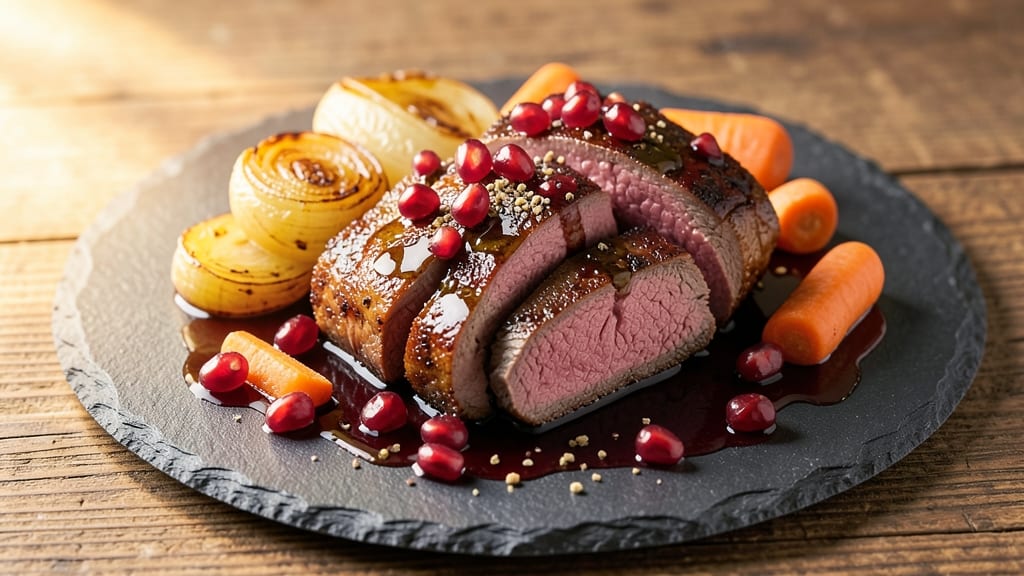
This beef and pomegranate recipe transforms humble ingredients into a dish that feels like a celebration—rich red wine braising meets bursting ruby jewels of pomegranate for a balance of deep savory and bright sweetness.
The secret lies in slow-cooked beef that becomes fork-tender while absorbing the wine's depth, then brightened by the tart-sweet pop of fresh pomegranate arils at the end. This isn't just a stew; it's a technique that turns weeknight dinners into restaurant-worthy moments with minimal effort.
The beauty of this recipe is its versatility—equally at home in a rustic stoneware pot or elegant dinnerware. Start with chuck roast for affordability and flavor, then let it braise until the meat nearly falls apart.
The red wine base builds complexity, while onions and garlic form the aromatic foundation. What sets this apart is the final touch: a handful of pomegranate arils scattered over the top, their vibrant color and juicy crunch cutting through the richness.
It's a technique borrowed from Middle Eastern cuisine but simplified for home cooks.
What you'll end up with is a dish that's deeply satisfying—warm, aromatic, and visually stunning. The beef is melt-in-your-mouth tender, the sauce velvety with just the right balance of acidity and sweetness. Serve it over mashed potatoes for comfort or with crusty bread to soak up every last drop.
The pomegranate arils add a refreshing contrast, making each bite feel special. This recipe proves that elegant flavors don't require complicated techniques—just patience and a few key ingredients.
Pair it with a simple cucumber-yogurt salad or roasted vegetables to round out the meal. The bright acidity of the salad will complement the richness of the braise, while the earthy notes of roasted veggies add another layer of depth.
Leftovers keep well for up to 4 days, making this a perfect meal prep option too. Let's get started on creating a dish that feels like a celebration every time.
Ingredients for beef and pomegranate
Transform humble pantry staples into a restaurant-worthy braise with ruby jewel accents.
| Ingredient | Amount | Notes |
|---|---|---|
| Chuck Roast 🥩 | 2 ½ lb | Well-marbled for tenderness |
| Dry Red Wine 🍷 | 1 ½ cups | Bold variety like Cabernet Sauvignon |
| Yellow Onions 🧅 | 1 whole | Thinly sliced for even cooking |
| Garlic Cloves 🧄 | 6 cloves | Minced for aromatic depth |
| Carrots 🥕 | 4 whole | Cut into thick rounds |
| Tomato Paste 🍅 | 2 tbsp | For rich umami base |
| Beef Broth 💧 | 2 cups | Low-sodium preferred |
| Fresh Pomegranate Arils 🍇 | ½ cup | Freshly popped from seed |
| Fresh Thyme 🌿 | 2 tbsp | Chopped sprigs for brightness |
| Fresh Rosemary 🌿 | 1 tbsp | Chopped sprigs for earthy notes |
| Olive Oil 🫒 | 2 tbsp | Extra-virgin for searing |
| Salt 🧂 | 1 ½ tsp | Kosher or sea salt |
| Black Pepper 🌶️ | 1 tsp | Freshly cracked for heat |
| Honey 🍯 | 1 tbsp | For subtle sweetness balance |
The chuck roast is the heart of this dish—look for well-marbled cuts with visible fat streaks for maximum tenderness. Whole Foods or specialty butchers often carry premium cuts, but most grocery stores stock reliable options. If using a whole roast, trim excess fat but leave some for flavor. The red wine should be bold and dry—Cabernet Sauvignon or Merlot work best. For the pomegranate, fresh arils are essential—avoid pre-seeded packets, which lack juiciness. If you can't find fresh, pomegranate molasses can substitute at half the amount for a different flavor profile.
No red wine? Substitute beef broth with a splash of balsamic vinegar for depth. Fresh thyme and rosemary can be swapped for dried at one-third the amount, though fresh delivers superior aroma. The tomato paste is non-negotiable for umami—Rao's or Bertolli brands are reliable. For the pomegranate, if you must use seeds, pick through carefully to remove any lingering membranes. The honey adds subtle sweetness—local raw honey enhances flavor, but store-bought works fine. If you prefer less sweetness, reduce to 1 teaspoon or omit entirely.
This braise develops deeper flavor over time—plan for at least 3 hours of cooking. Store leftovers in an airtight container for up to 4 days in the fridge, where flavors actually improve. For longer storage, freeze for up to 3 months. The pomegranate arils should be added just before serving to preserve their vibrant color and crisp texture. When reheating, add a splash of water or broth to prevent the sauce from thickening too much. The dish pairs beautifully with mashed potatoes or crusty bread to soak up the rich sauce.
Why You'll Love This Recipe
- One-Pot Magic: I swear by this—just dump everything in a Dutch oven (onion, garlic, carrots, wine, beef) and let it slow down. No chopping, no fuss, no stress. The chuck roast turns tender while you’re still deciding what to watch on TV.
- Wine-Infused Richness: That dry red wine doesn’t just cook off—it soaks into the beef, giving it a deep, velvety flavor. Pair it with the bright, juicy pomegranate seeds at the end, and suddenly, you’ve got a dish that tastes like a fancy restaurant’s secret.
- Leftovers That Beg for More: Between us, this recipe makes way more than I need for dinner. The next day, I reheat slices with crusty bread—still juicy, still packed with flavor. Honestly, I’ve been known to eat it cold in a sandwich (don’t judge).
- Budget-Friendly Feast: A chuck roast stretches for days, and the other ingredients? Basic pantry stuff. You’re getting restaurant-quality flavor for a fraction of the cost. Plus, the pomegranate seeds add a pop of color and freshness without breaking the bank.
Step-by-step instructions for ruby jewels in savory red wine braise
A rich, aromatic braise where tender beef meets jewel-like pomegranate arils in a deep red wine sauce.
Sear the Chuck Roast for Deep Flavor
Pat the 2.5 lb chuck roast dry with paper towels—this ensures a perfect crust. Heat 2 tablespoons olive oil in a heavy Dutch oven over medium-high heat until shimmering. Place the roast in the pan and sear for 4-5 minutes per side until deeply browned. Don't rush this step; the caramelized crust locks in flavor and moisture.
Remove the roast and set it aside. You'll notice the oil will darken and develop rich, meaty fond at the bottom—this is pure flavor that will dissolve into the braising liquid. If the fond starts to burn, reduce the heat slightly, but keep it hot enough to maintain that deep sear.
Build the Aromatic Base
In the same Dutch oven, add 1 whole yellow onion, sliced thinly, and cook for 5 minutes until softened and lightly golden. Add 6 cloves garlic cloves, minced, and cook for 30 seconds until fragrant—don't let the garlic burn, or it will turn bitter. Stir in 2 tablespoons tomato paste and cook for 1 minute to deepen its umami flavor.
Add 4 whole carrots, cut into thick rounds, and sprinkle with 1.5 teaspoons salt and 1 teaspoon black pepper. Pour in 1.5 cups dry red wine and scrape up any browned bits from the bottom of the pan. This deglazing step captures all the flavor you worked so hard to develop in the searing process.
Braise Until Tender
Return the chuck roast to the Dutch oven. Pour in 2 cups beef broth, cover, and bring to a simmer over medium heat. Once simmering, reduce heat to low and let it cook for 2.5 to 3 hours—this slow cooking breaks down the tough fibers in the beef, transforming it into fork-tender perfection. Check occasionally to ensure there's enough liquid; if it reduces too much, add a splash of water or broth.
After 2 hours, add 2 tablespoons fresh thyme, 1 tablespoon fresh rosemary, and 1 tablespoon honey to the pot. The honey adds a subtle sweetness that balances the acidity of the red wine and enhances the natural sweetness of the pomegranate arils you'll add later. Stir gently to distribute the herbs and honey evenly.
Finish with Pomegranate Arils
When the beef is fork-tender—you should be able to pierce it easily with a fork—remove it from the pot and set it aside. Skim any excess fat from the braising liquid, then stir in 0.5 cup fresh pomegranate arils. The arils will soften slightly but retain their vibrant ruby color and delicate crunch, adding a burst of freshness to each bite.
Return the beef to the pot and simmer for an additional 10-15 minutes to allow the flavors to meld. Taste the sauce and adjust seasoning if needed—you might need a touch more salt or pepper to balance the flavors. The braising liquid should coat the back of a spoon and cling beautifully to the beef.
Rest and Serve
Transfer the beef and braising liquid to a serving platter, spooning the sauce over the top. Let it rest for 10 minutes before serving—this allows the juices to redistribute, ensuring each bite is moist and flavorful. The beef should be fork-tender, with a rich, caramelized crust, and the sauce should be velvety with pockets of vibrant pomegranate arils.
Serve the braised beef with the ruby-studded sauce spooned over the top, accompanied by crusty bread or roasted potatoes to soak up every last drop. The contrast of the tender beef, sweet pomegranate, and deep red wine sauce creates a harmonious balance of flavors and textures that will impress even the most discerning diners.
Pro Tips For Making Beef And Pomegranate
- Sear the Chuck Roast Hard: Don’t just quick-brown the meat—get that roast screaming hot in a dry pan for 3-4 minutes per side until deep brown. I used to rush this, and the sauce never tasted as rich. A dark crust locks in flavor and keeps the meat moist during long cooking.
- Deglaze with Cold Wine: After searing, let the pan cool for 30 seconds, then hit it with cold red wine. The shock stops the cooking process and lifts every caramelized bit off the bottom—no scraping required. Warm the wine first if you’re impatient, but don’t skip the chill entirely.
- Slice Onions Thinly: Cut yellow onions into ⅛-inch slices, not chunks. They’ll soften faster and blend into the sauce instead of sitting like sad, chewy lumps. I learned this the hard way when my first batch looked like onion salad in a stew.
- Add Pomegranate Late: Toss in seeds only in the last 5-10 minutes of cooking. The acid will break down if it simmers too long, turning sweet into bitter. Reserve a handful to garnish at the end—bright color and crunch make all the difference.
Storing and reheating this recipe
Refrigerator Storage
Let your braised beef cool completely before transferring to an airtight container—I use glass Pyrex with snap-on lids. Store in the fridge at 40°F or below for up to 4 days.
The flavors actually deepen as the beef and sauce meld further. When reheating, add 2-3 tablespoons of water or beef broth to prevent drying out. 💫
Freezer Storage
For longer storage, freeze the beef and sauce in a freezer-safe bag or glass container, leaving 1 inch headspace for expansion. Label with the date—it keeps well for 3 months.
Thaw overnight in the fridge before reheating. I avoid microwave reheating for this dish because it can make the sauce grainy. Instead, use a stovetop method for best texture. ❄️
Stovetop Reheating
My preferred method is to transfer the beef and sauce to a heavy-bottomed pot over medium-low heat. Add ¼ cup beef broth to loosen the sauce, then simmer uncovered for 10-15 minutes until heated through.
Stir occasionally to prevent sticking. The pomegranate arils should be added just before serving to preserve their freshness and vibrant color. 🔥
Slow Cooker Option
For reheating large batches, a slow cooker works beautifully. Set to low heat and cook for 2-3 hours with ½ cup beef broth added. The gentle heat keeps the beef tender and the sauce silky.
This method is perfect for feeding a crowd or meal prepping for the week. The pomegranate arils should still be added fresh at serving time. 💡
Pomegranate Tips
Fresh pomegranate arils are essential for the best texture and flavor. If reheating leftovers, save the arils separately and add them back just before serving. For extra brightness, sprinkle with fresh parsley or cilantro after reheating.
The arils will soften slightly but still provide that juicy crunch that makes the dish special. 🍇
Serving Suggestions
Serve your reheated beef over creamy mashed potatoes or with crusty sourdough bread to soak up the sauce. For a lighter option, pair with a cucumber-yogurt salad to balance the richness. The pomegranate arils add a refreshing contrast that makes every bite feel special. 🥖
Nutrition facts
Frequently asked questions
Can I substitute another cut of beef for chuck roast?
For a quicker cook, use beef short ribs (braise for 2 hours) or stew beef (braise for 2.5 hours). Avoid lean cuts like sirloin—they'll dry out. Chuck roast is ideal because its fat content keeps it tender during long cooking.
How do I make this dish vegetarian?
Swap the beef for mushrooms (like portobello or cremini) or lentils for protein. Use vegetable broth instead of beef broth, and add 1 teaspoon smoked paprika for depth. The pomegranate still adds that bright contrast!
What if I don't have fresh pomegranate arils?
Try pomegranate molasses (1 tablespoon) or dried cranberries (2 tablespoons, chopped). For color, add red food coloring to the sauce (½ teaspoon) or sprinkle with pomegranate seeds (from the store) at the end. The flavor won't be identical, but it'll still look stunning!
Can I make this in an Instant Pot?
Yes! Sear the beef first, then add all ingredients except pomegranate. Cook on high pressure for 45 minutes, then natural release. Finish with arils and adjust seasoning. The Instant Pot cuts cooking time to 1 hour but requires extra liquid (add ½ cup water).
Why does my sauce look too thin?
Simmer uncovered for 10-15 minutes to reduce. If it's still thin, mix 1 tablespoon cornstarch with 2 tablespoons water, stir into the sauce, and simmer until thickened. Never skip the pomegranate—it adds natural sweetness that balances the sauce's acidity!