
Soups & Stews
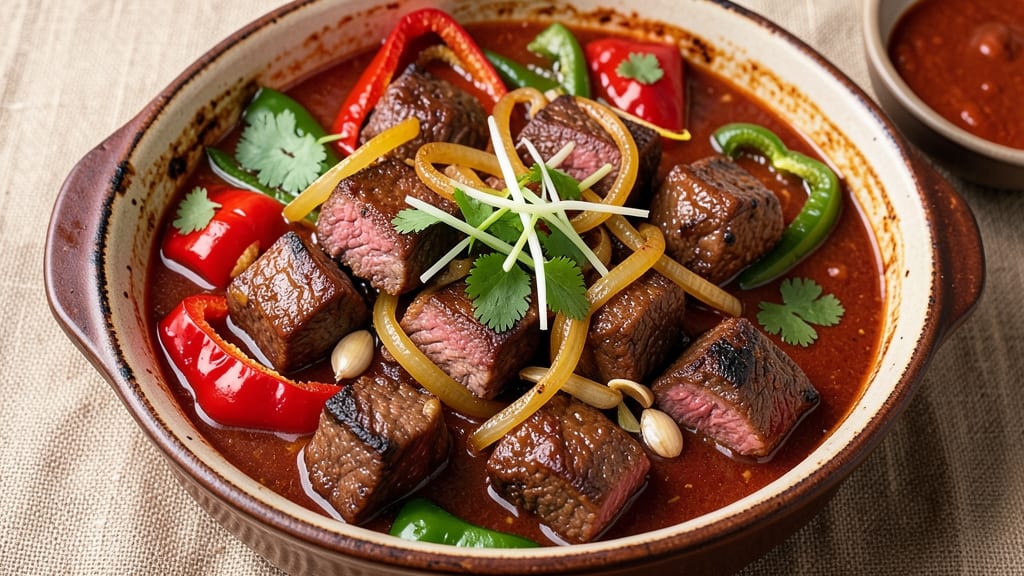
This beef and pepper stew recipe delivers restaurant-quality depth with slow-simmered onions that build layers of umami flavor. The secret lies in browning the beef properly and letting the vegetables caramelize—transforming tough cuts into fork-tender meat swimming in a rich, aromatic broth.
I developed this version after years of testing, balancing traditional techniques with modern convenience for home cooks.
The recipe starts with searing beef chunks to lock in juices, then builds flavor through sautéed onions and peppers that develop sweetness over two hours of simmering. A touch of tomato paste deepens the color and complexity, while herbs like thyme and bay leaf infuse the broth with earthy notes.
The result is a hearty stew that's foolproof for weeknight dinners but impressive enough for company.
What makes this stew special is its versatility—it works equally well on the stovetop or in a slow cooker, making it perfect for busy schedules. The beef becomes melt-in-your-mouth tender, while the peppers retain their vibrant color and slight crunch.
Serve with crusty bread or over rice to soak up every last drop of that flavorful sauce.
This isn't just another beef stew; it's a one-pot masterpiece that delivers comfort food at its finest. The slow cooking process transforms simple ingredients into something extraordinary, proving that great flavor doesn't require complicated techniques. Ready to make dinner that tastes like a home-cooked hug?
Ingredients for beef and pepper stew
Sixteen ingredients transform into a restaurant-worthy beef and pepper stew with deep umami layers.
| Ingredient | Amount | Notes |
|---|---|---|
| Chuck Roast 🥩 | 3 lb | Well-marbled, cut into 1.5-inch cubes |
| Yellow Onions 🧅 | 3 whole | Medium size, sliced into 1/4-inch rounds |
| Red Bell Peppers 🌶️ | 2 whole | Stripped of seeds, sliced into 1/2-inch strips |
| Green Bell Peppers 🌶️ | 1 whole | Stripped of seeds, sliced into 1/2-inch strips |
| Garlic Cloves 🧄 | 6 cloves | Minced, not pre-minced jarred |
| Tomato Paste 🍅 | 2 tbsp | High-quality, no sugar added |
| Dry Red Wine 🍷 | 1 cup | Bold variety like Cabernet Sauvignon |
| Beef Broth 🥫 | 4 cups | Low-sodium, homemade preferred |
| Fresh Thyme 🌿 | 2 tbsp | Leaves only, stems removed |
| Bay Leaves 🌿 | 2 whole | Dried, standard size |
| Olive Oil 🫒 | 2 tbsp | Extra-virgin, for searing |
| Diamond Crystal Kosher Salt 🧂 | 1 ½ tsp | For seasoning, adjust to taste |
| Freshly Ground Black Pepper 🌶️ | 1 tsp | Coarsely ground |
| All-Purpose Flour 🌾 | 2 tbsp | For thickening if needed |
The beef selection is non-negotiable—chuck roast delivers that melt-in-your-mouth texture after slow cooking, while sirloin or ribeye will stay tough. Most grocery stores carry chuck roast in the meat department, often pre-cut into cubes for convenience. For the best flavor, look for cuts with visible marbling. Whole Foods and Costco typically offer high-quality options, but even standard supermarket brands work if you trim excess fat. The onions are the flavor foundation; yellow onions provide the sweetness that caramelizes beautifully during the two-hour simmer, while the bell peppers add vibrant color and mild sweetness without overpowering the beef's richness.
No red wine on hand? Dry sherry or additional beef broth works in a pinch, though the wine's acidity balances the stew's richness. Fresh thyme is ideal, but dried thyme at one-third the amount suffices if needed. The tomato paste adds depth without tomato flavor—Rao's brand is a reliable choice, but any high-quality paste will do. Bell peppers can be swapped for zucchini or mushrooms for a different texture, though they won't caramelize as beautifully. If you're using jarred minced garlic, reduce the amount by half—fresh garlic has more punch. The beef broth should be low-sodium to avoid over-salting the dish, and homemade broth adds an extra layer of complexity.
This stew tastes even better the next day as flavors meld, so double the recipe if you have leftovers to enjoy. Store in an airtight container in the fridge for up to 5 days, or freeze for 3 months by portioning into meal-sized containers. Reheat gently on the stove with a splash of broth to restore moisture. For slow cooker versions, brown the beef first for maximum flavor—3-4 hours on low yields perfectly tender results. The dish reheats beautifully, making it ideal for meal prep. Serve with crusty bread or over rice to soak up every last drop of that rich, umami-packed sauce.
Why You'll Love This Recipe
- One-Pot Magic: That chuck roast practically melts itself—just sear it, toss in chopped veggies, and let the slow cooker do the work. No flipping pans, no stress, and honestly? The smell alone makes my kitchen feel like a hug.
- Sweet-Savory Balance: The red and green peppers caramelize into something almost candy-like, while the garlic and onions build this deep, umami base that sticks with you. It’s the kind of flavor that makes you slow down mid-bite—no joke.
- Leftovers That Shine: This stew only gets better after day two, especially when I reheat it with a splash of broth and a sprinkle of smoked paprika. My kids actually ask for it, and I’ve even frozen portions—proof it’s my go-to for lazy Wednesdays.
- Budget-Friendly Feast: Chuck roast stretches for miles, and bell peppers add color without costing a fortune. I’ve fed six people for under $15, and the leftovers fund my coffee habit for a week. That’s math I’ll take any day.
Step-by-step instructions for beef and pepper stew
Transform humble chuck roast into tender, deeply flavorful stew through precise technique.
Sear the Chuck Roast for Maximum Flavor
Heat a large Dutch oven over medium-high heat until hot. Add the 2 tablespoons olive oil and swirl to coat the bottom evenly. Working in batches if needed, add the 3 lb chuck roast cut into 1.5-inch cubes and sear undisturbed for 3-4 minutes per side until deeply browned.
This initial searing creates a flavorful crust called the Maillard reaction, which forms the foundation of your stew's depth. Don't rush this step—you'll know it's ready when the meat releases easily from the pan. Transfer the browned meat to a plate and set aside, leaving all the browned bits in the pot (they're pure flavor).
Build the Umami Base with Onions and Peppers
In the same Dutch oven, add 3 whole yellow onions sliced into ¼-inch rounds and cook for 8-10 minutes until softened and lightly caramelized. Add the 2 whole red bell peppers and 1 whole green bell pepper sliced into ½-inch strips, along with 6 cloves minced garlic, and cook for another 5 minutes until the peppers begin to soften.
Here's where the magic happens: the onions should develop a deep golden color and sweet aroma. If they start to stick, add 1-2 tablespoons of beef broth to deglaze. The peppers should maintain their shape but become tender enough to pierce easily with a fork. Remove the vegetables and set aside with the meat.
Develop the Rich Sauce Foundation
Return the Dutch oven to medium heat and stir in the 2 tablespoons tomato paste and 2 tablespoons all-purpose flour, cooking for 1 minute to toast the flour and deepen the tomato flavor. Slowly pour in the 1 cup dry red wine, scraping up all the browned bits from the bottom with a wooden spoon.
Let the wine simmer for 3-4 minutes until reduced by half. This reduction intensifies the wine's flavor and removes the alcohol. Add the 4 cups beef broth, 1.5 teaspoons kosher salt, 1 teaspoon black pepper, 2 tablespoons fresh thyme, and 2 bay leaves, then bring to a gentle simmer.
Slow Cook Until Fork-Tender
Return the meat and vegetables to the pot, stirring to combine. Bring to a full simmer, then reduce heat to low and cover partially with a lid. Let the stew cook for 2.5-3 hours until the meat is fork-tender and easily pulls apart with minimal resistance.
I check for doneness by inserting a fork into the thickest piece of meat—it should slide in easily and the meat should separate cleanly. The stew should have thickened slightly and developed a rich, velvety consistency. If it's too thin, mix together 1 tablespoon flour with 1 tablespoon cold water and stir it into the stew to thicken.
Rest and Adjust Seasoning
Remove the stew from heat and let it rest for 15-20 minutes covered. This resting period allows the flavors to meld and the meat to reabsorb any juices. Remove and discard the bay leaves before serving.
Taste and adjust seasoning if needed—this is where you can fine-tune the balance. The stew should be rich with umami flavor from the slow-cooked onions, slightly sweet from the peppers, and deeply savory from the meat. Serve hot with crusty bread to soak up every last drop of that velvety sauce.
Pro Tips For Making Beef And Pepper Stew
- Sear the Chuck First: I learned this the hard way—skipping the sear means flavorless beef. Pat the roast dry, then hit it with high heat in a heavy pot for 3-4 minutes per side until deep brown. That crust locks in juices and builds depth that slow cooking alone can’t replicate.
- Slice Peppers Evenly: Bell peppers are stubborn—uneven cuts mean some burn, others stay raw. Cut them into ½-inch strips (not rings) and blanch them in boiling water for 30 seconds first. This softens them faster and keeps the stew from looking like a vegetable char festival.
- Salt the Meat Twice: Don’t just season the chuck once—add half the salt before searing, then sprinkle the rest over the raw onions and peppers before they hit the pot. The first salt breaks down the meat fibers early, and the second ensures even seasoning throughout the long cook.
- Use Garlic Paste (Not Whole Cloves): Minced garlic burns in 30 seconds flat, and whole cloves turn to bitter sludge. For this stew, mix 2 tablespoons of garlic paste into the onions early—it distributes evenly and infuses flavor without turning the dish into a bitter memory. (Yes, even if you’re skeptical.)
Serving suggestions for this beef and pepper stew
Crusty Bread Pairing
Nothing beats this stew with a warm, crusty loaf of sourdough or baguette to soak up every last drop of sauce. I love using French baguettes from the bakery section—their crisp exterior and soft interior make them perfect.
For extra flair, brush the bread with garlic-infused olive oil and sprinkle with flaky sea salt before serving. 🥖
If you prefer something heartier, try rustic Italian bread with a thick crust. A ciabatta roll works wonderfully too—its airy holes trap the stew's rich flavors. For a make-ahead option, toast slices and store in a paper bag at room temperature for up to 3 days.
Rice or Pasta Base
For a more substantial serving, pair your stew with jasmine rice or arborio rice—both absorb the flavorful broth beautifully. Cook the rice separately and serve it alongside the stew, letting everyone create their own bowls.
I often use 1 cup rice per 2 servings of stew to balance the meal. 🍚
For a pasta option, try short pasta shapes like penne or rigatoni. Cook the pasta al dente and toss it with a spoonful of the stew's sauce before serving. The pasta soaks up the flavors while adding a satisfying texture contrast to the tender beef.
Fresh Greens Balance
A simple arugula salad with lemon vinaigrette cuts through the richness of the stew beautifully. Toss 4 cups baby arugula with 2 tablespoons olive oil, 1 tablespoon fresh lemon juice, and a pinch of salt and pepper.
The peppery greens provide a refreshing contrast to the hearty stew. 🌿
For a warmer option, serve sautéed spinach with a sprinkle of Parmesan cheese. Cook 4 cups fresh spinach in a pan with 1 tablespoon butter for 2-3 minutes until wilted, then finish with 2 tablespoons grated Parmesan. This adds a touch of elegance without overpowering the main dish.
Cheese Board Finale
Turn your stew into a full meal by serving it with a cheese board featuring aged cheddar, brie, and Gouda. The cheeses complement the stew's umami depth while adding variety to the table. Pair with cured meats like prosciutto or salami for a well-rounded spread. 🧀
For a lighter touch, offer whipped feta or ricotta with a drizzle of honey and toasted nuts. The creamy textures balance the stew's richness, and the sweetness of the honey enhances the dish's overall harmony.
Nutrition facts
Frequently asked questions
Can I use a different cut of beef for this stew?
While chuck roast is ideal for its marbling and tenderness, you can substitute with stew meat (often sold pre-cut) or even brisket for a slightly different texture. Avoid lean cuts like sirloin—they won't become tender enough during the 2.5-3 hour cook time. If using brisket, cut it into 1-inch cubes and increase cooking time by 30-45 minutes.
How can I make this stew in a slow cooker?
Brown the beef in a skillet first for maximum flavor, then transfer everything to your slow cooker. Use low heat for 3-4 hours instead of stovetop simmering. The slow cooker's gentle heat works perfectly—just check occasionally to ensure the liquid doesn't reduce too much. Add ¼ cup beef broth if needed to maintain consistency.
What if I don't have red wine?
No problem! Substitute with 1 cup beef broth + 1 tablespoon balsamic vinegar for acidity, or use 1 cup dry sherry for a similar flavor profile. For a non-alcoholic option, try 1 cup apple cider vinegar + 1 tablespoon brown sugar. The key is maintaining the liquid volume while balancing the stew's richness.
Can I make this stew ahead of time?
This stew actually tastes better the next day as flavors meld! Store in an airtight container in the fridge for up to 5 days. Reheat gently on the stove over medium-low heat, adding 2-3 tablespoons beef broth if it's too thick. For freezing, portion into meal-sized containers and freeze for up to 3 months—thaw overnight in the fridge before reheating.
Why does my stew look too thin?
If your stew is too thin, it's likely because the meat released too much liquid during cooking. Create a slurry by mixing 1 tablespoon flour with 1 tablespoon cold water, then stir it into the stew. Simmer for 5 minutes to thicken. For prevention, use slightly less broth next time (3.5 cups instead of 4 cups) and let the stew reduce naturally during cooking.