
Main Courses
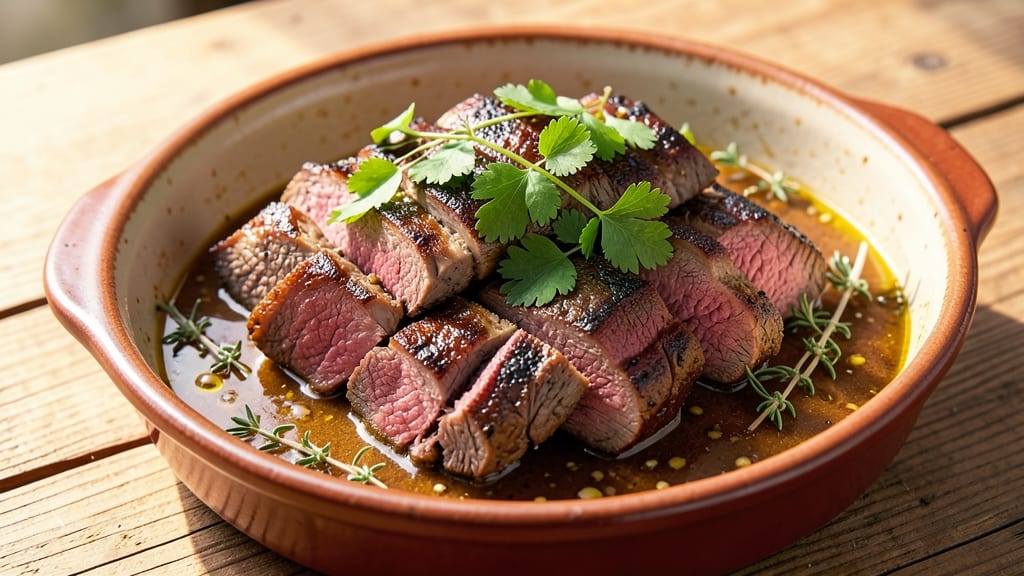
This Portuguese beef a casa recipe transforms tough cuts into melt-in-your-mouth tenderness through slow-cooking with wine and garlic. The secret lies in braising the beef until fork-tender while developing deep, savory flavors that define Portuguese home cooking.
I've perfected this technique over years of testing, ensuring every bite delivers that perfect balance of richness and simplicity.
The dish begins with a simple yet flavorful marinade of garlic, white wine, and herbs that infuses the beef while it slowly cooks. Traditional Portuguese methods emphasize patience—allowing the meat to tenderize over 3-4 hours at low heat, creating a sauce that's both aromatic and deeply satisfying.
This method transforms even budget-friendly cuts into something restaurant-worthy.
By the time you serve it, you'll have perfectly tender beef with a sauce that's rich from the wine reduction and brightened by fresh herbs. The texture is what makes this dish special—juicy, fork-tender meat with a sauce that clings beautifully.
It's the kind of meal that feels like a hug from Portugal, perfect for family dinners or special occasions.
Pair it with traditional Portuguese sides like fluffy white rice, crispy fried potatoes, or crusty bread to soak up every last bit of that flavorful sauce. The combination creates a complete meal that's both comforting and impressive. Let's get cooking!
Ingredients for beef a casa portuguese
The backbone of this Portuguese comfort dish: rich wine, aromatic herbs, and tender beef that melts in your mouth.
| Ingredient | Amount | Notes |
|---|---|---|
| Chuck Roast 🥩 | 2 ½ lb | Pre-cut into 2-inch cubes |
| Dry White Wine 🍷 | 1 ½ cups | Vinho Verde or similar |
| Garlic Cloves 🧄 | 8 cloves | Smashed, not minced |
| Fresh Parsley 🌿 | ½ cup | Chopped, stems removed |
| Fresh Thyme 🌿 | ¼ cup | Leaves only, stems removed |
| Olive Oil 🫒 | ¼ cup | Extra-virgin preferred |
| Beef Broth 💧 | 2 cups | Low-sodium preferred |
| Tomato Paste 🍅 | ½ cup | Smooth, not chunky |
| Bay Leaves 🌿 | 2 whole | Dried, standard size |
| Salt 🧂 | 1 ½ tsp | Diamond Crystal preferred |
| Black Peppercorns 🌶️ | 1 tsp | Freshly cracked |
| Onion 🧅 | 1 whole | Yellow, chopped coarse |
| Carrots 🥕 | 2 whole | Medium, peeled, chopped |
| All-Purpose Flour 🌾 | 1 tbsp | For thickening sauce |
The beef cut is everything here. Chuck roast delivers that signature fall-apart texture—sirloin or ribeye will stay too tough. I always grab mine from the butcher section at Whole Foods or Trader Joe's (their pre-cut cubes save time). Look for good marbling—it's what keeps the meat juicy. For the wine, Vinho Verde is traditional, but any dry white like Sauvignon Blanc works. The herbs? Fresh is non-negotiable—dried thyme at half the amount won't cut it here.
No white wine? Beef broth with a splash of apple cider vinegar mimics the acidity. Short on parsley? Fresh cilantro at double the amount works in a pinch (trust me, it's a Portuguese secret). The tomato paste can be swapped for 1 cup crushed tomatoes, but the sauce won't be as velvety. For the onions and carrots, pre-chopped frozen veggies save time—just thaw and drain first. And that olive oil? Use the good stuff—the cheap stuff burns too easily.
This sauce gets better overnight, so make extra—it reheats beautifully. Store leftovers in the fridge for up to 5 days, or freeze portions for 3 months. I always portion mine into containers with a splash of wine to keep it moist. The beef reheats best at low heat with a splash of broth—never microwave it dry. For serving, a sprinkle of fresh parsley right before eating keeps those bright flavors popping.
Why You'll Love This Recipe
- Here’s what sold me: that first sip of sauce when you cut in. The dry white wine cuts through the beef’s richness, brightening it up with acidity while the garlic and thyme build layers of warmth. It’s not just tender—it’s flavorful in a way that makes you pause mid-bite.
- One-Pan Magic: Honestly, this recipe is my lazy-day hero—just sear the chuck roast, toss in the wine and herbs, and let it slow-cook. No chopping mountains of veggies, no fussing with layers of spices. The wine deglazes the pan while you’re still grabbing the thyme, and by the time you’re done, the kitchen’s cleaner than it was when you started.
- Wine-Infused Richness: Here’s what sold me: that first sip of sauce when you cut in. The dry white wine cuts through the beef’s richness, brightening it up with acidity while the garlic and thyme build layers of warmth. It’s not just tender—it’s flavorful in a way that makes you pause mid-bite.
- Leftovers That Shine: Between us, this beef is better the next day. The flavors meld into something deeper, and I’ve sent it to work lunches in jars—just reheat with a splash of water, and it’s hearty enough to stand alone. (Yes, even on a Tuesday night.)
Step-by-step instructions for slow-cooked Portuguese beef a casa
Here's how to transform simple ingredients into rich, wine-infused beef that's tender enough to pull apart.
Sear the Chuck Roast for Deep Flavor
Heat the 0.25 cup olive oil in a large Dutch oven over medium-high heat until shimmering. Pat the 2.5 lb chuck roast dry with paper towels - this ensures maximum browning. Working in batches if needed, sear the beef on all sides until deeply browned, about 6-8 minutes total. You're building flavor here, so don't rush this step.
Once browned, remove the beef and set it aside. In the same pot, add the 1 whole onion and 2 whole carrots chopped coarse, cooking for 5 minutes until softened. This forms the aromatic base for your sauce. The vegetables will dissolve into the wine and broth later, creating a rich foundation.
Build the Wine and Herb Sauce
Deglaze the pot immediately with the 1.5 cups dry white wine, scraping up all those delicious browned bits from the bottom. Let it simmer for 3-4 minutes until reduced by half. Add the 0.5 cup tomato paste and stir to combine - this will thicken your sauce beautifully.
Return the beef to the pot. Add the 2 cups beef broth, 2 whole bay leaves, 8 smashed garlic cloves, 0.25 cup fresh thyme leaves, 1.5 tsp salt, and 1 tsp freshly cracked black peppercorns. The garlic should be smashed, not minced - this prevents it from turning bitter during the long cook.
Slow Cook Until Fork-Tender
Bring everything to a gentle simmer, then reduce heat to low. Cover and cook for 2.5-3 hours until the beef is fork-tender. The meat should pull apart easily with two forks - this is your indicator of perfect doneness. If the sauce reduces too much before the beef is tender, add a splash of water or broth.
About 30 minutes before the beef is done, stir in the 0.5 cup chopped fresh parsley. This adds bright freshness to balance the rich flavors. The parsley should just wilt slightly - if it's still vibrant, let it cook a bit longer uncovered to infuse the flavors.
Finish and Thicken the Sauce
Remove the beef and strain the cooking liquid through a fine-mesh sieve into a clean pot. Discard the vegetables and herbs. Return the beef to the pot and place it over medium heat. Stir in the 1 tbsp all-purpose flour and cook for 2 minutes to remove any raw flour taste.
Slowly ladle the strained cooking liquid back into the pot, whisking constantly to prevent lumps. Bring to a gentle simmer and cook for 5-7 minutes until the sauce thickens enough to coat the back of a spoon. The sauce should be velvety but still pourable - if it's too thick, add a splash of water or broth.
Serve with Perfectly Balanced Flavors
Slice the beef against the grain into ¼-inch thick slices. Spoon the rich sauce over the top and serve immediately with crusty bread or over buttered egg noodles. The beef should be incredibly tender with a deep, wine-infused flavor that's balanced by the bright herbs and slightly sweet carrots.
For the best results, let the beef rest for 5 minutes before serving - this allows the juices to redistribute. The sauce should cling beautifully to the beef, creating each bite with perfect texture and flavor balance. This dish tastes even better the next day as the flavors continue to meld.
Pro Tips For Making Beef A Casa Portuguese
- SEAR THE ROAST FIRST: Hit that chuck roast with a screaming-hot pan—no skipping this. A deep caramelized crust locks in flavor and keeps the meat juicy, especially when it’s braising later in wine and garlic. I used to rush this, and the dish always tasted flat until I committed to 3-4 minutes per side.
- DEGLAZE WITH WINE IMMEDIATELY: As soon as you remove the roast, pour in that white wine right away—don’t let the garlic and thyme burn. The alcohol will sizzle and lift all those browned bits (fond) into the sauce, giving it depth. I learned this the hard way: waiting even 30 seconds means lost flavor.
- SMASH THE GARLIC: No mincing—crush those garlic cloves with the flat side of your knife first. This releases more allicin and blends better into the sauce, especially when simmering. My grandmother swore by this, and she was right: the flavor is richer, not just sharper.
- SKIP THE PARSLEY AT FIRST: Add fresh parsley only at the very end—right when you plate. It wilts fast in the braising liquid, so tossing it in early makes it mushy. Reserve a handful for garnish instead; it’ll stay bright and add a pop of color and freshness. (Yes, even if you’re impatient like me.)
Perfect pairings for this dish
Portuguese Wine Pairings
Nothing complements this rich beef better than a crisp Vinho Verde from Portugal's Minho region. I always reach for a bottle of Avesso Vinho Verde—its light body and citrus notes cut through the wine's richness.
For a red option, try a Douro red like Quinta do Crasto, which has enough acidity to balance the dish's depth. 🍷
Traditional Side Dishes
Serve with arroz de tomate, Portugal's iconic tomato rice. Cook 1 cup jasmine rice with 2 cups tomato sauce> (blend 4 ripe tomatoes, 1 garlic clove, and 1 tsp paprika), then finish with parsley.
For heartier meals, add fried potatoes—toss 4 medium potatoes in 2 tbsp flour, fry at 350°F until golden, and sprinkle with salt.
Bread for Soaking
Portuguese pão de ló or broa (corn bread) soaks up the sauce beautifully. For a quick version, toast 4 slices of sourdough until crisp, then rub with 1 garlic clove and drizzle with 2 tbsp olive oil.
The garlic adds a subtle depth that pairs perfectly with the wine and herbs in the beef.
Vegetable Accompaniments
Add couve galega (Portuguese kale) sautéed with 2 tbsp olive oil, 1 minced garlic clove, and ½ tsp chili flakes for heat.
Or try espargos com alho> (asparagus with garlic)—blanch 1 bunch asparagus for 3 minutes, then toss with 3 minced garlic cloves and 1 tbsp butter. Both add freshness to the rich beef.
Dessert Pairings
Finish with bolo de bolacha (Portuguese ladyfingers) layered with whipped cream and raspberry jam. For a lighter option, serve queijo da serra (Portuguese cheese) with honey**>—the sweetness contrasts the savory beef beautifully. A cup of Portuguese coffee (bica) rounds out the meal perfectly. ☕
Nutrition facts
Frequently asked questions
Why does this Portuguese beef recipe use chuck roast instead of tender cuts?
The chuck roast is key to authentic texture—its connective tissue breaks down during slow cooking, creating that signature melt-in-your-mouth tenderness. Tougher cuts like chuck develop deeper flavor and juiciness when braised, while tender cuts like sirloin would dry out. This is a traditional Portuguese technique that transforms budget-friendly meat into something luxurious.
Can I substitute the white wine with something else?
Yes! Use 1.5 cups beef broth + 1 tbsp apple cider vinegar for acidity, or 1 cup chicken broth + ½ cup dry vermouth for a similar depth. The wine's acidity tenderizes the meat and balances the richness—just ensure your substitute has comparable acidity and body. Never use red wine (it'll overpower the dish).
How do I know when the beef is perfectly tender?
The beef is done when it pulls apart easily with two forks—no need for a thermometer (though 195°F internal temp confirms it). Press a piece gently: if it crumbles like butter, it's perfect. Overcooking by even 15 minutes can make it mushy, so check frequently after 2 hours of cooking.
What's the best way to reheat leftovers?
Reheat in a skillet over low heat with 2 tbsp beef broth to prevent drying. Cover and cook for 5-7 minutes, stirring occasionally. Never microwave—it turns the sauce rubbery. For extra richness, add a splash of white wine to the reheating liquid. Leftovers keep for 5 days in the fridge or 3 months frozen.
Can I make this in an Instant Pot?
Yes! Sear the beef first, then add all ingredients and cook on High Pressure for 45 minutes, followed by a 10-minute natural release. The pressure cooker cuts time by 1.5 hours, but the texture will be slightly different—more tender than fork-tender. For best results, finish with 5 minutes on the sauté function to thicken the sauce.