
Soups & Stews
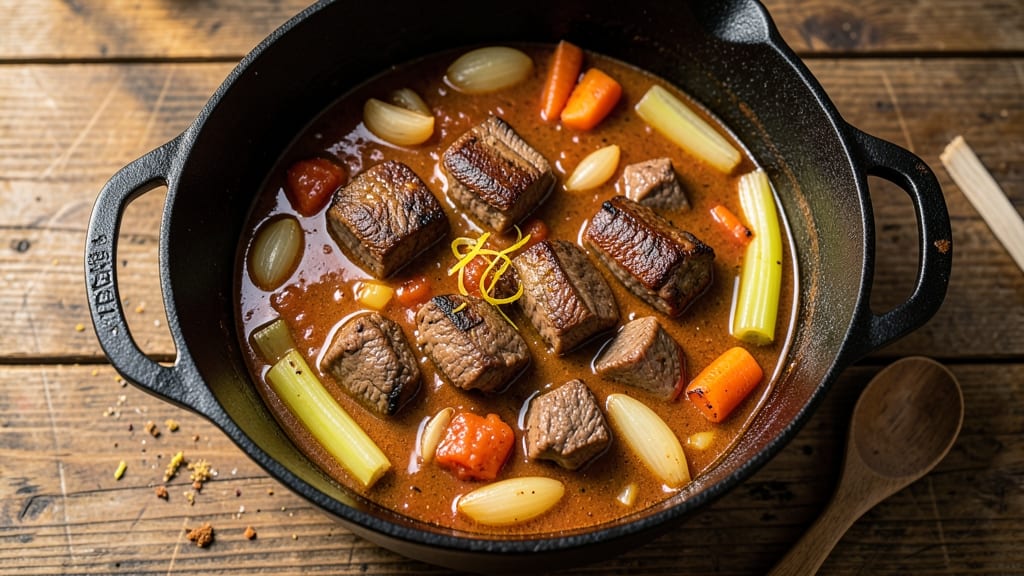
This basic beef stew recipe without wine delivers restaurant-quality depth using caramelized roots and slow-simmered umami. The secret lies in proper browning of the beef and building layers of flavor through aromatic vegetables and rich stock—no wine required.
What you'll end up with is a hearty, comforting stew that's perfect for cold evenings.
Starting with a well-browned beef creates the foundation for deep flavor, while onions, carrots, and celery form the classic "holy trinity" base. These vegetables caramelize beautifully during the cooking process, adding natural sweetness and complexity.
The long, slow simmer transforms tough cuts into fork-tender meat while developing a rich, velvety broth.
What makes this recipe truly special is how the flavors meld together over time. The combination of beef, vegetables, and herbs creates a symphony of tastes that's both comforting and satisfying. Each bite delivers tender beef, tender vegetables, and a flavorful broth that's rich without being heavy.
This beef stew pairs perfectly with crusty bread for soaking up every delicious drop of broth. The recipe scales beautifully for feeding a crowd or makes great leftovers for quick meals throughout the week. Let's get started on creating this comforting classic.
Ingredients for basic beef stew recipe without wine
Sixteen ingredients transform into a deeply flavorful beef stew without wine, relying on caramelized roots and slow-simmered umami.
| Ingredient | Amount | Notes |
|---|---|---|
| Beef Chuck Roast 🥩 | 3 lb | Well-marbled, cut into 1.5-inch cubes |
| Yellow Onions 🧅 | 2 whole | Medium, sliced into 1/2-inch pieces |
| Carrots 🥕 | 4 whole | Medium, peeled and cut into 1-inch chunks |
| Celery Stalks 🧆 | 4 whole | Cut into 1-inch pieces, including leaves |
| Garlic Cloves 🧄 | 6 cloves | Peeled and lightly crushed |
| Tomato Paste 🍅 | ½ cup | High-quality, unsweetened |
| Beef Stock 💧 | 4 cups | Homemade or high-quality store-bought |
| Red Wine Vinegar 🍷 | ¼ cup | For umami depth without alcohol |
| Fresh Thyme 🌿 | ½ oz | Or 1 tbsp dried thyme |
| Fresh Bay Leaves 🌿 | 2 whole | Removed before serving |
| Black Peppercorns 🌶️ | 1 tsp | Freshly cracked |
| Kosher Salt 🧂 | 2 tsp | Diamond Crystal preferred |
| Olive Oil 🫒 | ¼ cup | Extra-virgin for browning |
| All-Purpose Flour 🌾 | 2 tbsp | For coating beef |
The beef is non-negotiable—chuck roast with visible marbling delivers that melt-in-your-mouth texture. Look for cuts with good fat distribution at Whole Foods or your local butcher; pre-packaged supermarket chuck works fine for weeknight meals. The holy trinity of onions, carrots, and celery should be fresh and firm, not limp or discolored. For the tomato paste, San Marzano is ideal, though any high-quality brand in a tube works best—avoid the canned varieties with added salt. Fresh thyme and bay leaves elevate the dish, but dried thyme at one-third the amount suffices if fresh isn't available.
No wine vinegar? Balsamic vinegar or even apple cider vinegar will add acidity, though red wine vinegar provides the most authentic depth. The beef stock should be rich and unctuous—homemade is ideal, but Kitchen Basics or Pacific Foods brands are reliable store-bought options. For browning the beef, olive oil is essential—its high smoke point ensures proper searing. If you're short on time, skip the flour coating, but it creates a beautiful crust that locks in moisture. The garlic should be lightly crushed to release its oils without turning bitter, and the peppercorns should be freshly cracked for maximum aroma.
This stew tastes even better the next day as flavors meld. Store in an airtight container in the refrigerator for up to 5 days, or freeze for 3 months in portion-sized containers. For reheating, add a splash of beef stock or water to prevent drying out. The broth reduces significantly during cooking, so plan for 2-3 cups of liquid at the start—it will transform into a velvety sauce. Leftovers reheat beautifully and make for quick lunches throughout the week, especially when paired with crusty bread to soak up every drop.
Why You'll Love This Recipe
- No Wine? No Problem: I swear by this version—no fancy ingredients, just a slow-cooked chuck roast, onions, and carrots until the meat falls apart. The garlic and thyme build layers of warmth that don’t need wine to shine.
- One-Pot Wonder: Dice the veggies, brown the beef, add broth, and walk away. Honestly, the hardest part is remembering to stir it once. My slow cooker does 90% of the work while I’m doing laundry or scrolling.
- Leftovers That Win: This stew actually improves the next day—thicker, richer, and perfect for lunch. I freeze half in portions because reheating it is like a hug on a cold morning. (Yes, even on a Tuesday night.)
- Budget-Friendly Powerhouse: A chuck roast stretches to feed four for under $10, and the veggies are pantry staples. Between us, this is how I stretch grocery money without sacrificing flavor—crispy edges on the carrots, tender beef, zero waste.
Step-by-step instructions for crafting deep umami beef stew
Master this slow-cooked technique for rich, caramelized depth without wine.
Develop the Base Through Caramelization
Heat the 0.25 cup olive oil in a heavy Dutch oven over medium heat. Add the 2 whole yellow onions, 4 whole carrots, and 4 whole celery stalks, spreading them evenly. Cook undisturbed for 15 minutes until the vegetables soften and develop a deep golden brown color—this is where the umami magic begins.
Stir occasionally to prevent burning, but let those caramelized bits build on the bottom of the pot. These fond bits dissolve into the stew later, creating unmatched depth. If you notice any pieces sticking too aggressively, add a splash of beef stock to deglaze.
Brown the Beef for Maximum Flavor
Pat the 3 lb beef chuck roast dry with paper towels and cut into 1.5-inch cubes. Toss the beef with 2 tbsp all-purpose flour and 2 tsp kosher salt, shaking off any excess. Working in batches if needed, sear the beef over medium-high heat for 3-4 minutes per side until deeply browned.
Don't overcrowd the pot—this is where you want maximum contact with the hot surface. Remove the beef and set aside. The browned crust on each piece will release into the stew, creating that signature beefy richness. If the oil starts smoking before all pieces are browned, reduce the heat slightly and continue cooking.
Build the Aromatic Foundation
Return the Dutch oven to medium heat and add the seared beef back to the pot. Stir in the 6 cloves garlic cloves, 0.5 cup tomato paste, 0.25 cup red wine vinegar, and 1 tsp black peppercorns. Cook for 3 minutes, stirring constantly, until the garlic becomes fragrant and the tomato paste darkens slightly.
This step develops the stew's aromatic base. The vinegar adds bright acidity to balance the richness, while the tomato paste provides a concentrated umami punch. If you notice the garlic burning, remove the pot from heat for 30 seconds to let it cool slightly before continuing.
Simmer for Deep Flavor Development
Pour in the 4 cups beef stock and bring to a gentle simmer. Add the 0.5 oz fresh thyme and 2 whole fresh bay leaves, then reduce heat to low. Cover and let the stew cook for 2.5-3 hours until the beef is fork-tender and pulls away from the bone easily.
Resist the urge to peek or stir frequently during this time—gentle cooking is key. The stew should reduce slightly, allowing the flavors to concentrate. If you notice the liquid level dropping too much, add a splash of water or stock to maintain the proper consistency. The beef should be so tender that a fork slides through it with minimal resistance.
Finish and Adjust for Perfect Balance
Remove the fresh bay leaves and adjust seasoning if needed. Taste the stew and add more kosher salt or red wine vinegar as necessary to achieve the perfect balance of richness and acidity. The stew should be deeply flavorful with a velvety texture.
For the best presentation, let the stew rest for 10 minutes before serving. This allows the flavors to meld completely and the texture to thicken slightly. Serve with crusty bread to soak up every last drop of that deeply umami-rich broth. The result should be a stew where each bite delivers layers of caramelized vegetables, tender beef, and complex flavor without any wine involvement.
Pro Tips For Making Basic Beef Stew Recipe Without Wine
- Sear the Chuck Roast Hard: I learned this the hard way—skipping the deep sear means flavor gets lost in the slow cook. Use a heavy pot (cast iron if you have it) and let that roast sit undisturbed for 4-5 minutes per side until it’s got a dark, crusty brown. That’s where the depth comes from, not the broth.
- Cut Onions and Celery Small: Big chunks of onion or celery turn to mush and make the stew look sloppy. Dice the onions into ¼-inch pieces and slice the celery into ½-inch rounds—small enough to disappear but big enough to hold shape. (Yes, even if it takes 5 minutes extra.)
- Deglaze with Cold Water: After browning the meat, don’t grab the wine substitute (tomato paste, beef broth, whatever)—grab cold water. A splash (about ½ cup) poured in while scraping the fond loosens it better than hot liquid. Let it simmer 30 seconds to meld before adding the rest of the liquid.
- Add Carrots Last: Tossing carrots in with the onions means they’ll turn to mush before the beef is tender. Wait until the stew’s been simmering 1.5 hours (or halfway through cooking time) to add them—just 20 minutes before serving. They’ll stay crisp and sweet, not sad.
Common mistakes when making perfect results
Overcrowding the Pot
One of the biggest mistakes is trying to brown all the beef at once in a crowded Dutch oven. When you overcrowd, the beef steams instead of searing, which means you miss out on that crucial Maillard reaction that creates deep flavor.
I always work in batches—no more than 2-3 inches of beef in the pan at a time. This ensures each piece gets that perfect golden crust. 🔥
Skipping the Caramelization
Rushing through the vegetable cooking step is a common error. Those 15 minutes of undisturbed caramelization are where the stew builds its umami foundation. If you stir too soon or don't let the vegetables brown deeply, you'll end up with bland, watery vegetables instead of rich, sweet caramelized bits.
Patience here makes all the difference.
Using Low-Quality Stock
Store-bought beef stock can vary wildly in quality, and using a weak or salty stock ruins the entire dish. I always recommend homemade stock or premium brands like Kitchen Basics or Pacific Foods.
If you're short on time, at least choose a low-sodium version and season the stew accordingly. The broth should be the backbone of your stew—don't skimp here.
Not Deglazing Properly
After browning the beef, those flavorful bits stuck to the bottom of the pot are pure gold. If you just dump in the stock without deglazing first, you're wasting 30-50% of the potential flavor.
I always add ¼ cup beef stock or red wine vinegar, scrape up those browned bits, and let them dissolve into the liquid. This simple step adds layers of depth that transform a good stew into a great one.
Peeking Too Often
Every time you lift the lid during the 2.5-3 hour simmer, you release steam and increase cooking time. I know it's tempting to check on progress, but resist! The stew needs that steady, gentle heat to develop its velvety texture.
If you must check, do it quickly and minimize exposure to air. The beef will be tender when it naturally pulls away from the bone—no need to rush it.
Ignoring the Resting Time
Skipping the 10-minute rest before serving might seem minor, but it's crucial. This final step allows the juices to redistribute throughout the stew, ensuring every bite is moist and flavorful. If you serve it immediately, the broth will be thinner and the beef might release too much liquid.
Trust me, that extra 10 minutes makes a world of difference in the final texture and taste. ⏰
Nutrition facts
Frequently asked questions
Can I substitute red wine vinegar with something else?
Yes! If you don't have red wine vinegar, use apple cider vinegar or balsamic vinegar for similar acidity. For a deeper umami flavor, try ½ cup soy sauce instead—just reduce the salt slightly since soy sauce is salty. The key is balancing the stew's richness with acidity or umami.
What's the best cut of beef for this stew?
Use chuck roast for the best results—it's well-marbled and becomes fork-tender when slow-cooked. Other good options include stew meat (pre-cut chuck) or brisket. Avoid lean cuts like sirloin, as they won't develop the same rich texture. Look for visible fat marbling for maximum flavor.
How do I make this stew in a slow cooker?
Brown the beef and caramelize the vegetables as directed, then transfer everything to your slow cooker. Add the remaining ingredients and cook on low for 7-8 hours or high for 4-5 hours. The slow cooker's gentle heat works perfectly for tenderizing the beef while keeping the vegetables intact. Just check occasionally to ensure the liquid doesn't reduce too much.
Can I prepare this stew ahead of time?
This stew tastes even better the next day as the flavors meld. Store it in an airtight container in the refrigerator for up to 5 days or freeze for 3 months. When reheating, add a splash of beef stock or water to maintain the proper consistency. The stew reheats beautifully and makes for quick, comforting meals throughout the week.
What vegetables can I add for extra nutrition?
Try adding potatoes (add after 1 hour of cooking), mushrooms (sauté with the onions), or green beans (add during the last 30 minutes). For heartier stews, include barley or lentils—just add them with the stock. Remember, denser vegetables like carrots and potatoes hold up better to long cooking times than delicate greens.