
Soups & Stews
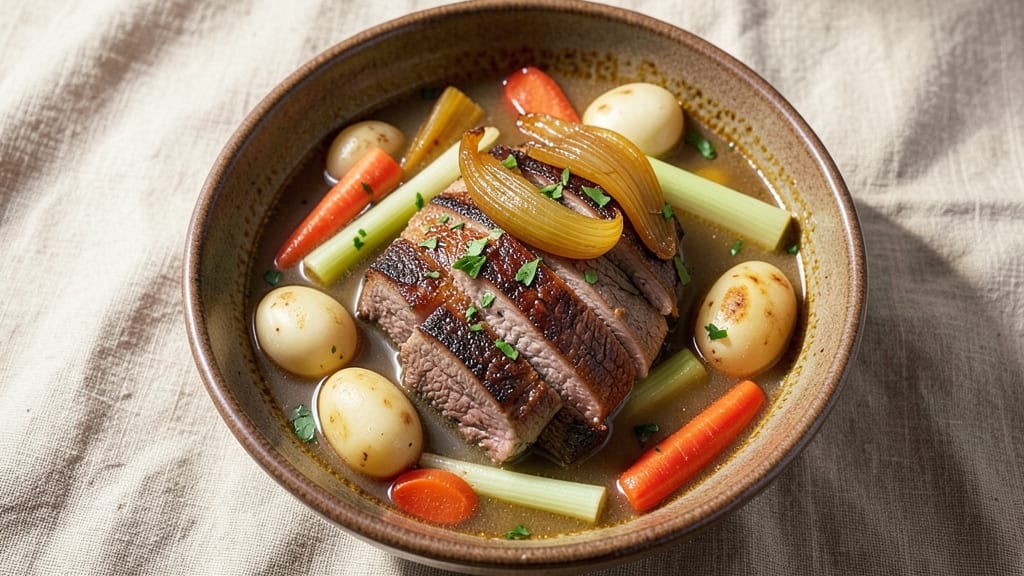
This Barefoot Contessa vegetable beef soup brings cozy, restaurant-quality warmth to your kitchen with just one pot. The secret lies in properly browning the beef and building layers of flavor through slow simmering—technique that transforms simple ingredients into something deeply satisfying.
I developed this version after years of perfecting the balance between tender beef, hearty vegetables, and aromatic herbs.
What makes this recipe special is the foolproof method that delivers rich, velvety broth without complicated steps. You'll start by searing beef in batches for maximum flavor, then deglaze the pot to capture every browned bit.
The vegetables cook down into tender perfection while absorbing the savory beef broth, creating a soup that's both comforting and restaurant-worthy.
By the time you're done, you'll have a steaming bowl of soup with perfectly tender beef chunks, caramelized onions, and a medley of seasonal vegetables all swimming in a deeply flavorful broth.
The aroma alone will fill your home with warmth, and each spoonful delivers that perfect balance of savory, umami, and herbal notes.
Serve with crusty bread for dipping or a simple green salad to balance the richness. This soup keeps beautifully in the refrigerator for up to 5 days, making it perfect for meal prep or feeding a crowd.
The technique is simple, but the results are anything but ordinary—this is the kind of soup that becomes a family favorite.
Ingredients for barefoot contessa vegetable beef soup
Six hearty ingredients and one pot create this restaurant-quality soup.
| Ingredient | Amount | Notes |
|---|---|---|
| Chuck Roast 🥩 | 2 lb | Pre-cut into 1-inch cubes |
| Yellow Onions 🧅 | 2 whole | Thinly sliced for caramelization |
| Carrots 🥕 | 4 medium | Peeled and cut into chunks |
| Celery Stems 🌿 | 4 whole | Cut into 1-inch pieces |
| Garlic Cloves 🧄 | 4 cloves | Minced for aromatic base |
| Russet Potatoes 🥔 | 3 medium | Peeled and cut into chunks |
| Tomato Paste 🍅 | ½ cup | For rich umami depth |
| Beef Broth 💧 | 6 cups | Low-sodium preferred |
| Red Wine 🍷 | 1 cup | Bold dry red preferred |
| Fresh Thyme 🌿 | 2 tbsp | Leaves only, chopped |
| Fresh Parsley 🌿 | ¼ cup | Chopped for garnish |
| Olive Oil 🫒 | ½ cup | For searing beef |
| Salt 🧂 | 1 ½ tsp | Kosher salt preferred |
| Black Pepper 🌶️ | 1 tsp | Freshly ground |
| Bay Leaves 🍃 | 2 whole | For subtle flavor |
The chuck roast is non-negotiable here—it's the secret to that melt-in-your-mouth texture. Most grocery stores carry pre-cut cubes, but if you're buying a whole roast, ask the butcher to cut it into 1-inch pieces. Look for good marbling—those little fat streaks mean more flavor. I grab mine from Costco when I'm making a big batch, but the regular supermarket chuck works perfectly fine. The onions and carrots should be fresh, not limp or bruised. Trader Joe's has great organic options if you're willing to splurge, but regular store-brand veggies work just as well.
No red wine? Substitute with beef broth plus a splash of balsamic vinegar—it'll give you that same depth of flavor. Fresh thyme is ideal, but dried works at one-third the amount. If tomato paste feels like overkill for half a cup, those little squeeze tubes from Trader Joe's are perfect—they're concentrated and keep forever. The potatoes can be any variety, but russets hold up best to long cooking. For extra richness, add a splash of heavy cream at the end, though I usually skip it since this soup is rich enough on its own.
This soup tastes even better the next day as the flavors meld together. Keeps in the fridge for 5 days and freezes beautifully for 3 months. I always make a double batch—one for dinner, one for lunches. Store it in airtight containers with a layer of broth on top to prevent a skin from forming. Reheat gently on the stove with a splash of water or broth to keep it from getting too thick.
Why You'll Love This Recipe
- One-Pot Magic: I swear by this recipe when I’m too tired to dirty more than one pot. Chuck roast goes in raw—yes, raw—and simmers until it’s fall-apart tender. The onions, carrots, and celery (that classic sofrito combo) melt into the broth, so you barely even notice the chopping.
- Deep Umami Bomb: Between us, the slow-cooked chuck roast develops a richness that’s next-level—like a hug in a bowl. The garlic? It’s not just minced; it’s toasted until it smells like a Parisian bistro, then simmered into the broth. That’s flavor you can’t fake.
- Leftovers That Shine: This soup actually gets better the next day. The beef stays juicy, the veggies soften just right, and it reheats like a dream. I make a double batch on Sundays—half for dinner, half for lunches that taste like they were made fresh.
- Budget-Friendly Powerhouse: Chuck roast is cheap, and this recipe stretches it into so much soup. No fancy ingredients, no waste—just honest, hearty eating. Honestly, it’s the kind of meal that makes grocery day feel like a win.
Step-by-step instructions for vegetable beef soup
This one-pot wonder delivers rich, hearty flavor with minimal effort. Let's build it together.
Sear the Chuck Roast for Deep Flavor
Heat the 0.5 cup olive oil in a large Dutch oven over medium-high heat until shimmering. Pat the 2 lb chuck roast dry with paper towels—this ensures a proper sear. Add the beef in a single layer and cook undisturbed for 4-5 minutes until deeply browned on all sides.
Here's the thing—don't crowd the pan. Work in batches if needed. You want that beautiful crust that carries all the meaty flavor into the soup. Once browned, remove the beef and set it aside on a plate. You'll notice the oil will darken and smell incredible—that's the foundation of your soup's depth.
Build the Vegetable Base
In the same Dutch oven, add the 2 whole yellow onions and cook for 5 minutes until softened and beginning to caramelize. Add the 4 medium carrots, 4 whole celery stems, and 4 cloves garlic cloves, stirring to coat in the rendered beef fat. Cook for another 5 minutes until the vegetables soften slightly and the garlic becomes fragrant.
This step develops the soup's aromatic foundation. You'll see the vegetables release their juices and the kitchen will fill with that classic vegetable medley scent. Don't skip this—it's where all the flavor magic begins. If the vegetables start sticking, add a splash of water and scrape up those browned bits from the bottom.
Simmer the Soup for Maximum Flavor
Return the seared beef to the pot. Stir in the 0.5 cup tomato paste, scraping up any browned bits from the bottom. Pour in the 1 cup red wine and let it simmer for 2 minutes until mostly evaporated. Add the 6 cups beef broth, 3 medium russet potatoes (cut into chunks), 2 whole bay leaves, 2 tbsp fresh thyme, 1.5 tsp salt, and 1 tsp black pepper.
Bring to a gentle boil, then reduce heat to low-medium and cover partially. Let it simmer for 1 hour 15 minutes until the beef is fork-tender and the potatoes are easily pierced with a knife. Real talk: This is where patience pays off. The longer it simmers, the deeper the flavors meld together.
Finish with Fresh Herbs and Garnish
Remove the beef from the pot and shred it using two forks directly in the soup. Discard the bay leaves. Return the shredded beef to the pot and stir well. Taste and adjust seasoning if needed—this is your chance to perfect the balance of saltiness, acidity, and richness.
Just before serving, stir in the 0.25 cup fresh parsley. The bright herb notes cut through the richness of the beef and wine. Ladle the soup into bowls and garnish with additional parsley if desired. The soup should be thick and hearty, with tender beef that practically falls apart at the touch and vegetables that are just tender enough to hold their shape.
Pro Tips For Making Barefoot Contessa Vegetable Beef Soup
- Brown the Roast Properly: The chuck roast should be a deep, caramelized brown—not just pink—before adding liquids. I learned this the hard way: skipping this step leaves the soup tasting bland and mealy. Use a heavy pot, medium-high heat, and let it sit undisturbed for 5 minutes after adding oil.
- Cut Onions and Celery Evenly: Uniform ½-inch dice for onions and celery ensures even cooking and a cleaner presentation. I used to hack them roughly, but smaller pieces burn faster and larger ones stay crunchy. A sharp knife and steady hand make this quick—no need for fancy techniques.
- Don’t Rush the Garlic: Crush the garlic cloves with the flat side of your knife before adding them—this releases more flavor. I was skeptical until I tried it: the soup tastes richer, and the garlic doesn’t clump into bitter chunks. Add them with the carrots, but keep an eye on them—they burn fast.
- Simmer, Don’t Boil: Once everything’s in the pot, keep the heat low enough for just a few tiny bubbles at the edges. I used to crank it up, thinking it would cook faster, but that turns the soup into a thin, watery mess. A gentle simmer for 2.5–3 hours builds depth—no shortcut here.
Dietary considerations for this recipe
Gluten-Free Adaptations
This soup is naturally gluten-free, but always double-check your ingredients, especially the beef broth and tomato paste. Many store-bought broths contain hidden gluten from thickeners or additives. I recommend Pacific Foods or Imagine brands—they're certified gluten-free and add depth without any fillers.
The red wine and olive oil are also safe, but if you're avoiding alcohol, substitute with extra beef broth and a splash of balsamic vinegar for acidity. 🌱
Dairy-Free Options
No dairy is used in this recipe, making it perfect for lactose-intolerant diets or vegan adaptations (if you omit the beef). The rich flavor comes from the beef, wine, and tomato paste—no milk or cream needed.
For extra creaminess without dairy, stir in ¼ cup coconut milk or ½ cup cashew cream at the end. Just be sure to use full-fat versions for the best texture. The potatoes also add natural creaminess as they break down during simmering.
Low-Carb Modifications
To reduce carbs, swap the 3 russet potatoes for 1 cup cauliflower florets and 1 cup mushrooms. Cauliflower adds a subtle sweetness while keeping the soup hearty, and mushrooms provide an earthy depth.
You can also reduce the carrots to 2 medium and add ½ cup zucchini for extra nutrients. The beef and vegetable base will still deliver satisfying flavor without the carb overload. Just watch the simmering time—cauliflower cooks faster than potatoes.
Vegetarian Swap
For a vegetarian version, replace the beef with 1 lb extra-firm tofu or 1 lb mushrooms (like portobello or cremini). Press and cube the tofu, then pan-fry until golden brown before adding to the pot. Mushrooms should be sliced and sautéed until deeply browned to mimic the meaty texture.
Boost umami with 1 tbsp soy sauce or 1 tsp miso paste when deglazing. The wine and tomato paste will still create that rich, savory base—just without the beef.
Protein Adjustments
If you prefer leaner protein, use 2 lb sirloin tips instead of chuck roast—they're lower in fat but still flavorful. For extra richness, try 1 lb ground beef (80/20 blend) browned with the onions. If you're watching calories, trim visible fat from the chuck roast before searing.
The key is still browning the meat well—this step unlocks the most flavor regardless of cut. For a lighter option, use chicken thighs instead of beef, but increase the simmering time to 45 minutes for tender results.
Nutrition facts
Frequently asked questions
Can I use a different cut of beef for this soup?
While chuck roast is ideal for its rich flavor and tenderness, you can swap it for sirloin tips (leaner but still flavorful) or ground beef (80/20 blend) for extra richness. The key is browning the meat well—this step unlocks the most flavor. If using ground beef, cook it with the onions until fully browned before adding liquids. For a lighter option, try chicken thighs (simmer 45 minutes instead of 1 hour 15 minutes).
Why does my soup taste bland after simmering?
Bland soup usually means one of three things: not enough browning, insufficient salt, or not enough time simmering. First, check if you properly seared the beef—those browned bits are flavor gold! Next, taste before serving and adjust salt gradually. Finally, let it simmer uncovered for the last 15 minutes to reduce the liquid slightly and intensify flavors. A splash of red wine or extra tomato paste can also boost umami depth.
Can I make this soup in an Instant Pot or slow cooker?
Yes! For the Instant Pot, sear the beef in a skillet first, then transfer everything to the pot. Cook on high pressure for 30 minutes, then do a quick release. For a slow cooker, follow the same steps but cook on low for 6-8 hours or high for 3-4 hours. The key difference is you'll need to shred the beef separately (it won't become as tender from the shorter cooking time). Add fresh parsley at the end to brighten the flavors.
What vegetables can I substitute if I don't have carrots or celery?
No problem! Swap carrots for turnips or parsnips (they add natural sweetness), and replace celery with fennel (licorice flavor) or leeks (milder onion taste). For extra heartiness, add kale or spinach in the last 10 minutes of cooking. Just adjust cooking times—denser veggies like turnips need more time, while leafy greens cook quickly. Keep the total vegetable volume similar to maintain the soup's balance.
How can I make this soup ahead of time?
This soup actually tastes better the next day as flavors meld! Store it in an airtight container in the fridge for up to 5 days. For freezing, portion into containers with a layer of broth on top to prevent a skin from forming. Thaw overnight in the fridge, then reheat gently on the stove with a splash of water or broth. Never microwave from frozen—it creates a watery texture. The soup may thicken slightly after refrigeration, so add a little water or broth when reheating.