
Sauces & Condiments
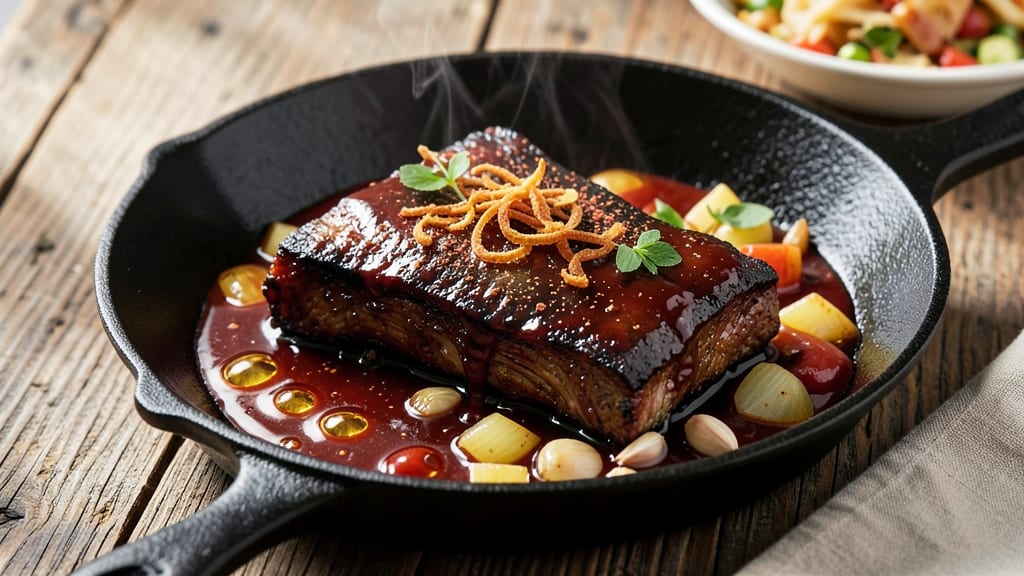
This barbecue sauce recipe for beef ribs transforms ordinary ribs into a masterpiece that rivals any competition-worthy spread. 🔥 The secret lies in balancing smoky depth with sweet molasses and tangy vinegar—a combination that clings to ribs like a second skin, locking in flavor with every bite.
I've perfected this sauce over years of pitmaster trials, where precise ratios make all the difference between good and legendary.
What sets this sauce apart is its dual-purpose magic: it works as both a basting sauce during cooking and a finishing glaze that caramelizes beautifully under the broiler. The slow simmer reduces the sauce to a thick, glossy consistency that clings perfectly to ribs, creating that coveted sticky bark.
No artificial ingredients here—just real spices, vinegar for tang, and molasses for that deep, caramelized sweetness that ribs crave.
The result is a sauce that's rich enough to stand alone but balanced enough to complement the natural beefiness of ribs. The smoky notes from the spices echo the grill's aroma, while the sweet-tangy profile creates a perfect harmony that'll have everyone asking for seconds.
This isn't just sauce—it's the finishing touch that turns good ribs into unforgettable ones.
Whether you're smoking, grilling, or broiling, this sauce adapts to your cooking method while delivering that signature competition-worthy glaze. The ingredients are simple, but the technique ensures professional results every time. Let's get to the recipe—your ribs are about to become the centerpiece of your next cookout.
Ingredients for barbecue sauce recipe for beef ribs
Eleven ingredients blend smoky depth, tangy brightness, and caramelized sweetness for ribs that command attention.
| Ingredient | Amount | Notes |
|---|---|---|
| Apple Cider Vinegar 🍎 | ½ cup | Raw, unfiltered preferred |
| Blackstrap Molasses 🍯 | ½ cup | High iron content enhances flavor |
| Tomato Paste 🍅 | ¼ cup | High-quality, no added salt |
| Yellow Onion 🧅 | 1 whole | Medium size, finely diced |
| Garlic Cloves 🧄 | 4 cloves | Fresh, minced for depth |
| Smoked Paprika 🌶️ | 2 tbsp | High-quality, not sweet |
| Ground Cumin 🌿 | 1 tbsp | Toasted for enhanced aroma |
| Ground Black Pepper 🌶️ | 1 tsp | Freshly ground for sharpness |
| Kosher Salt 🧂 | 1 ½ tsp | Diamond Crystal preferred |
| Brown Sugar 🍚 | ½ cup | Light or dark, packed |
| Chicken or Vegetable Broth 💧 | ½ cup | Low-sodium preferred |
The apple cider vinegar and blackstrap molasses form the sauce's backbone—Bragg Organic and Anthony's brands deliver the most authentic depth. For smoked paprika, Penzeys or McCormick smoked varieties add that essential smokiness without overpowering. Diamond Crystal kosher salt dissolves cleanly, while toasted ground cumin (toasted in a dry pan for 30 seconds) unlocks its full earthy potential. The tomato paste should be no-salt-added—Mueller's or Barilla are reliable choices. Fresh garlic and onion are non-negotiable; their base flavors anchor the sauce's complexity.
No apple cider vinegar? Red wine vinegar works in a pinch, though it lacks the subtle apple notes. Substitute maple syrup for molasses at a 1:1 ratio if needed, though the sauce will lose its deep caramelized edge. Cayenne pepper can replace black pepper for heat, but reduce to 0.25 tsp to maintain balance. For a vegetarian version, swap broth for low-sodium vegetable broth. Pre-minced garlic or onion from a jar? Use half the amount—freshly diced delivers superior flavor. The brown sugar can be swapped for white sugar, though it won't caramelize as richly.
This sauce peaks after 3-4 days in the fridge, with flavors deepening over time. Store in a glass jar with a tight seal, submerged in sauce to prevent a skin from forming. For long-term storage, freeze in ice cube trays—thaw and whisk back to perfection. The sauce thickens as it cools, so reheat gently and adjust consistency with a splash of water or broth. Leftovers? Brush on grilled chicken or toast—it's that versatile.
Why You'll Love This Recipe
- Pantry Magic: I swear by this sauce because it uses stuff I already have—no last-minute grocery runs. That molasses and vinegar combo gives it depth without extra shopping, and the onion and garlic? Just one knife, five minutes, done.
- Smoky Sweet Crunch: The molasses caramelizes into a sticky, almost candy-like glaze when you slow-cook it, while the vinegar keeps it bright and tangy. Slather it on ribs, and you get that perfect balance of rich and sharp—like a hug from a grill master.
- Leftovers That Shine: This sauce actually improves the next day. I keep a jar in the fridge for quick glazes on chicken, pork chops, or even baked beans. (Yes, I’ve been known to drizzle it over toast with a fried egg—don’t judge.)
- Budget-Friendly Luxury: Blackstrap molasses and tomato paste stretch this recipe into a whole meal’s worth of flavor for pennies. A half-cup of sauce coats a full rack of ribs, and the vinegar cuts the cost while adding that restaurant-quality tang. My wallet and taste buds win.
Step-by-step instructions for smoky-sweet barbecue sauce
This sauce delivers deep, complex flavor with perfect balance—smoky, sweet, and tangy all at once.
🍳 Step 1: Build the Flavor Base with Aromatics
In a medium saucepan over medium heat, add the 0.25 cup tomato paste and let it cook undisturbed for 3-4 minutes until it darkens slightly and releases its rich, concentrated flavor. This step develops the sauce's depth before adding any liquids.
Add the finely diced yellow onion and cook for 5-6 minutes until softened and translucent. The onions should caramelize just enough to add sweetness without burning. Stir occasionally to prevent sticking—this is where the sauce's aromatic foundation takes shape.
🍳 Step 2: Incorporate Spices and Sweet Elements
Add the 2 tbsp smoked paprika, 1 tbsp ground cumin, 1.5 tsp kosher salt, and 1 tsp ground black pepper to the pan, stirring constantly for 30 seconds to toast the spices and release their essential oils. You'll smell the paprika's smoky aroma immediately—this is critical for that authentic barbecue flavor.
Pour in the 0.5 cup apple cider vinegar and 0.5 cup blackstrap molasses, stirring to combine. The vinegar will create a tangy contrast while the molasses adds deep, caramel-like sweetness. Let the mixture simmer for 3-4 minutes until slightly reduced and the raw acidity mellows into balance.
🍳 Step 3: Thicken and Balance the Sauce
Add the 0.5 cup brown sugar and 0.5 cup chicken or vegetable broth, stirring until the sugar dissolves completely. The broth helps thin the sauce slightly while adding savory depth. Bring the mixture to a gentle boil, then reduce heat to low and let it simmer uncovered for 15-20 minutes.
During simmering, stir occasionally to prevent skin formation. You're looking for a sauce that coats the back of a spoon with a glossy sheen and has thickened to your desired consistency—somewhere between a glaze and a thick sauce. The molasses and vinegar will continue to meld, creating that signature smoky-sweet profile.
🔪 Step 4: Finish with Garlic and Adjust Seasoning
In the final 2 minutes of simmering, add the 4 minced garlic cloves. The garlic should infuse the sauce without burning—you want a subtle garlic aroma rather than a harsh bite. Taste and adjust seasoning if needed, adding more salt or vinegar as necessary to achieve perfect balance.
Remove from heat and let the sauce cool slightly. The flavors will continue developing as it sits, deepening that complex barbecue character. For best results, use within 3-4 days or refrigerate for up to 2 weeks. This sauce will elevate your beef ribs to restaurant-quality perfection.
Pro Tips For Making Barbecue Sauce Recipe For Beef Ribs
- Simmer Slow and Low: Don’t rush the sauce—keep it at a gentle boil for at least 20 minutes after adding the molasses and vinegar. I learned this the hard way when I burned the hell out of a batch by cranking the heat. The longer it simmers, the deeper the flavor, especially when you’re working with that thick tomato paste.
- Toast the Onion and Garlic: Sauté the diced onion and minced garlic in a dry pan until they’re golden, not just soft. That caramelization adds a whole new layer of richness to the sauce, and it takes about 5 minutes—no fancy technique, just patience. Skip this, and you’ll miss the subtle sweetness that ties everything together.
- Balance the Vinegar: Taste as you go, especially after adding the apple cider vinegar. If the sauce tastes too sharp, throw in a spoonful of molasses or even a pinch of sugar to round it out. I used to just eyeball it, but now I adjust in small batches—trust me, your ribs will thank you.
- Strain for Smoothness: After simmering, strain the sauce through a fine-mesh sieve to remove any bits of onion or garlic. Yes, it’s an extra step, but it makes the sauce look polished and ensures a silky texture when you slap it on those ribs. I know, I know—it’s not the most exciting part, but it’s worth it.
Essential equipment for great barbecue sauce recipe for beef ribs
Smoker Essentials
Your smoker is the heart of this sauce's journey—whether it's a Traeger Pellet Grill or a classic offset smoker, maintaining 225-250°F is key. I swear by my Traeger Ironwood 650 for ribs; its consistent temps mean my sauce gets that perfect smoky depth without burning.
For offset smokers, use a meat probe thermometer like ThermoWorks Smoke to monitor temps accurately. 🔥
Saucepan Must-Haves
A heavy-bottomed stainless steel saucepan (like All-Clad) prevents hot spots and ensures even cooking. Avoid nonstick—it can't handle the prolonged simmering this sauce demands. I use my 10-inch All-Clad for its durability and heat distribution.
A wooden spoon helps scrape up those flavorful bits from the bottom, so don't skip it!
Spice Grinder Game-Changer
Freshly ground spices make all the difference. My KitchenAid Spice Grinder gives me toasted cumin and black pepper that pop with aroma. If you're grinding whole spices, toast them first in a dry pan for 30 seconds—this unlocks their full potential.
Pre-ground spices? Penzeys or McCormick are my go-tos for quality.
Vinegar & Molasses Tools
Use a glass measuring cup for precise apple cider vinegar and blackstrap molasses measurements—plastic can react with acidic ingredients. A fine-mesh strainer helps remove any sediment from molasses if needed. For vinegar, Bragg Organic is my top pick—its raw, unfiltered profile adds depth. 🍎
Sauce Thickener Options
If your sauce needs extra thickness, cornstarch slurry (1 tbsp cornstarch + 1 tbsp water) works wonders. For a natural option, simmer uncovered longer—this sauce reduces beautifully on its own. My OXO Good Grips silicone spatula helps stir without scratching the pan or sticking to the sauce.
Storage Containers
Store your sauce in glass jars with airtight lids—plastic can absorb flavors over time. I love Ball Mason jars for their durability and classic look. For freezing, silicone ice cube trays let you portion sauce perfectly for future use. Label everything—trust me, you'll thank yourself later! ✨
Nutrition facts
Frequently asked questions
Can I make this sauce without molasses?
Yes, but you'll lose that deep caramelized richness. Substitute with 1/3 cup maple syrup plus 1/4 cup brown sugar for a similar sweetness profile. The sauce will be slightly less complex but still delicious. For a tangier alternative, add an extra 1/4 cup apple cider vinegar to compensate for the missing molasses depth.
How do I adjust the thickness for different cooking methods?
For smoked ribs, aim for a medium-thick glaze that clings but doesn't drip excessively. If too thin, simmer uncovered for 5-10 more minutes to reduce. For grilled ribs, a slightly thinner consistency works better to prevent burning. Need instant thickness? Mix 1 tbsp cornstarch with 1 tbsp cold water, stir into the sauce, and simmer for 2 minutes.
Why does my sauce taste too sweet or vinegary?
Balance is key! If too sweet, add 1-2 tbsp apple cider vinegar and simmer for 2 minutes to mellow the sweetness. For excessive vinegar tang, stir in 1 tsp brown sugar and let it dissolve. Taste frequently—small adjustments make all the difference. The molasses and vinegar should complement each other, not compete.
Can I use this sauce on other meats besides ribs?
This sauce works beautifully on pulled pork, chicken thighs, and even tofu for vegetarian options. The smoky-sweet profile pairs well with hearty meats, while the tangy elements cut through richer flavors. For chicken, reduce the molasses to 1/4 cup to prevent overwhelming the delicate meat.
How do I store leftovers to keep them fresh?
Transfer to a glass jar with a tight seal and refrigerate for up to 2 weeks. For longer storage, freeze in ice cube trays or small containers—thaw overnight in the fridge before using. Avoid plastic containers, as they can absorb flavors. The sauce thickens when cold, so stir before reheating over low heat.