
Main Courses
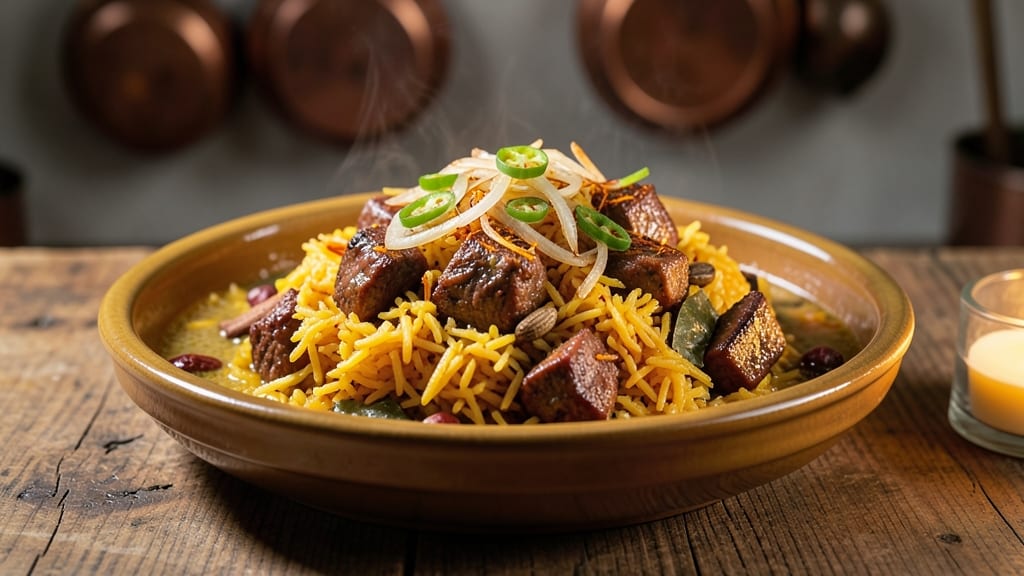
The Bangla beef biryani recipe transforms a simple pot of rice and meat into a fragrant, layered masterpiece that carries the soul of Bengali cuisine. Saffron-infused basmati rice meets tender, spice-marinated beef in a symphony of flavors—aromatic, slightly sweet, and deeply satisfying.
This dish isn’t just a meal; it’s a celebration, often served at gatherings and special occasions, where every bite tells a story of tradition and love.
What sets this recipe apart is the two-step cooking process: first, the beef is marinated overnight in a blend of yogurt, ginger, garlic, and whole spices, then layered with partially cooked rice before the final dum cooking.
This method ensures the meat stays juicy while the rice absorbs the rich, spiced broth. The secret to authenticity lies in the balance of spices—cardamom, cinnamon, and cloves—and the slow, even cooking that lets flavors meld together.
By the time it’s done, you’ll have a dish that’s as visually stunning as it is delicious—golden layers of rice and beef, topped with crispy fried onions and fresh herbs.
The aroma alone will have everyone gathering around the table, while the first bite delivers a perfect harmony of smoky, spiced beef and fragrant saffron rice. This is the kind of meal that turns a simple dinner into a memorable feast.
Pair it with a cooling raita or a fresh cucumber salad to balance the richness, and you’ve got a complete Bengali spread. Whether you’re cooking for family or hosting a dinner party, this biryani will leave a lasting impression. Let’s get started on creating this timeless classic.
Ingredients for bangla recipe beef biryani
Saffron rice, spiced beef, and fragrant layers—this biryani brings Bengali tradition to your kitchen.
| Ingredient | Amount | Notes |
|---|---|---|
| Basmati Rice 🍚 | 2 cups | Long grain, uncooked |
| Beef Chuck Roast 🥩 | 2 ½ lb | Cut into 1.5-inch cubes |
| Plain Yogurt 🥛 | 1 cup | Whole milk, unsweetened |
| Saffron Threads 🌼 | ¼ tsp | Soaked in 2 tbsp warm water |
| Ginger 🧄 | 2 tbsp | Freshly grated |
| Garlic Cloves 🧄 | 8 cloves | Minced |
| Onions 🧅 | 2 whole | Medium, thinly sliced |
| Green Chilies 🌶️ | 4 whole | Slit lengthwise |
| Bay Leaves 🌿 | 2 whole | Dried |
| Cinnamon Sticks 🌿 | 2 whole | 2-inch pieces |
| Cardamom Pods 🌿 | 8 whole | Lightly crushed |
| Cloves 🌿 | 4 whole | Whole |
| Black Cardamom Pods 🌿 | 2 whole | Lightly crushed |
| Fresh Cilantro 🌿 | ½ cup | Chopped, for garnish |
| Fried Onions 🧅 | ¼ cup | For topping |
| Ghee 🫒 | ½ cup | For cooking |
| Salt 🧂 | 1 ½ tsp | Adjust to taste |
| Lemon Juice 🍋 | 2 tbsp | Freshly squeezed |
The beef is the heart of this dish, so look for chuck roast with good marbling—it stays tender through the long cooking. Indian grocery stores often carry it pre-cut, but the supermarket butcher can do it too. If you can't find chuck, sirloin works in a pinch, though it'll be slightly less tender. The basmati rice should be long-grain—Tilda or India Gate brands are my go-tos, but any good-quality basmati will do. Saffron is pricey, but you only need a pinch—buy it whole, not ground, and store it in the freezer to preserve freshness.
No fresh cilantro? Dried works at half the amount, though it lacks that bright finish. Running low on ghee? Butter or neutral oil will work, but ghee gives that authentic richness. The spices—cardamom, cinnamon, cloves—should be whole and aromatic. Spice boxes at Indian markets often have fresher whole spices than the grocery store. For the fried onions, thinly slice and fry in batches until golden—don't overcrowd the pan, or they'll steam instead of crisp up.
Marinate the beef overnight for maximum flavor, but if you're short on time, 2 hours minimum still works. The rice keeps best in the fridge for 2 days, but the biryani actually tastes better the next day as flavors meld. Freeze portions for up to 3 months—just reheat gently with a splash of water. The fried onions lose crispness fast, so make them fresh before serving. Leftovers? Microwave with a damp paper towel to revive moisture.
Why You'll Love This Recipe
- One-Pot Magic: I swear by this—layer the marinated beef and partially cooked rice in one pot, then seal it with foil and let the oven do the work. No flipping pans, no stress, just hands-off perfection while you sip chai.
- Saffron Kiss: That first whiff of saffron-infused steam? Unreal. The threads bloom into a golden, floral aroma that turns simple rice into something luxurious—no fancy ingredients, just pure flavor payoff.
- Leftovers Reimagined: The beef stays tender for days, and the rice? Still fluffy if you reheat it gently. Pack it for lunches, freeze portions, or turn cold slices into biryani wraps—this recipe actually gives back.
- Budget Feast: Beef chuck roast stretches further than you’d think when slow-cooked with yogurt and ginger, and basmati rice is cheaper than you’d guess for long-grain quality. Feeds four for under $20, and everyone leaves happy.
Step-by-step instructions for Bangla beef biryani
Here's how to create layers of aromatic rice and tender beef that'll transport you to the streets of Dhaka.
Marinate the Beef with Spices and Yogurt
In a large bowl, combine the 2.5 lb beef chuck roast cut into 1.5-inch cubes with 1 cup plain yogurt, 2 tbsp freshly grated ginger, 8 minced garlic cloves, 1.5 tsp salt, and 2 tbsp lemon juice. Mix thoroughly until the beef is fully coated in the yogurt marinade—this tenderizes the meat and infuses it with flavor.
Add the soaked saffron threads (with their soaking liquid), 4 slit green chilies, 2 lightly crushed black cardamom pods, and 4 whole cloves. Gently fold everything together, ensuring each beef piece is well-coated. Cover the bowl and refrigerate for at least 4 hours (overnight is even better)—this long marinating time is key to breaking down the tough beef fibers and developing deep flavor.
Cook the Spiced Beef in Ghee
In a heavy-bottomed pot or Dutch oven, heat 0.5 cup ghee over medium heat. Add the marinated beef in a single layer and let it brown undisturbed for 5-6 minutes—this creates a beautiful crust. Once browned on one side, gently flip the pieces and cook for another 5-6 minutes until they're evenly browned.
Remove the beef and set it aside. In the same pot, add 2 medium thinly sliced onions and cook until they turn golden brown (5-6 minutes). Add 2 bay leaves, 2-inch cinnamon sticks, 8 lightly crushed cardamom pods, and stir for 30 seconds until fragrant. Return the beef to the pot and pour in enough water to cover the beef by 1 inch. Bring to a boil, then reduce heat to low, cover, and simmer for 1.5 hours until the beef is fork-tender.
Parboil the Rice with Aromatics
While the beef simmers, rinse the 2 cups basmati rice in cold water until the water runs clear—this removes excess starch and prevents gummy rice. In a separate pot, bring 3 cups water to a boil and add the rice. Stir once, then cover and cook for 7 minutes on medium-high heat. Drain the rice immediately in a colander and spread it on a clean kitchen towel to steam-dry.
In the same pot used for the beef, add 2 tbsp minced garlic, 2 tbsp grated ginger, and the drained rice. Stir gently to combine, then add 1.5 cups water and 1 tsp salt. Bring to a boil, then reduce heat to low, cover, and cook for 5 minutes until the rice is 70% cooked—this is crucial for the final texture. Turn off the heat and let it sit covered.
Layer and Dum Cook the Biryani
Preheat your oven to 350°F. In a large oven-safe pot (or your Dutch oven), spread half of the 70% cooked rice as the first layer. Arrange half of the cooked beef pieces evenly over the rice. Sprinkle half of the 0.5 cup chopped fresh cilantro and 0.25 cup fried onions over the beef.
Add the remaining rice and beef, followed by the remaining cilantro and fried onions. Drizzle the soaking liquid from the saffron threads evenly over the top. Cover the pot tightly with foil or a lid, then place it in the preheated oven. Bake for 20 minutes, then remove from the oven and let it rest for 10 minutes before serving.
Garnish and Serve Immediately
Uncover the biryani and fluff the rice gently with a fork. Garnish with additional chopped fresh cilantro and fried onions for color and extra flavor. Serve hot with raita or a simple cucumber salad to balance the richness. The biryani should have perfectly tender beef, fragrant saffron rice, and layers of complex spices in every bite.
Pro Tips For Making Bangla Recipe Beef Biryani
- Parboil Rice Twice: First boil the basmati until 70% cooked—it should still have a bite. Drain, spread on a tray, and let it dry for 5 minutes before the final layer. This stops the rice from turning mushy when you dump in the beef and spices later. I learned this the hard way after serving a soggy biryani that tasted more like beef porridge.
- Marinate Beef Overnight: Skip the rushed marinade—let the beef chuck soak in yogurt, ginger paste, and a pinch of turmeric for at least 12 hours. The acid tenderizes the meat and lets the flavors sink in deep. I was skeptical until I tried it; the difference in texture and taste is night and day.
- Layer Rice and Beef Separately: Don’t mix everything in one pot. First, spread half the rice in the bottom, then the beef, then the remaining rice. This keeps the grains distinct and prevents the beef from turning the rice into a sticky mess. Sounds weird, but it works—your biryani will look and taste like a restaurant’s.
- Use Saffron Water Wisely: Soak the saffron threads in 2 tablespoons of warm water for 10 minutes, then strain before adding to the rice. This ensures the color and flavor distribute evenly instead of clumping in one spot. I used to just toss in the threads dry, and half the time, they’d sit like little orange specks in my dish.
Dietary considerations for these flavors
Vegetarian Adaptations
Swap beef for chickpeas or potatoes to keep the dish vegetarian while maintaining texture. Marinate 2 cups chickpeas in yogurt, ginger, garlic, and spices for 4 hours, then layer with rice.
For extra richness, add ½ cup paneer cubes cooked in ghee with the same spices. The key is balancing moisture—reduce water by ½ cup since chickpeas release liquid. 🌱
Gluten-Free Considerations
This recipe is naturally gluten-free, but check your spices for hidden additives. Use certified gluten-free ghee (like Ghee Himalaya) and ensure your fried onions are cooked in pure oil without gluten-containing anti-stick sprays.
For extra safety, toast basmati rice in a separate pot to avoid cross-contamination. The dish remains hearty and flavorful without gluten. ✨
Low-Carb Options
Replace rice with cauliflower rice (2 cups) for a lower-carb version. Sauté it with ghee and spices until tender, then layer with beef and dum cook as usual.
Add 1 tbsp psyllium husk to the cauliflower rice before cooking to improve texture. The result is a lighter dish that still delivers bold biryani flavors. 💪
Spice Sensitivity
Reduce heat by omitting green chilies and using ½ tsp milder powdered ginger instead of fresh. For extra mildness, blend 1 tbsp yogurt with ¼ tsp turmeric and brush it over the beef before cooking.
Keep whole spices (cardamom, cinnamon) intact—they add aroma without sharp heat. Taste the marinade before cooking to adjust. 🌶️
Dairy-Free Swaps
Replace yogurt with coconut yogurt (1 cup) for the marinade and use coconut oil instead of ghee. The coconut flavor pairs surprisingly well with biryani spices. For richness, add 2 tbsp cashew cream to the final layers before dum cooking. The texture remains moist and flavorful without dairy. 🥥
Nutrition facts
Frequently asked questions
What makes Bangla beef biryani different from other biryanis?
Bangla beef biryani stands out for its layered texture and saffron-forward rice, often cooked with a dum technique that traps steam for tender meat and fragrant grains. Unlike Hyderabadi or Lucknowi styles, it uses whole spices like black cardamom and cinnamon sticks for depth, and the beef is marinated in yogurt overnight for maximum tenderness. The crispy fried onions on top add a signature crunch.
Can I make this biryani without an oven for dum cooking?
Yes! Use your stovetop instead: After layering, cover tightly with foil and place a heavy pot lid on top. Then, wrap the pot in a thick towel and place it over low heat for 20-25 minutes. This mimics the oven's trapped steam. For extra authenticity, place a hot brick or water-filled tray on top of the lid to create steam.
Why does the rice need to be only 70% cooked before layering?
The 70% cooked rice absorbs the beef's juices perfectly during dum cooking, creating fluffy layers instead of mushy rice. Overcooking it first prevents gumminess, while the final steam in the oven or stovetop finishes cooking it evenly. This technique also ensures each bite has both rice and meat in every mouthful.
What’s the best way to store leftovers?
Store in an airtight container for up to 3 days in the fridge. Reheat gently with a splash of water, covered, over low heat or in the microwave (add a damp paper towel). For longer storage, freeze portions for up to 3 months. The flavors actually improve after resting overnight!
Can I use ground beef instead of chunks?
Ground beef works but requires adjustments: Cook it until 90% done before layering, and reduce marinating time to 2 hours (it cooks faster). For texture, mix in ½ cup cooked lentils or chopped potatoes to mimic the bite of chunky beef. The dish will be more cohesive but slightly different in mouthfeel.