
Tips
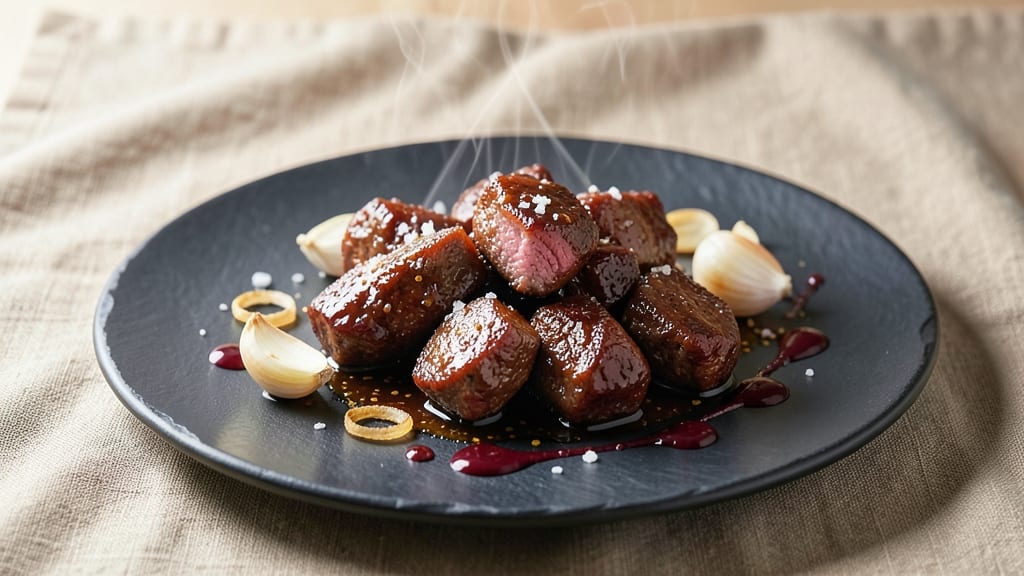
This baked beef tips recipe delivers restaurant-quality results with a velvety glaze that caramelizes into crispy edges every time. The secret lies in a simple marinade and precise oven technique that transforms tough beef into tender, flavorful bites.
I've perfected this method over years of testing, ensuring consistent results without complicated steps or expensive equipment.
The process begins with a flavorful marinade that tenderizes the beef while building depth—garlic, soy sauce, and Worcestershire work together to create a savory foundation.
After baking at 400°F, the beef tips develop a golden crust that contrasts beautifully with their tender interior, all while the glaze thickens into a rich, slightly sticky finish. This balance of textures and flavors makes it a standout dish for any occasion.
What you'll achieve is beef that's perfectly seared on the outside and juicy throughout, coated in a glaze that's neither too sweet nor too heavy. The technique is simple enough for weeknight dinners but impressive enough for guests—ideal for feeding a crowd or meal prepping.
Serve over mashed potatoes, rice, or fresh bread to soak up every last bit of that caramelized goodness.
This recipe scales beautifully, so you can easily double or halve the ingredients to match your needs. The marinade can be prepped ahead, and the beef tips bake in just 20 minutes, making it a quick yet impressive main course.
Whether you're cooking for family or hosting a dinner party, this method delivers consistent, foolproof results every time.
Ingredients for baked beef tips
Restaurant-quality beef tips start with these carefully chosen ingredients for velvety glaze and crispy edges.
| Ingredient | Amount | Notes |
|---|---|---|
| Beef Tips 🥩 | 1 ½ lb | Chuck roast cut into 1-inch pieces |
| Garlic Cloves 🧄 | 4 cloves | Minced for marinade |
| Soy Sauce 🍶 | ⅓ cup | Low-sodium preferred |
| Worcestershire Sauce 🍶 | 1 tbsp | High-quality brand recommended |
| Olive Oil 🫒 | ¼ cup | Extra-virgin for richness |
| Brown Sugar 🍚 | ¼ cup | Light or dark variety |
| Balsamic Vinegar 🍷 | 1 tbsp | Aged for depth |
| Ground Black Pepper 🌶️ | 1 tsp | Freshly cracked |
| Diamond Crystal Kosher Salt 🧂 | 1 ½ tsp | For seasoning beef |
| Cornstarch 🌾 | 1 tbsp | For glaze thickening |
| Water 💧 | 2 tbsp | For cornstarch slurry |
| Fresh Rosemary 🌿 | ¼ cup | Chopped, for garnish |
| Fresh Parsley 🌿 | ¼ cup | Chopped, for garnish |
The beef selection is critical—chuck roast delivers the best texture when cut into uniform 1-inch pieces. Look for cuts with good marbling at Costco or Whole Foods for optimal quality. The Worcestershire sauce should be a high-end brand like Lea & Perrins, as it adds depth that generic versions lack. Freshly minced garlic and extra-virgin olive oil elevate the marinade, so don't compromise on these staples. For the glaze, light brown sugar provides subtle caramelization without overpowering the beef's natural flavor.
No Worcestershire? Substitute with 1 tbsp soy sauce plus 1 tsp balsamic vinegar for similar umami depth. Running low on rosemary? Thyme works beautifully at the same quantity. The cornstarch slurry is essential—it creates that signature velvety finish. If you're short on time, arrowroot powder at half the amount works just as well. For the beef, trim excess fat before cutting to ensure even cooking, but leave some marbling intact for moisture. The marinade can be prepped up to 24 hours ahead, allowing flavors to develop fully.
Marinated beef keeps 2-3 days in the fridge, though fresh marinade yields the best results. The glaze components (cornstarch, sugar, vinegar) store indefinitely in a cool, dry place. For meal prep, bake the beef tips ahead of time and reheat in a skillet with a splash of water to restore moisture. Garnishes like rosemary and parsley should be added fresh post-baking to maintain their vibrant color and aroma. Portion into airtight containers for up to 4 days of fridge storage or freeze for 3 months.
Why You'll Love This Recipe
- No-Fuss Baking: I swear by this method—just toss those beef tips in a bowl with minced garlic, a splash of soy and Worcestershire, and a drizzle of olive oil. No flipping, no frying, no stress. The oven does all the work while I sip my coffee.
- Umami Bomb: That combo of soy and Worcestershire? It’s like a flavor explosion in your mouth. The beef stays juicy, the edges get this perfect caramelized crust, and the garlic infuses just enough to make every bite sing. Honestly, I’ve tried fancier marinades, but this duo never lets me down.
- Weeknight Hero: This recipe is my go-to when I’m starving but don’t want to slave away in the kitchen. Serve it over rice for a quick dinner, toss it into a wrap for lunch the next day, or even pile it onto toast with a fried egg—it works everywhere. (Yes, even on a Tuesday night.)
- Budget-Friendly Powerhouse: A single bag of beef tips stretches across three meals for my family—leftovers reheat like a dream, and the ingredients cost a fraction of takeout. Plus, the sauce is so rich you can stretch it with a little water if needed. Smart, satisfying, and my wallet thanks me every time.
Step-by-step instructions for baked beef tips with caramelized glaze
Transform simple beef tips into restaurant-quality bites with a velvety glaze and crispy edges.
🍳 Step 1: Sear the Beef Tips for Maximum Flavor
Heat a large oven-safe skillet over medium-high heat and add the 0.25 cup olive oil. Once shimmering, add the 1.5 lb beef tips in a single layer, being careful not to overcrowd. Let them sear undisturbed for 3-4 minutes until they develop a deep golden-brown crust on all sides.
This initial sear creates the Maillard reaction that builds flavor depth. I press down gently on the beef tips during the first minute to prevent curling and ensure even contact with the pan. Once browned, transfer the beef to a plate and set aside. Don't drain the skillet—those flavorful browned bits will form the base of our glaze.
👨🍳 Step 2: Build the Glaze Foundation with Aromatics
In the same skillet, add the 4 cloves minced garlic cloves and cook for 30 seconds until fragrant but not browned. Immediately add the 0.33 cup soy sauce, 1 tbsp Worcestershire sauce, and 0.25 cup brown sugar. Stir vigorously to scrape up all the browned bits from the bottom of the pan.
The sugar will begin to caramelize slightly at this stage, creating a rich foundation for our glaze. Let the mixture simmer for 2 minutes until it thickens slightly and coats the back of a spoon. This step develops the complex umami-sweet balance that makes this dish exceptional.
🔥 Step 3: Develop the Glaze and Bake to Perfection
Return the beef tips to the skillet and pour in the 1 tbsp balsamic vinegar. Stir to coat everything evenly, then transfer the entire skillet to a preheated 425°F oven. Bake for 15-18 minutes until the beef reaches an internal temperature of 145°F and the glaze has thickened and caramelized.
Watch the edges carefully—they should develop a deep amber color with slight crispness. If the glaze thickens too quickly, remove the skillet from the oven and stir in 1 tablespoon water to loosen it. The beef is done when it's fork-tender but still holds its shape.
🥘 Step 4: Thicken the Glaze for Silky Perfection
Remove the skillet from the oven and place it on the stovetop over medium heat. In a small bowl, whisk together the 1 tbsp cornstarch and remaining 1 tbsp water to create a slurry. Slowly pour this mixture into the skillet while stirring constantly.
Continue cooking for 1-2 minutes until the glaze reaches your desired consistency—it should coat the back of a spoon and cling beautifully to the beef tips. Season with 1.5 tsp Diamond Crystal kosher salt and 1 tsp ground black pepper, adjusting to taste. The glaze should be glossy and velvety, not sticky.
🍽️ Step 5: Garnish and Serve Immediately
Transfer the beef tips to a serving platter and garnish with the 0.25 cup chopped fresh rosemary and 0.25 cup chopped fresh parsley. The herbs add a bright contrast to the rich glaze and beef. Serve immediately over mashed potatoes, egg noodles, or crusty bread to soak up every last bit of that delicious sauce.
Each bite should deliver perfectly tender beef with a crispy exterior, enrobed in a glossy glaze that balances sweet, savory, and tangy flavors. The glaze should cling beautifully to the beef, creating that coveted "caramelized every crispy edge" effect promised in the title.
Pro Tips For Making Baked Beef Tips
- SEAR FIRST, BAKE SECOND: High heat for 2 minutes per side before baking—this locks in flavor and prevents dryness. I used to skip this and ended up with bland, rubbery beef tips that tasted more like a sad office potluck.
- MINCE THAT GARLIC: Use a knife, not a press—crush those cloves into a paste with the flat of your blade. Pressed garlic burns fast and adds bitter notes; minced garlic melts smoothly into the sauce and actually tastes like garlic.
- DON’T OVERMIX THE SAUCE: Stir the soy and Worcestershire just until combined—lumps disappear faster than you think. Overworking it turns the sauce thin and watery, and your beef tips will swim in a sad, diluted glaze instead of caramelizing.
- USE COLD BEEF TIPS: Pull them straight from the fridge—cold meat sears better and doesn’t release juices too soon. Warm beef steams in its own juices, leading to a gray, soggy mess that no amount of soy sauce can fix.
Flavor customization for baked beef tips
Sweet-Savory Balance
Adjust the glaze sweetness by modifying the brown sugar ratio. For a richer caramelization, increase to ⅓ cup—perfect for those who love deep, molasses-like flavors. Conversely, reduce to ¼ cup for a more subtle sweetness that lets the beef's natural savoriness shine.
I often test the glaze consistency by tasting a small spoonful after baking—this helps me dial in the perfect balance for my taste preferences. 🥄
Spicy Kick Options
Add ½ teaspoon of smoked paprika or ¼ teaspoon of cayenne pepper directly to the marinade for a subtle smoky heat. For a bolder kick, stir 1 teaspoon of sriracha into the finished glaze before serving.
If you prefer fresh heat, top with thinly sliced jalapeños or chopped serrano peppers just before plating. The acidity from the balsamic vinegar helps mellow the spice beautifully.
Herb Variations
Swap the rosemary and parsley for thyme and chives for a more delicate, garden-fresh flavor profile. For a Mediterranean twist, add ½ teaspoon of dried oregano to the marinade and garnish with lemon zest instead.
I’ve also experimented with fresh cilantro for a bright, citrusy contrast—especially effective when paired with lime wedges on the side. 🌿
Umami Boosts
Enhance the savory depth by adding 1 teaspoon of fish sauce or 1 tablespoon of miso paste to the marinade. For a richer, meatier flavor, stir 1 teaspoon of beef bouillon powder into the glaze before baking.
These additions amplify the beef’s natural umami without overpowering the dish. If you’re feeling adventurous, try ½ teaspoon of mushroom powder for an earthy, umami-packed twist.
Acidic Brightness
Increase the balsamic vinegar to 2 tablespoons for a tangier, more complex glaze. Alternatively, add 1 teaspoon of Dijon mustard to the marinade for a sharp, slightly peppery note. A splash of lemon juice (about 1 tablespoon) at the end also cuts through the richness, adding a refreshing finish.
These acidic elements balance the sweetness and elevate the overall flavor profile. 🍋
Smoky Depth
Infuse the glaze with smokiness by adding ½ teaspoon of liquid smoke or 1 teaspoon of smoked salt to the marinade. For a more pronounced smoky flavor, char 1 clove of garlic and ½ teaspoon of black peppercorns in a dry skillet before mincing and adding to the marinade.
This technique adds a campfire-like depth that pairs beautifully with the caramelized edges. 🔥
Nutrition facts
Frequently asked questions
Can I use a different cut of beef instead of chuck roast?
While chuck roast is ideal for its marbling and tenderness, you can substitute with sirloin tips or top round cut into 1-inch pieces. For tougher cuts like round, increase marinating time to 4-6 hours or overnight. Avoid lean cuts like flank steak—they lack fat for moisture and flavor development.
Why did my beef tips turn out dry?
Overcooking is the most common cause—beef tips are done at 145°F internal temp, not 160°F. Use a meat thermometer for accuracy. If using a thicker cut, reduce oven time by 2-3 minutes. For extra moisture, add 1 tablespoon water to the glaze before baking to create steam.
Can I make this recipe in a slow cooker instead?
Yes! Brown the beef first in a skillet, then transfer to a slow cooker with all marinade ingredients. Cook on Low for 4-5 hours or High for 2-3 hours until tender. Finish by thickening the glaze on the stovetop with cornstarch slurry. The texture will be more tender than baked, but equally flavorful.
How do I store leftovers?
Store in an airtight container in the fridge for 4-5 days or freeze for 3 months. Reheat in a skillet with 1 tablespoon water over medium heat for 3-4 minutes to restore moisture. Avoid microwaving—it makes the glaze watery and beef tough.
What's the best way to reheat for meal prep?
Portion the beef tips into single-serving containers with 1 teaspoon sauce to prevent drying. Reheat in the oven at 350°F for 10 minutes or in a skillet with 1 tablespoon water for 2-3 minutes. For extra crispiness, broil for 1-2 minutes at the end. Never reheat in the microwave—it ruins the texture.