
Main Courses
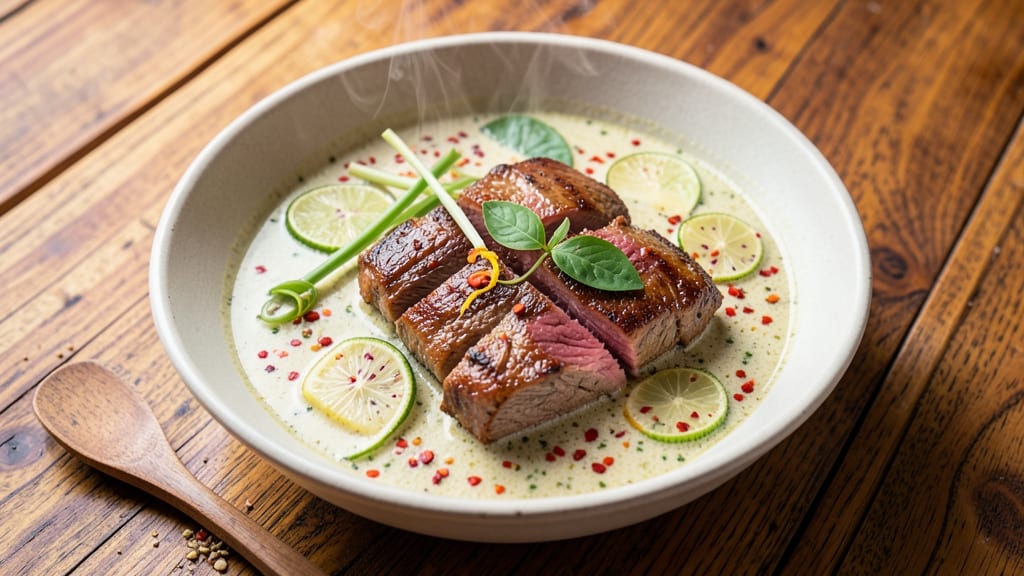
This authentic Thai green beef curry recipe delivers the perfect balance of herbal heat and creamy richness that defines street-side Thai cuisine. The secret lies in proper curry paste preparation—fresh galangal, lemongrass, and kaffir lime leaves create that signature aromatic depth, while coconut milk transforms the dish into velvety perfection.
I've perfected this technique over countless batches, ensuring the beef stays tender yet flavorful, and the sauce achieves that ideal consistency between thick and saucy.
The recipe begins with searing beef in a hot wok to develop deep caramelization before adding the aromatic paste and coconut milk. This traditional method builds layers of flavor that canned pastes simply can't match.
The slow simmer allows all ingredients to meld harmoniously, with just enough fish sauce and sugar to balance the heat. What you'll end up with is a vibrant green curry that's rich, aromatic, and packed with authentic Thai flavors—far from the overly sweet or watery versions you might find elsewhere.
By the time you serve this curry over fragrant jasmine rice, you'll have achieved restaurant-quality results at home. The beef will be fork-tender, the sauce perfectly balanced between creamy and slightly spicy, and the aroma will fill your kitchen with that unmistakable Thai restaurant scent.
Garnish with fresh cilantro and a squeeze of lime for that final touch of brightness that makes every bite unforgettable.
This recipe works beautifully for weeknight dinners or special occasions, and it scales perfectly for feeding a crowd. The techniques are approachable yet yield professional results, making it ideal for both home cooks and those looking to elevate their Thai cooking skills. Let's get started on creating this authentic masterpiece.
Ingredients for authentic thai green beef curry
Fresh herbs, tender beef, and rich coconut milk create this restaurant-quality Thai masterpiece.
| Ingredient | Amount | Notes |
|---|---|---|
| Beef Chuck Roast 🥩 | 1 ½ lb | Cut into 1-inch cubes |
| Fresh Galangal 🌿 | 1 piece | About 3 inches long, peeled |
| Lemongrass Stalks 🌿 | 4 whole | Lower 3 inches only, bruised |
| Kaffir Lime Leaves 🍋 | 4 whole | Stems removed |
| Green Curry Paste 🌶️ | 3 tbsp | Homemade or quality store-bought |
| Full-Fat Coconut Milk 🥥 | 13 ½ oz | High quality, no additives |
| Fish Sauce 🍶 | 2 tbsp | Red Boat preferred |
| Palm Sugar 🍯 | 1 tbsp | Or substitute brown sugar |
| Green Chili Peppers 🌶️ | 2 whole | Bird's eye, seeded |
| Garlic Cloves 🧄 | 6 cloves | Minced |
| Shallots 🧅 | 3 whole | Peeled, sliced |
| Cilantro Leaves 🌿 | ¼ cup | Fresh, chopped for garnish |
| Lime Juice 🍋 | 2 tbsp | Freshly squeezed |
| Jasmine Rice 🍚 | 1 ½ cups | Uncooked, for serving |
| Vegetable Oil 🫒 | 2 tbsp | For searing beef |
The galangal and kaffir lime leaves are non-negotiable for authentic flavor. Find them at Asian markets—the frozen section works in a pinch, but fresh has more punch. For galangal, look for a piece about the size of a lemon; it should be firm with a citrusy aroma. Lemongrass needs to be fresh too—if the stalks are dry or discolored, skip it. Thai Kitchen brand curry paste is solid if you can't make your own, but homemade paste with fresh ingredients makes all the difference. The beef matters here too—chuck roast stays tender during the long simmer, unlike leaner cuts.
No galangal? Ginger at half the amount works, but it's not the same—just don't bother. Fresh lemongrass unavailable? Substitute 1 tsp lemongrass paste (found in Asian markets). For the coconut milk, avoid the 'lite' versions—full-fat is essential for that creamy texture. The fish sauce should smell pungent but not rotten; Red Boat is the gold standard. Palm sugar can be swapped for brown sugar, but it adds a unique caramel note. If you're sensitive to heat, reduce the green chilies to just 1 or use Thai bird's eye chilies with seeds removed.
Coconut milk separates when refrigerated—stir well before using. The curry paste keeps for 3 months in the fridge, while fresh galangal lasts 2 weeks wrapped in a damp towel. Make a double batch of curry paste if you're hosting—it's worth the extra effort. The beef can be prepped ahead and refrigerated for 24 hours before cooking, but don't marinate it in the sauce. Serve over jasmine rice within 2 days for best flavor, or freeze portions for 3 months—the sauce actually improves with time.
Why You'll Love This Recipe
- One-Pot Magic: I swear by this recipe—just sear the beef, toss in the green curry paste, and let the galangal and lemongrass work their magic. No extra pots, no fuss, and the house smells like heaven by the time it’s done.
- Deep, Complex Heat: That green curry paste? It’s the star—packed with turmeric, chilies, and herbs that build layers of flavor. The galangal adds a citrusy kick, while the kaffir lime leaves bring a bright, almost floral finish. (Yes, even my picky husband asks for seconds.)
- Leftovers That Shine: This curry tastes better the next day—honestly. The beef gets even more tender, and the coconut milk thickens into a rich, velvety sauce. I double the batch on Sundays and freeze half; it’s my go-to for lazy nights.
- Budget-Friendly Luxury: Beef chuck roast is affordable, and the aromatics (lemongrass, galangal) stretch the flavor so far. A single curry paste jar lasts for months, and I use the same technique for chicken or tofu later. Fancy dinner for half the cost? Done.
Step-by-step instructions for authentic Thai green beef curry
Master the balance of herbal aromatics and creamy richness in this traditional Thai dish.
Prepare the Aromatic Base
Heat the 2 tablespoons vegetable oil in a heavy-bottomed pot over medium heat. Add the 3 whole shallots and 6 cloves garlic, cooking for 3-4 minutes until softened and fragrant—they should smell sweet and nutty. This foundational step develops the curry's depth before adding the paste.
Next, add the 2 whole green chili peppers and 1 piece fresh galangal (sliced into thin rounds). Cook for 2 minutes until the chilies soften slightly. The galangal will release its citrusy, ginger-like aroma—this is where the authentic Thai flavor profile begins to build. Keep the heat at medium to avoid burning these delicate aromatics.
Develop the Curry Paste
Stir in the 3 tablespoons green curry paste and cook for 2-3 minutes until it darkens slightly and releases its oils. This step is crucial—properly blooming the paste removes its raw taste and intensifies its flavor. You'll know it's ready when the paste coats the back of a spoon and smells deeply aromatic.
Add the 4 whole lemongrass stalks (bruised) and 4 whole kaffir lime leaves (torn in half). Cook for another 1 minute—the lemongrass will infuse its citrusy notes while the lime leaves contribute a floral brightness. The combination creates the signature herbal complexity of Thai green curry.
Sear the Beef for Depth
Push the aromatics to one side of the pot and add the 1.5 lb beef chuck roast (cut into 1-inch cubes) to the empty space. Sear for 3-4 minutes until the beef develops a deep brown crust—this Maillard reaction creates rich, meaty flavor that carries through the entire dish. Stir occasionally to ensure even browning.
Once the beef is well-seared, return all contents to the pot and stir to combine. Add 1 tablespoon palm sugar and cook for 1 minute to caramelize slightly. This step balances the curry's heat with natural sweetness—a hallmark of authentic Thai cooking.
Simmer in Coconut Milk
Pour in the 13.5 oz full-fat coconut milk and bring to a gentle simmer. Reduce heat to low and cover partially, allowing the curry to cook for 45-50 minutes until the beef becomes fork-tender. Stir occasionally to prevent sticking and ensure even cooking.
After 30 minutes, taste the curry and adjust seasoning with 1 tablespoon fish sauce first. Add more if needed for saltiness, then balance with 1 tablespoon lime juice for brightness. The curry should be rich, aromatic, and properly balanced between heat, sweetness, and umami.
Finish and Serve
Remove the lemongrass stalks and kaffir lime leaves before serving. Stir in the 0.25 cup chopped cilantro leaves just before plating—they add freshness that cuts through the richness of the coconut milk. The curry should coat the back of a spoon with a velvety texture while maintaining its vibrant green color.
Serve immediately over 1.5 cups cooked jasmine rice, allowing each person to enjoy the full depth of flavors. The rice absorbs the aromatic curry beautifully, creating the perfect balance of textures and temperatures. For an authentic touch, garnish with additional lime wedges and fresh cilantro sprigs.
Pro Tips For Making Authentic Thai Green Beef Curry
- Bloom the paste first: Toss 2 tablespoons of oil into your pot on medium heat, then add the green curry paste before the beef. Let it sizzle for 3-4 minutes until fragrant and slightly darkened—this unlocks the flavors instead of just heating them. I used to skip this, and the curry always tasted flat until I realized the paste needs time to wake up.
- Slice galangal thinly: Skip the chunky slices—grate or thinly slice the galangal (about 1/8-inch thick) so it dissolves into the curry instead of sitting as chewy bits. Fresh galangal’s citrusy bite shines when it infuses fully, not when you’re picking it out later. (Yes, even if you’re impatient like me.)
- Don’t rush the beef: After browning the beef, pull it out and set it aside—then simmer the paste, coconut milk, and aromatics for 10 minutes before adding it back. This builds depth; rushing it means the beef steams instead of caramelizing, and the sauce stays thin. My grandmother swore by this, and she was right: patience here makes all the difference.
- Tear lime leaves roughly: Don’t chop kaffir lime leaves finely—they’ll turn bitter. Tear them into large pieces so they release aroma without overpowering. (Pro move: Add them late, right before serving, so the flavor stays bright.) I learned this the hard way after a batch tasted like soap.
Troubleshooting great authentic thai green beef curry
Curry Too Thin?
If your curry turns out watery, it's likely because the coconut milk separated or the beef released too much liquid. To fix this, simmer the curry uncovered for an extra 5-10 minutes to reduce the sauce naturally.
For a quicker fix, stir in 1 tablespoon cornstarch mixed with 2 tablespoons water and cook for 2 minutes until thickened. I’ve also found that using full-fat coconut milk (like Thai Kitchen brand) prevents separation better than lighter versions. 🌡️
Beef Too Tough?
Overcooking is the usual culprit here. Chuck roast should be fork-tender but not falling apart. If your beef is tough, it likely simmered too long. Next time, check doneness at 45 minutes—it should be tender but still holding its shape.
For a rescue, shred the beef slightly and continue simmering the sauce alone for 10-15 minutes to let it absorb more flavor. Also, don’t overcrowd the pot when searing—work in batches if needed. ⏰
Flavor Too Mild?
Muted flavors usually mean under-seasoning or weak aromatics. Boost the heat by adding 1 extra green chili pepper (seeded for less heat) or ½ teaspoon chili flakes. For depth, stir in 1 extra tablespoon fish sauce and let it simmer for 5 minutes to meld.
I also recommend toasting the curry paste for an extra 1-2 minutes before adding aromatics—this intensifies its flavor. Fresh herbs like cilantro or Thai basil added at the end can brighten the dish too. 🌶️
Curry Too Spicy?
If the heat overwhelms, balance it with 1 extra tablespoon palm sugar or 1 tablespoon lime juice—both cut through the spice. For a milder version, reduce the green chilies to 1 whole pepper (or remove seeds entirely).
If the curry is already cooked, stir in 2 tablespoons coconut cream to mellow the heat slightly. I’ve also found that simmering with a bay leaf for the last 5 minutes adds subtle earthiness that balances spice. 🍋
Burnt Aromatics?
Burnt galangal, lemongrass, or lime leaves turn bitter and ruin the dish. Keep the heat at medium when cooking these delicate ingredients—they should sizzle gently, not brown. If you notice burning, remove the pot from heat immediately and stir in 1 tablespoon fresh coconut milk to neutralize the bitterness.
For next time, bruise lemongrass (lightly crush with a knife) before adding to release oils without burning. 💫
Sauce Separated?
Coconut milk separation happens when exposed to heat or cold. To fix it, whisk the curry vigorously or use a hand mixer for 30 seconds to recombine. For prevention, stir the coconut milk before opening the can and add it gradually while simmering.
If the curry still looks oily, stir in 1 tablespoon cornstarch slurry to help emulsify. I also recommend using coconut milk from a single brand (like Aroy-D) for consistency. ⚡
Nutrition facts
Frequently asked questions
Can I substitute chicken for beef in this recipe?
Yes, but use bone-in chicken thighs instead of beef for best results. Chicken cooks faster, so reduce the simmering time to 25-30 minutes until fully tender. The fat in thighs prevents drying out, and the bone adds depth to the broth. For white meat, use boneless, skinless chicken breast but reduce cooking time to 20 minutes and add the chicken after the beef has simmered for 30 minutes.
What makes this curry 'authentic' compared to other recipes?
The authenticity comes from three key elements: fresh aromatic ingredients (galangal, kaffir lime leaves, lemongrass), properly blooming the curry paste (toasting it until fragrant), and balancing the five Thai flavors—sweet, sour, salty, bitter, and spicy. Many recipes skip the fresh herbs or use canned paste, which lacks depth. The slow simmer and careful seasoning with fish sauce and palm sugar create that signature Thai restaurant taste.
How do I adjust the spice level for kids or sensitive eaters?
For milder heat, reduce the green chilies to 1 whole pepper (seeded) or omit them entirely. Add ½ teaspoon chili flakes later if you want subtle warmth. For extra creaminess that balances heat, stir in 2 tablespoons coconut cream at the end. Always taste before serving—you can adjust with more lime juice or sugar to complement the reduced spice. Kids often love the creamy coconut flavor without the heat!
Can I make this curry in an Instant Pot or slow cooker?
For the Instant Pot, sear the beef first, then sauté aromatics and paste. Add coconut milk, seal, and cook on high pressure for 20 minutes. Let pressure release naturally. For a slow cooker, follow the same steps but cook on low for 6-7 hours or high for 3-4 hours. The slow cooker version may need extra fish sauce at the end since flavors concentrate differently. Both methods work well, but the Instant Pot gives you more control over timing.
What sides pair best with this curry?
Beyond jasmine rice, try steamed basmati rice or coconut rice for extra richness. For a complete meal, add Thai eggplant salad (a refreshing contrast), stir-fried bok choy, or crispy Thai fried rice. Garnish with Thai basil or mint leaves for brightness. The key is balancing textures—creamy curry with crisp vegetables or fluffy rice creates the perfect bite. Don't forget lime wedges for that final zing!