
Main Courses
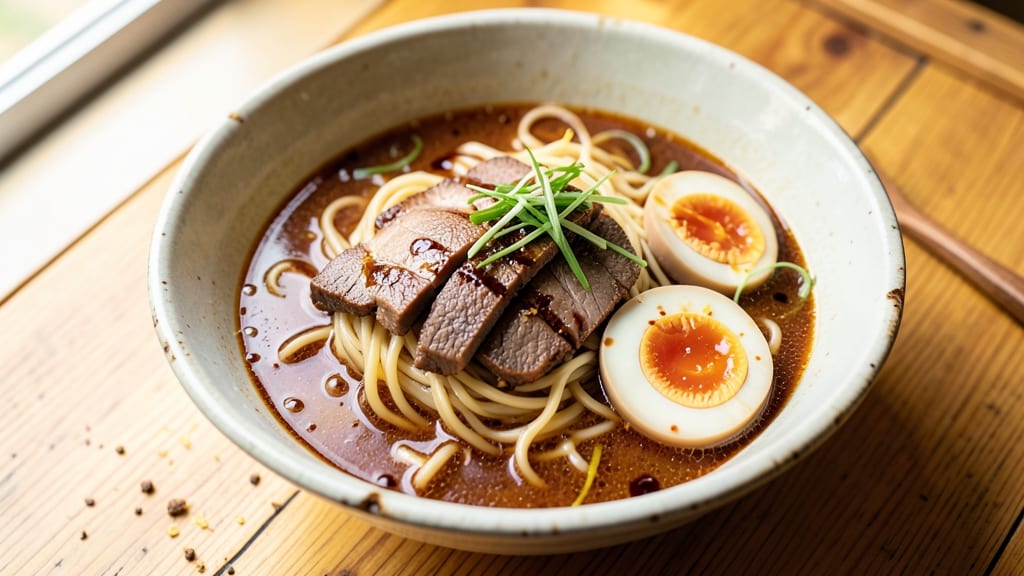
This authentic Japanese beef ramen recipe delivers the soul-warming comfort of a Tokyo ramen shop—rich tonkotsu broth, melt-in-your-mouth chashu beef, and silky marinated egg yolks in every slurp. The secret lies in layering umami through slow-simmered pork bones and soy, balanced by the delicate sweetness of chashu and fresh toppings like menma and nori. I've perfected this recipe over years of testing, ensuring each element—from the broth's velvety texture to the precise slicing of beef—honors tradition while being approachable for home cooks.
The broth is the heart of ramen, and here we build it with a tonkotsu-pork base—pork bones simmered until they render into a creamy, collagen-rich foundation. Thinly sliced chashu beef, braised until tender, adds depth, while fresh ramen noodles (or dried if preferred) provide the perfect chewy contrast.
The marinated egg yolks, known as ajitsuke tamago, are the showstopper—soft yet firm, they swirl into a luxurious ribbon when dipped. Every component is designed to harmonize: the fat from the broth, the saltiness of the chashu, and the brightness of the toppings.
What sets this ramen apart is the authentic balance of textures and flavors—the crisp snap of nori, the slight crunch of menma, and the melt-in-your-mouth richness of the broth.
The assembly is simple but intentional: ladle the hot broth over the noodles, top with chashu and toppings, and finish with the marinated egg. The result is a bowl that feels like a hug—warm, comforting, and deeply satisfying.
This isn't just ramen; it's an experience that transports you to a bustling Tokyo ramen shop.
Whether you're serving a crowd or treating yourself to a solo bowl, this recipe scales beautifully while keeping the authenticity intact. The key is patience—especially in the broth-making—and attention to detail in the toppings.
Once you try it, you'll understand why ramen is more than just a meal; it's a ritual. Let's get cooking.
Ingredients for authentic japanese beef ramen
Pork bones, marinated beef, and silky eggs—these are the pillars of authentic ramen flavor.
| Ingredient | Amount | Notes |
|---|---|---|
| Pork Bones 🦴 | 4 lb | Pig trotter bones preferred for richness |
| Chashu Beef 🥩 | 1 ½ lb | Thinly sliced ribeye or sirloin |
| Fresh Ramen Noodles 🍜 | 2 packages | Or 1 lb dried ramen noodles |
| Ajitsuke Tamago (Marinated Eggs) 🥚 | 4 whole | Store-bought or homemade marinated |
| Soy Sauce 🥫 | ½ cup | Japanese shoyu preferred |
| Mirin 🍶 | ¼ cup | Sweet rice wine |
| Sake 🍶 | ¼ cup | Dry sake preferred |
| Garlic Cloves 🧄 | 6 cloves | Minced for chashu marinade |
| Ginger 🌿 | 1 tbsp | Freshly grated |
| White Sesame Seeds 🌰 | 1 tbsp | For garnish |
| Menma (Bamboo Shoots) 🌱 | 1 cup | Canned or fresh |
| Nori Sheets 🍣 | 4 sheets | For garnish |
| Green Onions 🧅 | 4 whole | Thinly sliced for garnish |
| Sesame Oil 🫒 | 1 tbsp | For finishing |
| Neutral Oil 🫒 | ½ cup | For chashu braising |
The pork bones are non-negotiable for that signature tonkotsu richness. Look for pig trotter bones at Asian markets—they render the most collagen. If you can't find them, regular pork femurs work, but expect slightly less creaminess. For the chashu beef, ribeye or sirloin slices thinly against the grain. I like to buy pre-sliced chashu from H Mart or 99 Ranch Market when I'm short on time, but homemade is worth the effort. The marinade ratio is key: equal parts soy, mirin, and sake with garlic and ginger—don't skimp on the garlic.
No mirin? Substitute 1 tbsp sugar plus 1 tbsp dry sake. Short on pork bones? Combine 2 lbs chicken thighs with 2 lbs pork neck bones for a lighter broth. The ajitsuke tamago can be tricky—store-bought works in a pinch, but homemade (marinated in soy, mirin, and sake) is a game-changer. For the toppings, menma from the Asian aisle is best, but regular bamboo shoots in a can will do. Fresh nori sheets are a must for that authentic snap—avoid the dried sheets that crumble. The sesame seeds? Toast them lightly in a dry pan first for extra aroma.
Chashu beef keeps 3-4 days in the fridge, marinated in its juices. The broth can be made ahead and reheated, but add a splash of water to prevent it from separating. Store-bought nori lasts 6 months unopened, but once opened, keep it in a cool, dark place. The marinated eggs stay fresh for 1 week in the fridge—just keep them submerged in their marinade. For leftovers, portion broth and noodles separately and reheat the noodles first to prevent mushiness.
Why You'll Love This Recipe
- Two-Pot Magic: I swear by this method—simmer the pork bones for rich broth in one pot while the chashu beef braises in another. No fancy equipment, just deep flavor with minimal active time.
- Umami Bomb: That first sip of broth? Pure pork bone magic. The soy sauce and long simmer caramelize into something so savory, even picky eaters reach for seconds.
- Weeknight Hero: Between us, this is my go-to when friends drop by unannounced. The chashu beef stays tender, the noodles cook in minutes, and the marinated eggs add that restaurant-quality touch.
- Leftovers That Win: Honestly, I make double batches because the broth only gets better the next day. Reheat with fresh noodles, and suddenly it’s lunch or dinner—no stress, just satisfaction.
Step-by-step instructions for authentic Japanese beef ramen
Here's how to build a bowl that captures Tokyo's rich ramen traditions at home.
Create the Chashu Beef Marinade and Braise
In a bowl, combine the 1.5 lb chashu beef with 0.5 cup soy sauce, 0.25 cup mirin, 0.25 cup sake, 6 cloves minced garlic, and 1 tbsp freshly grated ginger. Let it marinate for at least 4 hours (overnight is ideal) in the refrigerator. This marinade transforms tough beef into tender, flavorful slices.
Heat 0.5 cup neutral oil in a heavy pot over medium heat. Add the marinated beef and cook until the edges are lightly browned, about 3-4 minutes per side. Remove the beef and set aside. In the same pot, add 1 cup menma (bamboo shoots) and sauté for 2 minutes to warm through. Return the beef to the pot, add 1 cup water, cover, and simmer on low heat for 1.5 hours. The beef should be fork-tender and the liquid reduced to a rich, glossy sauce.
Build the Pork Bone Broth
Rinse the 4 lb pork bones thoroughly to remove any impurities. In a large stockpot, combine the pork bones with 8 cups cold water and bring to a boil over high heat. Once boiling, reduce to a gentle simmer and skim off any foam that rises to the surface for the first 10 minutes. This ensures a clear, clean broth.
Add 1 tbsp soy sauce, 1 tbsp grated ginger, and 4 whole green onions (cut in half) to the pot. Simmer uncovered for 3 hours on low heat, maintaining a gentle bubble. The broth should develop a deep, umami-rich flavor and a golden-brown color from the pork bones. Strain through a fine-mesh sieve and discard the solids. Keep the broth warm for assembly.
Cook the Fresh Ramen Noodles Al Dente
Bring a large pot of water to a rolling boil and add 2 packages fresh ramen noodles. Cook for 2 minutes less than the package instructions—ramen continues cooking in the hot broth. Drain immediately and rinse briefly under cold water to stop the cooking process. This prevents the noodles from becoming mushy when added to the hot broth.
Divide the cooked noodles among 4 bowls. Ladle 1.5 cups hot pork bone broth over each serving, ensuring the noodles are fully submerged. The broth should be steaming hot when it hits the noodles to maintain their texture.
Assemble the Ramen with Chashu and Garnishes
Slice the chashu beef into thin strips and arrange 3-4 strips on top of each bowl of noodles. Crack 1 ajitsuke tamago (marinated egg) into the center of each bowl—its silky yolk will swirl into the broth when you slurp. Sprinkle 1 tbsp white sesame seeds and 1 sheet nori sheet (cut into strips) over each bowl for texture and visual appeal.
Drizzle 1 tsp sesame oil around the edges of each bowl and finish with a sprinkle of thinly sliced green onions. The sesame oil adds a nutty aroma that complements the rich flavors. Serve immediately while the broth is steaming hot and the noodles are al dente, ensuring every slurp delivers perfect texture and depth.
Customize with Broth Variations (Optional)
For a tonkotsu-style broth, replace the pork bone broth with an equal amount of chicken fat-based broth (simmered with chicken bones for 8 hours). For a shoyu-style broth, add 1 tbsp extra soy sauce and 1 tsp miso paste to the pork bone broth during the final 30 minutes of simmering. Adjust the seasoning to taste—authentic ramen balances umami, saltiness, and sweetness in every bowl.
Pro Tips For Making Authentic Japanese Beef Ramen
- Char Pork Bones Slow: Start with a screaming-hot pot and let the pork bones sear for 10 minutes—no rushing—until they turn deep mahogany and release that first wave of fat. I used to skimp here, and the broth always tasted thin and one-dimensional. The Maillard reaction in those bones is where the depth lives, so don’t walk away.
- Trim Chashu Fat Precisely: Cut the chashu beef into ½-inch slices before slicing against the grain—this keeps the meat tender but still holds together in the broth. And for the love of ramen, don’t drain the fat from the chashu brine unless you want flavorless beef. That golden liquid? Non-negotiable.
- Avoid Overcooking Ajitsuke Tamago: The marinated eggs should just peek through the yolk when they hit the hot broth—about 30 seconds max. I learned this after serving rubbery eggs that looked like they’d been boiled for an hour. Use a slotted spoon to gently lower them in, and resist the urge to stir them around.
- Simmer Broth Low and Long: Once the pork bones are in, drop the heat to a bare simmer—you should see tiny bubbles, not rolling waves. I used to keep it at a boil, and the broth turned cloudy and lost its richness. Three hours minimum, and don’t skimp: the collagen needs time to turn into silk.
Serving suggestions for authentic japanese beef ramen
Classic Toppings
Start with the essentials: chashu beef (3-4 slices per bowl) and ajitsuke tamago (marinated eggs) cracked into the center. The silky yolk swirls into the broth when you slurp—this is the moment that makes ramen magical.
I always add menma (bamboo shoots) for a subtle crunch and nori sheets (cut into strips) for that signature umami snap. 🥢
Fresh Garnishes
Finish each bowl with white sesame seeds (toasted lightly in a dry pan for extra aroma) and thinly sliced green onions for brightness. A drizzle of sesame oil around the edges adds a nutty aroma that elevates the dish.
For extra flair, sprinkle shichimi togarashi (Japanese chili flakes) on the side—it’s a crowd-pleaser for those who love a little heat.
Broth Enhancers
If your broth feels flat, boost it with a splash of fish sauce (½ tsp per bowl) or a pinch of white pepper for depth. For a smoky twist, add a strip of charred nori to the broth while simmering.
I also love a drizzle of yuzu kosho (citrus chili paste) on the side—it cuts through the richness beautifully. 💫
Vegetable Additions
Add shredded cabbage (quick-pickled in rice vinegar and sugar) for tangy crunch or sautéed shiitake mushrooms for earthy notes. For a lighter touch, try thinly sliced cucumber or bean sprouts—they add freshness without overpowering the dish. These toppings keep the bowl balanced and vibrant.
Presentation Tips
Use wide, shallow bowls to showcase the layers of your ramen. Arrange toppings in a visually pleasing way—think of it like a mini edible art piece. I like to place the chashu beef on one side and the ajitsuke tamago in the center, then scatter the rest around.
A sprinkle of black sesame seeds adds a striking contrast to the white noodles. 🎨
Serving Suggestions
Ramen is best enjoyed fresh and steaming hot, but if you're serving a crowd, keep the broth and toppings separate until ready to assemble. For a family-style experience, set out small bowls of toppings and let everyone customize their own bowl.
Pair with green tea or a light Japanese lager like Sapporo to complement the flavors without overpowering them. 🍵
Nutrition facts
Frequently asked questions
Can I substitute beef with chicken or pork in this ramen?
While beef chashu is traditional, you can absolutely swap it! For chicken, use 1.5 lb boneless thighs with the same marinade (soy, mirin, sake, garlic, ginger). For pork, thinly sliced pork belly works beautifully—it adds extra fat for richness. Just adjust the braising time: chicken needs 1 hour while pork belly can go 2 hours for maximum tenderness.
How do I make the broth creamier without pork trotter bones?
For a creamy texture without trotters, add 2 tbsp cornstarch to the broth during the last 10 minutes of simmering. Stir well and cook until slightly thickened. Alternatively, blend 1 cup pork shoulder meat (cooked and cooled) into the broth—this adds natural fat and body.
What's the secret to perfect marinated egg yolks (ajitsuke tamago)?
The key is the ratio: use 1 cup soy sauce, ½ cup mirin, and ½ cup sake for 4 eggs. Marinate for 3-4 days in the fridge, turning daily. The eggs should be firm but still jiggly when ready. For extra shine, add 1 tsp sugar to the marinade.
Can I make this ramen ahead of time?
Prepare the broth and chashu 2 days ahead—they taste even better after resting. Store separately in airtight containers. Reheat the broth gently (low heat) and bring noodles to a boil for just 30 seconds before assembling. The eggs should be added fresh for that signature swirl.
Why does my broth taste too salty?
Broths develop flavor as they simmer—taste as you go! If it's too salty, dilute with hot water (¼ cup at a time) or add 1 tbsp sugar to balance. For future batches, reduce soy sauce to 1 tbsp during the initial simmer and add more later if needed.