
Main Courses
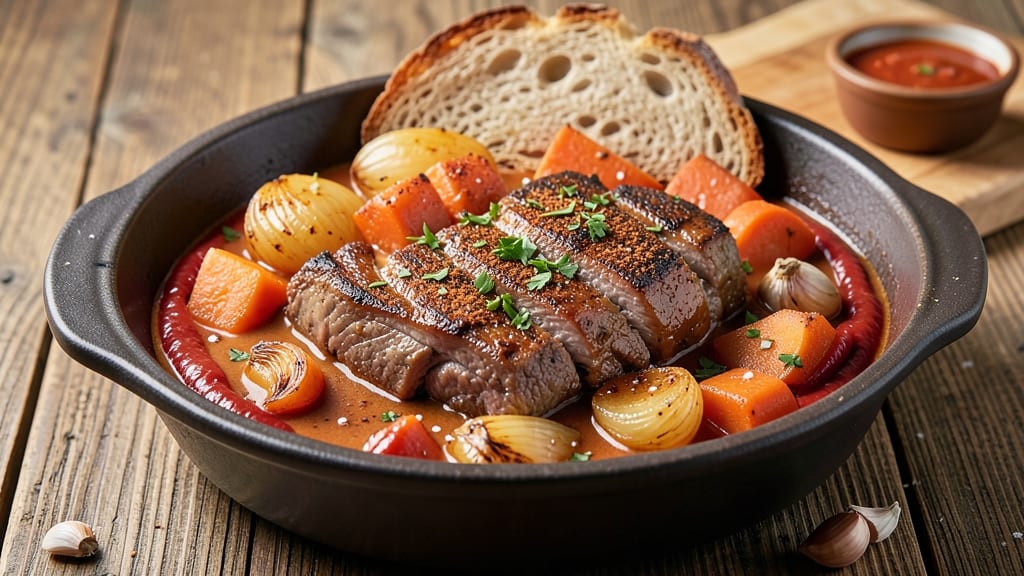
This authentic German beef goulash recipe delivers the hearty, paprika-rich flavors that make it a staple in Bavarian kitchens. The secret lies in slow-simmered beef that melts in your mouth, infused with smoky paprika and aromatic spices that create layers of depth.
I've perfected this version after years of testing—it's the kind of dish that transforms a simple weeknight into a cozy German feast.
The process begins with browning the beef for maximum flavor, then simmering it in a rich tomato-paprika sauce until tender. German goulash relies on slow cooking to develop those deep, caramelized notes that set it apart from other stews.
The result? A dish where each bite offers a perfect balance of tender beef, smoky paprika, and slightly sweet tomato undertones.
What makes this recipe truly special is its authentic German technique—no shortcuts, just the traditional method that creates restaurant-quality results at home. The beef becomes fork-tender while absorbing the complex flavors of the sauce, and the finish with fresh parsley adds a bright contrast that elevates every spoonful.
Serve it with crusty German rye bread or fluffy spätzle to soak up every last bit of that flavorful sauce. This isn't just goulash—it's a taste of Germany's culinary soul, brought to your kitchen with professional precision. Let's get cooking!
Ingredients for authentic german goulash recipe with beef and paprika
Authentic German flavors start with these carefully selected ingredients for rich, smoky goulash perfection.
| Ingredient | Amount | Notes |
|---|---|---|
| Beef Chuck Roast 🥩 | 2 lb | Cut into 1-inch cubes, trimmed of fat |
| Sweet Hungarian Paprika 🌶️ | 2 tbsp | Smoked variety for deeper flavor |
| Yellow Onions 🧅 | 1 whole | Medium, thinly sliced |
| Carrots 🥕 | 4 medium | Peeled, cut into 1-inch chunks |
| Garlic Cloves 🧄 | 4 cloves | Minced, fresh preferred |
| Tomato Paste 🍅 | ½ cup | High-quality, no sugar added |
| Beef Broth 💧 | 3 cups | Homemade or premium low-sodium |
| Red Wine 🍷 | ½ cup | Dry, bold variety like Cabernet |
| Bay Leaves 🌿 | 2 whole | Fresh, removed before serving |
| Fresh Thyme 🌿 | 1 tbsp | Leaves only, finely chopped |
| Fresh Parsley 🌿 | ¼ cup | Chopped, for garnish |
| Olive Oil 🫒 | 2 tbsp | Extra-virgin for browning |
| Salt 🧂 | 1 ½ tsp | Diamond Crystal kosher salt |
| Black Peppercorns 🌶️ | 1 tsp | Freshly ground, coarse |
The beef chuck roast is non-negotiable—its marbling ensures tender, fork-friendly bites after slow simmering. Butcher shops often carry it pre-cubed, saving you time, but if buying whole, ask for a well-marbled cut. For paprika, Penzeys or Hungarian specialty stores offer the authentic sweet variety, though any quality smoked paprika will work. The onions and carrots should be fresh, with vibrant color—no wilted or discolored produce. Garlic cloves should be firm and free of sprouts; German markets often carry premium varieties worth seeking out for this dish.
No red wine? Substitute with additional beef broth and a splash of balsamic vinegar—the acidity helps balance the richness. Fresh thyme is ideal, but dried thyme at one-third the amount works in a pinch. For tomato paste, San Marzano in a squeeze tube is my go-to—no waste, and it keeps indefinitely. The beef broth should be homemade if possible, but premium low-sodium brands like Pacific Foods are acceptable. If you're short on time, pre-cut frozen onions and carrots (thawed and drained) work perfectly—just don't skip the fresh garlic and herbs.
This goulash tastes even better the next day as flavors meld. Store in an airtight container in the fridge for up to 5 days, or freeze portions for 3 months. For long-term storage, portion into individual containers—perfect for meal prep. The sauce thickens as it cools, so add a splash of broth when reheating. Fresh parsley should be added just before serving to preserve its bright flavor. German rye bread or homemade spätzle are traditional pairings, but crusty sourdough works beautifully too.
Why You'll Love This Recipe
- One-Pot Magic: I swear by this recipe because it’s literally one pot—no chopping boards full of scraps, no extra pans to wash. Just brown the beef, toss in the onions and carrots, add the paprika, and let it simmer. Honestly, I’ve made this on nights when I’m too tired to clean up, and it still tastes like I slaved over it.
- Paprika Powerhouse: That deep, smoky Hungarian paprika? It’s the star. The first time I used it, I nearly burned the kitchen waiting for the aroma to fill the house. The beef gets tender, the sauce thickens just right, and the sweetness from the paprika balances the richness. (Yes, even on a Tuesday night.)
- Leftovers That Beg: This goulash tastes better the next day—like, seriously, my family fights over the last bowl. I make a double batch on Sundays, freeze half, and pull it out for lazy nights. The beef stays juicy, the carrots soften perfectly, and the paprika flavor only deepens. My secret weapon for busy weeks.
- Budget-Friendly Feast: Beef chuck roast is affordable, and a single pot stretches for days. I’ve fed six people for under $15 using this recipe, and no one ever guesses it’s cheap. The onions and carrots bulk it up, the garlic adds depth without cost, and the paprika makes it feel special. Perfect for when you want hearty without breaking the bank.
Step-by-step instructions for authentic German beef goulash
This method delivers restaurant-quality depth with tender beef and rich paprika flavor.
Prepare the Beef for Maximum Flavor
Pat the 2 lb beef chuck roast completely dry with paper towels—this is crucial for achieving a proper sear. Using a sharp chef's knife, cut the beef into 1-inch cubes, being careful to trim away any excess fat. The fat cap should be reduced to about ¼-inch thickness to prevent greasiness in the finished dish.
In a medium bowl, combine the beef cubes with 1.5 tsp salt and 1 tsp freshly ground black peppercorns. Toss gently to ensure even seasoning. Let the seasoned beef sit at room temperature for 15 minutes before cooking. This allows the seasonings to penetrate the meat and ensures more even cooking throughout.
Develop the Paprika Base
Heat 2 tbsp olive oil in a large Dutch oven over medium-high heat until shimmering. Add the beef cubes in a single layer, working in batches if needed to avoid crowding. Sear the beef for 3-4 minutes per side until deeply browned—this creates the Maillard reaction that forms the foundation of the goulash's rich flavor. Remove the beef and set aside temporarily.
In the same Dutch oven, add the 1 whole yellow onion and 4 medium carrots cut into 1-inch chunks. Cook for 5 minutes until the onions soften and begin to caramelize. Add the 4 minced garlic cloves and stir for 30 seconds until fragrant. Immediately sprinkle in the 2 tbsp sweet Hungarian paprika and stir vigorously for 1 minute until the paprika loses its raw taste and develops its characteristic aroma.
Build the Sauce Foundation
Reduce the heat to medium and stir in the 0.5 cup tomato paste, spreading it evenly across the bottom of the pot to prevent burning. Cook for 2 minutes until the paste darkens slightly and begins to release its oils. Deglaze the pot with the 0.5 cup red wine, scraping up all the browned bits from the bottom—these contain concentrated flavor that will infuse your goulash.
Add the 3 cups beef broth and bring to a gentle simmer. Return the browned beef to the pot along with the 2 whole bay leaves and 1 tbsp chopped fresh thyme. The liquid should just cover the beef—if it's too thin, reduce slightly over high heat. This initial simmer helps dissolve any remaining surface flavors from the beef and vegetables.
Slow-Simmer for Tender Perfection
Cover the Dutch oven and transfer to a preheated 325°F oven. Simmer for 2 to 2.5 hours, or until the beef is fork-tender and easily pulls apart. The liquid should reduce to a thick, velvety consistency that coats the back of a spoon. Check the beef after 1.5 hours—if it's not tender, continue cooking until it reaches your desired texture.
About 15 minutes before the goulash is finished, stir in the 0.25 cup chopped fresh parsley. This adds a bright, fresh note that balances the rich flavors. Remove the bay leaves before serving, as they can impart bitterness if consumed. The goulash should have a deep red hue from the paprika and a complex aroma that combines smoky, sweet, and slightly acidic notes.
Adjust Consistency and Serve
If the goulash is too thick, add 2-3 tablespoons of hot water or beef broth to reach your desired consistency. Taste and adjust seasoning with additional salt or pepper if needed. The finished goulash should be rich but not overly salty, with a perfect balance of paprika's sweetness and the wine's acidity.
Serve the goulash immediately in deep bowls, garnished with additional fresh parsley. The beef should be tender enough to pull apart with a fork, and each bite should deliver a harmonious blend of smoky paprika, caramelized vegetables, and the deep umami of the slow-cooked beef. For an authentic German touch, serve with crusty bread or buttered egg noodles to soak up the flavorful sauce.
Pro Tips For Making Authentic German Goulash Recipe With Beef And Paprika
- CRISP THE ONIONS FIRST: The onions should be golden and slightly caramelized before the paprika hits—this builds flavor depth. I used to rush this step, but now I let them cook for 8-10 minutes on medium-high, stirring often, until they’re almost dry. That’s when the paprika’s sweetness really shines.
- SWEAT THE CARROTS TOO: Cut the carrots into thick chunks (½-inch) and add them with the onions—they’ll soften into the stew while holding their shape. I learned this the hard way: raw carrots turn to mush and make the goulash gloppy. A quick 5-minute sweat with the onions does the trick.
- DON’T BOIL THE PAPRIKA: After adding the paprika, keep the heat low and stir constantly for the first 2 minutes—this prevents scorching, which turns the sauce bitter. I was skeptical until I tried it: the color stays vibrant, and the flavor remains clean. (Yes, even if you’re impatient like me.)
- REST THE MEAT UNDER FOIL: Once the beef reaches 195°F (or your preferred doneness), pull it out and tent it loosely with foil for 5-10 minutes. This keeps it juicy while you finish the sauce. I skip this when I’m lazy, but the difference in tenderness is noticeable—especially with chuck roast.
Essential equipment for this dish
Dutch Oven Essentials
A heavy-bottomed Dutch oven is non-negotiable for authentic German goulash. I recommend the Le Creuset Signature (5.5-quart) for its even heat distribution and durable enamel coating. The deep sides prevent spills during the long simmer, and the tight lid traps steam for tender beef.
For budget-conscious cooks, the Lodge Pre-Seasoned Dutch Oven works beautifully—just ensure it's 5-6 quarts to accommodate the beef and vegetables comfortably. 🔥
Precision Tools
Invest in a meat thermometer to track beef doneness—aim for 195°F for fork-tender results. The ThermoWorks Smoke model is my go-to for its accuracy and durable probe.
A sharp chef's knife (like the Victorinox 8-inch) is crucial for cleanly cutting the 1-inch beef cubes, while a wooden spoon prevents scratching the Dutch oven's surface during stirring.
Spice Grinders Matter
Freshly ground black pepper transforms this dish. My KitchenAid Spice & Nut Grinder delivers consistent coarseness, but a simple handheld pepper mill works if you prefer grinding at the table. For paprika, a small measuring spoon ensures precise 2 tbsp additions—too little weakens the flavor, while too much overpowers.
Store paprika in an airtight container away from light to preserve its vibrant color and smoky depth.
Broth & Wine Essentials
Use a fine-mesh strainer to clarify homemade beef broth before adding it to the goulash. For wine, a red wine funnel makes pouring the 0.5 cup Cabernet effortless without spills. I keep a small carafe on hand to decant any sediment from cheaper bottles.
If substituting wine, a 1:1 ratio of beef broth to balsamic vinegar mimics the acidity and depth—just reduce the broth by 1 tbsp to account for the vinegar's liquid content.
Fresh Herbs & Garnishes
A pair of kitchen shears makes quick work of chopping 0.25 cup fresh parsley for garnish. For thyme, a microplane releases more aromatic oils than snipping with scissors. Store fresh herbs in glass jars with a damp paper towel—this keeps them vibrant for up to 5 days in the fridge.
A small whisk helps emulsify any added broth if the sauce separates during reheating.
Nutrition facts
Frequently asked questions
Why does authentic German goulash use sweet paprika instead of hot?
Sweet Hungarian paprika is traditional in German goulash because it adds depth and color without overpowering heat. The smoky-sweet notes complement the beef and tomatoes perfectly, while hot paprika would dominate the dish. For authenticity, use 2 tbsp sweet paprika—it's the secret to that signature rich, velvety sauce.
Can I make this goulash in a slow cooker instead of an oven?
Brown the beef first in a skillet, then transfer everything to a 6-quart slow cooker on low for 6-7 hours. The slow cooker's gentle heat achieves the same tender results. Just add 0.5 cup extra broth since slow cookers evaporate more liquid—check the consistency before serving.
What's the best way to reheat leftovers?
Reheat goulash in a saucepan over medium-low heat with 2-3 tbsp broth to restore moisture. Never microwave—it makes the sauce watery. If too thick, add a splash of broth while warming. Leftovers taste even better the next day as flavors meld!
Is there a vegetarian version of this recipe?
Traditional German goulash relies on beef, but you can substitute with mushrooms or hearty lentils for a meatless version. Use 1.5 lbs portobello mushrooms sliced thickly, or 1.5 cups cooked lentils—both absorb the paprika sauce beautifully. Simmer for 45 minutes instead of 2 hours.
Why does my goulash taste bland after simmering?
Bland goulash usually means under-seasoned or insufficient browning. Double-check: brown beef deeply first, use salted broth, and taste before serving. A pinch of sugar (just ½ tsp) can balance acidity if needed. The paprika should be the star—don't skimp on the 2 tbsp!